Middle class, but feeling economically insecure

By Patricia Cohen, New York Times

It’s not only what you have, but how you feel.

When it comes to membership in the middle class, earnings and assets are just part of the definition. Nearly nine out of 10 people consider themselves middle class, as a recent survey by the Pew Research Center found, regardless of whether their incomes languish near the poverty line or skim the top stratum of earners.

“Middle income is not necessarily the same thing as middle class,” said Rakesh Kochhar, a senior research associate at Pew. Even as the proportion of households in the middle-income brackets has narrowed, people’s identification with the middle class remains broad.

That’s because the middle-class label is as much about aspirations among Americans as it is about economics. But a perspective that was once characterized by comfort and optimism has increasingly been overlaid with stress and anxiety.

Read the whole story


Gondola to link Squaw Valley-Alpine Meadows

By Kathryn Reed

After years of talking about linking Squaw Valley and Alpine Meadows, the talk is over and the doing is about to begin.

Plans are expected to be submitted to the U.S. Forest Service and Placer County this summer. It’s too soon to predict construction and completion dates.

“There are currently no plans being contemplated to allow skiing or other non-skiing activities along the lift route or on the White Wolf terrain. The existing ski areas of Squaw Valley Alpine Meadows will not be affected by gondola construction,” Michael Radlick, spokesman for the ski resorts, told Lake Tahoe News.

It will likely take 13½ minutes to travel the two miles in what will be eight-person cars. Up to 1,400 skiers will be able to be transported per hour. It’s anticipated this will be for winter use only.

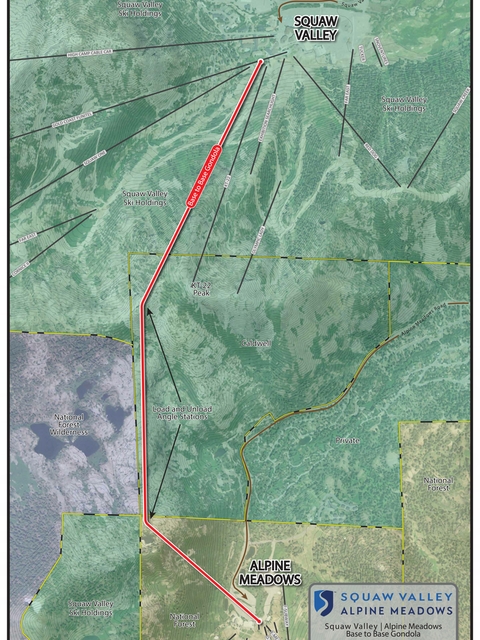
This shows the route of the gondola. Graphic/Provided

This shows the route of the gondola. Graphic/Provided

The gondola will connect the base of the two resorts via a detachable gondola that will go over KT-22 peak. Officials said the goal is to minimize the footprint and scenic impacts to the nearby Granite Chief Wilderness Area.

KSL Capital Partners bought Squaw in November 2010. JMA Ventures bought Alpine in 2007. Squaw Valley Ski Holdings Inc. was created in September 2011 to operate both resorts.

It was announced today that Squaw Valley Ski Holdings reached an agreement with the owner of the private land located between Squaw Valley and Alpine Meadows to build the gondola.

“The base-to-base gondola will offer our guests the ability to easily explore and experience the unique attributes of these two mountains via a brand new aerial connection, while simultaneously reducing vehicle traffic between them,” Andy Wirth, CEO of Squaw Valley Ski Holdings, said in a statement.

Troy Caldwell owns the private land known as White Wolf.


‘Twain’ to visit Incline Village

McAvoy Layne will embody the host of Mark Twain for “Mark Twain’s Tales of Tahoe” on April 24.

The Incline Village & Crystal Bay Historical Society is putting on the event at Twain Room at the History Exhibit (across fromStarbucks) 969 Tahoe Blvd., Incline Village

Doors open at 6:30pm, event is at 7pm. Cost is $20 at door (cash/check). Seating is limited. Reservations required by calling 775.833.1835. Bring a beverage of choice.


Bill proposes citizen commission set Nev. officials’ pay

By Sandra Chereb, Las Vegas Review-Journal

CARSON CITY — Talking about salary and whether you deserve a raise is uncomfortable, especially if forced to vote in public to increase your take from taxpayers.

Some Nevada lawmakers want to change that with a constitutional amendment creating an appointed citizen commission to evaluate and set salaries for legislators, constitutional officers and judges.

Assembly Joint Resolution 10, which has been approved unanimously by the Assembly Committee on Legislative Operations and Elections, now moves to the Assembly floor.

The measure, introduced by Assemblywoman Victoria Dooling, R-Henderson, and four Southern Nevada Republican co-sponsors, also would allow lawmakers to receive a salary for every day worked by repealing a constitutional provision that limits pay to 60 days — only half of the 120-day sessions held every two years.

Read the whole story


Tahoe Tails — Adoptable Pets in South Lake Tahoe

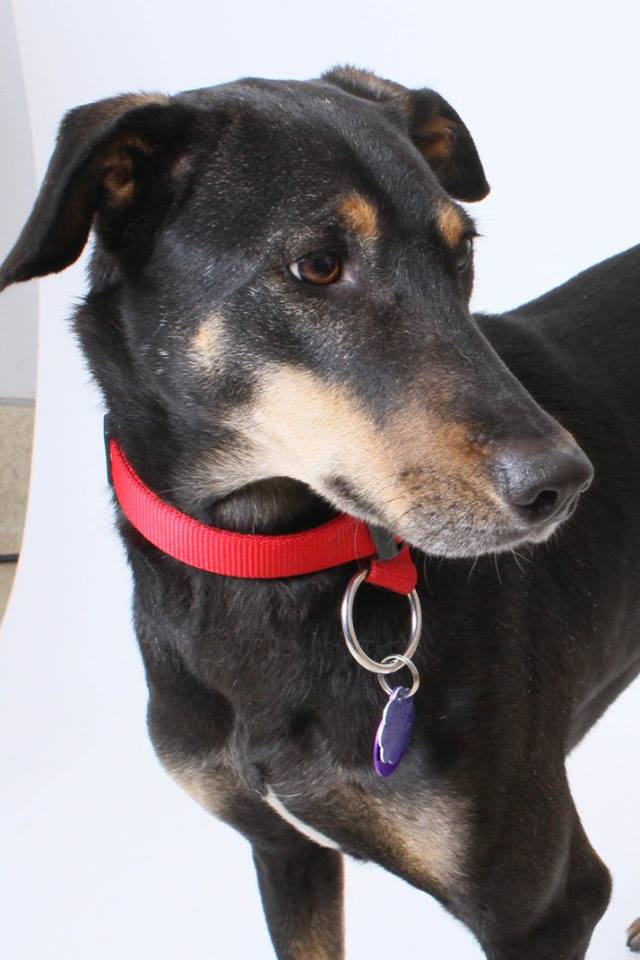
Jacky

Jacky

Jacky is a 4-year-old who looks like a cross between a whippet and maybe a Doberman. He’s about 35 to 40 pounds and very sweet.

He likes to talk when he’s excited, is house trained, and does well with other larger dogs and cats. He’s a bit scared of smaller dogs, and we think he’d do better in a home without small children.

Jacky spent his earlier years in India, and was brought to the United States by several groups to find his permanent home.

Jacky is neutered, microchipped, tested for heart worm, and vaccinated. He is at the El Dorado County Animal Services shelter in Meyers, along with many other dogs and cats who are waiting for their new homes.

Go to the Tahoe animal shelter’s Facebook page to see photos and descriptions of all pets at the shelter.

Call 530.573.7925 for directions, hours, and other information on adopting a pet.

For spay-neuter assistance for South Tahoe residents, go online.

— Karen Kuentz


Tahoe roadwork to severely impact drive time

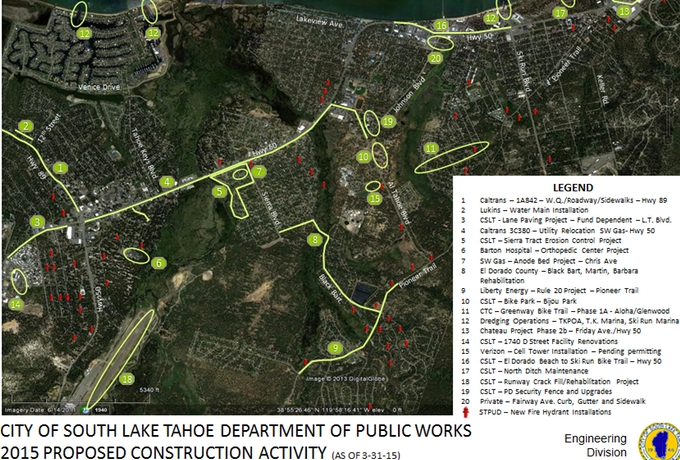
slt roadworkBy Kathryn Reed

Extra time. It’s something motorists will need more of this summer because of all the road related work occurring in the Lake Tahoe Basin this summer.

With the weather being unseasonably dry, the work is already beginning. Some of the work is on state highways, other is on municipal streets, bike paths are being put in, utilities changed and water meters installed.

In South Lake Tahoe, nearly all the main thoroughfares will be affected, which means normal shortcuts are not going to save any time.

Southwest Gas starting in mid-May is expected to begin relocating its infrastructure from the Y to Al Tahoe Boulevard. It will then go up Al Tahoe Boulevard to the first entrance for Lake Tahoe Community College. This will take two years.

This needs to be done before Caltrans comes in in 2017. The state will repave that 2-mile stretch, put in curb and gutter. It will essentially look like other areas of town where Caltrans has upgraded the roadway; but it won’t have streetlights. The Caltrans job when it starts will take three years to complete.

Lane closures will be the norm all summer.

The other utility project is Liberty Utilities will be putting its lines underground on Pioneer Trail from Golden Bear to the city limits. This mean lane closures on Pioneer Trail.

Compounding that area will be El Dorado County’s repaving project on Black Bart, Martin and Barbara avenues.

Then the city will be working on Sierra Boulevard most of the summer, with the start date being early May on the $4.5 million project. There will be curbs and gutters on the side that drains into the meadow. This is mostly a water quality project that will tie into the Caltrans project that is coming in 2017.

“In Sierra Tract there are not many places in the road to put big storm drain pipes. That is what is supposed to be put in first before the roads, not last,” Jim Marino, assistant public works director, told Lake Tahoe News. “There will be a lot of detours, road closures and definite impact to that residential area.”

The most noticeable and impactful project may be through Camp Richardson. Caltrans will be working on a $25 million project on Highway 89 from the Y to Cascade Lake. This will take at least two years, if not three.

Trees have already been removed to accommodate 4-foot shoulders in the two-lane area.

The four-lane stretch will see curbs, gutters and sidewalks, much like the middle of South Lake Tahoe.

While at the end of the day the road is designed to look better, the main thing is improved water quality by putting in drainage features so less sediment is reaching Lake Tahoe.

The contractor is set to begin work today. Significant traffic controls are slated to begin next week. Expect up to 20-minute delays just in this area.

Off-peak season work will be around-the-clock from Sunday at 10pm to Friday at 11am. During peak season it will be Sunday at 9pm to Monday at 7am, and Monday-Friday 7pm-7am.

“There is a proposal that our resident engineer has put forth to work during the day during the season in the four-lane section of town where the motels are,” Steve Nelson with Caltrans told Lake Tahoe News. “The hotel owners are pushing for us to work during the day because of the disturbance to their guests. It has not been approved yet.”

The concern about working during the day is that backups would be more severe.

With all of Caltrans’ projects, it may take more than an extra hour to drive from South Lake Tahoe to Tahoe City.

The Vikingsholm to Meeks Bay project should be completed this year. Half of the 7-mile section was finished last year, with the other half on the books for this season.

Meeks Bay to Wilson Road in Tahoma is a separate 2-mile stretch that will take one summer to do.

From Homewood to the Ward Creek area near Sunnyside is another project.

Each Caltrans project could be a 20-minute delay. During peak season the Homewood/Sunnyside and Tahoma jobs will  have around-the-clock work during the week.

Bike paths will be built in the county and city. The Sawmill path should be completed this summer. It will then provide a continuous link from Meyers to South Tahoe High School.

In South Lake Tahoe, the path from the site of the old Alta Mira building, at the end of Lakeview Commons, to Ski Run Boulevard will be repaved. It will be a class 1 trail – meaning off the road, and 10 feet of pavement.

The hope is that work will begin mid-summer, but the city still needs to acquire property and/or right-of-way before going out to bid.

Marino, with the city, said the money – mostly grants – is in hand for what could be a $4 million project for three-quarters of a mile. That figure includes acquisitions and planning, not just building the trail.

Some property owners want compensation and won’t just grant an easement because parking spots will be eliminated.

“Being adjacent to the highway there are grade issues and restructuring; acquisition at several those commercial properties is driving up the costs,” Marino said. Water quality improvements will also be part of the bike path.

Work is also continuing on Highway 28 in Kings Beach.

—–

Notes:

• April 21, 9am South Lake Tahoe City Council meeting will have a presentation about the Sierra Tract project.

• April 23, 6pm at Lake Tahoe Airport there will be a meeting hosted by the city, Caltrans and Southwest Gas to talk about the project along Highway 50.

• Here is Caltrans information.


Opinion: Safety comes with fire adapted communities

By Ed Smith and Elwood Miller

A fire adapted community is one where the people have joined together to adequately prepare themselves and their homes for the occurrence of wildfire. They share the goal of mutual protection and creating a community that can survive wildfire with little or no assistance from firefighters. They perceive their community as vulnerable and constantly think about and discuss the threat of wildfire while individually and collectively taking action to mitigate the
threat.

Residents of fire adapted communities:

• Acknowledge that their community is vulnerable to the destructive force of wildfire.

• Understand those landscape and structural characteristics that increase the probability of ignition.

• Understand the limitations of fire suppression efforts and accept responsibility for preparing their home through pre-fire activities.

• Understand the importance of a fuel break where firefighters, when available, can safely defend life and property.

• Are knowledgeable about how weather, topography and fuels influence wildfire behavior.

• Work with their neighbors and the local fire service to develop a community action plan that details high priority needs and projects (e.g., Community Wildfire Protection Plan).

• Routinely assess their house in terms of vulnerability to wildfire and take corrective action.

• Actively communicate about the wildfire threat and promote actions necessary to reduce the threat within the community.

• Share their knowledge and perspective with newcomers to the community.

• Understand that they share their level of wildfire risk with their neighbors (i.e., if one house is inadequately prepared, the risk to the whole neighborhood increases.)

• Know that mitigating the wildfire threat to their homes is not a one-time effort, but must be ongoing.

Creating a fire adapted community is an ongoing process that requires acceptance of a real wildfire threat and a collective determination to increase community survival by reducing that threat. Take that first step in becoming a fire adapted community today by talking to your local fire service, or contacting us at millere@unce.unr.edu or going online.

Ed Smith and Elwood Miller are with the University of Nevada Cooperative Extension.


Advanced ski helmet coming to U.S. market

By Frederick Reimers, Outdoor

During a high speed impact, a camera attached to a helmet becomes a weapon. In order to protect wearers, the Grimnir’s carbon fiber shell is reinforced beneath its two built-in camera mounts. Photo: Courtesy of Sweet Protection

Starting next fall, Norwegian helmet maker Sweet Protection will bring what it’s calling “the most advanced snowsports helmet on the market” to North America.

The Grimnir ($450), which was available in Europe this past winter, stakes those superlatives on a host of new technologies. But the innovation we’re most excited about is the claim that the Grimnir is the only lid available that will protect you from your action-cam mount in a crash.

As Outside reported last year, there’s a growing demand for accessories—including helmet mounts and selfie sticks—that let you attach an action camera to your body to capture better footage. But these tools come with risks: many require making modifications to your gear, which can severely compromise products designed to keep you safe. A camera stuck to a helmet turns into a weapon during a high-speed impact. It’s like gluing a rock to your lid, says Sweet spokesman Scott Kaier. “We don’t want the camera to crash through the shell.”

Read the whole story


Open government advocates fend off attacks at Nev. Legislature

By Sean Whaley, Las Vegas Review-Journal

CARSON CITY — Four bills that critics said would hamper public access to government information either failed or were substantially weakened Friday on a Nevada legislative deadline for committee action on measures.

Three measures, one seeking fees for more complicated records searches and two others proposing to close off prison and retirement system records, failed outright.

“Legislators have done a good job of listening to our concerns about vague language and sweeping changes in bills about Nevada’s open-government statutes, although there are still attempts to chip away at the information available to the public,” said Barry Smith, executive director of the Nevada Press Association. “The supporters of these bills often argue they’re trying to cut costs. But in the long run, it’s public scrutiny that saves money.”

Read the whole story


Calif. heat destroys all previous records

By Tom Randall, Bloomberg

The California heat of the past 12 months is like nothing ever seen in records going back to 1895. The 12 months before that were similarly without precedent. And the 12 months before that? A freakishly hot year, too.

What’s happening in California right now is shattering modern temperature measurements — as well as tree-ring records that stretch back more than 1,000 years. It’s no longer just a record-hot month or a record-hot year that California faces.

It’s a stack of broken records leading to the worst drought that’s ever beset the Golden State.

Read the whole story