School-grown food a hit with kids

Students learn about the growth cycle of strawberries. Photos/Kathryn Reed

Students learn about the growth cycle of strawberries. Photos/Kathryn Reed

By Kathryn Reed

Lunches aren’t ordinary at Sierra House Elementary School. Sometimes produce grown in the domes is on the plates.

That’s third-grader Breck Nealis’ favorite part about the two growing domes – being able to eat some of the food at lunch. She was part of the group that planted the peppers.

Before the school year ends the plan is to have pizza for the students made with spices like basil and oregano that are growing in the domes.

Kale is thriving in the dome.

Kale is thriving in the dome.

For those who don’t attend the school, samples of the produce were available last week. There was sprouted baby broccoli with garlic goat cheese on a cucumber disc, kale with artichoke and Parmesan on a cracker, and olive tapenade wrapped in dome grown green leaf lettuce.

The greens are thriving. The freshness of the produce is nothing like the kids are used to having from the grocery store.

Much of the produce starts as seeds.

Much of the produce starts as seeds.

Last week Breck and her big sister, MacKenzie, were giving their mom a tour of the domes that sit adjacent to the South Lake Tahoe school. The public had a chance to meander through the domes that were the brainchild of parents.

Strawberries and tomatoes are growing in hanging planters. A kumquat tree has fruit ready to harvest. Lettuce, kale, Swiss chard, bell peppers, Anaheim peppers, sweet peas, carrots, radishes, beans and herbs are just some of the items being grown.

Everything was planted by students.

Sun filters in to the dome to help tomatoes grow.

Sun filters in to the dome to help tomatoes grow.

A reflective paneling has been attached to part of the ceiling to attract the sun. Below it is a large almost hot- tub like basin of water. This is the natural heating mechanism so the dome won’t freeze.

The domes have been a bigger success than most people anticipated. And it’s not stopping at the domes. South Tahoe High School students in woodshop are making garden beds. They will be the dividers between the domes and playground.

Principal Ryan Galles told Lake Tahoe News this whole side of the school is likely to have some sort of contraption dealing with growing food. (This area used to be where snow was pushed.)

Soroptimist International South Lake Tahoe and community funds paid for the domes.

Soroptimist International South Lake Tahoe and community funds paid for the domes.

“The kids are so proud and excited,” he said.

First-grade teacher Kristi Wilson is the dome manager. She is spearheading the curriculum for each grade level. In the lobby there are student projects about the life cycle of a plant and how dirt made their lunch.


Opinion: Tightening vaccine rules may backfire

By Brendan Nyhan

In a number of states, parents are allowed to opt out of legal requirements to have their children vaccinated before entering school by claiming a “personal belief” or “philosophical” exemption. These provisions have raised a great deal of concern since the Disneyland measles outbreak, including in California, where it began. Unfortunately, the blundering approach state legislators there have taken shows how direct attacks on exemptions can rally the anti-vaccine cause.

Senate Bill 277, which would eliminate the personal belief exemption, passed the Senate Health Committee on a 6-2 vote last week and heads to its second hearing in the Education Committee on Wednesday. The bill is scheduled to go through multiple committees, which is creating numerous opportunities for opponents to promote misinformation about the supposed dangers of vaccines.

Robert F. Kennedy Jr., an anti-vaccine leader, compared the issue to the Holocaust in comments in Sacramento before the screening of a scientifically unsubstantiated anti-vaccine film last week. An anti-vaccine group from Minnesota financed the airing of a television ad showing an infant having a seizure. Other vaccine opponents made similarly dubious claims about the risks of immunization in testimony to the Health Committee and jeered vaccine advocates from the audience.

Read the whole story


Conservation group opposes Squaw-Alpine gondola

By Hugo Martin, Los Angeles Times

A conservation group has vowed to stop a gondola lift planned to connect two Lake Tahoe-area ski resorts, complaining that it would cut through a federally preserved wilderness.

Sierra Watch, a nonprofit group based in Nevada City, Calif., said a gondola lift connecting the Squaw Valley and Alpine Meadows ski resorts would slice through the federally protected Granite Chief Wilderness Area.

“That kind of development would be a nonstarter for us,” said Tom Mooers, executive director of Sierra Watch.

But the ski resort operators dispute the claim that the gondola will cut through wilderness area.

Read the whole story


Caesars wants more time to file bankruptcy plan

By Associated Press

The bankrupt operating division of casino empire Caesars Entertainment Corp. wants more time to file its reorganization plan to get out from under some $18 billion in debt.

Caesars Entertainment Operating Co. lawyers filed a motion this week asking a bankruptcy judge in Chicago to allow the company six more months to file its own plan exclusively.

Caesars is the parent company of Harrah’s Lake Tahoe and Harveys in Stateline.

The company has until May 15 but asked for the extension pointing out the case’s complexity involving 173 business entities, dueling creditor groups, legal challenges and a pending investigation from the court-appointed examiner looking into the company’s past transactions.

Caesars Entertainment Operating Co. wants until Nov. 15 to file giving creditors until January 2016 to weigh in. Judge A. Benjamin Goldgar is scheduled to consider Caesars’ request on April 29.


USFS working on defensible space in neighborhoods

This spring, federal, state and local agency personnel will conduct defensible space inspections and provide recommendations on ways to create defensible space around homes to comply with defensible space regulations. While these regulations require residents to create defensible space on their own property, the defensible space zone often extends beyond the property line.

The Forest Service Homeowner Defensible Space and Fuels Reduction Stewardship programs allow homeowners adjacent to National Forest System lands the opportunity to work with the Forest Service to extend defensible space onto NFS lands in order to meet recommended clearance standards.

Homeowners may conduct low-impact defensible space clean up on any portion of NFS lands within 100 feet of their home. Specific guidelines are included in the Homeowner Defensible Space Agreement issued by the Forest Service or the local fire protection district responsible for conducting defensible space inspections. Defensible space treatments include removing pine needles and other forest debris, pruning trees and removing brush. Homeowners are required to follow Forest Service standards and guidelines to protect soil, prevent erosion and protect forest resources while working on NFS lands. The removal of standing trees is not allowed under this agreement. In most cases, the work is light and manageable, as Forest Service personnel already engage in large-scale fuels reduction on NFS lands. The free agreement can be implemented annually without being reissued.

When removal of trees or clearance beyond 100 feet is recommended, homeowners can clean up excessive fuels under a Fuels Reduction Stewardship permit. The Fuels Reduction Stewardship permit authorizes homeowners to remove excessive fuels beyond 100 feet of their home and with prior approval from the Forest Service, may allow homeowners to remove standing trees at the homeowner’s expense. If tree removal is recommended, Forest Service personnel will mark trees that need to be removed.

Prior to authorizing the work, a Forest Service employee will assess the adjoining NFS land, determine if homeowners qualify for the Fuels Reduction Stewardship Program, determine the scope of work, and answer any questions. A free permit will be issued authorizing the work to occur within a specified period. The permit expires at the end of the calendar year in which it was issued.

The benefits of implementing defensible space treatments on or adjacent to, private property include reducing the speed and intensity of a wildfire, improving forest health and providing increased protection to neighborhoods and communities. With drought comes increased fire risk, so it is crucial for communities to implement these strategies to better prevent the spread of a devastating wildfire.

For more information, or to set up a free consultation with Forest Service personnel, call 530.543.2759. Provide a detailed message including name, return phone number and address.


The right dose of exercise for a longer life

By Gretchen Reynolds, New York Times

Exercise has had a Goldilocks problem, with experts debating just how much exercise is too little, too much or just the right amount to improve health and longevity. Two new, impressively large-scale studies provide some clarity, suggesting that the ideal dose of exercise for a long life is a bit more than many of us currently believe we should get, but less than many of us might expect. The studies also found that prolonged or intense exercise is unlikely to be harmful and could add years to people’s lives.

No one doubts, of course, that any amount of exercise is better than none. Like medicine, exercise is known to reduce risks for many diseases and premature death.

But unlike medicine, exercise does not come with dosing instructions. The current broad guidelines from governmental and health organizations call for 150 minutes of moderate exercise per week to build and maintain health and fitness.

Read the whole story


Snippets about Lake Tahoe

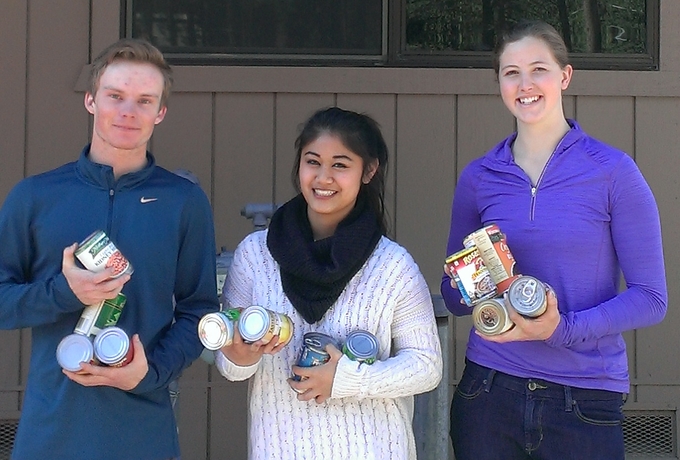
key club• South Tahoe High School’s Key Club, which is a student service club associated with Kiwanis Club, collected 1,200 non-perishable food items for South Lake Tahoe Family Resource Center. From left to right are Key Club members Alec Jobbins, Jomae Santos and Kylee Lyons.

• Chris Fiumara has been hired as vice president and general manager of Hard Rock Lake Tahoe.

• The League to Save Lake Tahoe is putting on two community cleanup days. One is April 19 from 1-3pm at Lakeview Commons; meet on the beach. The other is April 22 from 9am-noon. Meet at the grassy knoll under the gondola between Shoreline Ski & Snowboard and the parking garage. Bring gloves.

• El Dorado County Senior Day Care Services is offering Dementia 101, a workshop for family and friends who care for people with Alzheimer’s disease or a related dementia. The workshop will be May 30 from 8:30am-1pm at the Senior Center, 990 Lassen Lane, El Dorado Hills.


Searching for mozzarella in the land of processed cheese

By Gina DePalma

My grandmother’s visits from New York City always began with what I call The Great Unpacking, which took place on our dining room table the very second she crossed our threshold. I always wondered if her fellow travelers knew what my nonni was carting in her assortment of tote bags, not to mention the gigantic piece of luggage that was stuffed solely with food. As an Italian-American family living in Virginia in the 1970s, our only chance of getting what we needed to survive rested on Grandma’s small shoulders. Our neighbors thought of an Italian supper as sodden garlic bread from the freezer, mushy spaghetti topped with orange-tinted Ragu, and “cheese” that came from a green cardboard tube. Twice a year, Grandma came to rescue us, bringing the mother lode from 187th Street and Arthur Avenue in the Bronx.

Inside her bags were huge tins of extra-virgin olive oil and gigantic, hand-cut wedges of Parmigiano and Pecorino. There were cans of imported plum tomatoes and foil-wrapped jars of crinkly, oil-cured olives. I dove in frantically to uncover the big, golden balls of dried mozzarella, knotted at the top and stuffed with butter, and the crunchy wheels of toast known as frese. The fresh bread and pastries filled with ricotta and rum-scented cream would be devoured pretty quickly, but the spicy dried sausages made by my mother’s cousins were stashed away to last until the next visit. Most precious to my mother were the cans of espresso to brew in our macchina, which would soon be bubbling on the stove and filling the house with an intoxicating aroma as my grandmother and mother chatted away in Italian. As I sat in between them, munching away on Nonni’s homemade honey cookies and walnut-stuffed figs, the reminder of who we were and where we came from washed over me.

Grandma understood our needs in Virginia because she had experienced the same struggle when she came to the Bronx from her small town in Calabria after marrying my grandfather in 1926. Both accomplished cooks, my grandparents conducted an ongoing search for the right ingredients for family meals. They sought out the most reliable Italian vendors, who provided a small supply of imported foods. From Jewish dairy shops they bought fresh milk with the cream still on top, and scoops of sweet tub butter that was similar to what they had used in Italy. Produce, meat, and fish were purchased from trusted merchantsds. Not to be confused with appetizing shops that had the smoked fish and whatnot. sold dairy products, eggs, and some baked goo in the Italian neighborhoods of the Bronx.

But certain things just could not be duplicated. Back in their village of Carolei, my grandmother used freshly milled wheat and corn flour from the town mill, ground specifically to order for making breads and fresh pasta. (Grandma never stopped complaining about the flour in America, which she said ruined her pasta dough.) She missed the fragrant black anise seeds and oregano from the wild plants growing in the surrounding hills Just outside their doors were porcini and figs to be foraged and vegetables to be picked from the family garden. My great-grandfather raised and slaughtered pigs, making dried sausages and prosciutto, and my grandmother and great-grandmother used the lard for their pastry dough. And there were grapevines, of course, for making homemade wine. In a New York scraping its way out of the Great Depression and on the road to another World War, the family was determined to be Americans, to live out the dreams and desires that had brought them there, but in the kitchen, their hearts remained in Italy.

The kitchen, for my grandparents and so many other past and present newcomers to America, is a place to escape the tasks of assimilation and adaptation and find comfort in food. Even the humblest stove and a few cupboards can offer a safe haven and a way to preserve cultural identity and honor the traditions left behind. This expat yearning for the foods needed to cook family recipes has profoundly influenced the way that we all eat and shop.

My own family played a role in that, not just through our own home cooking, but also by starting successful food businesses. Our cousins, young twin boys who immigrated in 1947, eventually became restaurateurs and merchants of Italian imports. After 60 years in business, Mike’s Deli still thrives in the Arthur Avenue Retail Market in the Bronx, the place I visit every month for the same staples of Italian cooking that Nonni brought to us in Virginia. And it really came as no surprise that I too would become a chef.

Professionally and in my own home kitchen, I’ve reaped the harvest from seeds sown by my grandparents’ immigrant experience. In the 15 years I spent as the pastry chef of Babbo, a groundbreaking Italian restaurant in New York, I often paused and marveled at the abundance of imported Italian products I so easily accessed that they never would have imagined. And as a home cook, I reap the benefits of a local grocery store in my Washington Heights neighborhood that carries fish sauce, kimchi, and Sriracha, along with Danish butter, Spanish pimentón, and Israeli couscous. On weekends you might find me cooking dishes from India or Southeast Asia that feel about a million years from my childhood, when going exotic meant cracking open the Old El Paso Taco Kit.

I, like most Americans, can thank the generations of immigrants — like my cousins — who started out selling ingredients and cooking in small family restaurants as a way to make a living, serving their own communities first, and eventually anyone else with a nose for good food. The indiscriminate power of something delicious landing in a satisfied belly is a reliable way to overcome suspicion and prejudice. Goods cross international borders by boat, over highways, and through the air for the simplest reason: someone from somewhere else really misses them.

The “American melting pot” isn’t just a metaphor. It’s about what we eat for lunch. And when you look at what Americans love to eat, you see that we haven’t just tolerated our immigrant waves; we’ve embraced them. Every major city in America offers a panoply of ethnic delights spanning every continent on earth, and you’d be hard pressed to find a small town that doesn’t have at least a Thai noodle joint or taco shop in the local lineup.

The list of dishes that are indigenous to America is short; almost everything we eat originated elsewhere and evolved, layer upon layer. I think what is means to be an American cook is to appreciate, celebrate, and contribute in a way that enriches our culinary culture and makes it more than the sum of its parts. In restaurant kitchens and as a cookbook author, I devoted myself to using traditional ingredients in my desserts in new ways that would be exciting and expansive to my diners. Food has been one of our greatest triumphs of harmony and acceptance. For proof of this, we need not look farther than our pots, pans, and plates.

Gina DePalma is a James Beard Award-winning pastry chef and author of the cookbook “Dolce Italiano: Desserts from the Babbo Kitchen”. She wrote this for “What It Means to Be American”, a national conversation hosted by the Smithsonian and Zócalo Public Square.


Reasons to worry about oral cancers

By Ron Roth

Cancer from the neck up is typically associated with the tongue, throat, and voice box. But oral, head, and neck cancers can also occur in the mouth, lips, thyroid glands, nasal cavity, or sinuses.

Traditionally, tobacco and alcohol users were considered the populations at greatest risk. Now, according to new research from the American Academy of Otolaryngology, about 10 percent of new cases of oral cancer is attributed to human papillomavirus, or HPV, a sexually transmitted infection.

Ron Roth

Ron Roth

The Centers for Disease Control and Prevention claims HPV is so common nearly all men and women will get it in their lifetime. It is transmitted through vaginal, anal, and oral sex. An infected person can pass HPV on to a partner without showing any signs or symptoms.

Given the rise in oral cancers related to HPV, screening for early detection of cancer is more important than ever. According to the Harris Interactive Survey, 71 percent of Americans report they have not been examined by a medical professional for oral, head, or neck cancer.

Just because you can’t feel it doesn’t mean it isn’t there. More than 110,000 Americans are diagnosed with oral, head, or neck cancers annually. Oral, head, and neck cancers claim approximately 14,000 lives each year. However, if diagnosed early, these types of cancers may be treatable without significant complications and the chances for survival greatly increases.

Who should get tested?

Every adult should get tested. Tobacco and alcohol users have the greatest risk, and younger adults who do not smoke may get the cancer causing virus from HPV. HPV related oral cancers are difficult to detect because cancers usually occur on the back of the tongue or tonsils. Yet another reason to get regular screenings.

What are the warning signs of oral cancer?

  • A sore in the mouth that does not heal
  • Persistent pain in the mouth
  • Lumps or white patches in the mouth
  • Difficulty chewing, swallowing, or moving the tongue
  • Soreness in the throat or the feeling that something is caught in the throat
  • Changes in the voice
  • A lump on the neck.

What should you do?

Make an appointment with your primary care provider or contact an ear, nose, and throat or head, nose, and sinus specialist for an exam. Men through the age of 21 and women through the age of 26 are eligible for the HPV vaccine. Seeking help early can help avoid cancer, disfigurement, and even death.

Ron Roth is a board-certified otolaryngologist at Barton Ear, Nose, and Throat. 


California’s biggest water users are secret

By Katharine Mieszkowski and Lance Williams, Reveal

In the midst of a historic drought, Californians have no way of knowing who’s guzzling the most water.

That’s not an accident. It’s by design, thanks to an obscure 1997 measure that weakened one of the state’s chief open government laws, the California Public Records Act.

For the source of this legislation, look no further than Silicon Valley, where the city of Palo Alto decided it needed to do more to protect the privacy of the tech elite.

“Palo Alto, even then, was home to a number of very high-profile tech-­related residents,” said Ariel Calonne, who was the city attorney at the time. “We had fairly extensive databases that covered a lot of sensitive information for a lot of noteworthy people, and that became a concern for our utility managers.”

In the name of privacy and security, the city of Palo Alto backed legislation sponsored by Byron Sher, the local state senator. (Sher is now on the Tahoe Regional Planning Agency Governing Board.) It allowed utilities to keep secret their customers’ “utility usage data” – that is, how much water and power they were using.

Other supporters included the California Municipal Utilities Association and the League of California Cities.

At the time, the Public Records Act required agencies that operated utilities to make customers’ bills public upon request. During a 1991 drought, the press exposed California water wasters by relying on data from water utilities. The Los Angeles Times found that the top 100 water users in San Diego gulped down 3,000 gallons or more a day, while the average household used 349 gallons.

Atop the list of the biggest users: The San Diego Union­-Tribune’s publisher, Helen Copley, who pumped an average of 10,203 gallons a day on her 9.5-acre La Jolla estate, which was tended by 10 full-time gardeners. Dozens of those top water users complained that publicizing their water use would expose them to security concerns or ridicule, the L.A. Times reported.

In lobbying to change the law, proponents of the Sher measure noted that utility bills include ratepayers’ home addresses. They argued that it was dangerous to make that information public, citing the 1989 shooting of actress Rebecca Schaeffer, who was killed by a stalker who got her address from Department of Motor Vehicles records. The Legislature restricted access after that.

State agencies routinely redact personal information in releasing public records to address security concerns. But proponents of the measure also argued that because private utilities like PG&E did not have to release utility usage data, public ones shouldn’t have to either.

Once it was introduced, there was no stopping the measure, recalled Tom Newton, executive director of the California Newspaper Publishers Association.

The publishers and other open­ records advocates “made a political assessment that we couldn’t kill it,” said Newton, who was the organization’s general counsel at the time. Instead, he said, they worked to amend the measure to maintain open access to the bills of public officials who set utility rates.

“We did our best” to temper the law’s effects, he said. A spokeswoman for the League of California Cities says it has no position on the law today.

During California’s current drought, the law has been used to shield the water bills of big users like golf courses from public scrutiny.

Last year, the nonprofit First Amendment Coalition sued to get water usage data for major business customers of the Coachella Valley Water District in the Palm Springs area, where golf courses are prodigious water users. Peter Scheer, the coalition’s executive director, argued that the 1997 law was intended to protect the privacy only of people, not corporations.

Earlier this month, a judge ruled that corporate water bills also should remain secret, saying that while businesses don’t have the same privacy rights as people, the law nevertheless applies to all customers.

Under present law, there are a few exceptions that allow for some limited public scrutiny of water bills. Last year, The Center for Investigative Reporting used the public-official exemption to reveal the water use of officials who weren’t living up to their own calls for conservation. Many water agencies redacted the home addresses of the officials but provided copies of their bills.

The law also allows the agencies to disclose customers’ water use if they have violated “utility usage policies.” As water agencies restrict use in response to Gov. Jerry Brown’s recently announced mandatory water cuts, scofflaws could find themselves in the public eye.

But only if the agencies feel like sharing that information.