Boca Reservoir water flow cut off

By Associated Press

With the start of summer two months away, the Truckee River’s level already is dropping around Reno after flows into it from a Sierra Nevada reservoir were halted last week.

Federal Water Master Chad Blanchard said he needed to begin closing Boca Reservoir’s floodgates on Thursday because of its low water levels stemming from the four-year drought.

“We’re out of water and we’re ramping it down,” he told the Reno Gazette-Journal. “It’s something we’ve never seen before. We’ve never run out this early before.”

It’s the earliest the flow has been cut off since record keeping began more than a century ago, he said. The previous earliest date was June 5, 1992, during the height of another drought. Last year, the flow from Boca was cut off July 31.

“It’s way beyond what we imagined we would see,” Blanchard said. “We’re in uncharted waters, or uncharted lack of waters.”

The Sierra snowpack has been well below average the last four winters, with the most recent one the worst yet. The Truckee River basin’s snowpack on Thursday was 15 percent of average for the date. The Lake Tahoe basin’s snowpack was even worse: zero.

Tahoe dropped below its natural rim in October, cutting off its flow into the Truckee. Tahoe is not expected to rise above its natural rim this year. The Truckee flows more than 100 miles from Tahoe to Pyramid Lake, about 30 miles north of Reno.

Boca Reservoir impounds waters of the Little Truckee River, a major tributary of the Truckee. The reservoir is located in the Tahoe National Forest near Truckee, California.

With the flow out of Boca halted, river levels will quickly drop and the Truckee will be fed mostly by scant natural snowmelt from its other tributaries.

The Truckee’s summer flows now will only come from reservoir storage dedicated to the Pyramid Lake Paiute tribe to maintain its fisheries and to the Truckee Meadows Water Authority to provide water for the Reno area.

The authority has asked its customers to cut water use by at least 10 percent.


Plein air artist to display work in Meyers

Bona Fide Books will host an art reception for plein air painter Claudia A. Garza on May 1, 6:30-8:30pm at its shop in Meyers. This event is free and open to the public.

Raised in Chicago, Garza is a longtime art lover who began studying with Phyllis Shafer and Dave Russo at Lake Tahoe Community College when she moved to South Lake Tahoe in 2004.

Garza’s landscape collection, “Another Glorious Sierra Day . . . ”— named after the John Muir quote — will be at Bona Fide Books through May.

Bona Fide HQ is located at 1069 Magua St., No. 4, behind the Getaway Café in Meyers.

For more information, contact Publisher Kim Wyatt at editor@bonafidebooks.com or 530.573.1513.


El Dorado County political operative arrested

Updated April 21 2:43pm:

A one-time worker for the El Dorado County’s Republican Party who has worked on numerous political campaigns has been arrested on felony willful infliction of corporal injury of a cohabitant charges.

Rodney Stanhope, 47, is married, but the alleged victim was not his wife. The Placerville resident was arrested earlier this month.

Stanhope was a paid consultant on the failed Mike Owen for county auditor campaign in 2014. Stanhope also worked on the campaigns of disgraced former Supervisor Ray Nutting, Sheriff John D’Agostini, Rep. Tom McClintock, and Assemblywoman Beth Gaines. In 2011, Stanhope represented Gaines at a campaign function.

Most recently, Stanhope was working with the Dave Pratt’s 2016 supervisorial campaign.

This is not Stanhope’s first run-in with the law. In 2009, a Central Valley couple sought a restraining order to stop Stanhope from, among other things, harassing their 14-year-old daughter. In 2012, a Pollock Pines woman sought a restraining order to stop Stanhope from sending her threatening text messages.

— Lake Tahoe News staff report


Study: Wildfires release more greenhouse gases than thought

By Jenna Iacurci, Nature World News

It turns out that California wildfires release more greenhouse gases than previously thought, according to new research.

According to the study, from 2001-10, annual carbon losses from forests and wildlands in California represented as much as 5-7 percent of state carbon emissions.

Interestingly, the state’s Global Warming Solutions Act, or AB 32, says that by the year 2020 California has to reduce its greenhouse gas emissions to 1990 levels. But these findings, published in the journal Forest Ecology and Management, suggest that goal may be easier said than done.

Read the whole story


Teen killed by train near Truckee

By Associated Press

A 13-year-old boy was hit and killed by a train Sunday evening while walking along tracks near Truckee, about 20 miles west of the California-Nevada line.

KXTV in Sacramento reports California and Nevada officials found the boy’s body after responding to reports of a pedestrian incident near Interstate 80.

Anthony William Schafer of Sun Valley died at the scene. Foul play is not suspected.

The California Highway Patrol says the incident shut down eastbound lanes on I-80 for a few hours.


Drought will be profitable for some businesses

By Erik Sherman, Fortune

There will be businesses, new and old, that find water shortages can produce profits. As droughts become more common throughout the world, these 9 industries may thrive.

It’s crunch time for water, with shortages presenting one of the top global risks over the next decade, according to the World Economic Forum.

This is a problem that is current, not only future. Look beyond California’s multi-year punishing drought. The U.S. and Brazil face historic water crises, even though between them the two have a fifth of the planet’s freshwater reserves. And China faces a huge potential crisis within 15 years, according to a report by The National Intelligence Council (NIC), the federal agency that provides analysis to America’s intelligence community.

You can’t live without water, and doing business is pretty tough as well. “Water is fundamentally mispriced around the world,” Clinton Moloney, a managing director of PwC’s sustainable business solutions practice told Fortune. “The social cost is not built into the price that companies pay.” There’s always something else that can be done with water, and when there’s concern about having enough to drink and grow necessary food, what has been a cheap resource could quickly get far more expensive.

Read the whole story


Tahoe Tails — Adoptable Pets in South Lake Tahoe

Murray

Murray

Murray is one of several small, fluffy dogs that have just arrived at the Tahoe shelter to find new homes. He is a very sweet little poodle, 5 years old, who loves to go for walks and car rides.

If you are lucky enough to visit the shelter when all the little dogs are outside, go sit on the bench. All the dogs will swarm you, looking for attention. Murray will jump up on the bench and will be content to just lean up against your shoulder.

Murray is neutered, microchipped, tested for heart worm, and vaccinated. He is at the El Dorado County Animal Services shelter in Meyers, along with many other dogs and cats who are waiting for their new homes. Go to the Tahoe shelter’s Facebook page to see photos and descriptions of all pets at the shelter.

Call 530.573.7925 for directions, hours, and other information on adopting a pet.

For spay-neuter assistance for South Tahoe residents, go online.

— Karen Kuentz


Drought impacting El Dorado County vintners

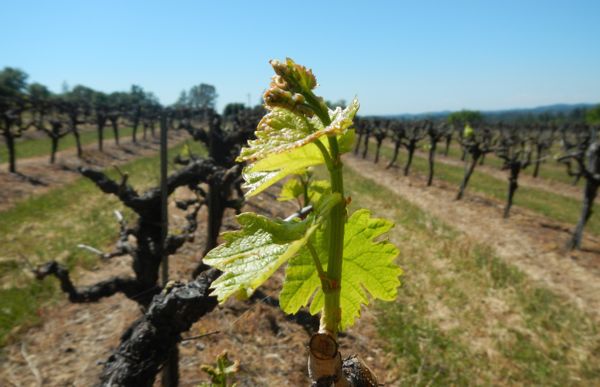
An early bud break will mean an early harvest in El Dorado County. Photos/Kathryn Reed

An early bud break will mean an early harvest in El Dorado County. Photos/Kathryn Reed

By Kathryn Reed

FAIR PLAY – Wells in El Dorado County’s wine country continue to drop because the minuscule snowmelt from the Sierra is unable to recharge the aquifer.

Vineyards relying on surface or ditch water are in tougher shape because of the severe cutback in allocations. However, even those on wells are wondering what will become of their vines if the drought, which is now in its fourth year, extends beyond this season.

There is no Plan B for most of them. It’s not like there is an unlimited supply to tap.

“If the wells dry up, what do you do?” Jonathan Pack, winemaker for Gwinllan Estate, asked. He doesn’t have the answer.

His vines have received 75 to 80 percent of water they normally would in mid-April. He has heard of years when water was trucked in for irrigation.

The good thing about grapes is they don’t need a ton of water to survive. Still, the lack of rain in the region is changing how vineyard managers do business. They are at the mercy of Mother Nature, and as she changes, they must change.

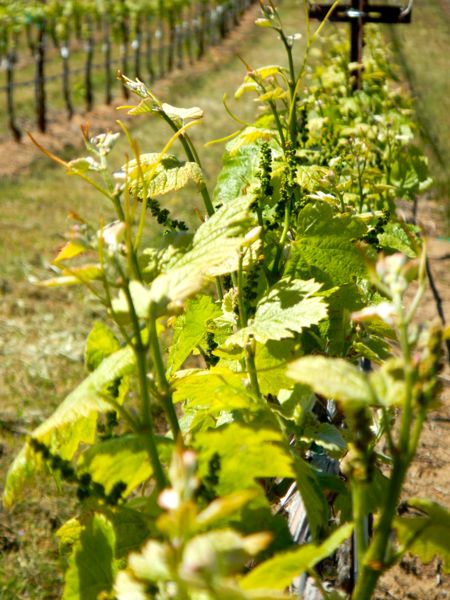
Growth on vines is two months early in some instances.

Growth on vines is two months early in some instances.

“I’m less worried about the drought and more about the time of the year for harvest. I look at the vineyard and I’ve never had leaves on vines this time of year,” Elliot Graham of Busby Cellars told Lake Tahoe News.

Chardonnay vines started to bud in February. Usually it’s April when they do. This could mean harvest will be in July – not August or September.

While dry farming has been around for years, this method still requires Mother Nature to provide moisture – something she has not done in any great measure lately. This style means there is no supplemental water added.

Single Leaf Winery went to this style five years ago when its well stopped producing water. Their Zinfandel has been dry farmed for 54 years.

Zinfandel – California’s oldest varietal – is extremely hearty. This is a good thing since El Dorado County boasts some of the best Zins in the state.

Shadow Ranch had planned to plant an acre of Zin just outside the tasting room two years ago. The drought changed those plans because it takes so much water at the get-go.

Many vintners are relieved their acreage is planted with Rhone varietals  — like Syrah, Viogner and Grenache – that do well in this granite, rocky soil. This soil doesn’t retain water. Those using drip irrigation are able to get the water deeper to the roots.

Shadow Ranch staked out an area for Zin across the pond, but the drought has delayed those plans.

Shadow Ranch staked out an area for Zin across the pond, but drought delayed those plans.

MV Vineyard is the smallest winery in Fair Play, producing 1,200 cases. Their 600-foot-deep wells have water at 300 feet, so they aren’t worried about this year. It’s future years that Kristi Mayhew, tasting room manager, said could be problematic.

Fire is her other concern. The July 2014 Sand Fire, which destroyed 20 homes, came close to their property and would have wiped out the vineyard had the winds changed. Last week a smaller fire erupted in the same area.

Stress – as in lack of water – is normally good for wine grapes. The flavor profile is enhanced, though the yield is less.

“We are getting some serious extraction. It’s pretty amazing what we are getting out of the grapes,” Scott Miller with Single Leaf Winery told Lake Tahoe News.

So, while the tonnage of grapes is likely to decline during this time of drought, the quality is destined to increase. Winemakers have always manipulated a certain amount of stress on the vines by cutting back the water so sugar content would increase, which in turn produces more robust flavors. Mother Nature is now doing that in a more extreme manner.

However, it’s not just irrigation water that is needed.

“There is a certain amount of water required in the winemaking process. The only thing to clean oak barrels is hot water,” Stephanie Simunovich with Skinner Winery told Lake Tahoe News.

A sign in the tasting room says, “Save H20 drink Rose.”

According to the Nature Conservancy, it takes 31 gallons of water to make one glass of wine.


Opinion: No one dealing with bloated budget

By Larry Weitzman

At the April 15 special meeting of the El Dorado County Board of Supervisors’ meeting, whose main purpose was a CAO budget update presentation to address the continuing county annual deficits, the operative word was “bloated.” During the meeting CAO Pamela Knorr admitted that the budget was bloated and she said it more than once. While Knorr admits the problem, she effectively refuses to solve the problem and three members of the BOS refuse to take the necessary action to solve this most critical EDC problem, a severe case of overspending.

Only Supervisors Shiva Frentzen and Ron Mikulaco apparently can see, as said by Mikulaco, the elephant in the room.

Larry Weitzman

Larry Weitzman

And this is not the first time that the BOS and CAO were advised that the EDC budget was heading full steam for an iceberg.  Auditor Joe Harn, in an email to the board on March 25, 2014, warned that the county was deficit spending and to continue to do so “will result in the necessity of draconian spending cuts next summer (of 2015).”

At the end of the FY 12-13 (6/30/13), the county had a cash balance of $54,461,348. By June 30, 2014, it was $45,106,043 and by June 30, 2015, that number is projected to be about $29,000,000 and perhaps as low as $25,000,000. Although this number goes up and down at the end of each month, the general fund cash balance which could be called a surplus will be depleted by as much as $30 million by the end of this fiscal year. The county has been living on savings for two years. Without these savings, the county would be upside down by that number.

And last week the CAO admitted the cause; bloated county budget spending. The main cause of the bloat was massive hiring by the prior CAO (about 170 general and non general fund employees, including many administrative employees) and a three-part 15 percent raise. From the June 2010 to June 2013 the county spent approximately $118 million on salaries and benefits annually. But when the cost of the new hiring hit, general fund spending on salaries and benefits grew to $132 million by June 2014 and will grow to about $141 million by the start of fiscal year 2015-16. Most of this increased spending is from hiring and not the raises that aren’t fully implemented until July 1 this year.

Salaries and benefits are about 70 percent of EDC’s general fund spending and the most significant, if not the only cause of the growth in county spending. When private businesses get in trouble, the first place they cut is their biggest expense, labor (employees). Governments across the nation have done the same thing. What is most interesting is that the growth in public safety spending for EDC has been minimal comparatively speaking. Since June 2013 the sheriff’s office has grown by two, probation has not grown, public defender is up by five and the District Attorney’s Office is down by two. Public safety departments have not grown. Total new county hiring since that date as said by a county official at the meeting was 134 employee.

Knorr made another significant comment about correcting this growing problem when she said, “The work force is the last thing we look at.”

The other source of significant county expense is the hiring of consultants, but there is little growth in that expense. Where else are we supposed to cut? Pens and pencils? The county is a service business; it doesn’t buy raw materials and manufacture products, except for some raw materials for road repair. At a BOS meeting last September, the prior CAO and chief financial officer could only point to a senior day care center with two employees as to any increase in county services.

What about revenue growth? County general fund revenues have grown from June 2006-14 at a rate of less than 1 percent annually ($185 million to $197 million), and the new forecast the county is using is a 4 percent growth for sales and property tax, but still not close to the pace of general fund spending. For four straight prior years (June 2010-13) revenues exceeded expenses by a total of $30 million. With the growth in spending from July 1, 2013, the deficits started and for the next fiscal year the annual deficit will touch $20 million if spending is not drastically reduced.

“For the last 12 months spending has exceeded revenues by about $1.3 million a month, and during the next fiscal year starting July 1, 2015, most county employees are going to receive a five percent raise,” said County Auditor Joe Harn. You can do the math. We have an accelerating deficit.

When BOS member Frentzen recently asked for analysis of that new hiring for the last three years or so by the county, the rest of the BOS gave her no support. Too bad for the county. Knorr didn’t do it on her own saying the BOS didn’t direct her to do so. In business do the shareholders have to vote to get the CEO to take action?

In the past when discussing the budget problem I mentioned that you should watch your wallets for increases in taxes and fees. Such a recommendation was part of CAO Knorr’s presentation when she suggested that a fee study should be done regarding fees charged by the Community Development Agency, HHSA, Treasurer/Tax Collector, Clerk/Recorder and the Surveyor. In more pulling at straws, Knorr even suggested cutting infinitesimally small programs like saving $13,200 annually by cutting the Perks Court Transitional Housing program. How’s that for saving the molehill while giving up the mountain? That’s rich (no pun intended); we’re going to balance the county budget that has had its salary and benefits balloon by $38 million by cutting a $13,200 program. If we could only cut about 1,500 Perks Court type programs, we would be at a $20 million saving. Perks Court is not the problem.

Unless spending is cut, and hopefully cut in an intelligent manner, this county will be facing those draconian cuts within six to 12 months.  Next time you call the sheriff’s office, I hope it’s not recorded music.

 Larry Weitzman is a resident of Rescue.



Questioning if health apps benefit healthy people

By Natasha Singer, New York Times

Consumers looking to use their mobile devices to improve their health — or at least maintain their well-being — have tens of thousands of choices.

But if those consumers are already healthy, the apps won’t necessarily do them any good, according to a new report in The BMJ, a British medical journal.

On Tuesday afternoon, for instance, the top 10 free health and fitness apps for iPhones included MyFitnessPal, a calorie counter and diet tracker; the FitBit activity tracker; Pacer, a pedometer and blood pressure tracker; and Period Tracker Lite, a menstrual-cycle tracker, according to data compiled by App Annie, an analytics firm.

Read the whole story