King Fire burn area to reopen Saturday

Sections of the Eldorado National Forest that have been off limits because of the King Fire will reopen April 25.

Roadside trees killed in the King Fire that were identified as an immediate threat to public safety have been felled. Further hazard tree assessment will be done as part of the ongoing King Fire Restoration effort.

There are still a few hot spots in the fire area. A recent flight over the fire area using infared technology for heat detection found 11 small spots remaining. Eight of these are in the Rubicon Canyon. Three others are near the fire perimeter. This is not unusual in a fire as large as the King Fire, and these hot spots are being monitored, according the Forest Service.

The public is reminded that permits are required for the collection of mushrooms, firewood and all other forest products. The District Offices at Georgetown and at Pacific will be open on Saturday to accommodate visitors who want to get permits or recreation information.


Calif., N.Y. rethinking higher ed, feds lag behind

By Nick Anderson, Washington Post

In its first few years, the Obama administration played a major role in higher education as the nation’s economy was foundering. The expansion of Pell grants for students in financial need, the provision of billions of dollars in stimulus funding for university research and other purposes, an overhaul of federal student loans to put the government at the center of lending — these and other measures enacted in 2009 and 2010 showed that Washington was thinking big.

Now, it seems, it is the states that are expansive. Or at least some of them. That’s a takeaway from recent interviews with higher ed leaders from the Empire State and the Golden State.

Nancy L. Zimpher, chancellor of the State University of New York, is promoting a new goal for a system that grants 93,000 degrees a year. She wants SUNY to award 150,000 degrees a year by 2020.

With 460,000 students from the community college level to doctoral programs, SUNY is a key player in public higher education. President Obama in August 2013 launched a significant initiative at one its campuses, choosing the University at Buffalo as the backdrop for a speech announcing that the federal government would rate colleges on measures of value and access. More than a year and a half later, the federal ratings plan is inching forward slowly. Some college leaders wonder whether it will ever happen.

Read the whole story


Snippets about Lake Tahoe

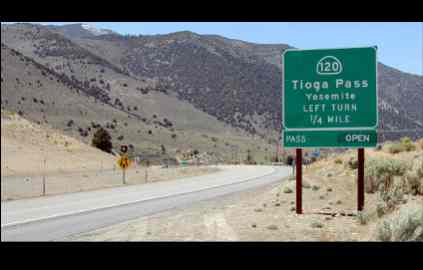
tioga• Sonora and Tioga passes are open.

• Kenny Curtzwiler will be a speaker at the Veteran Suicide Awareness March on May 2 at 1pm at Western Nevada College in Carson City. For more info about the 1.5-mile walk and event, email wncveterans@gmail.com.

• Check this story out to learn about the snowboarder who landed the first Quad Cork 1800.

• The County Health Rankings report ranked El Dorado County the seventh healthiest among the 57 ranked counties in California.

• Four Washoe County sheriff’s deputies will join more than 3,000 of their law enforcement colleagues on May 9 to kick off the 2015 Police Unity Bike Tour to honor officers who have lost their lives in the line of duty. The tour will culminate with a national vigil at the National Law Enforcement Officers Memorial in Washington on May 12.


Gambling losing its appeal in Las Vegas

By Hugo Martin, Los Angeles Times

Gambling, once the mainstay of Las Vegas, is slowly taking a back seat to other entertainment in Sin City.

The latest survey of Las Vegas visitors found that fewer people go to the city to gamble and that first-time visitors are more likely to travel there for a wedding or a convention or to visit friends and family.

The number of visitors increased to 41 million in 2014, up from 39.7 million in 2013, according to the Las Vegas Convention and Visitors Bureau. But as hotel occupancy rates and hotel tax revenue went up, gaming revenue for Clark County fell from $9.7 billion in 2013 to $9.5 billion in 2014, according to the agency.

Read the whole story


Tahoe lodging officials ramp up guest services

By Kathryn Reed

Walking in they didn’t say much. They were timid, shy and apprehensive. They didn’t want to say the wrong thing.

When English isn’t your first language it’s easy to feel intimidated about speaking to others who have spoken it their entire lives. But not communicating can be detrimental in the work environment for the employee, consumer and business owner.

Communication with hotel staff can make the difference between having an experience worth writing a good or bad review. Interaction with staff, especially bosses, can be the difference between becoming a supervisor or staying in a dead-end job.
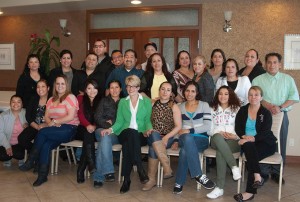
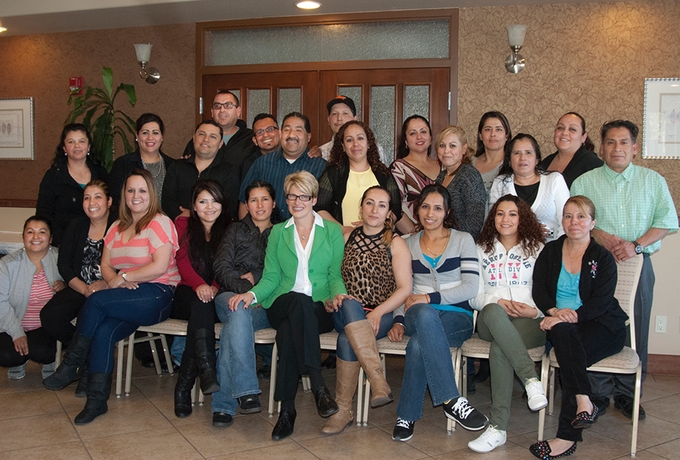
Housekeeping staff on the South Shore are better equipped to communicate with guests after a three-day course. Photo/Provided

Housekeeping staff on the South Shore are better equipped to communicate with guests after a three-day course. Photo/Pat Leonard-Heffner

Twenty-four housekeepers from four South Lake Tahoe properties last week were immersed in a three-day session at Lake Tahoe Community College to become more proficient at English.

“We got to take them from zero to 100. We got to gain their trust and get them excited about learning English, to feel valued, important and smart,” instructor Ronna Timpa told Lake Tahoe News.

Timpa, who is based in Las Vegas, has been doing this type of work for 24 years.

“When employees feel valued by their company, they are more likely to give better guest service and give better service over all,” Timpa said. “It’s likely the room is going to be little bit cleaner, they are going to go out of the way to help guests.”

The 24 hours of instruction came about from the South Lake Tahoe Lodging Association wanting to do something so frontline staff could better interact with guests and staff. Conversations with Lake Tahoe Community College started. Coursework for credit would take too long to put together, so that’s how it became a community education offering.

The lodging association and individual properties paid for the training.

“It helps me as a property by helping the consumer. If the consumer, our guests can communicate with our staff, if they are able to say ‘Hi, how are you?’, make good eye contact, that is good service and that is what puts hotels above other hotels,” Jerry Bindel, who runs Lakeland Village, told Lake Tahoe News. “A guest doesn’t want to have to fight to communicate the things they need. They want to say they need this and we give them what they like.”

Internally, Bindel knows better communication will come from housekeeping being able to tell maintenance what is needed and to hear what the front desk has to say.

The lodging group has been talking for a few years about doing something like this, but knew it would take an outside entity. The college was the logical party to take this on.

Guest services had been taught before through LTCC, but that was to people who spoke English as their first language. This is the first time to teach front line staff whose native tongue is Spanish. They were taught phrases pertinent to the industry – how to understand basic requests and what possible responses could be.

It was also an opportunity to learn how to interact with people, to be more outgoing. What they learned are life skills, not just work skills.

“This was training that they need for life. They learned how to communicate with customers, co-workers and bosses,” Timpa said. “We talked about their job now, their job in the future and how to get there.”

Another component of this training that is still to be developed is to have supervisors be taught some basic business skills like writing appropriate emails and how to deal with problems involving guests and co-workers.

Ultimately, Bindel foresees about the half the staffs of most lodging properties going through these trainings.


Opinion: West Nile virus awareness critical

By Ada Barros Heiser

The Placer Mosquito and Vector Control District is announcing the official beginning of the season during West Nile virus and Mosquito and Vector Control Awareness Week, April 19-25.

“With another mild and brief winter this year, a lot of our residents did not get much of a break from mosquitoes.” stated Joel Buettner, district manager. “Many of our residents understand the cycle of West Nile virus throughout the season, but many are also wondering how yet another dry year will affect mosquito populations.”

In past drought years, district surveillance data show very little impact on mosquito populations, but show a slight increase in West Nile virus activity. Experts believe this could be attributed to more infected birds congregating around fewer water sources, creating hotspots for bird to mosquito transmission of the virus.

“The good news is, we have not yet seen any West Nile virus activity in Placer County. This gives all our residents time to help us minimize mosquito populations by dumping out containers and eliminating drainage problems on your property. By reducing mosquito breeding locations now, we can reduce the risks associated with mosquito bites and West Nile virus later in the season” states Buettner.

The district also supports water conservation efforts, as many conservation measures also help reduce standing water in certain areas. Simple strategies such as cutting down on watering your lawn can help reduce the amount of water that goes into storm drain systems, which are a popular habitat for urban and suburban mosquitoes.

The week of April 19-25 is West Nile virus and Mosquito and Vector Control Awareness Week in California. Mosquito control districts throughout the state are gearing up for what could be an unpredictable and unusual season. The Placer Mosquito and Vector Control District is enlisting the public’s help to slow down the West Nile virus cycle this season. Residents can do a variety of things to help the community. Among these things are reporting potential mosquito sources or unusual mosquito behavior, such as mosquitoes biting during the daytime. Residents can also help identify high-risk areas for West Nile virus by reporting dead birds to the California Dead Bird Hotline at 877.968.2473.

In 2014, Placer County had seven human cases of West Nile virus, including one fatality, 40 dead birds that tested positive for the virus, and 77 virus-positive mosquito samples.

Ada Barros Heiser works for Placer County.


Calif. court rejects tiered water rates

By Meghann M. Cuniff, Orange County Register

An appellate court on Monday declared San Juan Capistrano’s water rate system illegal, questioning the validity of the longstanding tiered rate model that’s used by agencies across drought-stricken California to encourage water conservation.

But the 29-page ruling, which has been anxiously awaited by municpalities and water districts throughout the state, emphasizes that rates that increase as usage increases are “perfectly consonant” with state law so long as the rates correspond with service costs. That just didn’t happen in San Juan Capistrano.

The judges also declared legal San Juan Capistrano’s method of charging all water customers for recycled water even though the service wasn’t available to everyone, which reverses part of the August 2013 ruling from now retired Orange County Superior Court Judge Greg Munoz that declared the city’s entire rate structure illegal.

Read the whole story


Miwok tribe picks smaller shooting range

By Stephen Magagini, Sacramento Bee

Responding to a barrage of protest from neighbors and local residents, the Shingle Springs Band of Miwok Indians, owners of Red Hawk Casino, have scaled back plans to put in a public 29-lane outdoor gun range south of Highway 50 and instead develop a small gun range “open only to tribal members and their guests.”

The decision to go smaller was met with relief by opponents, some of whom live 100 yards from the proposed range on Shingle Springs Drive. But they remain concerned about sound and safety issues, said community organizer Damon Tribble, a web designer whose daughter attends second grade at a school 1,000 yards from the shooting range.

“We appreciate this gesture by the tribe, and we think this is a step in the right direction,” Tribble said, noting the tribe, as a sovereign nation, can do what it wants on the 2 acres of tribal trust land it owns – and El Dorado County government and courts can’t do anything about it. But Tribble said he and other neighbors wish the tribe would relocate the gun range to a place “that’s a lot more wild and remote.”

Tribble and his core group of 15 activists have launched a website, a Facebook page and YouTube videos featuring maps, sound studies and guns being fired at the range site.

Read the whole story


Letter: Sierra Valley Electric helps at B&B

To the community,

Bread & Broth, a nonprofit all volunteer organization, serves evening meals on Mondays at St. Theresa Church Grace Hall and Fridays at the Lake Tahoe Community Presbyterian Church. B&B is funded by our generous donors, jar collections at local businesses and our Adopt A Day of Nourishment program.

On April 13, Sierra Valley Electric Inc. donated $250 to be the Adopt A Day sponsor and provide over 100 meals to the evening’s dinner guests. Locally owned and operated, Sierra Valley Electric’s owners and employees have a strong sense of community and serving with B&B is just one of the of many community functions that they support.

“It was an honor to be part of such a wonderful program for our community,” said Ralph Duron, a Sierra Valley Electric team member. “It is nice to see all the volunteers and the smiles on the faces of the people we served.”

Helping to bring those diner’s smiles were fellow teams members Bryan Kambitsch, Sandy Herback, Roy Umana, and Kaylee and Nick Chandler. B&B would like to thank Sierra Valley Electric Inc. and its employees for their commitment to the community and their continued support of helping B&B feed members of our community who struggle with hunger.

Kaylee Chandler said, “Helping the community is a joyful experience and seeing the smiles of every person we served was absolutely priceless.”

Carol Gerard, Bread & Broth


Wild horse advocates disagree on contraceptives

By Scott Sonner, AP

United in their belief wild horses should remain free to roam public rangeland across the West, groups working to protect the mustangs are increasingly at odds over whether contraception should play a role in the decades-old dispute over efforts to reign in the natural size of the herds.

The American Wild Horse Preservation Campaign — made up of more than 60 groups, including the Humane Society of the United States, Animal Welfare Institute and In Defense of Animals — has been willing to accept treating mares with the anti-fertility drug PZP as a more humane alternative to gathering and shipping mustangs to costly holding facilities.

“The use of birth control, in the form of the PZP vaccine, was recommended by the National Academy of Sciences and is in line with public opinion and taxpayer interests,” campaign spokeswoman Deniz Bolbol said.

Leaders of two dissenting groups who recently won a court order blocking a roundup in Nevada are harshly critical of the national coalition, accusing some members of abandoning the mustangs’ best interests.

The New York-based Friends of Animals and San Francisco-based Protect Mustangs say recent studies show use of the contraceptive, which keeps the horses from reproducing for two years, is having an unnatural impact on the herds’ social structure.

U.S. District Judge Larry Hicks in Reno agreed in February when he blocked a roundup based partly on BLM’s reliance on a 5-year-old study that largely ignores newer data suggesting contraception prompts some mares unable to become pregnant to leave in search of stallions in other bands.

“We champion the herd’s freedom and will prevent special interest groups from using them as pharmaceutical lab rats for drug research,” Protect Mustangs executive director Anne Novak said.

Friends of Animals President Pricilla Feral stepped up the criticism last month.

“They may want to stick their head in the sand and use this as a fundraising opportunity, but the harsh reality for wild horses is that research shows PZP has long-term detrimental effects on wild horses,” she said.

The Humane Society has the patent on PZP, and Feral and others argue they benefit financially from its use.

Holly Hazard, senior vice president of the Humane Society of the United States, said internal dissent is nothing new but acknowledged the “tone and tenor is ramping up.” She said the claim her group pushes PZP to raise money is “ludicrous.”

“We have been working with PZP for 20 years,” she said. “We believe it’s the best hope for getting the wild horse management challenges under control.”

The BLM estimates there are 49,209 wild horses and burros roaming free in 10 western states — half in Nevada. The agency maintains that’s nearly twice as many as the range can sustain. It reported in February there were 48,335 animals in holding facilities with a total capacity of 50,209.

Hazard said the groups share the same “pure vision of what we’d like to see — which would be horses remaining on the range, untouched by man.”

“But if the only argument you can make is they should be left free on the range, I say that they are not now and will not ever be — at least in the reasonable future,” she said. “We want a solution. We don’t want to rattle our saber toward a victory that will never come.”