Snippets about Lake Tahoe

ltcc logo• Jeremy Evans has been hired as coach of Lake Tahoe Community College’s women’s soccer team.

• Wagon Train will go from Zephyr Cove to Placerville from May 30-June 4.

• El Dorado County Mental Health’s South Lake Tahoe clinic is hosting a free open house May 13 from 6-8pm at 1900 Lake Tahoe Blvd.

• Here are the El Dorado-Tahoe and Sierra roadwork schedules from Caltrans for the next week.

• T.C. Ghisletta of Tahoe Douglas Fire Protection District is now a certified hazmat technician. He will be on the Quad County HazMat Team – Douglas, Central Lyon, Carson City and Storey counties.


Car rental insurance can make sense

By John Scarpinato, Outside

We’ve all been there, waiting at the car rental counter, exhausted from traveling, when the desk agent reels off a series of optional insurance coverage add-ons.

They all seem reasonably important, but they can leave you wondering if you’re being baited. The answer isn’t that simple, but these tips from insurance advisor Jenny McNeal, will help you make a more informed decision.

Whether the rental company describes this coverage as a collision or loss damage waiver (CDW or LDW), it’s essentially the same thing. Its purpose is to protect you from loss or damage to the car you are renting, regardless of whether you have your own insurance.

Most personal auto insurance plans cover this sort of damage even if you’re driving a rental vehicle, so people often opt out of the CDW. But McNeal says the policy can be worth the money. “Most people understand that their auto insurance already provides the type of coverage that an LDW does, but they don’t consider the deductible,” she says. If your deductible is higher than the LDW or CDW fee, it’s worth paying the extra fee for the protection — especially if you’re driving or parking in dangerous areas, tight streets, or in countries with notoriously poor drivers.

Read the whole story


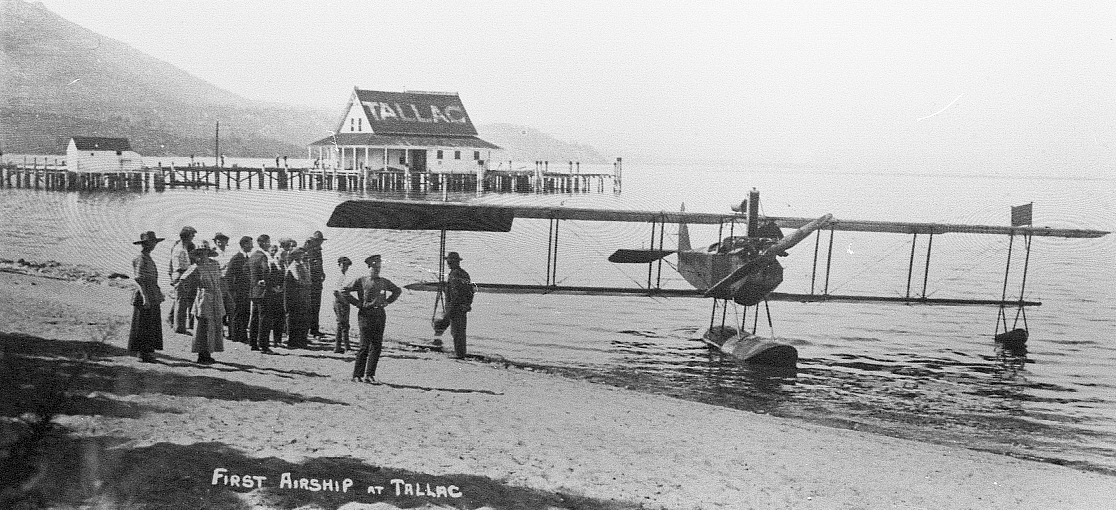
Then and now: Seaplanes make a splash

The first seaplane at Lake Tahoe. Photo/Lake Tahoe Historical Society

The first seaplane at Lake Tahoe. Photo/Lake Tahoe Historical Society

The oldest-known presence of an “airship” at Tahoe was photographed at Lucky Baldwin’s estate on the South Shore in the early 1900s. Over the years, there have been various seaplanes based around Lake Tahoe.

Republic RC-3 Seabee

Republic RC-3 Seabee

In the mid-1940s, Republic Aircraft Corporation built 1,060 RC-3 amphibious planes, popularly called SeaBees. They could operate on land or water. The engine was mounted above and behind the pilot and passengers, as if to have the “backward propeller” push the plane.

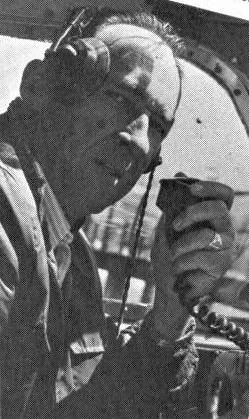
Wes Stetson on KTHO. Photo/Bill Kingman

Wes Stetson on KTHO. Photo/Bill Kingman

At Lake Tahoe, Wes Stetson offered passenger flights on his Seabee for more than 30 years, mostly from Emerald Bay in the 1940s and 1950s.

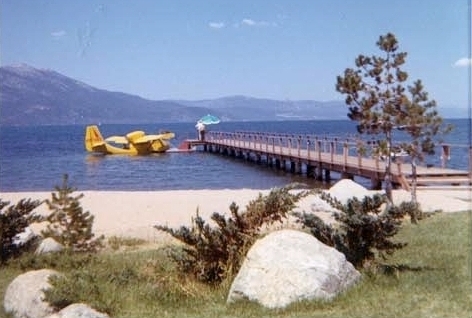
Wes Stetson's SeaBee at Tahoe Keys in 1969. Photo/Rich Jamieson

Wes Stetson’s SeaBee at Tahoe Keys in 1969. Photo/Rich Jamieson

In 1969, Stetson perched his yellow SeaBee at the Tahoe Keys Property Owners Association pier. He would broadcast on KTHO while flying until his passing in the late 1970s.

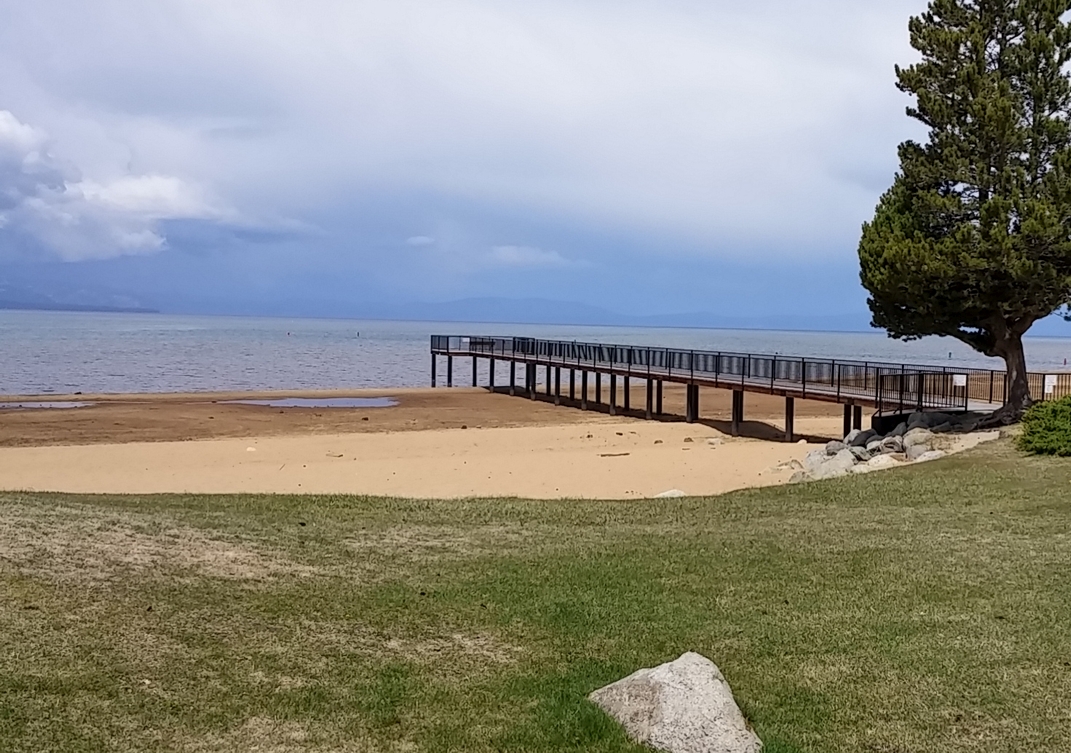
Tahoe Keys Pier in 2015. Photo/Bill Kingman

Tahoe Keys Pier in 2015. Photo/Bill Kingman

The Tahoe Keys pier was rebuilt a few years ago, but today it stands high and dry because of the drought.

— Bill Kingman


S. Tahoe’s aging snow removal fleet a concern

By Kathryn Reed

Dismal snow years are good and bad for South Lake Tahoe’s Public Works Department.

The good means the aging fleet doesn’t have to be used much.

The bad is that the state reimburses the city in part for its snow removal expenses, which means fewer dollars will be in the coffer for next winter. That’s bad if even a normal snowfall accumulates.

Ron Corbett, fleet manager for the city, told the City Council last week, “We have a lot of equipment that is in dire straits. This is the oldest fleet I’ve ever seen.” He’s been around fleets for 35 years.

A $20 a year parcel tax passed in 1989 is what the city relies on for buying equipment. (None of it goes toward operations.) In that time 15 snow graders-plows, one snowblower-loader combo and two snowblowers have been purchased. The three newest pieces were bought in 2007 and will be paid off next year.

There is no money in the kitty for new equipment until the current debt is paid.

The city received $227,753 from the parcel tax last year. A snowblower costs $750,000. Maintenance of the fleet is costing $800,000 a year.

“This $20 is not even close to (what is needed) to replace our equipment,” Corbett said.

Voters were asked in 2005 to up the $20 fee, but they said no.

The City Council in September 2013 voted to go back to the ballot box in 2014 to double the fee. That never came to fruition.

“I don’t think it had a good chance of passing,” Councilman Tom Davis told Lake Tahoe News. “Is it needed? Absolutely. Maybe it needs to be packaged with road repair and repaving.”

He said the council’s change of mind came about because other entities – Lake Valley Fire, the library and community college – were coming forward with tax initiatives and that the thinking was voters would not be happy to keep having their wallets tapped.

Davis also said it’s hard for the public to see the need for equipment replacement when the snowfall has been lackluster for the last few winters.

But what worries Corbett is he’s not sure if the vehicles are taxed in a heavy winter, if they will be able to hold up to the demand.

The $18 million fleet would cost $30 million to replace today. Corbett urged the council to put aside money for fleet replacement. No such action was taken at the April 21 meeting.


Opinion: Has Adelson learned from his mistakes?

By Josh Voorhees, Slate

The Koch brothers are set to play a historic role in 2016, but they’re not the only conservative mega-donors who could shape the election. This weekend, casino mogul Sheldon Adelson will host a pair of GOP contenders and a slew of other Republican politicians at one of his Las Vegas hotels. There, Texas Sen. Ted Cruz and former Texas Gov. Rick Perry will be addressing the Republican Jewish Coalition — but in reality their eyes will be on Adelson, who spent a staggering $100 million in 2012, making him the largest individual donor (non-dark money category) that election cycle .

If Adelson chooses to crack open his checkbook again — and all signs suggest he will — he could have a drastic impact on the GOP nominating contest. In 2012, Adelson almost single-handedly kept Newt Gingrich’s primary bid afloat far longer than it had any right to be by donating $20 million to the former House speaker’s super PAC. Of course, Gingrich is also proof of the limits of deep-pocketed patrons like Adelson. His cash was enough to allow Gingrich to prolong the inevitable, but it wasn’t enough to avoid it. (Adelson’s other political bets didn’t turn out much better for him that year.)

Read the whole story


Poetry is going extinct, government data show

By Christopher Ingraham, Washington Post 

Is verse a dying technique? How dead is poetry? Who killed poetry? Does anybody care?  Is poetry dead?  Is poetry dead? Is poetry dead?

Inquiries into the death of poetry comprise a tradition almost as rich and varied as American poetry itself. Earlier this month, a college literary magazine proposed a tidy solution to the evergreen problem: “if you have to keep declaring, over and over, that poetry is dead, it can’t actually be dead.”

Fair enough. Most of discussion around the question involves qualitative assessments that are inherently unsolvable. Is poetry too political, or not political enough? Is it too popular, or too elitist? Too pretentious or tooprofane?

I can’t answer any of these questions. But there are a number of facts about poetry that are knowable, and given that April is National Poetry Month(which I bet you didn’t know), now would be a good time to know them.

Read the whole story


Tahoe Honor Ride to raise money for injured vets

After the pros are done with the first leg of the Amgen Tour of California bike race in South Lake Tahoe, the masses may participate in a fund-raising ride for Ride 2 Recovery.

This nonprofit provides mental and physical rehabilitation programs for injured veterans through cycling. All proceeds support programs at military installations and VA hospitals around the country, and the purchase of bikes for participating veterans.

The Honor Ride Lake Tahoe is a 19-mile route that departs from Heavenly Mountain Resort’s California Base Lodge, goes along Pioneer Trail toward Meyers. It starts May 8at 11:30am.

The Honor Ride registration includes event shirt, finishing medal, lunch and staff support along route. Individual fee is $65 and day-of fee is $75. It is free to injured veterans. Go online to register.


Plenty of blame for California’s drought

By Richard Goode

My grandfather used to tell the story of traveling from Bakersfield to San Francisco by boat as a boy in about 1910. First up the Tulare Lake, then up the San Joaquin River and through the Delta. In those days, water in California’s San Joaquin Valley must have seemed inexhaustible.

Then, the lakes were drained and the rivers dammed; the valley floor was plowed and cities grew. Water was used at an ever-increasing rate. More and more wells were drilled and reservoirs built. There would be dry years and wet years. The water table dropped and wells went dry.

Last year, however, wells started going dry at an alarming rate. Residents in some areas have been without water for several months. The waiting list for a drilling rig to extend wells was up to a year. Today, up and down the San Joaquin Valley, signs along the freeway lament the water crisis. Everyone is ready to place blame, especially on the favorite whipping boys: Los Angeles and agriculture. But the truth is everyone is to blame and there are no easy solutions. California just doesn’t have enough water to meet the demand. Hydrologists have been warning us since the 1970s that this was coming.

To understand the water crisis, you have to understand the structure of California and the San Joaquin Valley. The San Joaquin Valley is a broad basin that is bounded on the west by the Coast Range, which is mostly comprised of marine sediments, and on the east by the granitic Sierra Nevada. This basin is filled with layers of sediments that have washed down from the mountains over millions of years. These sediments are saturated with water and vary in thickness from about 2,500 feet in the north to about 9,000 feet in the south.

In the south, where there was no outlet for the runoff, the vast Tulare Lake was formed. In years when water was in abundance, water overflowed the divide and into the San Joaquin River, which in turned flowed into the Sacramento-San Joaquin River Delta and then through the San Francisco Bay into the Pacific Ocean.

Before irrigation began in earnest in the 1930s as affordable pumps became available, much of the valley’s farming relied on the winter rains for the crops, winter wheat, and other grains. The ability to pump water from the aquifer beneath the valley is a major reason the valley became one of the world’s richest agriculture producing regions. Immense water projects allow California to store and transport surface water from the north, which generally receives more rain, to the dryer south. But even in wet years there is rarely enough surface water to meet the need. Groundwater is pumped to supply the difference between surface water availability and the demand for water.

California has been operating at a water deficit since at least the 1950s. Hydrologists estimate that on average 800,000 acre-feet per year are pumped from the aquifer annually. Last year alone, closer to 2 million acre-feet of water were pumped.

This tremendous withdrawal of groundwater has lowered the water table. As the water table drops, shallow wells that are normally sufficient to provide water go dry. The well must be drilled to a deeper level to provide access to the lowered water table.

The aquifer is usually recharged by runoff from the Sierra Nevada and, to a lesser extent, the Coast Range on the west. As the river water flowed into the valley, it soaked into the soil at the base of the mountains and made its way into the aquifer. The damming of the rivers, while providing water storage, has removed this major source of recharge. As water is removed from the ground and not recharged, the clay layers in the ground begin to compact. This causes subsidence of the surface. A few miles southwest of Mendota, the ground has subsided by more than 30 feet since the 1920s. Last summer’s pumping has accelerated the change, producing a subsidence rate of half an inch a month. Nearly all of this subsidence is permanent, thus reducing the capacity of the aquifer (and, ironically, making flooding worse in wet years).

With reduced snowpacks in the mountains during the winter, surface water is reduced and there is less water to share. This drying out is not just the present condition of the San Joaquin Valley; is the future of the American Southwest.

We have a bad habit of declaring a drought over when we receive several wet years in a row. But the damage of this drought is not reversible. Until we can recharge the groundwater at a rate equal to the withdrawal, California will be in a drought, no matter how much rain it receives. We may have already waited too long.

Richard Goode is a professor of geology at Porterville College and has lived in the San Joaquin Valley most of his life. His great-grandfather settled in the Ducor area in 1880. He wrote this for Zocalo Public Square.


Residential burn permits available from CalFire

Residents in the Amador-El Dorado Unit of CalFire will need burn permits beginning May 1.

They are free and valid for three years from the date of issuance and allows for the burning of dry vegetation (not household trash) that originates on the landowners property. Permits are available at most of the local staffed fire stations.

The use of burn barrels is no longer legal in Amador or El Dorado counties.

For more info, call 530.621.5897.


Station manager buys KRLT-KOWL

South Shore-based radio stations KRLT and KOWL are about to change ownership.

General Manager Steve Harness is buying 93.9-FM and 1490-AM from Cherry Creek Radio. The deal should be completed July 21. The FCC must still approve the transfer.

The on air talent and programming are expected to remain the same.

Harness has been with KRLT-KOWL since 2007. He started as a disc jockey, became program director, operations manager and then general manager last year.

The 39-year-old South Lake Tahoe resident started his broadcast career while in high school.

— Lake Tahoe News staff report