Expected snow closes some mountain roads

The Tioga Road and Glacier Point Road in Yosemite National Park will temporarily close at 8pm May 13.

This is due to a significant storm predicted for the area that will potentially produce several inches of snow at higher elevations.

Both roads will remain temporarily closed until conditions permit safe travel.

For updated, 24-hour road conditions, call 209.372.0200.


Congress considers treating wildfire like other natural disasters

By Elizabeth Shogren, High Country News

As the West girds itself for what looks likely to be a fierce wildfire season, a bipartisan group of Western senators is pushing a bill to rethink the way the federal government pays to fight catastrophic fires. The idea is that the largest wildfires would be treated like natural disasters. As with big hurricanes or earthquakes, funding for them wouldn’t have to come from an agency’s regular budget.

As HCN has reported, for seven of the last 12 years, wildfires have been so costly that the Forest Service ran through its fire budget in late summer, long before the season was over and had to raid other programs to keep fighting fires. The problem is so well known it’s got its own nickname, “fire borrowing.”

Forest Service Chief Tom Tidwell warned a Senate committee this week that there’s a 90 percent chance his agency will have to do that again this year. The drought and low snowpack across much of the West contribute to the forecast for a bad fire season this year. Tidwell said that with global warming, fire seasons could be expected to be longer — 80 days longer than they were just 15 years ago — and fiercer.

Read the whole story


Free physicals for South Shore athletes

Barton Health, Tahoe Center for Orthopedics and Lake Tahoe Unified School District are offering free sports physicals for student athletes.

South Shore students may receive medical and orthopedic screenings on June 1 at the South Tahoe High School blue gym.

The sports physicals start at 5:30pm with the schedule as follows:

  • 5:30pm: South Tahoe High and siddle School athletes
  • 6pm: Pop Warner athletes
  • 6:30pm: Whittell High School athletes

There is no fee.

The physical includes: vital signs, orthopedic evaluations and medical screenings. All students should wear appropriate gym attire.

Before the physical, students must have a medical history form completed and signed by a parent or guardian. Forms may be picked up in each school’s front office or through the student’s Pop Warner football coach.

For more information, call 530.543.5615.


Nasty weather to blow through Tahoe

Outdoor plans may need to be changed late this week in the Lake Tahoe Basin. Long pants are likely to replace shorts. Furnaces are apt to be churning instead of windows open.

Winter is returning for a few days.

The National Weather Service has issued a winter storm watch for the bulk of May 14 for locations above 6,000 feet. The heaviest snow is expected Thursday afternoon and evening, with accumulations of 2 to 6 inches. A foot or more is possible along the Sierra Crest in Alpine and Mono counties.

“The snow will lead to travel delays with several high elevation roads being closed. This includes Monitor, Ebbetts, Sonora and Tioga passes. Snow may also slow travel over Carson Pass and the Mount Rose Highway,” the NWS said.

Light snow is in the forecast for Friday and rain part of the weekend.

— Lake Tahoe News staff report


WHS, STHS ranked among best high schools

By Robert Morse, U.S. News & World Report

To produce the 2015 Best High Schools rankings, U.S. News & World Report teamed with North Carolina-based RTI International, a global nonprofit social science research firm.

Whittell and South Tahoe high schools made U.S. News & World Report’s list of top high schools. 	Whittell has a national ranking of 894 and is No. 3 in Nevada. 	Nationally, STHS comes in at No. 1,213, in California it is No. 247 and No. 9 in Northern California.
Whittell and South Tahoe high schools made U.S. News & World Report’s list of top high schools.
Whittell has a national ranking of 894 and is No. 3 in Nevada.
Nationally, STHS comes in at No. 1,213, in California it is No. 247 and No. 9 in Northern California.

RTI implemented the U.S. News comprehensive rankings methodology, which is based on these key principles: that a great high school must serve all of its students well, not just those who are college bound, and that it must be able to produce measurable academic outcomes to show it is successfully educating its student body across a range of performance indicators.

We started by reviewing 29,070 public high schools in all 50 states and the District of Columbia. Some of those schools had to be eliminated from consideration, mainly because they were too small to be analyzed. This reduced the count to 19,753, which is the total number of public high schools across the country that had high enough 12th-grade enrollment and/or sufficient enrollment in other grades during the 2012-13 school year to be eligible for the rankings.

Read the whole story


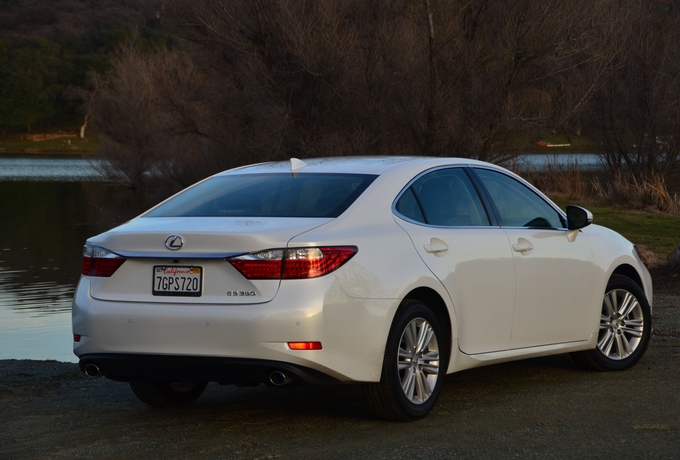
Road beat: Lexus ES350 oozes luxury

The Lexus ES350 is

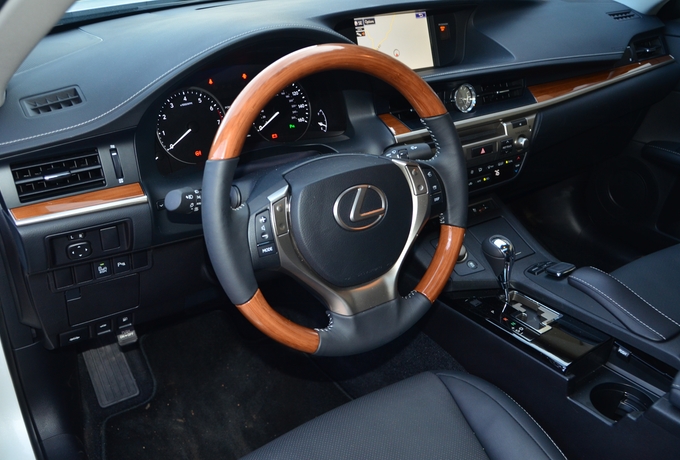
The Lexus ES350 is more popular with women. Photos/Larry Weitzman

By Larry Weitzman

While I call the Lexus ES350 a gentleman’s express, the buyer’s demographics show a majority of the majority of drivers are women. When you look at the performance numbers, you will see that the ES is a real performer, posting numbers well beyond my expectations, although I did receive a clue after testing the Camry V-6.

When introduced in 1990 as a Lexus ES250, there was little question that Toyota rebadged a gussied up Camry V-6, but as time when on with each successive generation the distinction between to two cars became more pronounced. And now the Lexus ES is based on the Toyota Avalon chassis with its longer 111-inch wheelbase (up 1.7 inches over a Camry). However, the ES is about 3 inches shorter than the Avalon at 193 inches, making the ES a midsize ride. In the area of width, the ES is identical to the Camry at 71.7 inches.
Specifications Price (base including transportation) SE $24,115 to over $30 large for a loaded V-6 Engines 3.5L DOHC, 24 valve V-6 268 hp @ 6,200 rpm  248 lbs.-ft. of torque @ 4,700 rpm Transmissions Six speed automatic  Configuration Transverse front engine/front wheel drive Dimensions Wheelbase 111.0 inches Length 192.7 inches Width 71.7 inches Height 57.1 inches Track (f/r) 62.6/62.0 inches Ground clearance 5.5 inches Weight 3,549 pounds Weight distribution (f/r) 61/39 percent Passenger volume 100.1 cubic feet Trunk capacity 15.2 cubic feet  Fuel capacity 17.2  Steering lock to lock 2.85 turns Turning circle 37.4 feet Wheel sizes 7X17 inches alloy Tires 215/55X18 Co efficient of drag 0.27  Performance  0-60 mph 5.44 seconds 50-70 mph 2.68 seconds 50-70 mph uphill 3.51 seconds Top speed Electronically limited at 130 mph Fuel economy EPA rated at 21/31/24 mpg city/highway/combined. Expect to achieve 25-26 mpg in overall driving and 33-34 mpg on the highway at legal speeds.

Specifications
Price (base including transportation) SE $24,115 to over $30 large for a loaded V-6
Engines
3.5L DOHC, 24 valve V-6 268 hp @ 6,200 rpm
248 lbs.-ft. of torque @ 4,700 rpm
Transmissions
Six speed automatic
Configuration
Transverse front engine/front wheel drive
Dimensions
Wheelbase 111.0 inches
Length 192.7 inches
Width 71.7 inches
Height 57.1 inches
Track (f/r) 62.6/62.0 inches
Ground clearance 5.5 inches
Weight 3,549 pounds
Weight distribution (f/r) 61/39 percent
Passenger volume 100.1 cubic feet
Trunk capacity 15.2 cubic feet
Fuel capacity 17.2
Steering lock to lock 2.85 turns
Turning circle 37.4 feet
Wheel sizes 7X17 inches alloy
Tires 215/55X18
Co efficient of drag 0.27
Performance
0-60 mph 5.44 seconds
50-70 mph 2.68 seconds
50-70 mph uphill 3.51 seconds
Top speed Electronically limited at 130 mph
Fuel economy EPA rated at 21/31/24 mpg city/highway/combined. Expect to achieve 25-26 mpg in overall driving and 33-34 mpg on the highway at legal speeds.

Externally the shape is definitely Lexus L’finesse  and that is good, as the overall Lexus body of work should be considered classically beautiful. Starting with its elegant grille the shapes are flowing and pleasing especially the window line. Nothing is wasted and its leanness can be seen by its lack of add-ons. Designers were intelligent in that less is more. ES350’s co-efficient of drag reflects its trim style with a number of 0.27.

Under the hood are more parts sharing and that is good as its powertrain (transmission included) is nut for nut, bolt for bolt the same as a Camry V-6. (The Avalon differs in a lower final rear axle ratio, but otherwise is also identical.) But this is a good thing as the 2GR-FE engine is one of the best in the business for smoothness and performance. While it is “only” rated at 268 hp at 6,200 rpm and twist is a modest 248 pounds at 4,700 rpm, it performs like 300 plus hp with another 40 pounds of twist.

Sending the power to the front wheels is a six speed automatic. The ES uses the identical transmission as well as the Camry V-6 and the Avalon. But while the ES and Camry use the same axle drive ratio, Avalon gear ratio is slightly lower.

Acceleration is deep into world class numbers. Do not choose off an ES in a drag race or you might very well get a real comeuppance. As with the Camry V-6, the ES performs just a tick behind the super performance Lexus IS350. Even Lexus lists the ES 0-60 mph times at 7.1 seconds. Lexus engineers must have left the emergency brake on. You can throw that number out the window as the road testing consistently ran 0-60 mph in the low 5-second range with an average of 5.44 seconds. That is super-sedan quick.

Other tests demonstrate that 0-60 mph number is no fluke, as ES350 passing tests were also super sedan quick with 50-70 mph simulated passes taking 2.68 seconds on a level highway and only slowing to 3.51 seconds up a 6 percent grade. Interesting is that these numbers are virtually identical to those of Camry V-6, which had times of 5.35, 2.67 and 3.53 seconds. Although the powertrains are identical, the Lexus weighs 3,549 pounds, while the Camry V-6 tips the scales at 70 pounds less, virtually insignificant.

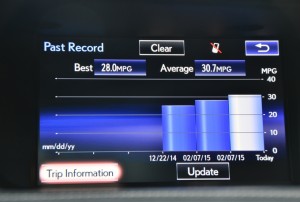
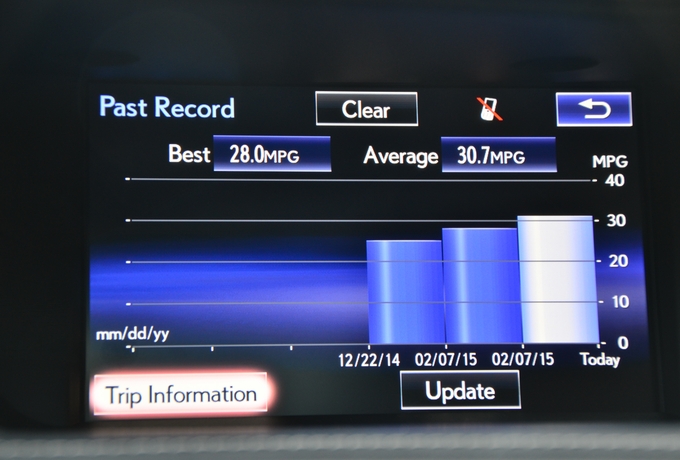
Fuel economy is rated by the EPA at 21/31/24 city/highway/combined. The Camry numbers are 21/31/25. But the reality is the ES350 returned slightly better fuel economy on the highway; perhaps because the engine in the ES only turned 1,900 rpm at 70 mph while the Camry V-6 ran at 1,950 rpm.  That RPM difference was either a tach error or caused by the ES350’s larger tire aspect ratio. Overall the ES350 averaged 29.4 mpg largely because 75 percent of the mileage during the test was a Saturday road trip from Placerville to Santa Rosa. Even with some time off the highway, the ES averaged 32.9 mpg for the 300 mile trip. But during a level highway run at 70 mph the ES350 averaged 34.5 mpg. But in purely rural driving 25-26 mpg would be the norm.  It’s amazing for a luxury car with world class performance to achieve that level of fuel economy.

While the ES350 uses the same suspenders as the Camry V-6 and Avalon, it has its own discernible upscale feel. Its suspension is state of the art four wheel independent. Steering is a quick electric rack that is 2.9 turns lock to lock with a 37.4 foot turning circle. And torque steer is held in check well, only noticeable under low speed, hard acceleration. Standard wheels are 17×7 inch alloys shod with 215/55 all season rubber. In another surprise, handling was good with accurate, quick turn in and strong grip. During its handling course it actually felt tighter than the Camry especially when sport mode is dialed in. Sure the steering feel is a bit isolated, but it can hustle through the twisties quite composed even when pushed hard. At eight-tenths you can feel the ES rotate in tight transitions. It was much better than expected.

Quiet is the operative word in describing ES350 ride quality. And you can say that with a capital “Q.” It is one of the smoothest rides for the Road Beat, especially on the highway or even on Caltrans deficient roads. On and off center feel is near perfect making that 300 mile one day trip as comfortable as it can get.  There is simply no wind, road or engine noise, just the sweet sounds from Lexus Premium sound system. Fox News never sounded so good. Speaking of sound, when pushed hard the engine gave a nice tone, uncharacteristic for a V-6.

Braking also uses the same rotors and discs with the same safety systems of ABS and the rest of the acronyms.  The ES350 had the shortest stops, coming to rest in just 40 feet from 40 mph. Excellent. Besides its complement of 10 airbags, the Lexus Enform Safety Connect system has automatic collision notification, an emergency connect button, a stolen vehicle location and an emergency assist button, an entire buffet of safety. HID headlights were excellent ($565).
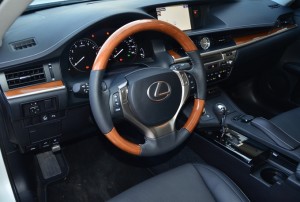
Comfort oozes from the Lexus, especially for the driver.

Lexus understands what luxury means.

Interior quality is pure Lexus, everything you see or touch is of the highest quality. Special mention needs to be made about the sublime front chairs which seem to simply envelope the driver and passengers. The quality of the seats was demonstrated by the lack of fatigue encountered during that five hour drive.  The total support was terrific.

Complete instrumentation was perfect with the only downside being the requirement to use a mouse to control the sound system. It is annoying and requires too much distraction.  It is also a long learning curve and difficult to use. However, as said before the sound system quality is superb.

The trunk is huge at more than 15 cubic feet.

Pricing for this luxury ride starts at just $37,550. My tester had about $5,000 in options plus a $925 charge for the luxury liner from Japan. Options included Blind spot monitor ($500), heated and ventilated front seats ($640), Nav system ($1,795), intuitive parking assist ($500), Premium pack Lexus memory system for seats, steering wheel, mirrors, bamboo wood interior trim ($730), rain sensing wipers ($155) and $300 for the bamboo and leather steering wheel which was quite comfortable to use . It was extra thick. The totaled sticker was $43,660. It is an exquisite motor vehicle.

Larry Weitzman has been into cars since he was 5 years old. At 8 he could recite from memory the hp of every car made in the U.S. He has put in thousands of laps on racetracks all over the Western United States.

Aquatic mammals thrive at Lake Tahoe

By Kathryn Reed      

When you go swimming in Lake Tahoe you aren’t alone. Besides the fish that call this body of water home, so do a handful of aquatic mammals.

Many of these critters are elusive and seldom seen. The work of some, like the beaver, is more apt to be visible than the actual animal.

Will Richardson, co-founder of the Tahoe Institute for Natural Science, gave a talk last week about the various  aquatic mammals that call Tahoe home. More than 40 people attended the Friends of the Library lecture.

The criteria he used for aquatic mammal was a “significant portion of their body is in contact with water most of their day.”

Minks are what Richardson called a “semi-aquatic.” They are native to Lake Tahoe, are about 2-feet long and weight 2 to 3 pounds.

“To swim they kind of undulate. They have a long, flexible spine,” Richardson said.

The problem is mink look a lot like river otter so people often confuse the two. The otter have a broader, flatter head than mink. Outside the family unit, mink are solitary, while otter are social. Both are part of the weasel family.

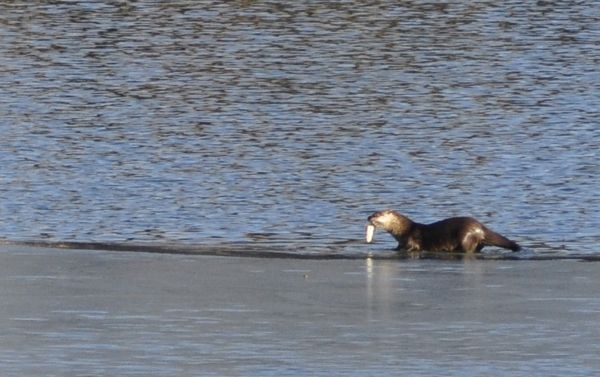
A river otter in January  finds plenty to dine on at Lake Tahoe. Photos/Bob Sweatt

A river otter in January finds plenty to dine on at Lake Tahoe. Photo/Bob Sweatt

River otter were in the basin in abundance prior to 1950. Then they were not seen from about 1950 to 2000. Richardson said scientists don’t know where they went or why.

Otters tend to be about 3½-feet long, with a tail that is 18-inches long.

They have been seen near the Tahoe Keys, Taylor Creek and Fallen Leaf Lake.

Water shrews are rodents that are semi-aquatic.

They eat close to their body weight every day.

“They are incredibly buoyant. They are so buoyant they can run on water,” Richardson said.

Because they are nocturnal, secretive, shy and nervous, they are seldom seen.

Mountain beavers are not actually beavers. They make burrows instead of dams. They were the least aquatic of the animals Richardson spoke about. However, they always need to have their feet wet, he said.

Their closest relative is a squirrel, they have opposable thumbs, and the only place they are found in Nevada is at Lake Tahoe.

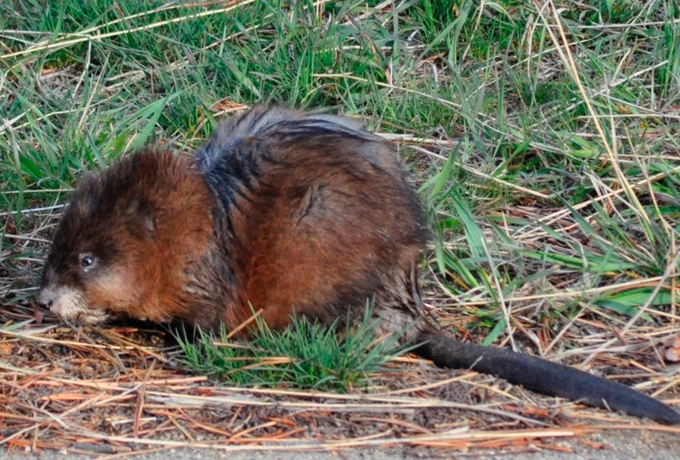
A muskrat in the Tahoe Keys in South Lake Tahoe.  Photo/Bob Sweatt

A muskrat in South Lake Tahoe. Photo/Bob Sweatt

Muskrats are about 2-feet long and weigh approximately 4½ pounds. They close their ears when they swim and they have partially webbed feet.

Stories of beavers being trapped at Tahoe go back to at least 1785.

“The beaver was trapped out of the Sierra by the mid-19th century.

To help with wetland restoration and erosion control nine beavers from Idaho were released into the Truckee River watershed between 1934-45, according to Richardson. It is descendants of those beavers that can been seen today in the Tahoe basin.

Their teeth never stop growing.

Richardson said beavers can be great for the environment, but they create problems and conflicts with people.


Opinion: Calif. tries to cope without water

By Timothy Egan, New York Times

In a normal year, no one in California looks twice at a neighbor’s lawn, that mane of bluegrass thriving in a sun-blasted desert. Or casts a scornful gaze at a fresh-planted almond grove, saplings that now stand accused of future water crimes. Or wonders why your car is conspicuously clean, or whether a fish deserves to live when a cherry tree will die.

Of course, there is nothing normal about the fourth year of the great drought: According to climate scientists, it may be the worst arid spell in 1,200 years. For all the fields that will go fallow, all the forests that will catch fire, all the wells that will come up dry, the lasting impact of this drought for the ages will be remembered, in the most exported term of California start-ups, as a disrupter.

“We are embarked upon an experiment that no one has ever tried,” said Gov. Jerry Brown in early April, in ordering the first mandatory statewide water rationing for cities.

Surprising, perhaps even disappointing to those with schadenfreude for the nearly 39 million people living in year-round sunshine, California will survive. It’s not going to blow away. The economy, now on a robust rebound, is not going to collapse. There won’t be a Tom Joad load of S.U.V.s headed north. Rains, and snow to the high Sierra, will eventually return.

But California, from this drought onward, will be a state transformed. The Dust Bowl of the 1930s was human-caused, after the grasslands of the Great Plains were ripped up, and the land thrown to the wind. It never fully recovered. The California drought of today is mostly nature’s hand, diminishing an Eden created by man. The Golden State may recover, but it won’t be the same place.

Read the whole story


Thinning project designed to reduce wildfires

The Nature Conservancy, federal, state and local agencies, as well as a private landowner are collaborating on a forest restoration project designed to reduce the risk of catastrophic fires, protect onsite and neighboring structures, protect water supplies for people and enhance wildlife habitat near Carson City.

The restoration work will include thinning trees on at least 800 acres in the upper Clear Creek watershed.

“By thinning the trees in this area, there will be more plant and wildlife diversity and fire behavior will change dramatically,” says Ryan Shane, Nevada Division of Forestry’s community protection program coordinator, said in a statement. “For example, flames can reach up to eight feet high and climb into the tree crowns, making an uncontrollable crown fire in an overgrown forest, versus a reaching only a foot high in an area that has been thinned properly.”


Economics of cycling to be discussed

The Bike’s Impact on Tahoe’s Economy will be the subject of a discussion May 20 from noon-1:30pm.

Biking and walking positively contribute to Lake Tahoe’s economy, but by how much? This talk will be a panel discussion on what is known about how biking and walking impact Tahoe’s economy.

The panel will be moderated by Ben Fish, president of the Tahoe Area Mountain Biking Association. Panelists include: Carol Chaplin, Lake Tahoe Visitors Authority; Curtis Fong, Bike the West; Gary Bell, Sierra Ski and Cycle Works; andJason Collin, Lake Tahoe South Shore Chamber of Commerce.

The free talk is in the Aspen Room at Lake Tahoe Community College.