Geography lesson helps clarify drought

By George Skelton, Los Angeles Times

Many of us could use a refresher course in California geography as we debate how to manage the drought and prepare for an uncertain water future.

For starters, calling the hardest-hit farm region the Central Valley is much too simplistic.

Second, agriculture per se is not the issue — not the culprit guzzler. Rather, it’s the location of the agriculture, which gulps 80% of California’s developed water. Almonds, for example, make a lot of sense in some areas; a lot less in others.

Too often we try to wrap it all into convenient, simple packages — Central Valley and nut orchards — when more specificity is required to grasp the nub of the problem.

What part of the vast Central Valley? How dry is it and what’s being grown there?

Read the whole story


Gear important for pleasant cycling experience

By Chris Kozlowski

Biking season is in full swing for mountain and road riders alike. Here are a few pointers to keep you riding smoother, safer, and more comfortably throughout the season.

Don’t wear underwear under bike shorts. I’ve had this conversation with several patients and it’s worth mentioning, loudly and boldly. Bike shorts are supposed to be worn commando and without undergarments. It decreases chafing from seams and makes the ride more pleasant. I promise.

Chris Kozlowski

Chris Kozlowski

Wear bike shorts. The extra cushion and protection will make your ride better. A good pair is worth the purchase. Cycling shorts will also decrease hand pressure by limiting weight you push on the handle bars and putting less weight on your bum.

Inspect your bike seat. Increased pressure in the hands may also come from your bike seat’s position. If the seat’s nose is tilted up, your arms may automatically pushing you off the nose with the weight in your hands. If the seat’s nose is tilted down, you could be sliding down and using your hands to push yourself back up on the seat. Millimeters can make a difference in seat positioning.

Wear gloves. Cycling gloves offer protection and varying degrees of padding depending upon the gloves you buy. Some riders like the flexibility and accessibility of fingerless gloves, while others prefer the warmth and protection from full fingered gloves. Whichever you choose, gloves decrease the pressure in your hands and protect the hands and wrists from sudden unplanned vertical drops into rocks or pavement.

Bend your elbows. Keep about 10 degrees of flex in your elbows to absorb the road shock. Mountain bikers typically flex their elbows, but I see a lot of roadies locking out their elbows. A slight flex will decrease the shock absorbed and increase comfort from your hands to your neck.

Wear bike shoes. Mountain bike and road cycling shoes are built with a firmer sole to increase pedaling efficiency. Your tennis or running shoes aren’t optimal for pedaling due to the increased flex in the shoe. This little variation makes a big difference, especially when climbing uphill. If you’re riding platform or clipless pedals, the pedals that attach to cycling shoes, make sure the pedals have the proper grip and your shoes won’t slide off the pedal. Clipless pedals increase efficiency upward of 30 percent.

Avoid mashing. Your pedals should spin smoothly while clipped in. This increases efficiency and avoids “mashing.” Mashing occurs when you use your leg strength in an up and down piston motion, like mashing potatoes, on every stroke instead of spinning in a circle motion.

Ride on the right side. If a car is coming at you, you’re on the wrong side. California and Nevada bicycle laws state bikers ride with the flow of car traffic and as close to the right as possible. This is safer for you, other bikers, and drivers.

I know some advice is gear related and will cost money. But it will buy you comfort, which will make you happier and more likely to ride a bike, which will save you gas money, and cover the cost of the new bike shorts. Now go outside and ride.

Chris Kozlowski, is a physical therapist conducts professional bike fits at Barton Health’s Tahoe Orthopedics and Sports Medicine. She is a certified bike fitter and received her USA Cycling Level III cycling coach certification in 2011.


LTBMU chief to give talk

Jeff Marsolais, Lake Tahoe Basin Management Unit forest supervisor, will be speaking at the May 28 Tahoe Area Sierra Club meeting.

He will be speaking on a variety of issues, including recreation sustainability and landscape collaboration. There will be an opportunity to ask questions and comment in an open forum after the talk.

The free talk is at 7pm at Unity at the Lake, 1195 Rufus Allen Blvd., South Lake Tahoe.


Nev. committee OKs PERS cost-cutting bill

By Associated Press

CARSON CITY – An Assembly committee has passed a bill aimed at saving the Nevada Public Employees Retirement System $1 billion every 10 years.

The Assembly Government Affairs Committee voted Friday to pass SB406, which is sponsored by Republican Senate Majority Leader Michael Roberson.

The bill got the support of the state teachers’ union and other labor groups, who said it was more reasonable than other PERS overhaul bills moving through the Legislature.

It seeks to slightly reduce benefits to new recipients and prevents public workers from collecting benefits after certain felony convictions, among other provisions.

An amendment added Friday extends benefits to survivors of public employees killed on duty in the past two years, including three Las Vegas police officers, a Sparks Middle School teacher and a Nevada Department of Transportation worker.


Soroptimist reward students with scholarships

Soroptimist International of Tahoe Sierra this week hosted an awards and scholarship breakfast honoring eighth-graders and graduating seniors from South Tahoe Middle School, Whittell High School, South Tahoe High School, and Mt. Tallac High School.

The awards and scholarships totaled $11,800, which was split between 18 students.

Receiving awards for most improved eighth-grade student and graduating senior from WHS were Isaiah Womack and JC Narvarte.  South Tahoe Middle School students were Thomas Burgess and Nevaeh Reed. STHS seniors receiving the award were Abishay Rosales and Christian Bernal Ruiz.

Scholarships were given to the following graduating seniors: the Mt. Tallac Joy Rothschild Memorial Scholarship was awarded to Cristian Reyes Montiel and Travis Perrine; and Mt. Tallac Young Parents Program Scholarship was awarded to Ana Amaro and Nikita Gorman.

The Soroptimist International of Tahoe Sierra Senior Scholarship recipient from WHS was Rodolfo Hernandez-Mata. Those receiving the scholarship from STHS were Dalton Diggs, Lindsey Herring, Trinity Marino-Latella, Joemae Santos and Teresa Tenoceloti.


Truckee to have Sunday farmers market

A new farmers market in Truckee launches June 14.

It will be on Sundays from 10am to 2pm through Sept. 27.


The Truckee Community Farmers Market, organized jointly by Slow Food Lake Tahoe and Gary Romano of Sierra Valley Farms, will be focused on increasing access to local, healthy food for all people in the region.


It will be at 12047 Donner Pass Road — Tri Counties Bank/Sears/Coffeebar Bakery parking lot.


The launch of the new farmers market is the latest move by Slow Food Lake Tahoe to engage the North Tahoe community in the slow food movement. Slow Food Lake Tahoe also runs the Truckee Demonstration Garden at the Truckee River Regional Park, and offers a monthly Skillshare Series with inexpensive classes that teach participants techniques like making fermented foods, homebrewing beer, composting and gardening in our high altitude environment. The Slow Food Lake Tahoe annual farm-to-table event, “Cooking Outside the Box” takes place on June 21 at Plumpjack Inn in Squaw Valley. For more information, visit www.slowfoodlaketahoe.org.


Slow Food Lake Tahoe’s mission is to reconnect people to the enjoyment of local, seasonal and sustainable food while educating the community about their vital role as participants in our food system. For additional information about Slow Food Lake Tahoe and upcoming events, visit www.slowfoodlaketahoe.org.


Sierra Valley Farms is a 65-acre certified organic farm and native plant nursery situated on the Middle Fork of the Feather River in the majestic Sierra Valley. The family farm is owned and operated by Gary Romano, his father Louis and son Joey. The farm hosts an on-farm farmers market, restaurant CSAs, and a Dinner in the Barn summer series, as well as supporting local nonprofit organizations


Snippets about Lake Tahoe

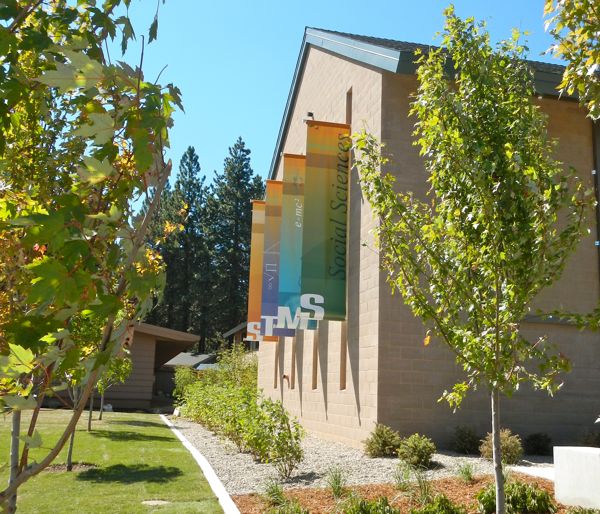
stms-3·  John Simons will be taking over for Beth Delacour as principal of South Tahoe Middle. He comes from Oakdale Junior High School.

·  The fifth annual Aquatic Invasive Species Public Forum is May 21 from 5-7:30pm at the Lake Tahoe Golf Course in Meyers.

·  The El Dorado County Grand Jury is accepting applications for the 2015-16 term. Here is an application.

·  Mammoth Mountain is staying open through Memorial Day.

·  Here are next week’s Caltrans roadwork schedules for El Dorado-Tahoe and Sierra.


STPUD cuts sewer connection fee 25%

By Kathryn Reed

By early June anyone building or remodeling in the South Tahoe Public Utility District sewer boundary will see a break on connection fees.

The board this month rolled back the sewer connection fees by 25 percent. This means the fee is now $3,660 per sewer unit instead of $4,930.

“The board heard from people in the community and realized it is a significant cost of new construction whether it’s a home or business, or business remodel where they are adding sewer capacity. It can be a significant part of the start up,” Richard Solbrig, general manager of South Tahoe PUD, told Lake Tahoe News.

The vote was 4-0 to make the fee change. Board member Jim Jones was absent, but said he would have voted against the proposal.

The loss to the district is expected to be about $200,000 a year. Paul Hughes, CFO for the district, said the cutbacks will come from the capital improvement budget.

While the change takes effect June 7, it is likely to have a negligible impact on the current budget that goes through June 30. Hughes said it is too soon to know what exactly on the to-do list will be delayed because of the hit to future budgets.

The connection fee will remain this price until the board takes further action. In 2009, the district produced a report saying how much the sewer connection fees should go up. The board had not increased the fee for the last three years.

The district is hoping the change will help stimulate growth in the area, which means there may be no adverse economic impact if there is more development. This would mean new customers.

For big projects this change in the price structure will be a significant savings. Lake Tahoe Wildlife Care, which is embarking on a state-of-the-art animal rehabilitation facility in South Lake Tahoe, will save about $40,000 with the new pricing.

The average three-bedroom, two-bath home has three sewer connections. This is because the kitchen is considered a connection. For that type of house it will be a savings of $1,270.

Commercial structures are calculated differently. It depends what the business is. For instance, a restaurant requires more sewer units than an office building. For restaurants it’s based on the number of seats.

Solbrig said the sewer connection was changed because in doing comparisons the district was higher than other agencies, whereas the water connection fee is less than many other areas.


Opinion: End of life debate needs more discussion

By Joe Mathews

Seventy-four years ago in Long Beach, a bride stood at the back of the Second Presbyterian Church, preparing to walk down the aisle. Her father eyed the groom warily and whispered in her ear: “It’s not too late to change your mind, dear.”

Today, that bride greets me from her bed in a board-and-care home in San Mateo. “Did you know I’m 100 years old?” she asks.

Joe Mathews

Joe Mathews

My grandmother is exaggerating. She’s 98. But I don’t correct her. I’ve inherited her conviction that facts shouldn’t get in the way of a good line. She’s also taught me that you can’t ever be too sure about life, especially its end.

Grandma Oops, as we call her (she’s a major league klutz), is in my thoughts these days, as SB128, the End of Life Option bill, makes its way through the California Legislature. The legislation would allow mentally competent California residents with six months or less to live to obtain a prescription for lethal drugs they can give themselves.

I have no beef with the legislation, and my grandmother is strongly for it. Such legislation suits California, where the long-standing movement to give people more control over how they die dates at least to the 1963 publication of Oakland resident Jessica Mitford’s exposé of the funeral business, “The American Way of Death”.

What doesn’t fit California, or the reality of the end of our lives, is the strident tone of those on both sides of the debate.

The advocates for SB128 can be unnerving in their unswerving commitment to the right to die, and in their bullying of those of us who would dare to use the term “suicide” in this context. The opponents are just as rigid. Religious leaders call the suicide of a terminally ill person an affront to God. Doctors claim that physicians are healers and nothing more (despite the lack of empathy and excessive charging of helpless patients in that profession).

These claims, and all the attention to the bill, are too much, for two reasons. One is mathematical. Even if the bill is enacted, such assisted suicides are certain to be extremely rare. In Oregon, which pioneered this right, there have been less than 1,000 such suicides since 1998, representing well less than 1 percent of deaths in the state. The second reason is fuzzier, literally: To apply rigid moral claims to a sphere as uncertain as the end of life is foolish. And wrong.

It also misses the point. The most important right to protect at life’s end is not the right to die but rather the right to change your mind.

Changes of mind define a life — that’s what my grandmother taught me. She didn’t care for marriage or family, but married as a nod to the times — you couldn’t spend all your time with a man if you didn’t marry him. She changed her mind about kids when she saw how good her husband was with them. She was committed to the casual Southern California life in Long Beach but became a Northern Californian — a teacher in San Mateo — when my grandfather, a civilian Navy employee, got a job at Hunters Point in San Francisco.

Because her teaching job came with government benefits, she could choose her end-of-life care, she selected a board-and-care that a large Tongan family runs out of their home. Tracking the decline of Grandma Oops has been a challenge. She was prone to spills and mixing up names when she was young, so falls and forgetfulness weren’t reliable signs of problems.

On her 90th birthday, Grandma Oops was taken to the local hospital and told she needed dialysis or she would die. She refused, saying she’d used too many of the earth’s resources already. Eight years later, she’s still refusing treatment when she’s ill. But when I visit her, I bring along her three great-grandchildren, ages 6, 4, and 20 months. She hugs them and encourages them to run down the long hallway of the board-and-care. She says she’s changed her mind — she’s glad she lived along enough to know them.

One of the best things about SB128 is that it leaves room for people to change their minds. You have to make two oral requests for lethal drugs 15 days apart, and a written request with witnesses. And you have to administer the medication yourself. The real problem with the legislation is its narrow focus. California needs a much broader conversation about improving end of life care for all of us. Palliative care is very hard to find. And we Californians have decided not to make the investments in the care we’ll need as our senior population explodes in the next several years.

Of course, it’s not too late for us to change our minds.

Joe Mathews is California and innovation editor for Zócalo Public Square, for which he writes the Connecting California column.



Proposed Calif. budget allocates $2.2 bil. for drought

By Matt Stevens, Los Angeles Times

As Californians prepare to confront the coming hot, dry summer months, Gov. Jerry Brown proposed more than $2 billion in additional drought funding Thursday as part of his revised state budget.

The surge in funding comes mostly from Proposition 1, a $7.5-billion bond measure for water projects approved last year by voters.

Under Brown’s proposal, the money would be spent on water conservation, emergency response and programs aimed at protecting and expanding local water supplies.

Read the whole story