LTN subscriber headed to weekend wine event

Lake Tahoe News subscriber Ty Robben is going to be at the Rocks & Rhones wine event in El Dorado County this weekend.

He won tickets to the event through a contest that was open only to Lake Tahoe News subscribers.

If you fill out this paid subscriber form, you will be eligible for the next contest. Subscriptions help Lake Tahoe News continue to provide the only daily news in the Lake Tahoe Basin.

For those who didn’t win, tickets are still available to the May 23-24 wine event. More info is available online.

“El Dorado County wineries are way more laid back and less crowded than the wineries in Napa and the quality is just as good,” Robben said.

— Lake Tahoe News staff


Study: Food storage linked to consumption patterns

By Angus Chen, NPR

Keeping food out of sight could be a way to keep it out of your mouth. That’s the hunch of Charles Emery, a psychologist at Ohio State University, anyway. His latest research suggests that how food is set up around the house could be influencing how much people eat and, ultimately, how heavy they might be.

There are a lot of factors that scientists say explain obesity — defined as a body-mass index over 30 — from genetics to lifestyle changes to socio-economic status.

But Emery says the home environment and how it may influence eating behaviors has largely been left unexamined. So his team decided to “look at every aspect of the home environment related to food,” he says.

They also found obese participants tended to keep more food visible in the places they spent the most time compared to non-obese people. If the bedroom was one of their favorite places at home, then snacks were also usually there in plain sight. In other words, food was almost always close at hand for the obese individuals. “It doesn’t take a big leap of faith to say if you’re spending most of your time where there’s more food sitting out to see, that’s going to make it harder not to eat,” Emery says.

Read the whole story


Memorial Day trips signal busy vacation season

By Anna-Louise Jackson, BloombergBusiness

Memorial Day could kick off a busy summer for travel, as low gasoline prices and an improving job market are fueling vacation-planning.

About 37.2 million Americans will travel 50 miles or more from home during this holiday weekend, the most in 10 years, according to AAA. This 4.7 percent projected increase from 2014 includes trips by car, air, cruise, train and bus in the May 21-25 period.

Memorial Day provides “a good indication of what’s ahead” because the holiday marks the unofficial start of the peak vacation season, said Julie Hall, a spokeswoman for the largest U.S. motoring association. This “very positive forecast” should continue throughout the rest of the summer, she said.

Such optimism is echoed by hotel chain La Quinta Holdings Inc., which sees “very strong demand” for lodging during the Memorial Day weekend, CEOWayne Goldberg said on an April 29 conference call. If so, that would defy recent measures of consumer confidence that suggest Americans are growing more pessimistic about the economy. The University of Michigan preliminary index of sentiment dropped in May by the most in two years. At the same time, households still held relatively upbeat views on incomes.

Read the whole story


Health grants available through Barton

The Barton Foundation has $50,000 to give away to help improve community health.

In this grant cycle, Barton Health will award up to $30,000 in grants and $20,000 will fund special community projects throughout the year as determined by the Community Health Action Committee.

Local projects and programs that address the most pressing needs identified by South Lake Tahoe’s 2015 Community Health Needs Assessment will receive priority.  Those are mental health, substance abuse and access to healthcare services.

Grant proposals addressing these top three priorities will be accepted until June 30. Grant recipients will be notified in September and awards will be distributed at the annual Philanthropy Day celebration on Nov. 6.

Additional grant criteria and the application are available online.


Fatal crash near Kyburz

A Bay Area man died Thursday in a head-on collision on Highway 50 near Kyburz.

David Calderon, 78, of Milpitas was pronounced dead at the scene.

Calderon was headed east May 21 at about 2:25pm when a vehicle driven by Gary Fitzgerald crossed the double-yellow line into oncoming traffic, according to California Highway Patrol officers. Fitzgerald, 73, of Grass Valley sustained serious injuries.

The accident is under investigation.

— Lake Tahoe News staff report


Free composting for Douglas County residents

Douglas County homeowners have an opportunity to compost their residential yard waste. The free annual recycling program is now open at Heavenly Mountain Resort’s Boulder Lodge parking lot.

Pine needles, branches, sticks and any other natural vegetation from defensible space clean up will be accepted from 9am-5pm, seven days a week through July 19.

Residents are asked to not bring any material containing weeds in order to prevent the spread of noxious weeds. Pine needles should be removed from trash bags. Yard waste must be free of all contaminates, especially rocks.  Commercial dumping is prohibited by law. Lumber and stumps cannot be recycled and in fact increase the cost of the program.


Buying the ripest produce isn’t always best

By Russ Parsons, Los Angeles Times

We all want to shop for the ripest fruit we can find. Or do we? In some cases, the ripest fruit is not the best buy. In fact, in some cases it should be avoided.

To understand why, we first need to delve into the complexities of ripeness and maturity. And while we’re at it, let’s think a little about climacteric fruits.

Ripeness and maturity are separate but linked processes. Think of it this way: Maturity is when the fruit has assembled all the building blocks necessary to create flavor; ripeness is the process by which those blocks are assembled into something greater. When fruit is maturing, it’s developing sugar as well as all the chemical compounds that will eventually make it delicious.

Read the whole story


Aquatic invasive species a constant struggle

By Kathryn Reed

MEYERS – What’s living and growing in Lake Tahoe wasn’t always here. Some of the non-native or aquatic invasive species were intentionally introduced to the waters and others were surreptitiously brought here.

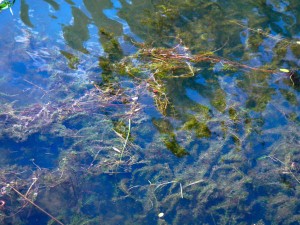
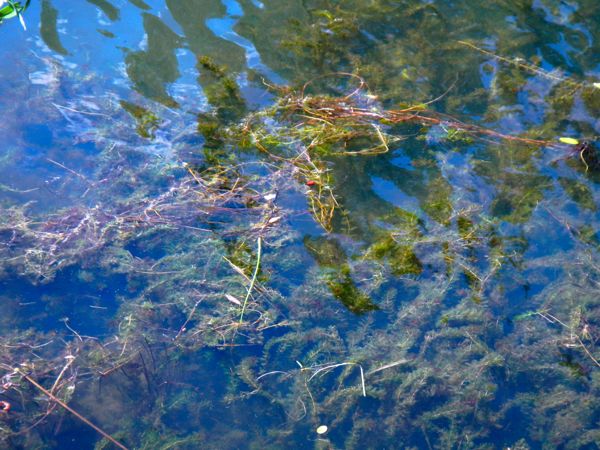
No matter their course of arrival, the AIS as they are better known, are altering the ecosystem. The Eurasian milfoil that is so prevalent in the Tahoe Keys is a breeding ground for warm water fish like big mouth bass. Neither of these two organisms is native to Tahoe.

At the fifth annual AIS Forum at Lake Tahoe Golf Course on May 21 various people spoke about what is being done to deal with some of the AIS that are here and how to keep out ones that aren’t. The major AIS already calling the lake home are curly leaf pondweed, Eurasian milfoil, warm water fish, Asian clams and bullfrogs. The three AIS that could be most devastating to the lake are New Zealand mud snails, Quagga mussels and zebra mussels.

Mats at Emerald Bay suffocated invasive clams. Photo/LTN file

Mats at the mouth of Emerald Bay suffocated invasive clams. Photo/LTN file

A multi-year project that ended six months ago with the removal of the mats from Emerald Bay showed a 80 percent mortality rate for the Asian clams. While it was deemed a successful project, it was also called expensive.

This fall a different mechanism will be used to help eradicate the clams from a spot at Emerald Bay. Aqua Treasures has been hired to use a Zamboni-like machine that will remove the shells as they are separated from the substrate.

The Tahoe Keys Property Owners Association expects to have the draft Integrated Weed Management Plan done in September, with associated environmental documents completed in February 2017 and implementation of the plan beginning in mid-2017.
The Tahoe Keys is blamed for the spread of milfoil to other parts of the lake. Photo/LTN file

The Tahoe Keys is blamed for the spread of milfoil to other parts of the lake. Photo/LTN file

Milfoil is choking more than 80 percent of the lagoons in this South Lake Tahoe enclave. Harvesters have been the traditional method for pulling up the weed, but it is costly and ineffective. In 2014, 18,600-cubic-yards of milfoil were removed from Keys. In 2007, 4,400-cubic-yards were taken out. Herbicides and bottom barriers are being considered as alternative methods.

Scientists at UNR and the Desert Research Institute did tests on Quagga mussels from Lake Mead with water from Lake Tahoe. Eighty percent of the adults and 80 percent of their offspring could live in those waters. Various tests were done with different amounts of calcium in the water. These mussels need calcium to survive and Tahoe has pockets that could provide habitat.
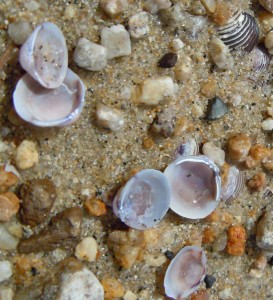
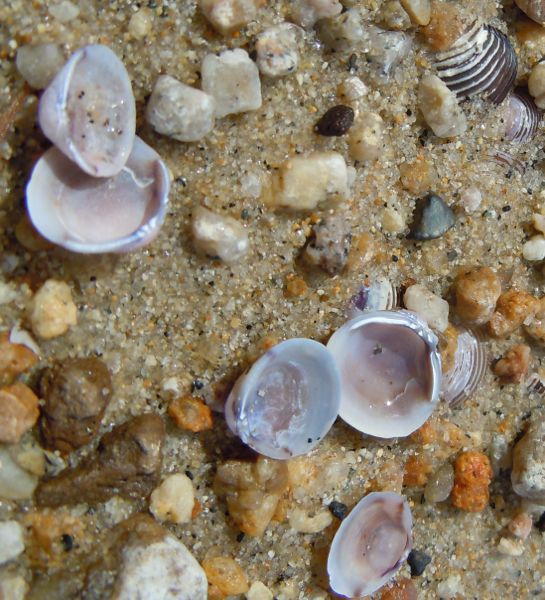
Clam shells at Lakeview Commons in South Lake Tahoe. Photo/LTN file

Clam shells at Lakeview Commons in South Lake Tahoe. Photo/LTN file

Quagga and zebra mussels multiply quickly, encrust watercraft and infrastructure, and compete for food with native fish. They are spread from one body of water to another attached to nearly anything that has been in an infested water body, or via standing water from an infested water body entrapped in boat engines, bilges, live-wells and buckets. That is why the boat inspection programs at Tahoe and other nearby water bodies were established.

“Our state’s natural resources are facing unprecedented threats today,” California Department of Fish and Wildlife Director Charlton Bonham said in a statement. “Preventing the spread of Quagga and zebra mussels, as well as other invasive species, is something everyone can take an active role in, thereby helping to protect the fish, wildlife and the habitats on which they depend.”

Quagga mussels were first detected in the Colorado River system in January 2007 and were later found in San Diego and Riverside counties. They are known to be in 29 waters in California, all in Southern California. Zebra mussels were discovered in San Justo Reservoir in San Benito County in January 2008.


Letter: Fanny Bridge project a financial boondoggle

To the community,

As a member of the Placer County Board of Supervisors, an obligation exists to make ethical and justified decisions which are beneficial to the taxpayers of Placer County.

On April 29, I requested justification from the director, staff and board members of Placer County to provide the benefits to the taxpayers of Placer County for spending $3.2 million and taking over the annual maintenance costs associated with Highway 89 and Fanny Bridge. This comes at a time when Placer County will face a $4 million financial reduction in tax revenue resulting from continuing lower fuel sales. To date there has been no response or justification provided from Placer County.

Caltrans, like Placer County, is facing current and future reductions in highway funding. The recent Caltrans deputy directive shifts funding priorities from constructing new sections of highway to maintaining current highways. This may explain why Caltrans is not financially involved in the bypass project; however, Caltrans will be provided with an enhanced maintenance yard.

Placer County will also be responsible for funding the annual maintenance for items such as street lights, benches, landscaping and sidewalks. To date how the annual maintenance funds will be generated has never been disclosed to the business community. Currently our bike and pedestrian trails are closed for half of the year and the bus shelters are being maintained by nonprofit community organizations.

Members of the community have met with Sen. Dianne Feinstein’s staff. The senator and her staff are reviewing the environmental and financial impacts of the proposed project against the goals and objectives of the Lake Tahoe Restoration Act. Under the Lake Tahoe Restoration Act, the environmental benefits must outweigh the project cost and impacts to the environment. The only gain for this project is shortening the travel distance for West Shore vehicles by approximately 200 yards. This minor gain does not outweigh the negative environmental and economical impacts. The proposed project with an estimated cost of $33 million is believed to not be supported by the Lake Tahoe Restoration Act.

The Placer County board is being pressured to support a project which resulted from a misleading and falsified funding application.

·      Fanny Bridge was determined to be structurally sound.

·      400 bicyclists and pedestrians per hour was not surveyed at Fanny Bridge.

·      There is no abnormal safety conditions. The pedestrian signal at Fanny Bridge provides a safe and controlled crossing.

·      There have never been two-hour backups.

·      The traffic congestion is through the commercial core, not at Fanny Bridge.

The Tahoe Transportation District stated, “It should be noted that some or all concepts delivered may not improve levels of service to levels normally considered acceptable.” Why would Placer County spend $3.2 million on a project that more than likely will not resolve the current conditions.

I request that the Placer County Board of Supervisors do what is ethical and vote against the current proposed project scope based on the unjustified expense to the taxpayers of Placer County. Let’s first address the traffic problem which exists through the commercial core.

Sincerely,

Jim Sajdak, Tahoe City


Tree planting sets Guinness World Record

People of all ages and backgrounds from across the U.S. and Canada came together May 20 to break the Guinness World Record for the most trees planted in one hour by small teams.

Organized by the Sustainable Forestry Initiative Inc., more than 200,000 trees were planted simultaneously in 28 communities. The old record was 52,598 trees.

The record attempt involved more than 1,100 participants, including those from the Sugar Pine Foundation, across four time zones. Each team of 25 to 100 people planted trees simultaneously for one hour.

Official confirmation from Guinness World Records is expected six to eight weeks.