Letter: STPUD employees work Bread & Broth line

To the community,

The community of South Lake Tahoe is blessed with very generous and kind-hearted people, organizations and businesses. Bread & Broth has been a recipient of this generosity and every week for the last three years, there has been a sponsor for every available Monday evening dinner.

Being no exception, the May 11 dinner was hosted by the employees of the South Tahoe Public Utility District. These community minded folks collected and donated the funds from their personal recycling efforts to pay the $250 donation for the sponsorship of a B&B Adopt a Day of Nourishment. Not only did the employees donate their personal funds, but also the five STPUD employees who came at 3pm to help at their sponsorship dinner took time off work to be able to represent their fellow STPUD members.

Taking time off from work at STPUD to take the opportunity to help people in need were Debbie Noorda, James “Cuz” Cullen, Mario Mangiaracina, Keith Parr and Julie Ryan. B&B is very grateful to these very special folks. Also helping to coordinate the STPUD employee sponsorship was Melonie Guttry. She said, “They did enjoy the dinner event and I have heard several of them mentioning how rewarding it was for them.”

One of the rewards is seeing the smiles on the faces of B&B’s dinner guest. Thank you STPUD employees for your generosity.

Carol Gerard, Bread & Broth


Nev. lawmakers approve bill authorizing Uber, Lyft

By Sean Whaley and Sandra Chereb, Las Vegas Review-Journal

CARSON CITY — A bill authorizing ride-hailing companies like Uber and Lyft to operate in Nevada won approval early Saturday in the Nevada Legislature, but it didn’t happen without plenty of confusion.

A 3 percent excises tax on fares, including on taxis and limousines, was also approved, which will raise tens of millions in new revenue, including $19 million to fully fund the new medical school at UNLV.

In Assembly and Senate floor sessions that lasted until the early morning hours on Saturday, the Assembly signed off on Assembly Bill 175, sending it to Gov. Brian Sandoval, who is expected to sign the measure.

Read the whole story


Big strike against Olympic Valley incorporation

By Kathryn Reed

The ability to make Olympic Valley the next incorporated city in California was dealt a set back this week.

The draft of the comprehensive fiscal analysis (CFA) says, “… the town’s potential general fund and road fund expenditures materially exceed revenues in each year of our forecast and incorporation does not appear to be feasible at this time.”

Placer County’s Local Area Formation Commission is tasked with determining if it is fiscally prudent for an area to become incorporated. Without a yes from LAFCo, it’s near impossible to proceed.

“These are proposed numbers, but I don’t agree with them,” Fred Ilfed with Incorporate Olympic Valley told Lake Tahoe News. He doesn’t believe LAFCo should have released any findings until the revenue neutrality negotiations are finished. Those talks aren’t supposed to start until June.

The whole issue of incorporation started a few years ago when Squaw Valley ski resort proposed developing the 26-acre base resort for more lodging and other amenities that were designed to make the area more of a year-round destination.

Many residents in this small enclave are resistant to the proposed changes. They like the quiet, rural setting. Now they want more of a say over what happens to their piece of the Sierra. Today their representation is the Placer County Board of Supervisors that occasionally meets in the greater Lake Tahoe area. Many feel disenfranchised with that board being based in Auburn and not tied to the greater Lake Tahoe area. This led the group to start the process of incorporating as a city.

One of the criteria to accomplish this is to demonstrate that doing so would not adversely financially affect the county. According to the draft CFA, that is not going to happen in this case.

“The independent study confirms the prevailing wisdom, that creating a town of 500 people, based on one revenue source and dependent on tourism and weather conditions, doesn’t make sense. There aren’t enough pencils and erasers in the world to make the numbers work,” Andy Wirth, president and CEO of Squaw Valley Ski Holdings, said in a statement. “Furthermore, any attempts by Incorporate Olympic Valley to grab and capture transient occupancy tax from other parts of the North Lake Tahoe area, amounts to a taking that will only have negative and adverse effects for everyone who lives here, works here or visits here.”

It is Wirth and his bosses who want to do the developing.

Pro incorporation advocates don’t believe the draft report is the final nail in their coffin. There is a public hearing next month to further gather information, plus the fiscal analysis is not completely done.


Law enforcement focusing on DUIs

The Avoid the 6 DUI Task Force is deploying officers this holiday weekend at DUI saturation patrols throughout El Dorado County to stop and arrest drunken or drugged drivers, and heighten awareness of the deadly impact alcohol and drugs can have.

Additional officers will deploy to stop and arrest those who drive impaired by either alcohol and/or drugs.

Extra patrols will be in Placerville, South Lake Tahoe and the unincorporated areas in county.

Funding for the Avoid DUI Task Force is by a grant from the California Office of Traffic Safety, through the National Highway Traffic Safety Administration.


S. Tahoe families struggle to find stable housing

By Nicole Zaborsky

Homelessness has many faces. Some are old, some are young. It affects all races, religions and sexes. It can be triggered by a poor economy, inconsistent work, a medical catastrophe, and death of a family member. In Lake Tahoe Unified School District there are 246 homeless students.

I recently sat down with one of those students to understand a day in the life of a homeless student.

For five months, Keira (not her real name) has been living in a one-room motel with four other family members and pets. The cost of a motel is $35 a night or $1,065 a month.

“We move weekly. Our homelessness is a result of inconsistent employment. In December of last year, we were living in a three-bedroom house. We had a kitchen, we each had a bed, and we had a proper place to do our homework,” she said.

Homeless takes on many forms in Lake Tahoe. Photo/Albert Bridge

Homelessness is a serious issue in South Lake Tahoe. Photo/Albert Bridge

While they are appreciative they have a roof over their heads, there is a desire to better their living situation.  At most motels, there is only a hot plate and no refrigerator, which can lead to families eating less healthy and more expensive meals. Many families eat prepared foods because of the lack of kitchen appliances, meal preparation space. And for Keira’s family, because they are moving each week.

“It’s overwhelming. Our family’s situation is like being in a hole and there is no movement. It’s hard to get up in the morning, and it’s hard to get to school, but I don’t give up. When I come to school, I leave my baggage at the door and focus on the progress in myself,” she said.

To cope with her five months of homelessness, Keira says, “I distract myself. I hang out with friends and we go on hikes. I try not to dwell on my situation. My pets help me cope.”

She can easily feel stuck, and overwhelmed that the family situation is not progressing.

“I focus on myself and my education to ensure I graduate from high school in June. I will be the first in my family to graduate,” Keira said.

LTUSD counselors and staff work with the homeless youth and their families. They assist families to connect to community resources such as food, apartment searches and job leads. Wait lists for Section 8 housing, credit and reference checks, and saving the money for the deposit are barriers to homeless families obtaining long-term housing.

Keira shares, “We have faced renter abuse. Our family has been given verbal promises that a house will be rented to us in exchange for cleaning it. Then the landlord never returns our calls.”

Keira has a job. Her income assists the family pay for food, rent and basic needs. Her story is one that many of our community members face.

There is a Warm Room Committee that has been meeting to develop multi-pronged options for families facing homelessness or unstable housing. The next Warm Room Facilities Advisory Group meeting is June 5, 10:30am at Live Violence Free. Volunteers are welcome to assist with tasks and actions.

Additionally, the St. Joseph Community Land Trust has begun to accept donations to assist LTUSD families transition from motel to long-term rental housing. Call 530.541.8930 for more information. Checks may be mailed to St. Joseph Community Land Trust, 1041 Lyons Ave., South Lake Tahoe, CA 96150. Mark the check “Motel to Housing Fund”.

Nicole Zaborsky is coordinator for the Lake Tahoe Collaborative and member of the Warm Room Committee.


Letter: Memorial Day remembrance

To the community,

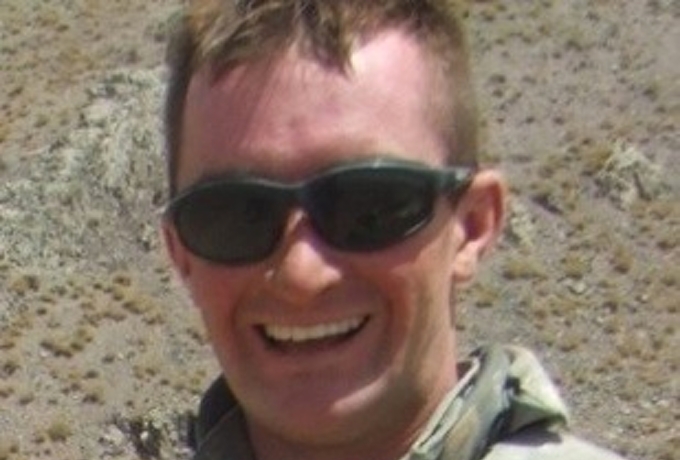
Tim Smith

Tim Smith

Timmy Smith touched so many lives and always made you smile when he entered a room. Timmy loved to make you laugh and also was proud to serve his country. Timmy was always a protector to all.

You will never be forgotten —  Sept. 20, 1982-April 7, 2008.

Forever on our hearts.

Love,

The Smith family, South Lake Tahoe

Note: Sgt. Timothy M. Smith, 25, of South Lake Tahoe died April 7, 2008, in Baghdad from wounds suffered when his vehicle encountered an improvised explosive device. 


Snippets about Lake Tahoe

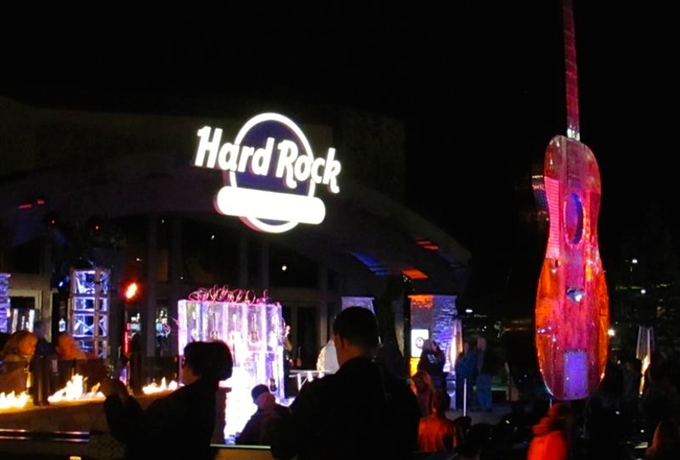
hard rock lede·  Lake Tahoe Hard Rock has delayed the opening of its pool party festivities because of the forecasted nasty weather this weekend. A new opening date has not been set.

·  The Eldorado National Forest draft environmental impact statement for the proposed King Fire restoration project is available online.

·  Donner Memorial State Park Visitor Center opens June 6.

·  Photographer Jaime Emery has moved Rose Street Studio to 100 McFaul St., Suite E in Zephyr Cove.

·  Effective June 1, outdoor irrigation with potable water will be restricted to two days per week and only on Tuesdays and Fridays for Truckee Donner PUD customers.


Soy lurks in many non-vegetarian foods

By Rachel E. Gross, Slate

Soy, light of my life, temptation of my taste buds. My sin, my soul. You put the bite in my chik’n nuggets, the creaminess in my soy lattes, the chew in my tofu scramble that all but convinces me that I’m eating something that came out of a chicken. You make it possible for me to enjoy burgers, sausage, chorizo, hot dogs, and chili on a near-daily basis. Thanks to you, not once have I felt left out while my friends chowed down on cow flesh. You are the chameleon of foods, the ultimate imitator, the snack of all trades. For vegetarians like me, you are a culinary miracle.

If you aren’t vegetarian, lactose-intolerant, or a lover of Asian cuisine, you may not share my appreciation for this humble legume. In fact, you may not think soybeans have much of an impact on your life at all. You would be wrong. It turns out soy isn’t just good at making fake meats more meat-like—it’s the secret ingredient making all processed food more, well, food-like.

I found this out a few years ago, when I dipped my toes into the underground world of veganism. As I began paying more attention to ingredient labels, I realized something strange: Soy showed up in a baffling array of foods, from hot dogs to salad oil to Oreos (which are, incidentally, vegan). A quick scan of McDonalds’ ingredients listrevealed soy in more than 200 items—and not just in expected things like French fries and chicken nuggets, but also breakfast sausages, grilled onions, chicken patties, BBQ ranch sauce, sesame buns, liquid margarine, cinnamon melts, hash browns, griddle cakes, chocolate chips, and bagels. (At Taco Bell, it’s the same story.) Forget Dunkin’, I realized: America runs on soy.

The weird thing is, people aren’t the main consumers of soy—not even close. More than 85 percent of soybeans get crushed and milled into animal feed. The result ishighly inefficient: Instead of feeding a high-quality protein to humans, we are first feeding it to our livestock, and then eating the protein in their meat. That means in order to produce 1 kilogram of animal protein, we have to feed livestock almost 6 kilograms of soy or other plant protein. In fact, experts estimate that we could feed at least 800 million more people if we just fed them the grain we usually feed livestock.

Read the whole story


Handful weigh in on Echo Summit bridge plans

By Jessie Marchesseau

MEYERS – Seven miles west of South Lake Tahoe on Highway 50, the Echo Summit bridge is cracking, rusting and flaking apart. Caltrans has been working on a replacement/rehabilitation plan for the bridge since 2012.

A community open house at the California Conservation Corps office in Meyers on Thursday was designed to present the current project alternatives and take public comment.

Dozens of chairs sat empty during the presentation as only about a half dozen people were in attendance, including El Dorado County Supervisor Sue Novasel. Novasel said it was decided after Caltrans did a similar presentation on the project in South Lake Tahoe back in February that one should be conducted in Meyers since the community will be directly affected by any work on the highway. (The media was sent a press release about the May 21 event one day earlier.)

Caltans plans to replace this Echo Summit bridge in 2019. Photo/Provided

Caltans plans to replace this Echo Summit bridge in 2019. Photo/Provided

Project manager Clark Peri discussed the need for the project, showing photographs of the deteriorating bridge with its rusting steel supports and spalling concrete. Built in 1939, the bridge is in what engineers consider advanced stages of deterioration, though is not in danger of actually collapsing anytime soon.

Caltrans has come up with six alternatives for the bridge project. The alternatives vary in scope, duration and type of road closure:

Alternative 1A

  • Replace with 26-foot wide bridge
  • Total 120-150 days in one construction season
  • 60-90 days under full closure and 10-30 days under one-way traffic control

Alternative 1B

  • Replace with 26-foot wide bridge
  • Total 100-130 days in two construction seasons
  • 20-50 days under full closure and 50-70 days under one-way traffic control

Alternative 2A

  • Replace with 30.75-foot wide bridge
  • Total 200-230 days in two construction seasons
  • Under one-way traffic control (8-hour work shifts)

Alternative 2B

  • Replace with 30.75 foot wide bridge
  • Total 160-190 days in two construction seasons
  • Under one-way traffic control (10-hour work shifts)

Alternative 3

  • Rehabilitate existing bridge
  • Total 150-180 days in two construction seasons
  • 20-50 days under full closure and 90-120 days under one-way traffic control

Alternative 4

  • Do nothing.

If the road were closed completely, vehicles would be detoured to highways 88 and 89 during that time. This is what happened when the highway was fully closed during the wall project in 2011, but it was only for a couple of weeks.

Novasel recalled the mudslide on Highway 50 in the 1990s when the road was closed for so long that businesses in Meyers were going out of business.

“We’ve seen how devastating it can be when it’s closed,” she said.

This is why she wants to start the conversation about this project early, get plenty of public input and plan well in advance. Right now the project is still in the environmental document and project report phase. Construction is not slated to begin until 2019.

During the comment portion of the meeting, attendees expressed a number of concerns. One resident who commutes to Sacramento for work was told commuter passes during road closures may be possible, though not guaranteed. When NDOT had Kingsbury Grade closed summer passes were issued on a limited basis.

Peri assured one attendee that his suggestion to build an alternate road through Echo Pass instead of detouring cars to Highway 88 would be discussed.

Another community member expressed his concerns about the area surrounding the highway not being geologically sound; he requested it be thoroughly studied before millions of dollars are invested into a bridge that would be completely demolished in the event of an earthquake. Again, Peri assured those in attendance there would be a thorough geological study completed, fault lines looked at and the findings taken into account before any project designs are decided upon. This is standard for all such projects, he said.

Caltrans expects to have the environmental studies completed by this fall and anticipates another public meeting at that time. The highway officials hope to have a draft of the environmental impact report ready for public feedback by January of next year.

“The team takes all the comments they’ve collected along the way, along with their own studies, into consideration before they make the final decision,” Steve Nelson, public information officer for Caltrans, said.

To submit a comment on the project, email Suzanne Melim at Suzanne.melim@dot.ca.gov.


Study: Cell phone bans improve student test scores

By Amanda Schupak, CBS News

Reactions to bans prohibiting kids from having cell phones in schools have had mixed reactions, with proponents arguing they cut down on distraction and cheating, and parents countering that it’s unsafe to cut off communication between them and their children. Now, a new study shows that there’s academic merit to the bans.

Researchers from the University of Texas at Austin and Louisiana State University measured student performance in 91 schools in four cities in England before and after cellphone bans were instituted. Their findings showed that average test scores improved post-ban, with students scoring 6.41 percentage points of a standard deviation higher, which made them 2 percent more likely to pass their end of the year exams.

The effect was twice as great for low-achieving and special-needs students.

Read the whole story