Tips to keep wildlife on the outside of a home

By Carol Singleton

Have you ever woken to the sound of a scampering animal in the ceiling above your bed or been startled by a strange scratching noise in your walls? If so, you understand the frustration of having wildlife take up residence in your home. Skunks, squirrels and raccoons are among the common culprits that end up inside people’s homes and businesses. These unwanted visitors can cause extensive property damage and transmit diseases to people and pets.

The key to keeping wild animals out of your home and off your property is to make your home an unwelcome place for wildlife. Start by walking around your home looking for any holes where wildlife may enter or spaces where they may nest. Even the tiniest holes should be fixed, as bats, mice and other small animals can squeeze through cracks as small as one-quarter inch.

Before you begin boarding up areas around your home, make sure that there are no animals or active nests inside. Other wildlife-proofing steps include:

  • Block any access points around your home and outbuildings where wildlife may enter.
  • Block access under stairways and decks and fill any holes around your foundation.
  • Fix tears in window screens and vents and cover any openings under your eaves.
  • Install a chimney cap.
  • Trim trees a minimum of 4 feet from your roof to avoid jumping animals.
  • Remove woodpiles, debris and low-growing, dense plants such as ivy that provide potential habitat for wildlife.
  • Never leave pet food or water outside.
  • Clean up fallen fruit and bird seed and tightly cover compost piles.
  • Keep barbecue grills clean and never leave food or trash out in the yard.
  • Make sure that garbage cans and recycling bins are secured.

It is unlawful to disturb the nests of songbirds as well as threatened and endangered species, so proceed with caution when you find a nest or burrow. CDFW also discourages the use of poison baits (rodenticide) to control rats, mice and other rodents as this can result in secondary poisoning to pets and other non-target wildlife such as owls, hawks and bobcats. Animals that eat dead or dying rodents that have consumed these baits will also be poisoned.

If you choose to trap nuisance wildlife, it is important to know the rules. You must release the animal immediately or kill it in a humane manner. You may wish to hire a pest control specialist to do this for you. According to the Fish and Game Code, it is illegal to relocate wildlife without a permit to do so.

People often think the most humane thing to do is to release the animal in a nearby park or woods, but this simply moves the problem to someone else’s backyard. Also, relocating wildlife can lead to the spread of disease, cause conflicts with other wildlife and may result in injury to the person transporting the animal.

Carol Singleton works for California Department of Fish and Wildlife.



Torrential rains possible in Tahoe on July 4

Updated 11:18pm:

Fireworks set up on the South Shore have temporarily halted as the thunderstorm rolls through. Workers are sheltering in place and making sure the fireworks do not get wet, as well ensure they are not discharged by the lightning charges.

—-

The Lake Tahoe Basin and Alpine County, including the Washington Fire area, are under a flood watch today from 11am-8pm.

“Unstable conditions will allow showers and thunderstorms to develop this morning and continue through the evening hours,” according to the National Weather Service in Reno. “A few strong thunderstorms may develop and produce torrential rainfall. Those heading outdoors today should have a plan to quickly return to a sheltered location.”

Streams, dry washes and the Washington Fire are at risk for flash flooding on July 4.

While the Washington Fire near Markleeville is 94 percent contained, the threat of mudslides is serious based on the forecast. Earlier this week there were road closures because debris had washed onto the pavement.

The producer of the South Shore fireworks show told Lake Tahoe News the pyrotechnics can be shot from under a layer of plastic if need be.

Thunderstorms are in the forecast through most of next week for Lake Tahoe.

— Lake Tahoe News staff report


Tech upgrades to enhance Valhalla experience

Technology at the Boathouse Theatre has been upgraded. Photo/LTN

Technology at the Boathouse Theatre has been upgraded. Photo/LTN

By Evangeline Elston

Valhalla Tahoe has upped its game when it comes to professional technical and production staff for the 2015 Valhalla Art, Music & Theatre Festival. For the festival to become known for excellent productions including concert sound, theater lighting, and play direction, it must have topnotch staff in place to help realize the vision.

This year Valhalla has hired Kevin Male of Kevin Male Audio as the concert sound engineer. Male has gone through Valhalla’s audio equipment assessing and rewiring and modifying the technical production booth in the Boathouse Theatre to make sure everything is in great shape. He has than 20 years of experience as a sound engineer and so far the concert sound has been “the best we’ve ever heard at the Boathouse”, according to one opening night couple of concert-goers who came to hear Alasdair Fraser.

Joe Barnett, a recent graduate of South Tahoe High School, is on staff for the summer as Valhalla’s theater tech. Barnett gained his extensive knowledge and experience working in the STHS theater program under Liz Niven. Barnett has been able to assess some complicated lighting and technical issues at the Boathouse Theatre, implemented solutions, reprogrammed the lighting board and focused and re-gelled the theatre lights.

Though Valhalla has technical production limitations in the theater due to older equipment and limited resources, Male and Barnett have been able to maximize capabilities beyond what anyone thought possible.

Ethan Niven, a 2015 graduate of Southern Oregon University, is on staff as festival assistant and as director for Valhalla and the Dakota Foundation’s production of “On Golden Pond”, which opens July 2 at the Boathouse Theatre. Niven graduated with a BA in theater arts and a double minor in musical theater and stage management. He is a nationally ranked performer in 2015 through the Kennedy Center. Locals may know him from his memorable performances at Lake Tahoe Community College over the years and as director of the 2014 Dakota/Valhalla production of “A Servant of Two Masters”.

The Valhalla Boathouse Theatre will be the ideal venue for “On Golden Pond”, a classic American comedy/drama that’s every bit as touching, warm, and witty today as when it debuted on Broadway in 1979. “On Golden Pond”, written by Ernest Thompson, is a work of rare simplicity and is the genesis of the much-heralded film starring Henry Fonda and Kathryn Hepburn. This play explores growing up, growing old and growing closer.

The cast of the play includes Pam Taylor, Stephanie Grigsby, Ryan Adams, Jody Paslov, Thomas Rayo and Dave Anderson.

On Golden Pond will run July 5, July 9-12 and July 16-18. Tickets and information are at www.valhallatahoe.com.

Evangeline Elston is director of the Valhalla Art, Music and Theatre Festival.


Wildflowers in full bloom in Sierra

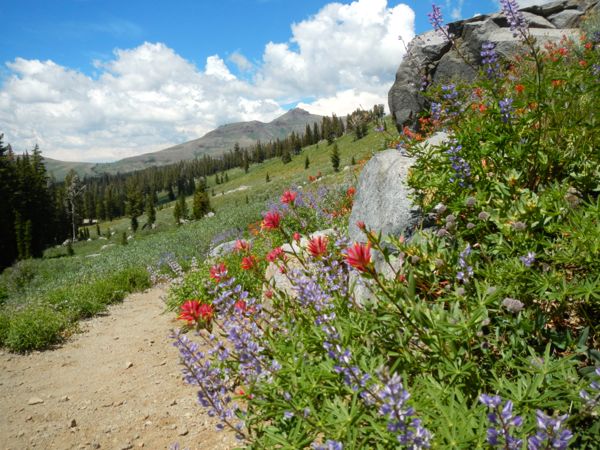
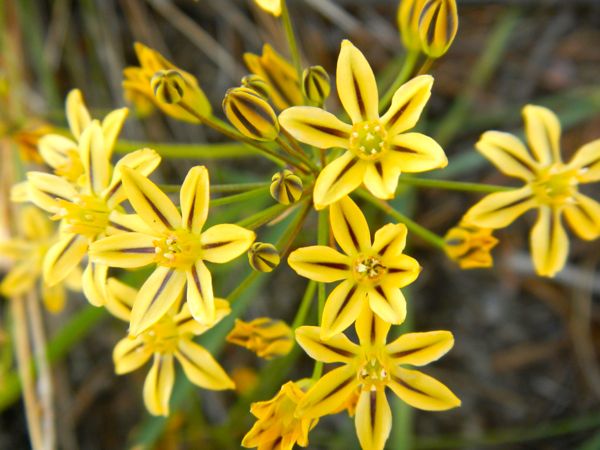
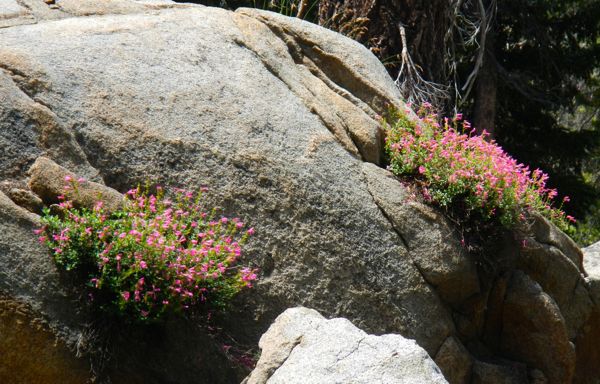
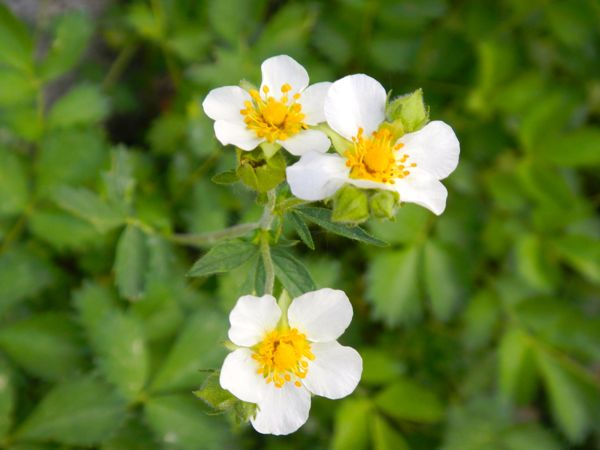
Wildflowers are peaking in the High Sierra. Photos/Kathryn Reed

Wildflowers are peaking in the High Sierra. Photos/Kathryn Reed

By Kathryn Reed

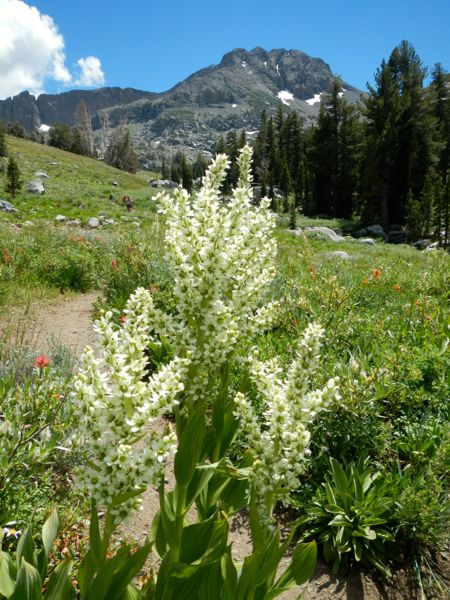
CARSON PASS – Wildflowers as far as the eye could see. Some are more than 5-feet-tall, others look like ground cover. The kaleidoscope of color is mesmerizing.

Even in the parking lot at the Woods Lake trailhead the water is rushing and the flowers are blooming. While the lot was full, as was the Carson Pass area, the number of people on the trail was not overwhelming. Getting a late start meant we passed more people on their way out.

Wildflower hike, Winnemucca and Round Top lakes with Sue and AJ

Wildflower hike, Winnemucca and Round Top lakes with Sue and AJ

We started the loop by going toward Winnemucca Lake. This is the route where the bulk of the flowers are.

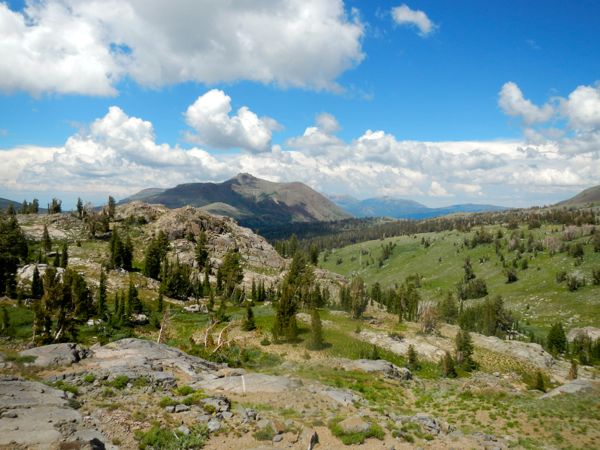
The open terrain was glorious. It was as though the hillside had been painted green and then dollops were splattered about to provide a rainbow of color. Granite boulders provided a steel grey contrast.

It didn’t take long before columbine, then Wildflower hike, Winnemucca and Round Top lakes with Sue and AJIndian paint brush and a variety of daisies, joined lupine. Soon it was a cornucopia of wildflowers. It was like a painter’s palette.

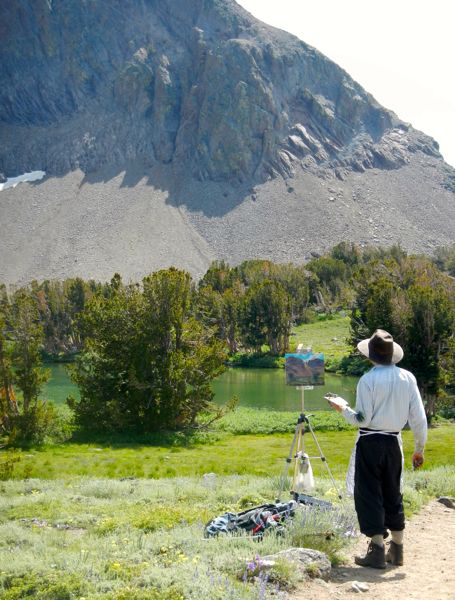
This was appropriate considering David Yapp of San Francisco was with his palette and easel at Round Top Lake capturing the Sierra’s summer beauty.

It was one of those magical days where clouds danced in the sky, providing shade when needed, but enough sun to necessitate a good dose of sunscreen. At Winnemucca it was as though the sky had been splashed with grey paint.

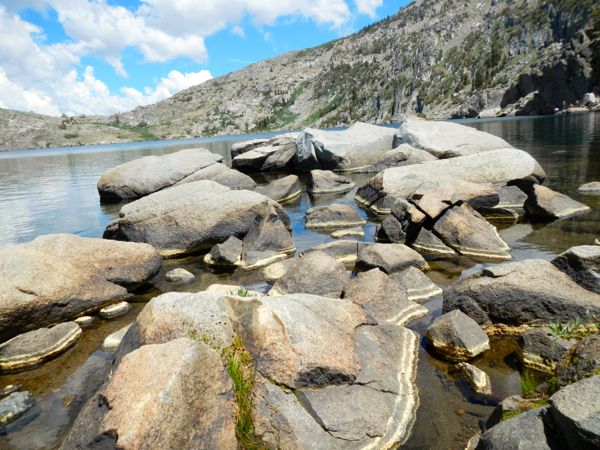
Here people were fishing, sitting on the shore having lunch and swimming. We hopped out to the boulders to have a bite to eat.Wildflower hike, Winnemucca and Round Top lakes with Sue and AJ

Round Top peak in the background.

Round Top peak in the background.

The smell of rain was still in the air Friday afternoon as we took our time on this six-mile round trip trek in the Carson Pass area. The amount of water and dampness brought out the skeeters as well as other biting bugs – at least along the first part of the trail.

Round Top peak towers above Winnemucca Lake at 10,381 feet. Our top elevation of the day was 9,400 feet, having gained about 1,200 feet.

The steepest section seemed to be the one mile trek between Winnemucca Lake and Round Top Lake. The decent from Round Top seemed steeper than the ascent on the other side. Few wildflowers were on this side. The conifers, especially at the base, were denser.Wildflower hike, Winnemucca and Round Top lakes with Sue and AJ From the trail down we could see Woods Lake, but never came close enough for AJ to take a swim. There is plenty of water on this hike, though, for the dog to stay hydrated and cooled off.

Pollen on the rocks at Winnemucca Lake.

Pollen on the rocks at Winnemucca Lake.

Wildflowers weren’t the only reason people were out on July 3. The dichotomy of interests of the trail users was interesting. Several had fishing poles, with a few saying they caught some brook trout. Two others had their skis on their backs. They had taken a few turns on Round Top. This was hard to believe based on how little snow is still there.

David Yapp paints Round Top Lake.

David Yapp paints Round Top Lake.

Originally our destination was Fourth of July Lake, which is another 1½ miles past Round Top Lake. My cold had me at times wondering if I was going to be spending the night in the wilderness, so we stuck to the loop. Not one step were we disappointed. It is near peak wildflower season in the High Sierra.

—–

Wildflower hike, Winnemucca and Round Top lakes with Sue and AJ (Red Lake Peak)

Red Lake Peak

        Getting there:

From South Lake Tahoe, go west on Highway 50. Turn left onto Highway 89 in Meyers.

At Picketts Junction, go right on Highway 88.

Go beyond the Carson Pass parking area. Woods Lake turn off is on the left. Trailhead parking is clearly marked on the right. It costs $5 to park.


Opinion: Civil War was won by immigrant soldiers

By Don Doyle

In the summer of 1861, an American diplomat in Turin, Italy, looked out the window of the U.S. legation to see hundreds of young men forming a sprawling line. Some wore red shirts, emblematic of the Garibaldini who, during their campaign in southern Italy, were known for pointing one finger in the air and shouting l’Italia Unità! (Italy United!). Now they wanted to volunteer to take up arms for l’America Unità!

Meanwhile, immigrants already in the United States responded to the call to arms in extraordinary numbers. In 1860, about 13 percent of the U.S. population was born overseas — roughly what it is today. One in every four members of the Union armed forces was an immigrant, some 543,000 of the more than 2 million Union soldiers by recent estimates. Another 18 percent had at least one foreign-born parent. Together, immigrants and the sons of immigrants made up about 43 percent of the U.S. armed forces.

America’s foreign legions gave the North an incalculable advantage. It could never have won without them. And yet the role of immigrant soldiers has been ignored in the narrative of a brothers’ war fought on American soil, by American soldiers, over issues that were uniquely American in origin.

In the 1860s, Confederate diplomats and supporters abroad were eager to inform Europeans that the North was actively recruiting their sons to serve as cannon fodder. In one pamphlet, Confederate envoy Edwin De Leon informed French readers that the Puritan North had built its army “in large part of foreign mercenaries” made up of “the refuse of the old world.”

Embarrassed Northerners claimed the Confederacy exaggerated how many foreign recruits made up the U.S. armed forces — pointing to immigrant bounty jumpers who enlisted to collect the money given to new recruits, deserted, and then re-enlisted. The underlying premise was that foreigners were not inspired by patriotic principle and, except for money, had no motive to fight and die for a nation not their own.

It was not true. Immigrants tended to be young and male, but they enlisted above their quota. Many immigrants left jobs to fight for the Union, enlisting before the draft — and the bounties — were even introduced. They volunteered, fought, and sacrificed far beyond what might be expected of strangers in a strange land.

Historians have done an excellent job of retrieving the voices of native-born, English-speaking soldiers. But the voices of the foreign legions remain silent — thanks to the paucity of records in the archives, the language barriers posed to historians, and, perhaps, a lingering bias that keeps foreigners out of “our” civil war.

Why did they fight? What were they fighting for? Recruitment posters in the New York Historical Society provide hints at the answers. One poster reads: Patrioti Italiani! Honvedek! Amis de la liberté! Deutsche Freiheits Kaempfer! (Italian patriots! Hungarians! Friends of liberty! German freedom fighters!) Then, in English, it urges “250 able-bodied men . . . Patriots of all nations” to fight for their “adopted country.”

One immigrant mother gave testimony in 1863 to an antislavery convention as to why her 17-year-old son was fighting for the Union. “I am from Germany where my brothers all fought against the government and tried to make us free, but were unsuccessful,” she said. “We foreigners know the preciousness of that great, noble gift a great deal better than you, because you never were in slavery, but we are born in it.”

Following the failed Revolution of 1848, thousands of young Germans fled to America. They took up arms in what they saw as yet another battle in the revolutionary struggle against the forces of aristocracy and slavery. “It isn’t a war where two powers fight to win a piece of land,” one German enlistee wrote to his family. “Instead it’s about freedom or slavery, and you can well imagine, dear mother, I support the cause of freedom with all my might.”

In another letter written to his family in Europe, a German soldier gave a pithy explanation of the war: “I don’t have the space or the time to explain all about the cause, only this much: the states that are rebelling are slave states, and they want slavery to be expanded, but the northern states are against this, and so it is civil war!”

So it was civil war, but for many foreign-born soldiers and citizens, this was much more than America’s war. It was an epic contest for the future of free labor against slavery, for equal opportunity against privilege and aristocracy, for freedom of thought and expression against oppressive government, and for democratic self-government against dynastic rule. Foreigners joined the war to wage the same battles that had been lost in the Old World. Theirs was the cause not only of America, but of all nations.

Don Doyle is the author of “The Cause of All Nations: An International History of the American Civil War”. He is McCausland professor of history at the University of South Carolina. He wrote this for What It Means to Be American, a national conversation hosted by the Smithsonian and Zócalo Public Square.


Fire cuts power to parts of Harveys

A fire in the electrical room at Harveys has the Mountain Tower of the hotel-casino in the dark.

Tahoe Douglas firefighters were able to contain the Friday night fire to the area where it started.

“NV Energy is on site and people are in the dark,” Eric Guevin, fire marshal with Tahoe Douglas, told Lake Tahoe News about 11:25pm July 3.

The switch gear is out, he said.

The Stateline property has generators, according to a hotel employee. The front desk worker said there have been no evacuations.

— Lake Tahoe News staff report


Benefits of sports at an early age

By Patti Neighmond, NPR

Amy Roegler and her husband, Octavio Herrera, live with their young kids, Jake and Alyssa, in Los Angeles. When it comes to pro baseball, they’re all Dodgers fans. And Jake loved balls even as a baby, Octavio says.

“Meanwhile his sister, 8-year-old Alyssa, has a passion for gymnastics. She, too, was a natural, her parents say — swinging on the monkey bars at age 2 and practicing splits on a balance beam today.

The parents know that the physical exercise their kids are getting is good for their health. But that’s not their only motivation for encouraging the children to participate in organized athletics.

The majority of parents in NPR’s recent poll on the role of sports and health in America seem to agree. The poll, done in conjunction with the Robert Wood Johnson Foundation and the Harvard T.H. Chan School of Public Health, finds that the majority of adults say they played sports when they were younger.

Read the whole story


Gamblers’ abuse claims test sovereignty of tribal casinos

By Michael Melia, AP

MASHANTUCKET, Conn. — For gamblers skilled at counting cards, it can be especially risky to play at America’s tribal casinos: Those who have gotten caught tell stories of seized winnings, wrongful detentions, or worse.

Casino bosses everywhere have ways of making so-called “advantage players” feel unwelcome, regularly tossing and blacklisting them. But gamblers have limited options to press claims of mistreatment at Native American-owned properties, which generally are shielded from lawsuits in outside courts by laws recognizing tribes’ sovereignty.

Now, a pair of lawsuits in federal courts is testing the principle of tribal immunity in cases involving allegations of abuse and bias in tribal justice systems.

The cases, in Connecticut and Arizona, involve crackdowns on advantage players who say they use card-counting or other methods that shift the odds in their favor, but generally are not illegal.

“You do not have a level playing field,” said Stanford Wong, a Las Vegas-based gambling expert who advises readers of his newsletters to be aware that tribal properties are governed by their own laws. “In a tribal casino, there’s no recourse whatsoever. You can’t sue them in regular court. The odds are all stacked against you.”

At the country’s largest Indian casino, Foxwoods in southeastern Connecticut, three gamblers from China claim the casino wrongly seized $1.6 million deposited as “front money” and $1.1 million in winnings after accusing them of cheating at mini baccarat during a graveyard shift on Christmas Eve 2011. The gamblers said they used a card-monitoring practice called edge-sorting, which involves players being able to tell the difference between some cards because of imperfections on their non-playing sides.

The gamblers including Cheung Yin Sun, a woman known as the “Queen of Sorts” for her card-monitoring skills, said they were denied the lawyer of their choice in tribal proceedings that ended with a ruling against them by the tribe’s gambling commission.

When the gamblers filed suit in federal court, the casino’s owner, the Mashantucket Pequot Tribal Nation, argued it had immunity, and a federal judge in early June dismissed the suit. An attorney for the plaintiffs on Wednesday filed notice of an appeal.

In the United States, there are 493 Indian casinos and 1,262 commercial casinos. In 2013, tribal casinos generated $28.3 billion in revenue while commercial properties had $37.7 billion, according to the Casino City research firm.

The options available to gamblers who want to press a claim depend on the contracts between tribes and the host states, which typically grant rights to operate locally in exchange for a share of revenue. The state of Connecticut, which does not require the tribe to waive sovereign immunity, has seven gambling regulation officers assigned to Foxwoods, but their role is limited to testing of the slot machines whose revenue is shared with the state. The state has no oversight of table games.

While tribal gambling commissions answer to the same tribes that own the casinos, National Indian Gaming Commission spokesman Michael Odle in Washington said they operate independently. He said those alleging a lack of impartiality could make the same argument about federal courts handling cases involving the U.S. government.

George Henningsen, chairman of the Pequot gaming commission, said it’s difficult to dispel allegations of bias because it’s typically only losers who speak out about their experiences with tribal justice.

A handful of lawyers around the country with expertise in gambling disputes say the worst horror stories are at tribal casinos. While some hope to bring pressure to put tribal properties on the same legal footing as commercial casinos, one attorney, Bob Nersesian, said he is more focused day to day on helping the clients who call with claims of abuse.

In the Arizona case, advantage players filed suit after they were detained on suspicion of cheating in 2011 at the Mazatzal Casino, owned by the Tonto Apache Tribe. A federal judge in Arizona last year ruled that sovereign immunity did not apply because tribal officials involved were named in their individual capacities, and an appeals court affirmed that decision on Tuesday.

One of the plaintiffs, Rahne Pistor, said the officers who detained him did not identify themselves as police and grabbed his genitals as they assaulted him.

“I simply had won more money than they liked,” Pistor said, “so they kidnapped me, handcuffed me, forced me into an isolated back room in the casino and physically stole whatever money they could out of my pocket.”

Nersesian, the plaintiffs’ attorney in the Mazatzal case, said such disputes do not discourage advantage players from visiting tribal casinos. If anything, he said, they draw them out in greater numbers by showing the games can be beaten.

“It’s more like somebody dying from a hot shot of heroin,” he said. “As soon as that happens, the market goes up, not down.”


DC commissioners say no to Liberty solar plant

People were on the floor and in the hall for the July 2 Douglas County Commission meeting. Photos/Anne Knowles

People were on the floor and in the hall for the July 2 Douglas County Commission meeting. Photos/Anne Knowles

By Anne Knowles

MINDEN — The Douglas County Commission has denied another application for a solar facility in Carson Valley.

Citing too many unknowns about the project, and a few surprises, the commissioners on July 2 unanimously rejected the application by Greenstone Renewables to build a 260-acre, 20 megawatt solar plant on Muller Lane.

“We’re finding out things today I wasn’t aware of and I don’t like that,” commission Chairman Doug Johnson said. “It’s OK, that’s the nature of the beast.”

After more than four hours of presentations, public comment and discussion, the commissioners agreed the project did not meet the county’s mandate to maintain a scenic and rural valley.

“I can’t get past the location,” said Commissioner Nancy McDermid. “The Planning Commission is the gatekeeper of the master plan and I believe the ones that voted for this project relied on private property rights and ignored the master plan.”

A special use permit required for the project was approved by the Douglas County Planning Commission by a 4-3 vote at its May 12 meeting.

Commissioners had volumes of paperwork to read before making their decision.

Commissioners had volumes of paperwork to read before making their decision.

That decision was appealed by Steve and Mary Walker, whose home is the only residence to abut the project property.

Their appeal contested six of the 16 conditions the planning commission imposed on the permit and four of its eight findings.

Those disputes centered on mitigation of glare from panels, noise in high winds, dust control, irrigation loss and wildlife impact, particularly to the bird population.

“We ask that you deny the application. It was an erroneous decision in conflict with the county master plan and recommendations of the Valley Vision plan,” said Steve Walker during his presentation to the board.

Walker also said an additional 40 acres would be required for a potential battery storage unit, bringing the total project acreage to 300 acres, which was news to the commissioners.

“I have a question I did not have before,” said Commissioner Steve Thaler after presentations from the Walkers and from Keith Rutledge with Greenstone Renewables. “This battery storage facility. I was not aware of this additional 40 acres. That’s taken me by surprise.”

Rutledge said Greenstone did not include the battery storage unit in its application because it was uncertain if it would be needed, and that the developer would return to acquire permission for that in the future.

But Walker pointed to the minutes of the Planning Commission meeting, in which staff said the battery storage facility would be considered an accessory use and would need no further permits.

Daniel Leck, a local appraiser engaged by the Walkers, said the solar plant would not only impact the Walkers’ property value but have a ripple effect in the community. He estimated property values in Douglas County, which stand at $6 billion, could drop between 5 and 10 percent, or by $300 million to $600 million.

The Walkers helped to generate a lot of public interest in the Greenstone project, collecting 700 signatures on a petition opposing the project.

The commissioners said they had received hundreds of emails and phone calls from county residents.

At least 200 people attended the county commissioners meeting, jamming the room and outside halls. Twenty-eight people rose to offer public comment, the majority of who opposed the project.

One complaint for many was the fact the power generated by the solar plant would be going to California customers serviced by Liberty Utilities, which had entered into an initial contract with Greenstone for the power generated.

Travis Johnson, Liberty Utilities’ director of Utility Planning and Business Development, spoke during public comment, to say those customers are all around Lake Tahoe. However, Liberty has no Nevada customers.

“Liberty Utilities is disappointed by the decision of Douglas County Commission. We believe that Greenstone’s proposed solar project would be an environmentally responsible means of bringing renewable resources to the region, as well as providing reliability improvements to the Carson Valley. Liberty remains committed to the pursuit of cost-effective renewable development for its 49,000 electric customers in the Lake Tahoe region,” Liberty Utilities’ VP of Operations Rich Salgo told Lake Tahoe News.

The owner of the Muller Lane property, which was set to be leased by Greenstone, also spoke.

“We feel strongly that we all have property rights,” said Jon Park. “We love to ranch. We love to irrigate our property. At the end of the day if this was a perfect world, we’d just ranch.”

Barbara Byington, whose ranch is adjacent to the Park property, also spoke in support of the plan.

“I border it, but I’m in favor of it,” said Byington. “I’ve kept my ranch green for all you people who want it green. But how can I keep it green in this drought? I think we ranchers need something. Maybe it’s not a solar farm, but every time we come to you, you say no, you can’t have that.”

In the end, the board, acting as the board of adjustments, voted unanimously to approve the Walker’s appeal and deny the solar project.

In July 2014, the county commission approved an ordinance adding solar to the county’s agricultural zoning.

In March, the commissioners denied a request by E.On Climate and Renewables for a 320-acre solar plant on Bently Ranch because it was too close to nearby residences. In June, they passed a 180-day moratorium on solar projects, but excluded the Greenstone plan because the application was already in process.

Greenstone could file a petition for judicial review. It would need to be filed within 25 days.


Parade to march down Highway 50

The Fourth of July parade in South Lake Tahoe starts at 10am at the recreation center on Rufus Allen Boulevard.

It will go down Highway 50 to Cardinale Way’s parking lot.

There are more than 30 entries.

The grand marshal is John Filas, a World War II vet who served in Marine Corp.