Drought changing how agencies do business

By Coral Davenport, New York Times

FOLSOM — Drew Lessard stood on top of Folsom Dam and gazed at the Sierra Nevada, which in late spring usually gushes enough melting snow into the reservoir to provide water for a million people. But the mountains were bare, and the snowpack to date remains the lowest on measured record.

“If there’s no snowpack, there’s no water,” said Mr. Lessard, a regional manager for the Bureau of Reclamation, the federal agency that built and operates a vast network of 476 dams, 348 reservoirs and 8,116 miles of aqueducts across the Western United States.

For nearly a century, that network has captured water as it flows down from the region’s snowcapped mountains and moves to the farms, cities and suburbs that were built in the desert. But as the snow disappears, experts say the Bureau of Reclamation — created in 1902 by President Theodore Roosevelt to wrest control of water in the arid West — must completely rebuild a 20th-century infrastructure so that it can efficiently conserve and distribute water in a 21st-century warming world.

For most of the 1900s, the bureau’s system — which grew into the largest wholesale water utility in the country — worked. But the West of the 21st century is not the West of Roosevelt. There are now millions more people who want water, but there is far less of it. The science of climate change shows that in the future, there will be less still.

Read the whole story


DC receives funds to complete valley trail

Douglas County was awarded $106,000 from the Nevada State Parks Recreational Trail Program for the construction of a trailhead on Buckeye Road to serve the proposed Martin Slough Bike Path.

The Douglas County project was one of 12 selected out of 22 applicants.

When complete, the Martin Slough Bike Path will connect Jakes Wetland in Minden to the Gilman Ponds in Gardnerville.  he path will be 2.61miles long and consist of a 10-foot wide paved section.

The trailhead will consist of several parking spots, including ADA parking, educational signage, and paved access from the trail to the parking area. The grant requires a 20 percent match of local funds. Douglas County provided $20,000, and Minden and Gardnerville each kicked in $3,000.

Existing parking is available at the north end of the project at the Jake’s Wetland Trail Head and at the south end of the project at the Gilman Ponds, but parking was limited mid-trail. These parking spots will also allow for easy access to proposed fishing pond just South of Buckeye Road.

Martin Slough Bike Path is nearly 90 percent complete. Douglas County is working with NDOT to complete acquisition of the required easements to accommodate the bike path. A construction schedule will be set once all necessary easements have been acquired.


1,600 lbs. of trash collected from Tahoe beaches

Garbage at Zephyr Shoals on July 4. Photo/LTN

Garbage at Zephyr Shoals on July 4. Photo/LTN

Nearly 300 volunteers on July 5 picked up 1,600 pounds of trash, including 5,266 pieces of plastic such as caps, bottles, utensils, and straws.

During the League to Save Lake Tahoe’s post-Independence Day cleanup, volunteers and staff catalogued debris collected from more than 4.5 miles of Tahoe’s shoreline, finding, for example 4,053 cigarette butts.

Each year, more than a quarter million visitors converge on Lake Tahoe for July 4.

League volunteers and staff and their partners cleaned up the shoreline along nine of Tahoe’s beaches: Kiva/Taylor Beach, Tallac Historic Site, Regan Beach, El Dorado Beach, Timber Cove, Nevada Beach, Zephyr Shoals, Kings Beach, and Commons Beach.


Sand bags available to S. Tahoe residents

With thunderstorms seeming to be the norm these days, South Lake Tahoe is reminding residents that sand bags are available at no cost year-round.

The sand lot is located at 1160 Rufus Allen Blvd., next to Campground by the Lake.

At the back of the lot is a large sand mound, shovels and bags. Residents fill their own bags and transport back to their own residence. The limit is 10 bags per visit.

Access to sand bags is available during normal business hours, Monday-Friday, 7:30am-4pm.


Alpine County trails lead to dry lakebeds

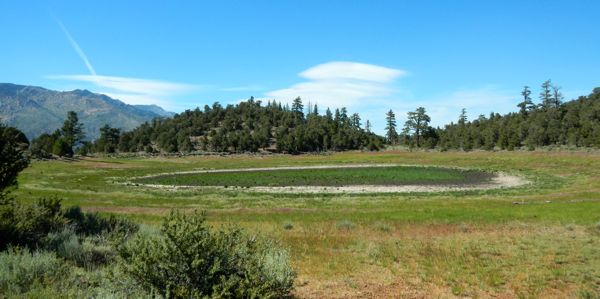
Views along the Curtz Lake interpretive trail in Alpine County. Photos/Kathryn Reed

Views along the Curtz Lake interpretive trail in Alpine County. Photos/Kathryn Reed

By Kathryn Reed

MARKLEEVILLE – Bring water because despite the destination being to a couple lakes there is no water to be found.

Dust bowls. That’s what Curtz and Summit lakes are. Lake is a bit of a misnomer. A ring outlines both. A muddy patch, at least two weeks ago, was at the center of them.

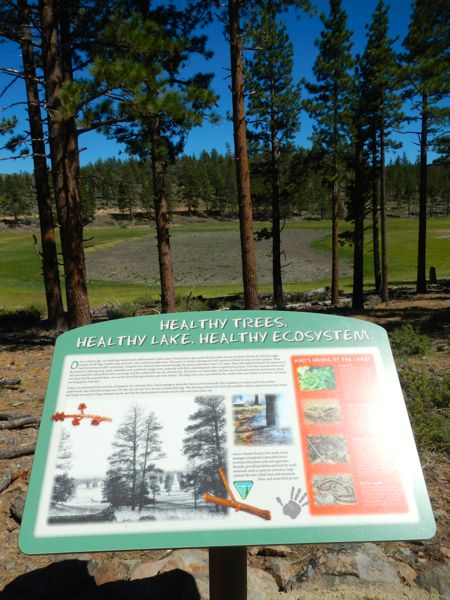
Multiple signs explain things about the land, wildlife and history of the area. One explains how it is not unusual by mid-summer for the lakebed to be dry. This year it was dry before the calendar even said summer.

Summit Lake without any water.

Summit Lake without any water.

The nonprofit Alpine Trails Association recently completed the 1.1-mile interpretive loop around Curtz Lake.

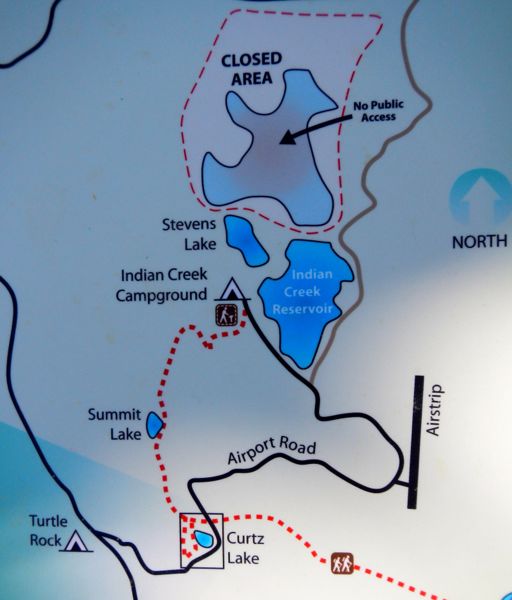
These trails are in the Indian Creek Recreation Area. Indian Creek Reservoir does have water.

Rural and remote define Alpine County. The trails underline this. What’s nice is that the trails are so close to Lake Tahoe, but provide such a different experience.

Pinyon pines dot the landscape, along with Jeffrey and ponderosa.

An interpretive sign above a dry Curtz Lake.

An interpretive sign above a dry Curtz Lake.

More volcanic rock than granite is prevalent. Signs say volcanic eruptions 10 million years ago created the rock mounds. Other rocks are strewn about as though it might have once been a lava field.

The views are varied – from the lakebeds to distant Sierra peaks with splotches of snow to mounds of rock to grassy areas.

Both lakes are easy hikes. Even in the middle of the day in late June the temperature wasn’t that bad. The interpretive route is a mix of shade and sun, with the trek to Summit Lake much more exposed.

—-

alpine-mapGetting there:

From South Lake Tahoe, go west on Highway 50. Turn left on Highway 89 in Meyers. Turn left onto Highway 88 at Picketts Junction. Turn right onto Highway 89 toward Markleeville. Turn left onto Airport Road. (If you pass Turtle Rock Park, turn around.) The trailhead is the first left. There is no sign.


Opinion: Trash a problem on July 4

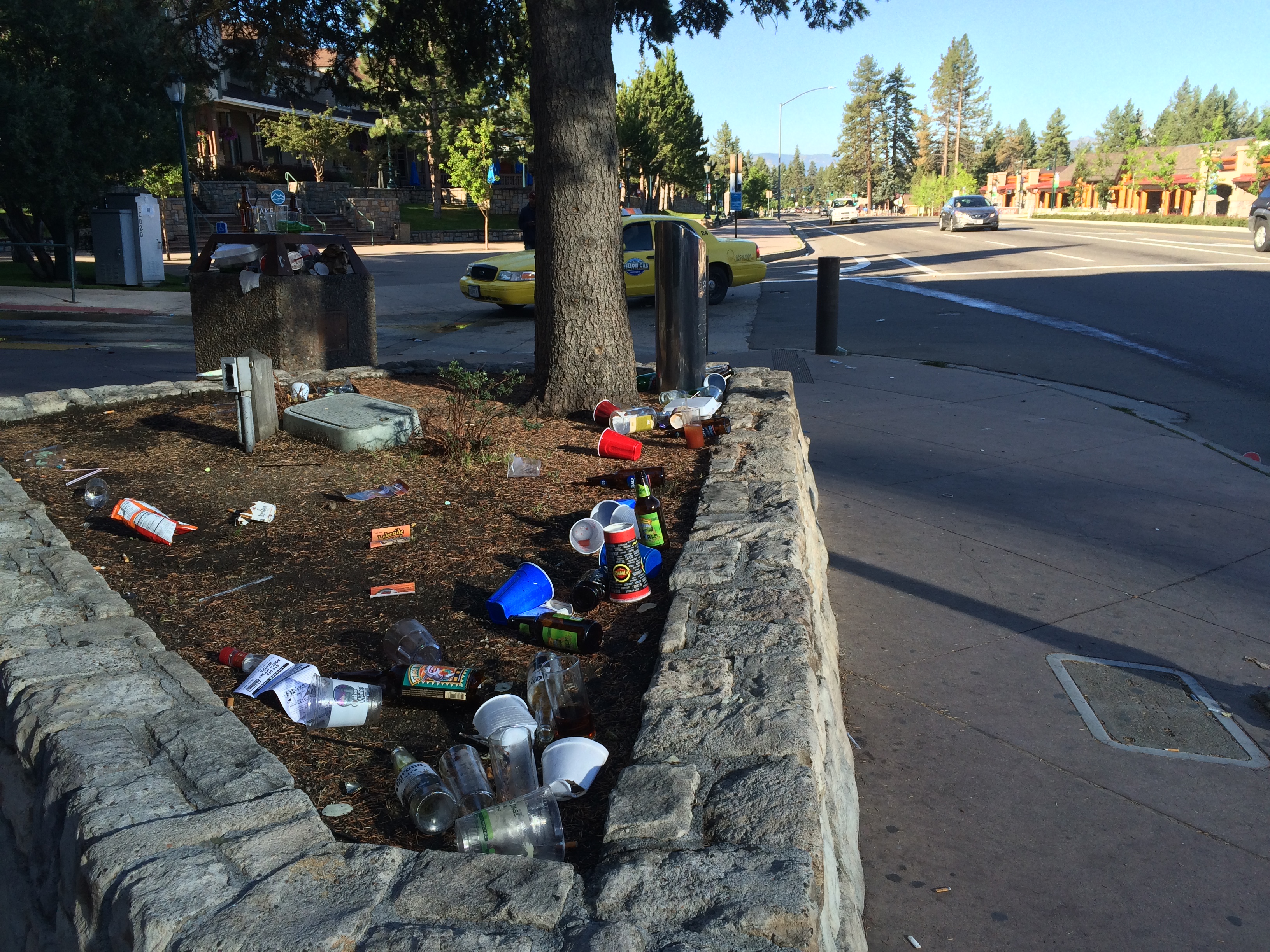
Trash in South Lake Tahoe left by July 4 partiers. Photo/Provided

Trash in South Lake Tahoe left by July 4 partiers. Photo/Provided

By Catherine Cecchi

Despite a great outreach push from land managers and local jurisdictions, environmental groups, and area businesses for Tahoe residents and visitors to clean up after themselves as they celebrated the Fourth of July, the evidence from Sunday morning indicated that we continue to have a significant problem with littering as people celebrate the holiday in South Tahoe.

Clean Tahoe, a South Tahoe nonprofit focused on litter abatement, removed more than 400 pounds of trash from the public roadway and sidewalks near the Stateline area on the morning of July 5. The largest problem area was along Stateline Avenue and Lakeshore Boulevard, where nine 30-gallon bags of litter were collected.

While Clean Tahoe staff did not take an inventory of what was collected, the overwhelming majority was bottles and cans, cups, cigarette butts, and food wrappers/packaging.

Clean Tahoe contracts with the city of South Lake Tahoe and El Dorado County to clean litter and illegally dumped items along our roadways and in neighborhoods on a year-round basis. Last year, more than 608-cubic-yards of trash and debris was removed from South Tahoe by the two-person field crew.

Because of the large concentration of visitors, Clean Tahoe focuses efforts on July 5 on the city streets near Stateline.

“This year the Stateline area wasn’t quite as bad as last year, but it is still pretty disappointing to see that much litter left out in our community after one night,” said Jeff Pollitt, Clean Tahoe field crew supervisor.

Clean Tahoe’s work was only one of many cleanups around the lake this year, with dozens of organizations, businesses, and land managers leading the efforts.

It’s been wonderful to see the attention being given to cleaning up after the 4th of July celebrations, and the volunteer participation for the beach cleanups in particular is really exciting. We’re hopeful that with continued outreach and awareness, we’ll have fewer litter issues each year.

Catherine Cecchi is program manager for Clean Tahoe.


Suspect accused of spitting on EDC deputy

An El Dorado County was arrested on Fourth of July for allegedly assaulting a sheriff’s deputy among other charges.

The deputy, whose name has not been released, heard what sounded like fireworks near the El Dorado Hills branch of the El Dorado County Library at 11pm July 4. The deputy located several people lighting and shooting off illegal fireworks from the back of a house in the 3800 block of Tilden Drive.

At the bottom of the driveway near the house, the deputy and security officer were confronted by 29 year-old Evan Lyons of Orangevale. Deputies said, Lyons was instantly confrontational, appeared angry, and was quite intoxicated. Lyons was uncooperative, became increasingly agitated and was verbally assaultive. People inside the house started to emerge and two dogs were released.

When an additional deputy arrived, Lyons was taken into custody. During the arrest and placement into the patrol car, Lyons was resistive. Once in the car, deputies said Lyons spit through the cage into the driver’s compartment and that on the way to the jail, Lyons continuously yelled using profanity and made racial slurs. He also allegedly threatened the deputy, spit on him and said he wanted all cops to die. The suspect also reportedly threatened to find the deputy’s family and described how he’d do them harm.

Lyons was booked at the El Dorado County Jail on charges of public intoxication, resisting arrest, and battery on a peace officer.

— Lake Tahoe News staff report


Fond memories of the Placer-Nevada League

By Mark McDermott, Sacramento Bee

One of the Sacramento region’s oldest semipro leagues was the Placer-Nevada League, founded by Allen “Scoop” Thurman of Colfax in 1923 and run by him until its demise in 1968.

Six teams competed in its inaugural season: Lincoln, Roseville, Colfax, Auburn-Newcastle, Grass Valley North Star Mine and Grass Valley Empire Mine.

The league had its share of memorable characters and moments.

▪ In 1950, Tommy Glaviano (Sacramento High School) hit three home runs in one game for the Lincoln Potters against the Placerville Bartletts. After the third homer, pitcher Edwin Jack Carpender (El Dorado) met him at home plate and shook his hand. Glaviano just completed his rookie season with the St. Louis Cardinals, hitting .267 in 87 games.

Read the whole story


Open house to feature multiple SLT departments

There will be an open house at the South Lake Tahoe Services Center on July 10.

This is part of the city’s 50th anniversary celebration.

The free event is from 2-5pm at 1052 Tata Lane.

The Services Center includes the city’s Planning, Building, Public Works, Capital Improvement, Engineering, and Streets/Snow Removal departments.

There will be displays of past projects and a chance to look at upcoming projects.


Report: 33% of Nevadans live in distressed communities

By Sandra Chereb, Las Vegas Review-Journal

CARSON CITY — On paper and with high-profile projects rising from the Nevada desert, the state’s economic recovery is in full swing. The jobless rate is down and companies are moving to the region, all good news for a state hit hard by the Great Recession.

But a new analysis being released today shows many communities in the Silver State are still struggling and have a long way to go in the cycle of economic rebirth.

Economic Innovation Group, a Washington bipartisan policy group, found that 33 percent of Nevada’s population lives in economically distressed communities, the highest percentage in the nation.

Georgia, South Carolina and Mississippi followed, each with 25 percent of their populations living in economically distressed communities. At the other end of the spectrum were states like Wyoming, North Dakota, Vermont, Iowa and Idaho, with distressed populations of 1 percent or less.

Read the whole story