Truckee project uncertain after cornerstone grocer leaves

By Sage Sauerbrey, Moonshine Ink

Nugget Markets officially pulled out of the Truckee Railyard development this month after determining the area would not be able to support it as well as two other new grocery developments approved in the last two months: a Raley’s at Soaring Way, and a Grocery Outlet at Gateway.

The loss of its cornerstone grocer puts an important component of the Railyard project, which has already endured its shares of hurdles, up in the air.

“To take the one prospect of a really great grocery store out of downtown Truckee, I don’t know how you can conclude it to be anything other than incredibly damaging,” said Douglas Wiele, president of Foothill Partners, the developer working with Nugget on the project. “It’s not clear to me whether there is a solution; we may just walk away from the whole thing … the town has decided that sprawl is more important than the downtown.”

Read the whole story


Tahoe receives Calif. Wildlife Conservation grant money

The Wildlife Conservation board this week approved approximately $33.1 million in grants for 22 projects to enhance stream flows to benefit fish and wildlife habitat throughout California.

The Legislature appropriated funding for these projects as authorized by the Water Quality, Supply and Infrastructure Improvement Act of 2014 (Proposition 1). A total of $200 million was allocated to the WCB for projects that enhance stream flow.

Projects were chosen through a competitive grant process, judged by the WCB, California Department of Fish and Wildlife (CDFW) and the State Water Resources Control Board.

Funded projects include:

  • A $609,970 grant to the University of California Regents for a cooperative project with UNR and the Desert Research Institute, to expand monitoring, scientific studies and modeling in the Tahoe-Truckee Basin. The results will guide watershed-scale forest thinning strategies that enhance stream flow within an area that provides critical habitat for threatened species. The project is located primarily on National Forest lands in the Lake Tahoe Basin and Tahoe National Forest.
  • A $4.8 million grant to The Wildlands Conservancy.
  • A $693,408 grant to the Humboldt Bay Municipal Water District.
  • A $726,374 grant to Mendocino County Resource Conservation District
  • A $5 million grant to the Sutter Butte Flood Control Agency.
  • A $851,806 grant to the Sonoma Resource Conservation District.
  • A $5.3 million grant to the Alameda County Water District.
  • A $3.9 million grant to The Nature Conservancy.


Tahoe resorts rejoice after week of storms

Tahoe area resorts would prefer snow dumps early in the season rather than late. Photo/Sierra-at-Tahoe

By Ed Fletcher, Sacramento Bee

Just in time for spring break, the late-season “atmospheric river” that dumped snow across the Sierra this week has ski resorts going from “waa” to “whoa!”

After below-average precipitation to start the season, the “miracle” storm may result in one of the snowiest Marches on record.

While ski resorts with deep pockets can buffer the impact of a weak winter with a sophisticated snow-making operation, none can escape the financial impact.

Read the whole story


Glider club awards scholarships to youths

The Minden Soaring Club awarded five scholarships to youth to help finance flight and ground instruction in preparation for obtaining a private or other glider rating.

Each of the $1,000 checks was awarded to youths who demonstrated they are interested in learning to fly gliders and/or who have already begun their training and need additional monetary assistance.  

Scholarship winners are: Ryan Holcomb of Carson City; Joshua Nord of Gardnerville; Ari Erickson of Carson City; Emily Hillman of Gardnerville; and Ivan Altunin of Incline Village. 

Glider pilots must go through the same certification procedures as powered airplane pilots, and with proper training, a pilot can solo a glider by age 14 and obtain their private pilot glider rating by age 16.


Raising healthy, well-adjusted kids starts at home

By Sheryce Allendorf

In a culture where alcohol, marijuana, and other substances are often sensationalized by the media, more and more youth are experimenting with, and/or using these substances on a regular basis. Whether this is the result of the glamorization of substances, growing up with adults using and partaking in controlled substance use, or trying to fit in, as a community we must do more to engage our youth and encourage healthy coping skills.

The California Center for Disease Control reported that 22 percent of high school students in California reported having five or more drinks in a row within a couple of hours in the previous 30 days. Although this statistic is from 2011, there has been an increase in binge drinking by youth 12 to 17 based on more recent studies.

Additionally, 9.4 percent of youth 12-17 were reported as current users of illicit drugs, which includes marijuana, cocaine, heroin, hallucinogens, inhalants, and misuse of prescriptions drugs.

As adults we may minimize the risks posed to youth who use alcohol or other drugs based on our own childhood experiences, belief system, or media, but research has shown that an individual’s brain continues to develop well into young adulthood. The use and/or abuse of alcohol and controlled substances in teens, can impact brain development and negatively impact neurocognitive functioning, which can impact how these youth function in adulthood.

Additionally, in 2014, 33 percent of youth ages 12-17 who use illicit drugs or alcohol had a co-occurrence of a major depressive episode. With the stigma surrounding mental health disorders, inability to obtain services, and one’s own denial, many youths are going without services that could support mental wellness, and instead, youth are using alcohol and other illicit substances to cope.

How do we help our youth? Whether you are parent, raising a child, or a member of our community, you play a vital role in assisting our youth to become the best they can be. The following are some ways help engage, support, and set examples for our youth:

·       Lead by example: If you are using illicit drugs or consuming alcohol which impacts your ability to manage daily responsibilities, seek out help and support.

·       Encourage community/recreational involvement.

·       Stay connected: eat a meal together, play a game, engage in meaningful conversation.

·       Make plans with your youth; give them something to which they can look forward.

·       Pay attention: pay attention to a youth’s verbal and non-verbal cues. If there have been changes in behavior, personality, or routine. Connect, ask, and provide support.

·       Set age appropriate boundaries, and expectations. Stand by your word.

·       Get to know your children’s friends, and their parents.

·       Trust your instincts; if you think something is cause for concern, act.

·       Seek out professional support.

Sheryce Allendorf is a residential clinician with Summitview Child and Family Services.


Tahoe book program earns Girl Scouts award

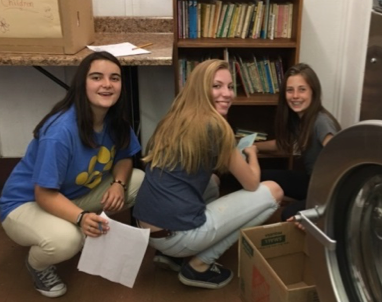
Molly Winslow, from left, Erika Strain and Mackenzie Nealis
set up bookshelves with free books. Photo/Provided

Three South Tahoe Girl Scouts, Molly Winslow, Erika Strain, and Mackenzie Nealis, are continuing their work after earning the silver award. They have created a program for kids and adults to be able to read books while they wash their clothes at four local Laundromats. 

The idea was inspired by the “libromats” (laundromat + library) of Cape Town, South Africa, featured on a 2015 National Public Radio broadcast. Girls spent many hours each day washing clothes by hand with a washboard. With donated money, washing machines and books were donated to wash their clothes and books were made available for the mothers to read to their children while their clothes were getting clean. 

Studies have shown that a home library can have the single greatest impact on a child’s education. Home libraries matter even more than money in predicting a child’s success in school. Many studies have shown that poorer communities have fewer books per household than wealthier communities. In one study, a neighborhood in Washington, D.C., where 61 percent of the children lived in poverty, there was on average only one book for every 830 children.

With donated bookshelves and books from the former St. Theresa’s School and the local community, the Tahoe girls have stocked almost 800 books to date. The bookshelves are located at Al Tahoe Laundry, High Sierra Laundry, Town & Country Laundromat, and Tahoe Keys Laundromat. The hope is that parents will spend time reading to their young children and older children can spend time reading on their own.

If someone really likes the book, it’s OK to take it home.

Although their Girl Scout silver award requirements have been met, the girls are committed to keeping the bookshelves stocked with books and of making this an ongoing community effort. To donate new or gently used children’s books, in English or Spanish, drop them off at St. Theresa Catholic School, 1041 Lyons Ave., South Lake Tahoe


How to keep a lawn healthy

By Melinda Myers

A healthy lawn is your best defense against lawn diseases and other problems. But when the weather favors the disease more than your lawn, problems can occur. 

Reduce the risk of disease by keeping your lawn healthy. Mow high to encourage deeply rooted grass that is more drought tolerant and resistant to disease problems.  Water early in the day so the grass leaves, blades, dry quickly and less water is lost to evaporation.

Apply the right type and amount of fertilizer at the proper time to limit the risk of disease. Regular fertilization, three to four times per year, encourages better results since most soils do not contain the essential nutrients for optimum growth.

Avoid high nitrogen quick release fertilizers that promote lush succulent growth that is more susceptible to disease. Instead use a low nitrogen slow release fertilizer that promotes steady growth that’s more drought tolerant and resistant to disease. 

Monitor lawns for brown patch when temperatures and humidity rise and grass remains wet for long periods of time. Infected lawns will have somewhat circular patches of thin light brown grass. Look for white cottony strands of fungal mycelium early in the morning on dew covered lawns. Check grass blades for small irregular tan spots with dark brown borders on the individual grass blades. Avoid heavy fertilization with fast release fertilizer in early spring and summer.

Look for dollar size to 6-inche diameter spots of bleached or light tan grass if you suspect dollar spot. Infected leaves have white lesions with reddish tan margins that often resemble an hourglass. Over and under fertilization, drought, water on the grass blades for extended time and mowing too low all increase the risk of this disease.

Closely examine lawns with a reddish hue to confirm the presence of rust disease. Rust infected lawns are covered with an orange or yellowish powder, the fungal spores, that can leave an orange residue on your shoes. Newly seeded and lawns weakened by inadequate fertilization and drought are most susceptible.

Stay alert for leaf spot diseases that can attack lawns. Avoid excess fertilization and watering late afternoon and evenings.

Once you discover a disease, visit a website like Milorganite.com for more detailed information and photos to help with diagnosis. Correct your lawn care practices to speed recovery and avoid problems in the future. Proper care and reseeding dead areas with disease-resistant grass varieties is usually enough to manage the disease. Be sure you need a fungicide before applying. These chemicals are costly, the results can be disappointing and when used improperly they can be harmful to pollinators and the environment.

Further speed recovery with a change in mowing habits. Continue to mow high but cut the healthy portions of your lawn first. Then cut the grass in the diseased areas. Once done, use a disinfectant to clean the mower blades then rinse with clear water. This along with collecting and disposing of clippings from the diseased areas of the lawn reduces the risk of spreading the disease next time you mow.

Provide proper care and monitor your lawn throughout the growing season. Discovering problems early means better results with less effort on your part.

Melinda Myers has written more than 20 books, including “Small Space Gardening and the Perfect Lawn” series. She hosts the Great Courses “How to Grow Anything” DVD series and the nationally syndicated Melinda’s “Garden Moment” TV and radio segments.


Barton employs device to help needle-shy patients

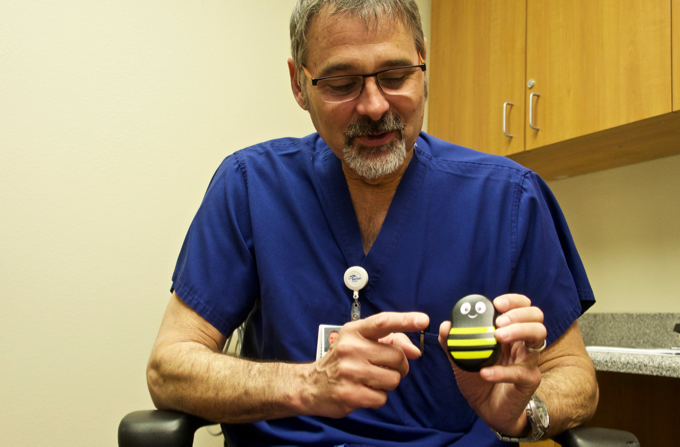
Nurse Ken Harvey is a believer in Buzzy helping needle-phobic patients. Photo/Kathryn Reed

By Kathryn Reed

For those who fear needles, there is no such thing as a simple little pin prick. It may end in a fainting episode which can ruin the rest of the day – where sleep is the only remedy to return to normal.

Health officials estimate at least 10 percent of the population has some form of needle phobia, also known as beonephobia. It was in 1997 that the phobia was recognized in the Diagnostic and Statistical Manual of Mental Disorders.

For those with extreme fear of needles it might mean avoiding getting the flu shot, other vaccinations or even having routine blood work done. It might also mean keeping one’s child away from needles as well.

“You need to make the first experience a non-painful experience,” said Ken Harvey, a registered nurse in the radiology department at Barton Memorial Hospital. “You should use a distraction the first time.”

If it’s a bad first experience, it’s possible the child will have issues as an adult where anxiety and apprehension are the norm around needles.

Barton this year started to use Buzzys as a way to distract patients from what is going on. They are clinically tested devices that have been around for a handful of years.

According to the Buzzy website, studies show the device reduces pain 56 to 88 percent of the time. They are battery operated and reusable after being cleaned.

“We put Buzzy between the brain and the pain,” Harvey told Lake Tahoe News. It’s placed a few centimeters higher than the insertion point.

In the short time Harvey been using it on patients – and he has only had adult patients – it has worked “extremely well” at least 90 percent of the time.

The concept is rather simple. The black and yellow device is designed to look like a bumble bee and then has a gentle buzzing sound, which is the vibration part of the device. The tiny blue ice pack resembles wings, and acts to numb the area. (There are Buzzys that look like lady bugs, too.)

The vibration stimulates the nerves, sending impulses to the brain. The end result is the patient is distracted, remains calm and is able to receive the injection without negative consequences.

Barton has seen such success with the Buzzys that more are being ordered for its various offices.


Opinion: Facebook is killing democracy

By Timothy Summers, The Conversation

What state should you move to based on your personality? What character on “Downton Abbey” would you be? What breed of dog is best for you? Some enormous percentage of Facebook’s 2.13 billion users must have seen Facebook friends sharing results of various online quizzes. They are sometimes annoying, senseless and a total waste of time. But they are irresistible. Besides, you’re only sharing the results with your family and friends. There’s nothing more innocent, right?

Wrong.

Facebook is in the business of exploiting your data. The company is worth billions of dollars because it harvests your data and sells it to advertisers. Users are encouraged to like, share and comment their lives away in the name of staying connected to family and friends. However, as an ethical hacker, security researcher and data analyst, I know that there is a lot more to the story. The bedrock of modern democracy is at stake.

You are being psychographically profiled

Most people have heard of demographics – the term used by advertisers to slice up a market by age, gender, ethnicity and other variables to help them understand customers. In contrast, psychographics measure people’s personality, values, opinions, attitudes, interests and lifestyles. They help advertisers understand the way you act and who you are.

Historically, psychographic data were much harder to collect and act on than demographics. Today, Facebook is the world’s largest treasure trove of this data. Every day billions of people give the company huge amounts of information about their lives and dreams.

This isn’t a problem when the data are used ethically – like when a company shows you an ad for a pair of sunglasses you recently searched for.

However, it matters a lot when the data are used maliciously – segmenting society into disconnected echo chambers, and custom-crafting misleading messages to manipulate individuals’ opinions and actions.

That’s exactly what Facebook allowed to happen.

Quizzes, reading your mind and predicting your politics

Recent reports have revealed how Cambridge Analytica, a U.K.-based company owned by an enigmatic billionaire and led at the time by candidate Donald Trump’s key adviser Steve Bannon, used psychographic data from Facebook to profile American voters in the months before the 2016 presidential election. Why? To target them with personalized political messages and influence their voting behavior.

A whistleblower from Cambridge Analytica, Christopher Wylie, described in detail how the company exploited Facebook users by harvesting their data and building models to “target their inner demons.”

How did Facebook let this happen?

The company does more than just sell your data. Since the early 2000s, Facebook has provided access to academic researchers seeking to study you. Many psychologists and social scientists have made their careers analyzing ways to predict your personality and ideologies by asking simple questions. These questions, like the ones used in social media quizzes, do not appear to have obvious connections to politics. Even a decision like which web browser you are using to read this article is filled with clues about your personality.

In 2015, Facebook gave permission to academic researcher Aleksandr Kogan to develop a quiz of his own. Like other quizzes, his was able to capture all of your public information, including name, profile picture, age, gender and birthday; everything you’ve ever posted on your timeline; your entire friends list; all of your photos and the photos you’re tagged in; education history; hometown and current city; everything you’ve ever liked; and information about the device you’re using including your web browser and preferred language.

Kogan shared the data he collected with Cambridge Analytica, which was against Facebook policy – but apparently the company rarely enforced its rules.

Going shopping for impressionable users

Analyzing these data, Cambridge Analytica determined topics that would intrigue users, what kind of political messaging users were susceptible to, how to frame the messages, the content and tone that would motivate users, and how to get them to share it with others. It compiled a shopping list of traits that could be predicted about voters. 

Then the company was able to create websites, ads and blogs that would attract Facebook users and encourage them to spread the word. In Wylie’s words: “they see it … they click it … they go down the rabbit hole.”

This is how American voters were targeted with fake news, misleading information and contradictory messages intended to influence how they voted – or if they voted at all.

This is how Facebook users’ relationships with family and friends are being exploited for monetary profit, and for political gain.

Knowingly putting users at risk

Facebook could have done more to protect users.

The company encouraged developers to build apps for its platform. In return, the apps had access to vast amounts of user data – supposedly subject to those rules that were rarely enforced. But Facebook collected 30 percent of payments made through the apps, so its business interest made it want more apps, doing more things.

People who didn’t fill out quizzes were vulnerable, too. Facebook allowed companies like Cambridge Analytica to collect personal data of friends of quiz takers, without their knowledge or consent. Tens of millions of people’s data were harvested – and many more Facebook users could have been affected by other apps.

Changing culture and politics

In a video interview with the Observer, Wylie explained that “Politics flows from culture … you have to change the people in order to change culture.”

That’s exactly what Facebook enabled Cambridge Analytica to do. In 2017, the company’s CEO boasted publicly that it was “able to use data to identify … very large quantities of persuadable voters … that could be influenced to vote for the Trump campaign.”

To exert that influence, Cambridge Analytica – which claims to have 5,000 data points on every American – used people’s data to psychologically nudge them to alter their behaviors in predictable ways.

This included what became known as “fake news.” In an undercover investigation, Britain’s Channel 4 recorded Cambridge Analytica executives expressing their willingness to disseminate misinformation, with its CEO saying, “these are things that don’t necessarily need to be true, as long as they’re believed.”

U.S. society was unprepared: 62 percent of American adults get news on social media, and many people who see fake news stories report that they believe them. So Cambridge Analytica’s tactics worked: 115 pro-Trump fake stories were shared on Facebook a total of 30 million times. In fact, the most popular fake news stories were more widely shared on Facebook than the most popular mainstream news stories.

For this psychological warfare, the Trump campaign paid Cambridge Analytica millions of dollars.

A healthy dose of skepticism

U.S. history is filled with stories of people sharing their thoughts in the public square. If interested, a passerby could come and listen, sharing in the experience of the narrative.

By combining psychographic profiling, analysis of big data and ad micro-targeting, public discourse in the U.S. has entered a new era. What used to be a public exchange of information and democratic dialogue is now a customized whisper campaign: Groups both ethical and malicious can divide Americans, whispering into the ear of each and every user, nudging them based on their fears and encouraging them to whisper to others who share those fears.

A Cambridge Analytica executive explained: “There are two fundamental human drivers … hopes and fears … and many of those are unspoken and even unconscious. You didn’t know that was a fear until you saw something that evoked that reaction from you. Our job is … to understand those really deep-seated underlying fears, concerns. It’s no good fighting an election campaign on the facts because actually it’s all about emotion.”

The information that you shared on Facebook exposed your hopes and fears. That innocent-looking Facebook quiz isn’t so innocent.

The problem isn’t that this psychographic data were exploited at a massive scale. It’s that platforms like Facebook enable people’s data to be used in ways that take power away from voters and give it to data-analyzing campaigners.

In my view, this kills democracy. Even Facebook can see that, saying in January that at its worst, social media “allows people to spread misinformation and corrode democracy.”

My advice: Use Facebook with a healthy dose of skepticism.

Timothy Summers is director of innovation, entrepreneurship, and engagement at University of Maryland.


CalPERS retirees worried about their pensions

By Adam Ashton, Sacramento Bee

Call it the Loyalton effect.

CalPERS’ decision in late 2016 to slash pensions for four retirees from the tiny mountain town startled the state’s public workers so much that their confidence in the $354 billion fund began to plunge to its lowest level in five years.

It showed in an annual survey conducted by the California Public Employees’ Retirement System that gauges how public employees, retirees and local government leaders feel about the state’s largest pension system.

Read the whole story