Lack of supply hurts Tahoe real estate sales

By Ben van der Meer, Sacramento Business Journal

The major force holding back Lake Tahoe-area real estate through the first half of 2015 is the same as elsewhere: lack of inventory.

And though many experts think a lot of new construction could solve the situation elsewhere, that’s not likely for Tahoe.

Sue Lowe, corporate broker and senior vice president at Chase International in Tahoe, said the lack of supply is because improving economic conditions means no one feels compelled to sell.

Read the whole story


Free concert to benefit CASA

CASA El Dorado is hosting a free concert at Lakeview Commons in South Lake Tahoe on Aug. 14 from 4:30-8pm.

The CASA fundraiser will feature two local bands: Howlen Wynd and Strange Weather.

There will be local vendors, a beer and wine garden, a live/silent auction, raffle prizes and more.


For more information, contact Alexis Foley at 530.573.3093 or alexis@casaeldorado.org.


Snippets about Lake Tahoe

ted gaines·       State Sen. Ted Gaines, R-El Dorado, and Assemblyman Mike Gatto, D-Glendale, have introduced legislation that would make it a serious state crime to fly a drone over a wildfire.

·      Dan Bern is having a release party for his CD “Hoody” on July 31 at 8pm at Sierra Valley Lodge, 103 Main St., Calpine. Tickets are $7 and $10. For more info, call 888.477.9288.

·      July 11 is the 35th annual Death Ride bike event in Alpine County.

·      It’s time to signup for Douglas County adult softball leagues. For more info, call 775.782.5500.

·      A section of the Legacy Trail in Truckee (at and near the Martis Creek Bridge) will be closed July 16 from 7am-5pm for asphalt repairs.


Business plan creation topic of workshop

Lake Tahoe South Shore Chamber of Commerce in partnership with South Lake Tahoe is offering a Create Your Business Plan workshop on July 22.

The goal is by the end of the workshop participants will have a completed draft of a business plan.

Topics covered during the workshop will include business vision and mission, overall business objectives, competitor analysis, unique selling proposition, business strategies, budget, income projections, startup capital and an action plan that describes what specific tasks entrepreneurs must complete now and going forward as they grow their businesses. This workshop is ideal for those thinking about starting a new business or current business owners who need to update or fine-tune their existing plans.

The workshop will be from 1-5pm at the chamber, 169 Highway 50, Stateline. The cost of the workshop is $15 for chamber members and $20 for non-members. For more detailed information or to register for the event, go online.


El Dorado County spending taxpayer money on PR agency for grand jury damage control        

By Kathryn Reed

El Dorado County has hired a public relations firm to primarily focus on getting out a positive message about the latest grand jury report.

The scope of work with Endicott Communications out of Roseville says the primary objectives are:

“1. County more favorably perceived by residents and other key regional stakeholders.

“2. Media coverage and other external communications regarding grand jury reports reflect county key messaging.”

Pamela Knorr, when she was acting CAO, signed the contract on June 15. Lake Tahoe News has been trying to get a copy of it since June 17 when the unfamiliar contact information appeared on a press release. Knorr never responded to the request. Auditor-Controller Joe Harn provided a copy of the public document on July 8, the same day he received it. As of Wednesday he had not received an invoice from the firm.

The $40,000 contract is below the threshold in which the Board of Supervisors would have to approve the expenditure.

The contract goes on to say the flacks are to develop talking points for county staff to use in regards to the grand jury, write and distribute press releases, develop content about the grand jury report for the county’s website and social media, and monitor and report on grand jury related media coverage.

One of the more highly charged grand jury reports was about the Human Resources Department, of which Knorr is head of. She was also acting CAO from December 2014 until June 29.

This isn’t the first time the county has sought outside help instead of relying on staff which it had done up until about three years ago.

Then CAO Terri Daly hired Stephanie McCorkle on May 13, 2014, to do public relations work. The one-year contract was not to exceed $25,000. She left before half the year’s term was up, but billed for nearly the entire amount of the contract.

There was also Kittelson and Associates, which entered a $516,995 three-year contract with the county in December to provide public outreach for a five-year capital improvement program and traffic impact mitigation fee program updates. In the document is a $44,720 contract with Flint Strategies to be a subcontractor of Kittleson’s for PR work.


Opinion: Drones can be deadly to firefighters

By Robert Westover

Imagine if a hostile country sent an Unmanned Aircraft System or UAS, otherwise known as a drone, to disturb the efforts of firefighters during a catastrophic wildfire. The confusion that might ensue could cause loss of life and property as flames jump fire lines simply because resources have been diverted or grounded to identify and remove the UAS.But these threats aren’t coming from an enemy state. They are being flown by our own citizens and impeding the job of our firefighters.  This isn’t a script for a Hollywood film. It’s really happening.

Recently, unauthorized drones disrupted wildfire operations in southern California twice in one week. Because of these drones, air tanker operations were suspended on both the Sterling Fire and Lake Fire on the San Bernardino National Forest.

“If a UAS is detected flying over or near a wildfire, we will stop air tankers from dropping fire retardant, helicopters from dropping water and other aerial firefighting aircraft from performing wildfire suppression missions until we can confirm that the drone has left the area and we are confident it won’t return,” said Steve Gage, U.S. Forest Service representative on the National Multi-Agency Coordinating Group at the National Interagency Fire Center in Boise, Idaho.

Firefighting aircraft, such as air tankers and helicopters, fly at very low altitudes, typically just a couple of hundred feet above the ground, the same as drones flown by members of the public. This creates the potential for a mid-air collision that could seriously injure or kill aerial or ground firefighters.  In addition, if a drone loses its communication link it could fall from the sky, causing serious injuries or deaths of firefighters on the ground.

Temporary flight restrictions or TFRs are typically put in place during wildfires that require aircraft, manned or unmanned, that are not involved in wildfire suppression operations to obtain permission from fire managers to enter specified airspace.

The FAA, Forest Service, Department of the Interior and other wildland fire management agencies consider drones, including those used by members of the public for hobby and recreation purposes, to be aircraft and therefore subject to TFRs.

Members of the public should not fly drones over or near wildfires even if a TFR is not in place to prevent accidents and disruption of suppression operations. Those determined to have interfered with wildfire suppression efforts may be subject to civil penalties and potentially criminal prosecution. For guidance to those flying drones for hobby or recreation purposes, go online.

Robert Westover works in the office of communications for the U.S. Forest Service.


Military takeover of Nev. wildlife refuge angers conservationists

Bighorn sheet are seen at the Desert National Wildlife Refuge. Photo/U.S. Fish & Wildlife Service

Bighorn sheet at the Desert National Wildlife Refuge. Photo/U.S. Fish & Wildlife Service

By Henry Brean, Las Vegas Review-Journal

Conservation groups are blasting a plan in Congress that could split Desert National Wildlife Refuge north of Las Vegas and hand half of it over to the U.S. Air Force.

The change, tucked quietly into the House version of a massive defense authorization bill now in conference committee, would make land withdrawals permanent for the Nevada Test and Training Range and put the Department of Defense in charge of almost 850,000 acres currently managed by both the Pentagon and the U.S. Fish & Wildlife Service.

Attempts to get a Department of Defense comment on the plan were unsuccessful Wednesday, but the proposal’s backers say it will save the military the time and expense of having to reapply for an extension every couple of decades just to keep using the land the way it has been used since World War II.

But environmental advocates worry it could curtail future wildlife research and management on that part of the refuge.

Read the whole story


Talk to focus on Reno’s economic impacts on Tahoe

How economic growth in Reno will impact the Lake Tahoe Basin, its workforce and its local economy will be the topic of a lunch on Aug. 7.

Mike Kazmierski, CEO of the Economic Development Authority of Western Nevada, will help facilitate a discussion to dig deeper into the possible scenarios  for Tahoe associated with development in Reno. The goal is for participants to identify steps to take for the Tahoe region to ensure its workforce, businesses and economy are prepared for what’s next.

The event is from noon-2pm at Lake Tahoe Resort Hotel in South Lake Tahoe. This lunch is presented by the Lake Tahoe South Shore Chamber of Commerce and the Tahoe Prosperity Center. Registration is $25 and includes lunch. Reservations may be made online.


Nev. firms get OK to use drones for photography

By Daniel Rothberg, Las Vegas Sun

Most Nevada companies that have received permission from the federal government this year to fly drones will be using their unmanned aircraft to take photos and video.

That’s according to data released last week from the Center for the Study of the Drone at Bard College, which compiled a database of the FAA’s progress in granting waivers to fly small drones in national airspace.


Nevada is one of six designated drone test sites the FAA is using for research before drones are fully integrated into the airspace.

Read the whole story


Truckee tackling climate change

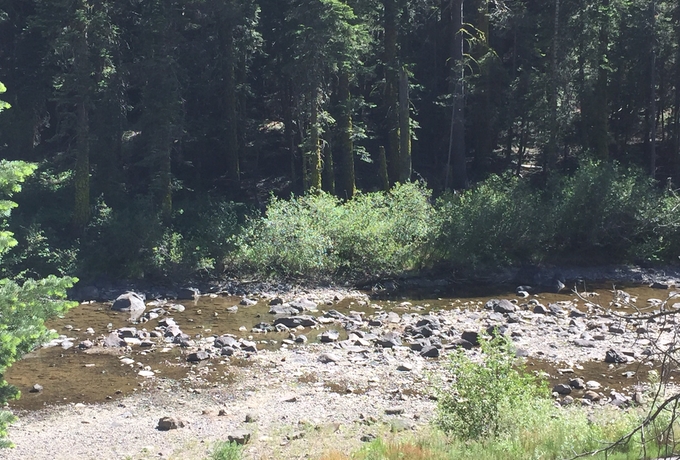
The Truckee River is a trickle between Tahoe City and Truckee. Photo/LTN

The Truckee River is a trickle between Tahoe City and Truckee. Photo/LTN

By Linda Fine Conaboy

TRUCKEE – Whether to jump aboard the global warming freight train or to simply remain at the station as the issue continues to heat up was the question posed last week at a Truckee climate planning workshop.

Town Manager Tony Lashbrook explained that the mission, moving forward, is to scope out, process and budget a greenhouse gas inventory and how the town might pursue a climate action plan.

The meeting, though fairly well represented by interested and seemingly supportive stakeholders, among them Truckee Donner Public Utilities District, a parks and recreation manager, a representative from the Truckee River Watershed Council and several interested citizens, did not, according to Lashbrook, include all of those who could have been there.

“I’m happy with the way the meeting went, though,” Lashbrook said July 7. “The objective was a workshop to educate community members, the town council and others on climate change. We wanted to point the compass to define the purpose and benefits of doing climate planning in California.”

To that end, Sierra Business Council and a group called the Local Government Commission, both nonprofit organizations, led the workshop they dubbed Climate Policy 101, starting with a presentation followed by public comment, and a question-and-answer session.

According to its website, SBC works closely with Sierra Nevada cities, providing training to staff and assisting them in preparing greenhouse gas emissions inventories, a first step in a jurisdiction’s climate protection initiative.

The carbon cycle, explained SBC President Steve Frisch, is a simple biochemical process where carbon is exchanged. It’s a series of processes by which carbon compounds are interconverted in the environment, chiefly involving the incorporation of carbon dioxide into living tissue by photosynthesis and its return to the atmosphere through respiration, the decay of dead organisms, and the burning of fossil fuels.

Carbon dioxide makes up 1 percent of the world’s atmosphere. Frisch said his agency’s goal is to figure out how to advance California’s policy, which demands that carbon be reduced to 1990 levels by 2020.

“When we burn fossil fuel, we return it to the atmosphere. The recent fire in Yosemite emitted as much carbon dioxide as all of the emissions recorded in Southern California in a year,” Frisch said.

Reducing these emissions is Frisch’s passion. What’s happening, he said, is that across the board, state policy is driving reduction, and California is meeting its goals.

Cap and trade plays a role. However, according to Frisch, who presented an extremely simplified definition, those who reduce their greenhouse emissions can sell them and those who don’t, can buy them, with all money from this project funneled into greenhouse emission reduction.

The Environmental Protection Agency, on its website, explained that successful cap and trade programs reward innovation, efficiency and early action and provide strict environmental accountability without inhibiting economic growth.

According to Frisch, this is important because the revenue side of the equation is driving a bunch of state programs — by 2020 the fund will total $5 billion, portions of which can be accessed by local entities meeting their pre-established goals.

Lashbrook said because of its location Truckee is not required to do climate planning. However, there are definitely big incentives and benefits to developing such a plan, not to mention the residual good to be gained from efforts to reduce global warming.

Greg Jones, vice president of SBC, cited a litany of positive reasons to embark on these kinds of programs: cleaner air leading to a reduction of asthma and obesity; reduction in the probability of catastrophic wildfires, green building benefits, wiser water usage, advances in land use and big pluses on the business side of things.

While the reasons to actively seek to reduce our carbon footprints are compelling, the looming question is, how to do this?

Kate Meis, executive director of Local Government Commission, led that charge. By way of explanation, LGC is a nonprofit, fostering innovation in environmental sustainability, economic prosperity and social equity.

Since the majority of carbon emissions come from private vehicles, Meis discussed the need to make alternatives to driving cars more attractive and then how to optimize that driving. She also talked about the need for in-fill projects, more efficient vehicles, mixed-use neighborhoods, flood protection projects, green infrastructure, “cool” roofs and water recycling.

And when funds finally do become available, it’s important to be pro-active in how to spend the money. Meis discussed municipal leadership, regulations and community engagement. And most important to advocates is how to actively engage the public in these programs, should they finally come to fruition.

Meis said Truckee has done a good job in meeting the goals it now has in place, such as its low-impact development standards and green building policies. But the belief more needs to be done and this is the charge of Truckee’s community leaders. Now they must discern if the area’s citizens have the fire in their bellies to climb on board this quickly moving freight, and then they must determine how to get it done.

Meis said it’s important to have goals, even little ones that are easily measured and then to demonstrate a method as to how to get there. “There needs to be a broad and deep collaborative process among departments and the public to develop a plan for combatting climate change.”