Snowmaking may help save disappearing glacier

By Julie Dugdale, Outside

The disheartening rate of glacial retreat in the face of climate change isn’t a new concern for scientists and outdoor enthusiasts. But ski behemoth Whistler Blackcomb has a particularly vested interest.

As one of two North American resorts to offer summer skiing and snowboarding on a glacier, the revered ski area—specifically, Blackcomb Mountain’s Horstman Glacier—has become a summer training destination for ski and snowboard teams from around the globe.

The problem: A couple of sparse snowfall years combined with rising summer temperatures have caused the glacier’s mass balance to dwindle, which puts the resort’s summer season—and the revenue it generates—at risk.

The proposed solution: snowmaking. The idea is to stabilize the glacier’s movement enough to support resort operations and, ideally, to reverse the recession—eventually.

Read the wholes story


Tesla buys 2,000 more acres in Northern Nevada

By Sandra Chereb, Las Vegas Review-Journal

Tesla Motors Inc. is expanding its presence in the Northern Nevada desert. Records from the Storey County assessor‘s office shows the California-based electric car maker recently purchased nearly 2,000 more acres in the Tahoe-Reno Industrial Center east of Reno, where it is building a massive battery factory in partnership with Japanese electronics maker Panasonic Corp.

The acquisition triples the size of Tesla‘s property holdings in the Silver State, bringing total acreage to around 3,000.Tesla bought 1,000 acres in the industrial park last year. Tesla, led by billionaire chief executive Elon Musk,is building a $5 billion, 5 million square-foot manufacturing plant where it intends to produce lithium ion batteries.Musk has said the batteries are key to the California car maker‘s goal of mass marketing its fast and sporty electric cars and make them more affordable to the general public.

Read the whole story


IDs released of those involved in fatal crash

It will be up to the El Dorado County District Attorney’s Office if charges are filed in the death of Skye Melzer.

The 21-year-old South Lake Tahoe woman was the passenger on a motorcycle that was hit by a truck on Highway 50 on July 5.

Melzer died at Renown Medical Center in Reno from her injuries.

Michael Cearley, 54, of South Lake Tahoe was turning left from the highway onto Modesto Avenue when he struck the motorcycle what was driven by Harrison Russel, 23, of South Lake Tahoe, according to officers. Russel sustained minor injuries and was treated at Barton Memorial Hospital; Cearley was not injured.

Alcohol and drugs were not a factor, nor was weather, according to officers.

— Lake Tahoe News staff report


Officials: Forest health, fire, water all related

Forest thinning projects help create a healthy watershed. Photo/LTN file

Forest thinning projects help create a healthy watershed. Photo/LTN file

By Kathryn Reed

What happens in the Sierra, does not stay in the Sierra. That is the message those tasked with managing land, water and fire suppression in the mountains are trying to convey to people downstream and to politicians in Sacramento and Washington, D.C.

The goal is to change how forests are managed. In part this has to do with the U.S. Forest Service now spending more money on fire suppression than on fire prevention. Prevention – aside from education – comes in the form of thinning forests so they are healthy and less prone to a catastrophic fire. Healthy forests also allow for more water to enter the aquifers because there are fewer trees absorbing the moisture. With them spaced out more, it means more snow on the ground.

All of this is important to the Lake Tahoe Basin because the Forest Service owns about 80 percent of the land. And most of the 25 million acres in the Sierra Nevada are controlled by the USFS, with National Parks, Bureau of Land Management and private owners making up much of the rest of the ownership puzzle.

The 2007 Angora Fire helped spur collaboration in the basin. Photo/Lake Valley Fire

The 2007 Angora Fire helped spur collaboration in the basin. Photo/Lake Valley Fire

Richard Solbrig, South Tahoe PUD general manager, told Lake Tahoe News that a comprehensive approach to the ecology of Lake Tahoe is critical.

Fires are burning hotter because of the massive amount of fuel in the forests. The mortality rate from the drought will compound that scenario. It used to be the burn rate on average was 20 percent. The Rim Fire by Yosemite was 40 percent and the King Fire by Pollock Pines was 50 percent.

“There’s a lot of landscape with too many trees. It’s not healthy. It’s not the way it was historically,” Jim Branham, executive officer of Sierra Nevada Alliance, said.

He was one of several speakers July 15 at a forum hosted by South Tahoe Public Utility District about the threat of high intensity wildfire at Lake Tahoe. The nearly 40 people in attendance represented the USFS, CalFire, most fire districts in the basin, Association of California Water Agencies, Tahoe Regional Planning Agency, League to Save Lake Tahoe, Tahoe Fund, Tahoe Resource Conservation District, staff from the offices of Sens. Barbara Boxer and Dean Heller and Reps. Mark Amodei and Tom McClintock, and others.

Jerry Brown on April 1 stands in a field by Sierra-at-Tahoe that should be covered in snow. Photo/Susan Wood

Jerry Brown on April 1 stands in a field by Sierra-at-Tahoe that should be covered in snow. Photo/Susan Wood

“It took the drought for the governor to stand in a meadow and see the significance of the Sierra,” Branham pointed out. This was in reference to when Jerry Brown attended the last snow survey at Echo Summit this spring.

With the majority of California’s potable water coming from the Sierra, the value and importance of this swath of land cannot be understated. The lack of snowfall is like turning the spigot off for the rest of the state.

The Association of California Water Agencies, which is comprised of 430 public water agencies in the state, this spring came out with a framework to improve the resiliency and management of headwaters like the Sierra.

One of the recommendations was: “Stakeholders should invest and participate in landscape-level research that explores water and forestry relationships, including ecological forest thinning which can have multiple benefits for water supply reliability, water quality and ecosystems.”

The Sierra Nevada Conservancy this spring launched the Sierra Nevada Watershed Environmental Improvement Program. The key outcomes are to increase funding for the watersheds and identify policies that impede the process of creating a healthy watershed.

It was acknowledged that ultimately laws might need to be changed at the state or federal levels to get a better functioning system.

Money – or the lack of it – was a reoccurring theme among the speakers. While there is some disagreement on what should be done, let alone the priorities, the bigger issue is there isn’t enough money for projects no matter what decisions are made.

The short-term goals of Wednesday’s gathering were to get people talking and to build on collaboration that already exists.

Dennis Cocking, who is working as a consultant to South Tahoe PUD, spoke about how the water agencies in the basin have been collaborating for a number of years, especially after the 2007 Angora Fire. This has allowed the group to be able to get funding for projects. The agencies are also working so water can flow from one district to the others. It happened with Gondola Fire in 2002 and Angora.

The other immediate point was for political operatives to hear the message. This is critical with the latest version of the Lake Tahoe Restoration Act having been introduced this month. That $415 million piece of legislation includes $150 million for fire prevention.


Opinion: Tahoe — a glass half-empty

By Garry Bowen

Back around May Day, I wrote an article “A Glass Half-Full”, as a commentary on South Lake Tahoe celebrating  a 50th anniversary of its incorporation while at the same time having several workshops on the question of what SLT wants to be when it grows up, highlighted by looking at each of those workshops, from the original standpoint of until we know and find shared agreement as to who we are, we won’t know why we’re caring for a future for the next 50 years.

Let’s take another look, under the promised title, “A Glass Half-Empty”. A bit darker of a full mirrored reflection,  as Tahoe’s proposed and purported successful future may depend on it.

Garry Bowen

Garry Bowen

As an observation in that earlier May Day piece (not by accident was that simile used), some have sensed that these workshops “barely touched upon how to turn the ideas into reality”, so I’ve been pondering the actual directions seen since that time, given the coming and going of Memorial Day,  several soft opening months trial run of the fulfillment of our fourth casino being back in operation, and the just-completed 4th of July.

In a “Glass Half-Full”, included within was a cryptic comment: “examples of other strategic missteps lie in wait”; unfortunately, a “half-empty” approach turns out to be prescient for purposes of follow-through, as an in years past perspective was used in the first instance to share partially what a Tahoe experience was like then, as so many transitory lives do not have that perspective, nor apparently do they do now.

Today’s perspective has not gotten any better, as the word “abysmal” has come into play several times.

But adjustments can be made to shift to higher quality, if the now-seen gap can be creatively fulfilled.

The following comments will refer to basically two errant directions, both related to Tahoe South’s implied direction of Tahoe’s viable and vital experiences for our visitor-based economy. The first would be the current revival of the idea that we are to become “America’s All-year Playground”, the slogan that accompanied the time-span of SLT’s incorporation period in 1965, which ongoing earnest efforts of many young local staffs now suggest is going to happen – the new trail extensions, the new bicycle facilities, the continued mapping of our extensive trail network, even Vail’s corporate entry into summer activities complementary to “iffy” winter prospects, are all suggestive of fulfillment of that professed desire.

Problem is, most of the current visitor-based emphasis is on hanging around the largest provided venue for them, Heavenly Village, as a majority never venture very far away, like outbound for other activities in the area, relying once again on mostly a day-tripper crowd, a lot of whom are never seen downtown at all, and vice-versa. Marriott has some 4,000 locations around the world, Tahoe being but one of those that might be chosen to visit, so I believe it is Tahoe’s earlier known cachet that is the attraction, but it may not end up to be too fruitful in building a newer clientele unless new marketing strategies are deployed to fill the gaps.

It would appear that most visitors there want to be associated with Tahoe, but are not really experiencing it in its fuller versions or glory, in spite of what outgoing surveys might indicate.

After all, it is all of us that are here that are to know the difference, and by all accounts we do not.

That would lead to item No. 2, the current situations associated with our casino corridor, still thought to be our “core” of economic activity, at the very least in their opinion – two of the most prominent, closest to the California-Nevada state line, with entrepreneurial pedigrees unique to Lake Tahoe, and the other two, with a more variegated background, in spite of their long-standing traditional family connection.

Noting that Nevada proper has a very slight improvement in gaming revenues throughout the state, Stateline’s were nevertheless down over 6 percent, which suggests that either the addition of a fourth entity did nothing to stimulate an increase in market share to cover another third (33 percent) addition to the real estate, or that, in spite of a promotional “splash”, any new clientele were not satisfied or impressed.

That latter comment is worthy of a fuller look, as interactions I have had suggest that unless the service accompanies the new digs, the outlook for much repeat business is not too good, as “satisfaction will not bring them back,” as the 9-lives scenario hopes.

Combine that, for now, with the previous category idea of underutilized recreational facilities that local folks will most certainly enjoy, but which won’t do much to increase the tax base or revenue streams, then the significance of a marketing void becomes all the more apparent. The “need to grow up” includes knowing what steps to take that may overcome what “adolescent” tendencies need to be changed.

As my schedule is very flexible, yet includes a significant background here, I meet people from all over the world, as we all can and do, but I ask them of their experiences, from a perspective of knowing what questions to ask, which quite often require more than an “I’m fine” response to “How are you ?”

The most recent one was a young professional woman from Tasmania, whose friends in Reno and she decided that after conducting her business in Colorado, then to Nevada, that they wanted something different, exciting, and fun, so they chose coming up from Reno to stay at our newest venture, which promised the adjectives above – but when she can report that they were sorry they did that – that from the valet parking, to the front desk, to the bellman, to the wait for the entrée, when they wanted to go have the fun promised, it became quickly apparent that it was not to be delivered.

That prompted from a young, sophisticated global traveler a conclusion that the experience was “abysmal”, a descriptive word used in the English-speaking world, but not in any way as PR spin.

Unfortunately for Tahoe in this seemingly isolated and particular case, this has been too often mirrored these days regardless of the specific location, which of course has nothing to do with the creation of the original Tahoe cachet still reflected in the four, five, and six-color brochures touting the exciting and beautiful happenings to be had here.

The honest and sincere attempts at identifying ourselves from the recent past will not be fully realized, nor will our planned success in redeveloping our economic infrastructure, if all these efforts are not combined with the realization that our visitors are not just responsible for the jobs we have, but also serve as opportunities to improve our own attitudes about the experiences they expect and deserve while they’re here, and that staff’s management organize themselves in such a way to allow the staff to bring that experience to fruition.

Bottom-line issues simply cannot intrude into understaffing and undertraining – that  only contributes to what is known in the human resource field as “survival-hiring” – having too many slots to fill with the closest warm-body, as the time is not devoted to training them adequately and appropriately for the tasks they were chosen to do. With that, the term “turnstile” comes to mind.

After all, the reminder is that “service” is the only product we have, as we have no factories to produce it, just our presence in their experience of visiting here.

Nothing contributes to a “buzz kill” quicker than to encounter someone not happy or content in their position – that resonates far beyond the actual time spent in the encounter, by either side – and now, the farthest reaches of the globe don’t have a spokesperson for Lake Tahoe, including Mauritius, another resort community in the middle of the Indian Ocean … the conversation previous to the one mentioned above, as the word used then was “dismal”, another word not often chosen by professionals.

Of course, we won’t see those words in any brochure – while the experience itself gains steam all over.

Tahoe need not be part of a “picture-postcard mentality”, unless we want to end up thinking of ourselves as just another “pretty face”, as, trust me, there are plenty of them around the entire globe.

Until that realization hits home, the glass doesn’t just remain half-full, but will stay half-empty.

Garry Bowen has more than a 50-year connection to the South Shore, with an immediate past devoted to global sustainability, on most of its current fronts: green building, energy and water efficiencies, and public health. He may be reached at tahoefutureforum@gmail.com.



Opinion: United approach benefits Lake Tahoe

By Casey Beyer

History shows time and time again our greatest accomplishments at Lake Tahoe are achieved when people work together. In the past, Tahoe was known as a place where unproductive interactions between stakeholders led to a stunning decay in our environment and our economic vitality, creating a region that seemed frozen in time.

We face major environmental challenges at Tahoe, including the uncertainties of climate change. And as Albert Einstein said, “We can’t solve problems by using the same kind of thinking we used when we created them.”

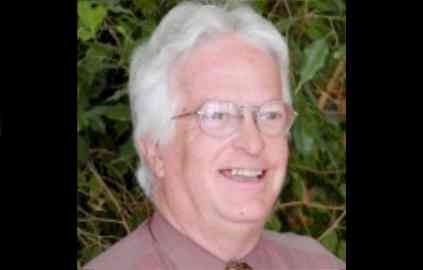
Casey Beyer

Casey Beyer

Fortunately, today, we have a strong and broad coalition of people who are working to meet those challenges head on. We must remember the lessons from our past and focus on working together and finding innovative solutions to achieve our next greatest accomplishments.

One recent example of people working together is the volunteer beach cleanups organized to pick up more than 2 tons of trash left behind by July 4 crowds.

The League to Save Lake Tahoe organized more than 300 volunteers who took time out of their own holiday weekends to pick up 1,800 pounds of trash carelessly left on our beaches. Similar efforts were undertaken by K&K Services, Clean Tahoe, and no doubt by many others. These volunteers deserve our thanks for stepping up to keep our environment and communities free of litter.

But keeping people from littering in the first place is another way to address this problem. Tahoe Fund, the Tahoe Regional Planning Agency, and dozens of other agencies, nonprofit groups, and businesses teamed up to create the innovative Take Care campaign. We have created an outreach campaign that aims to improve environmental awareness and stewardship among our visitors and residents and prevent such messes.

Take Care messages and graphics are available for free online. TRPA encourages people to use them every way possible. The colorful and creative messages are a subtle way to remind people that we all have a role to take better care of Tahoe by doing simple things such as properly disposing of our trash, preventing wildfires, stopping the spread of invasive species, and cleaning up after our pets.

At the state level, California and Nevada leaders are more committed than ever to finding solutions to vexing issues by working hand-in-hand. As Sen. Dean Heller, R-Nev., said, “If Nevadans and Californians can all agree upon one issue, it is the protection of Lake Tahoe.”

In a renewed spirit of cooperation, both states approved significant budget enhancements this year to provide sustainable funding for Tahoe’s boat inspection program. TRPA, in collaboration with 40 partner agencies and nonprofits, manages the inspection program. It has successfully prevented the introduction of any new aquatic invasive species and has become a national model for other parts of the country looking for ways to stop invasive species.

Leaders at the federal level also remain key partners at Tahoe. This month, our bi-state delegation in the Senate introduced the Lake Tahoe Restoration Act of 2015. Introduced by Sens. Dean Heller, Harry Reid, D-Nev., Dianne Feinstein, D-Calif., and Barbara Boxer, D-Calif., this bipartisan legislation is a comprehensive approach to continued environmental restoration at Tahoe, authorizing up to $415 million over 10 years.

Colleagues in the House of Representatives also are working on a version of the bill. Rep. Tom McClintock, R-Granite Bay, this week had a committee hearing on draft legislation he is preparing.

The legislation introduced in the Senate would continue the federal government’s investment in critical projects at Tahoe to improve forest health, reduce the risk of catastrophic wildfire, combat aquatic invasive species, reduce storm water pollution, improve water quality, restore mid-lake clarity, and continue reintroduction of the native Lahontan cutthroat trout.

This federal funding would give a substantial boost to our Lake Tahoe environmental improvement program, providing funding to leverage with local government, state, and private sector funding to complete our region’s highest-priority environmental restoration projects. More than 50 government, nonprofit, and private sector partners have made significant progress working together through the EIP, which is recognized as one of our country’s most ambitious and successful environmental restoration programs.

Almost 445 projects completed through the EIP have halted Tahoe’s long-running decline in water clarity, improved storm water collection and treatment on 674 miles of roads, cleared hazardous fuels from 55,690 acres of forest, restored nearly 16,000 acres of wildlife habitat, opened 2,579 feet of additional shoreline for public access, and built 137 miles of new bike and pedestrian routes. That is progress we can all be proud of, and progress we need to continue.

We are fortunate to have such an amazing array of individuals and groups who care deeply about Tahoe’s future and are committed to working together to preserve and restore our environment and revitalize our communities. Strengthening and building upon that culture of partnership and collaboration is a top priority for TRPA, and it is how we will best meet the challenges that lay ahead. Please join us in that effort by being active and engaged, and by sharing your energy and creativity to help us all work together toward common solutions.

Casey Beyer is chair of the Tahoe Regional Planning Agency Governing Board.


Finding a second life for electronic gadgets

By Marc Saltzman, USA Today

There’s one obvious downside to our fascination with gadgets: obsolescence.

Just when we start to get used to our new purchase – be it a smartphone, tablet, laptop or television – it seems there’s a better one around the corner. To make matters worse, you might find the newer and shinier tech toy costs even less than the one you bought.

Still, many of us can’t resist an upgrade. Instead of ditching your older products, however, consider handing it down to someone (or an organization) that will appreciate it. Or maybe sell it. Or trade it in.

Read the whole story


Golf tourney a big money-maker for charities

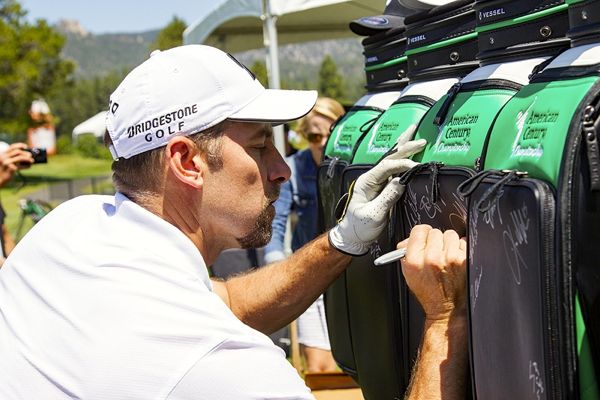
John Smoltz, who spent the bulk of his Hall of Fame career pitching for the Atlanta Braves, signs a golf bag that will be auctioned off for charity. Photo/Carolyn E. Wright/Copyright

John Smoltz, who spent the bulk of his Hall of Fame career pitching for the Atlanta Braves, signs a golf bag that will be auctioned off for charity. Photo Copyright 2015 Carolyn E. Wright

Charities are a big part of the annual American Century Championship golf tournament at Edgewood Tahoe.

Each year a number of local charities benefit from the event, with checks given when all the fun is over.

This is the second year Vessel Bags will provide personalized custom golf bags for each of the 92 participating celebrities. They will then be auctioned via social media.

All proceeds will benefit the Stowers Institute for medical research, named in honor of James Stowers, founder of American Century Investments. Last year’s auction raised more than $60,000. Public bidding on all celebrity golf bags is online.

Shane Battier, who won two NBA titles with the Miami Heat, is raising money for his charity while playing at the ACC. Photo/Carolyn E. Wright/Copyright

Shane Battier, who won two NBA titles with the Miami Heat, is raising money for his charity while playing at the ACC. Photo Copyright 2015 Carolyn E. Wright

Shane Battier, retired NBA player, has set up a fundraiser called Take Charge Save Par. Supporters of the Battier Take Charge Foundation may pledge any amount for each par Battier makes during the three-day tournament. For more information, go online.

The tournament at Edgewood Tahoe in Stateline is Friday-Sunday.

— Lake Tahoe News staff report


Liberty to start work on electrical line upgrade

Liberty Utilities in early August will begin construction to upgrade electrical lines in the North Lake Tahoe-Truckee area.

This month crews will begin prepping the site and bringing in materials.

The 650 electrical line is one of the oldest lines in Liberty Utilities’ service territory. The company said upgrading the line, which will eventually operate as part of a 120 kV loop, will allow greater load transfer and switching capability, and will improve Liberty’s ability to serve the North Lake Tahoe area.

The first phase involves the power line segment that is located between Martis Valley and the Northstar substation that generally follows Highway 267. Construction will primarily consist of replacing old wooden poles with self-weathering steel poles. The work should be done by mid-October.

The next segment of the 650 rebuild project will consist of work from the Northstar substation tap to Kings Beach, and will be completed in 2016.


California adopts strict lawn-reduction rules

By Phillip Reese, Dale Kasler and Ryan Sabalow, Sacramento Bee

The era of lush, green lawns adorning new California homes moved a dramatic step closer to ending Wednesday.

Drought-tolerant plants must dominate lawns around new homes and businesses across California under new regulations unanimously approved by the California Water Commission.

The new rules effectively limit the amount of turf grass around newly constructed homes to 25 percent of landscaped area. Under prior rules, turf grass could take up about one-third of landscaped area.

The restrictions will apply to all homes with more than 500 square feet of landscaped area – essentially, all new, single-family, detached homes in the state. Old rules only applied to new homes with more than 2,500 square feet of landscaped area. California homes, on average, feature about 2,500 square feet of landscaping, state officials said.

Read the whole story