Crews contain Stateline, Truckee grass fires

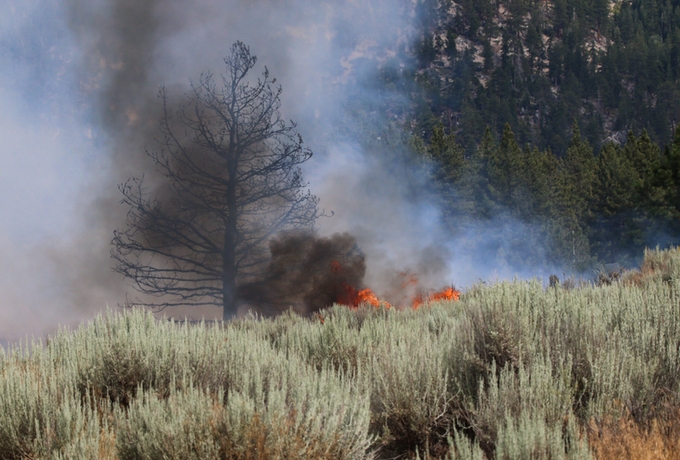
Flames shoot up July 19 from a fire in Rabe Meadow. Photos/Ray Fugitt

Flames shoot up from a fire in Rabe Meadow on July 19. Photos/Ray Fugitt

Firefighters were able to contain a blaze in Rabe Meadow to 1 acre Sunday afternoon.

The fire was near the bridge where walkers and cyclists cross coming from the parking area off Kahle Drive in Stateline.

Tahoe Douglas firefighters were the first to respond, with U.S. Forest Service crews doing mop up. This land is owned by the Forest Service.
rabe meadow fire t-d The cause of the July 19 has not been determined.

“They still need to investigate. They are protecting the point of origin,” Tahoe Douglas Fire Chief Ben Sharit told Lake Tahoe News.

Five small brush fires in Truckee on Sunday have Glenshire Drive between Whitehorse and Hirschdale drives closed. Truckee and CalFire crews had contained the fires by 5:30pm.

— Lake Tahoe News staff report


WHS student wins Gene Upshaw scholarship

Terri Upshaw and Daria Sharon

Terri Upshaw and Daria Sharon

Whittell High School senior Daria Sharon received the seventh annual Gene Upshaw scholarship at this year’s American Century Championship.

Sharon’s academic achievements and dedication to sports and community service are what earned her the $5,000.

NBC Sports and Edgewood Companies contributed equally to the scholarship, which is awarded to individuals possessing characteristics of leadership, community service, and academic excellence. Terri Upshaw, Gene’s widow, was at Edgewood Tahoe Golf Course to present the award on July 19.

Initiated in memory of NFL hall of gamer and longtime NFLPA Executive Director Gene Upshaw, the scholarship assists the ongoing education of young leaders.

Sharon has maintained a 4.0 gpa past three years, while taking multiple Advanced Placement classes. She plays on the soccer, softball, and basketball teams. She will be student body vice president this year.

Gene Upshaw (1945-2008) was a popular nine-time participant in the annual celebrity golf tournament at Edgewood. Upshaw was a part-time resident for more than 30 years at his second home in North Lake Tahoe.


Talk to focus on work in Uganda

Scott Kellerman, who with his wife, Carol, created the Kellermann Foundation in order to expand the work they were doing to empower the Batwa pygmies to break the cycle of poverty and poor health will be in South Lake Tahoe on July 22-23.

Soroptimist International of Tahoe Sierra will be hosting a reception July 22 from 5:30-7:30pm at the home of Kerry and Wendy David at 1300 Keller Road, South Lake Tahoe. On July 23 from 7:30-8:30am at the senior center in South Lake Tahoe Kellermann will be giving a presentation about his work.

The public is invited to both events.

For additional information about the Kellermann Foundation, go online.


Calif. studying health effects of artificial turf

By Melody Gutierrez, San Francisco Chronicle

SACRAMENTO — California officials have authorized spending $2.9 million to study the health effects of using recycled tire pieces on artificial turf fields, hoping to put to rest a simmering debate over their safety.

But even as the health effects are studied, the state will dole out millions of dollars in subsidies to schools and cities so that they can install public playgrounds and fields using the materials in question.

“I think it’s irresponsible,” said Sen. Jerry Hill, D-San Mateo, who authored legislation that would have stopped the grant program while the state conducted the study.

Hill’s bill was killed amid fierce lobbying from well-funded opponents in the tire recycling industry as well as labor interests. The groups spent nearly $300,000 for lobbying on Hill’s bill and other legislation during the first three months of the year, according to filings with the secretary of state.

Read the whole story


Tips for reducing threat of wildfire ignition

By Brice Bennett

With the passing of the 4th of July, we find ourselves right in the middle of summer here in the Tahoe basin. Locals and visitors alike recreating in many different ways, from camping to mountain biking, to boating, Lake Tahoe has something for everyone.

This summer and particularly this summer due to continued drought conditions, it is important to remember just how fragile the Tahoe basin is, and that there is a persistent threat of wildfire. Everyone needs to take steps to ensure they are being fire smart in everything they do. Doing the right thing, the wrong way can start a wildfire.

When using outdoor powered equipment to clear defensible space, make sure you are using the correct tool for the job. Lawn mowers are for lawns, not dried weeds and brush. A lawn mower with its metal blade can strike rocks or other objects hidden by weeds and create an ignition source that sparks a fire. A weed eater with a non-metal blade or string should be used on this type of dry grass and weeds. This type of work should be done before 10am and never on excessively dry or windy days. Spark arresters are required on all portable gasoline equipment. Perform routine maintenance on your powered equipment to ensure its functioning appropriately and not creating a possible ignition source.

Many people will be towing some sort of recreational equipment this summer, whether it’s a kayak behind a small car, or large travel trailer behind a sturdy pickup, there are some simple tips to make sure you are being wildfire safe while towing.

·       Trailer safety chains should be the proper length and not dragging on the ground.

·       Your tow vehicle should be properly maintained and up to the task of hauling a heavy load. A malfunctioning exhaust system or catalytic converter can start a fire with ease.

·       Maintain proper tire pressure. Driving on exposed wheel rims will throw sparks.

·       Carry a fire extinguisher in your vehicle and learn how to safely use it.

·       Worn out brakes are not only unsafe, but can throw sparks that can start a fire.

·       If you have to pull off the road, make sure you are not stopping on dry grass or brush.

Campfire safety is one of our most important topics. It is imperative that everyone follow the campfire rules for the area that they are planning to have a campfire. Currently the U.S. Forest Service and CalFire have suspended all open burning including camp fires, unless they are within a fire ring in a designates site. Portable gas stoves are allowed in the backcountry so long as they are accompanied by a campfire permit.

Share these simple fire safe tips with your friends in the Tahoe basin, as well as anyone planning on visiting. Only working together can we ensure a wildfire is not started here due to negligence. Over 90 percent of all wildfires are caused by people, so 90 percent of all wildfires are preventable. Remember one less spark, means one less wildfire.

Brice Bennett works for CalFire.


Douglas library hosting teen movie night

“Unmask!” is the theme of the teen summer reading program at the Douglas County Public Library.

The library’s teen advisory board is showing “Captain America: The Winter Soldier” on July 25 at 5:30pm in the Minden Library meeting room. Pizza, popcorn, and soda will be served.

This free event is sponsored by the Friends of the Douglas County Public Library and is open to all teens.

For more info, call 775.782.9841.


Kings Beach to re-do roundabouts

Construction on Highway 28 in Kings Beach will resume Aug. 10 in order to complete the highway work this year.

Work will be focused along the north side of Highway 28 between Secline and Deer streets. One lane of traffic in each direction will be maintained at all times, and a designated parking lane along the south side of the highway will also be made available.

Modifications and further construction work is planned for the roundabouts After careful consideration because Caltrans says they could inhibit safe and efficient snow removal operations. This construction work will occur after-hours in August.

The concrete curbs of the four islands leading into and out of the roundabouts will be flattened. This design change won’t leave enough room for landscaping in the center of the islands, so instead, they will be paved with concrete.

These unanticipated modifications also increase the possibility that some of the neighborhood grid work may not be completed until 2016.

Q & D is also constructing three parking lots this fall as part of the project. One lot will be along the south side of Highway 28 between Coon and Fox streets. The second lot will be just east of the post office on the north side of Salmon Avenue. The third lot will be located at the intersection of Deer Street and Rainbow Avenue directly behind the former Carpenters’ Union Hall. This work is expected to begin in August.

TART staff has been relocating signage and temporary benches to help public transit riders get used to the new bus stop locations. Two permanent bus shelters will be constructed this fall.


Then and now: Building, businesses upgraded over time

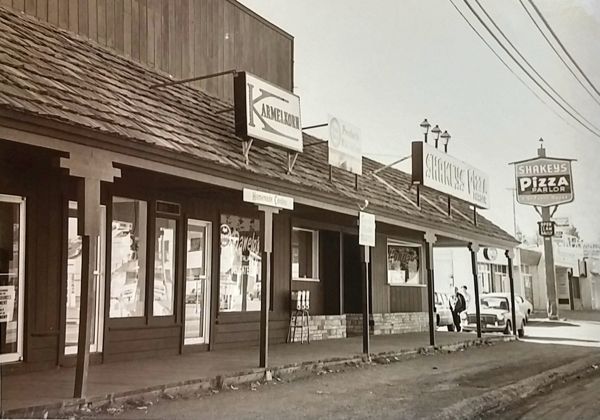
Buildings in South Lake Tahoe in the 1970s. Photo/Lake Tahoe Historical Society

Buildings in South Lake Tahoe in the 1970s. Photo/Lake Tahoe Historical Society

In the 1970s, eateries in this Highway 50 landmark included Karmelkorn & Homemade Candies, Danelo’s Italian Delicatessen, and Shakey’s Pizza Parlor.

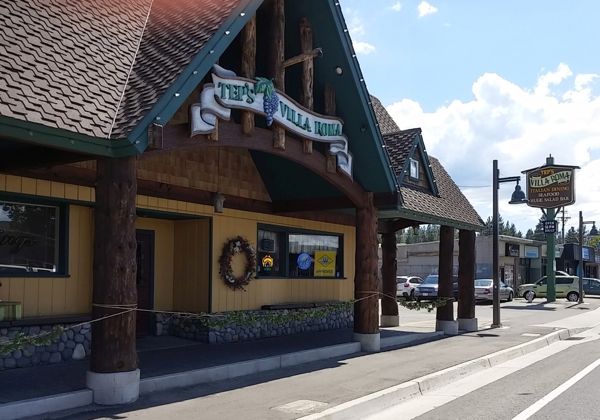
The facade of the building was restored a few years ago. Photo/Bill Kingman

The facade of the building was restored a few years ago. Photo/Bill Kingman

Four decades later, the same area in today’s remodeled building features Tep’s Villa Roma restaurant. Lake Tahoe Coin Jewelry & Loan is next door, left in the above photo.

Fifty and more years ago, the entire building was home to Nel’s Variety & Tahoe Supply Company. Since the 1960s, occupants have included the above named, a casino-wear store, telephone service, unemployment office, furniture store, and others.

— Bill Kingman


Big dreams take big money for ski racers

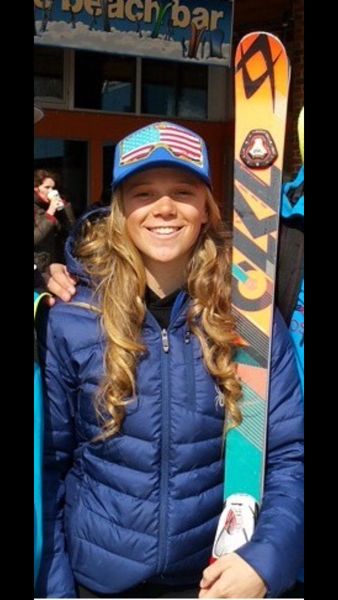
Cheyenne Brown at the Junior Championships at Mt. Bachelor in Oregon. Photos/Provided

Cheyenne Brown at the Junior Championships at Mt. Bachelor in Oregon. Photos/Provided

By Jessie Marchesseau

Anyone who has spent at least a few days on the slopes can tell you that skiing is an expensive pastime. But the cost of a weekend ski trip pales in comparison to the expense of being a ski racer.

Each season, racers and their families fork out thousands of dollars to get a shot at a podium. They pay for ski passes, coaching and training, race entry fees and gear, including multiple pairs of skis, boots, goggles, helmets and race suits. Then there are the travel costs to get to each race, about 20 per season, such as gas or airfare, hotels (most races last two to four days) and food while on the road.

Long-time Squaw Valley Ski Team coach Lee Schmidt said it’s not unrealistic for families to spend upward of $50,000 on a season of ski racing. Some help is available through scholarships, sponsors and donations, but he admitted nearly all of the members of the U.S. Ski Team come from privileged socioeconomic backgrounds.
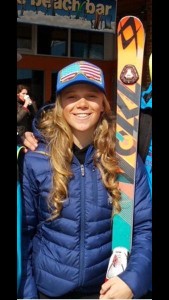
Cheyenne Brown is on quest to make the U.S. Ski Team.

Cheyenne Brown is on quest to make the U.S. Ski Team.

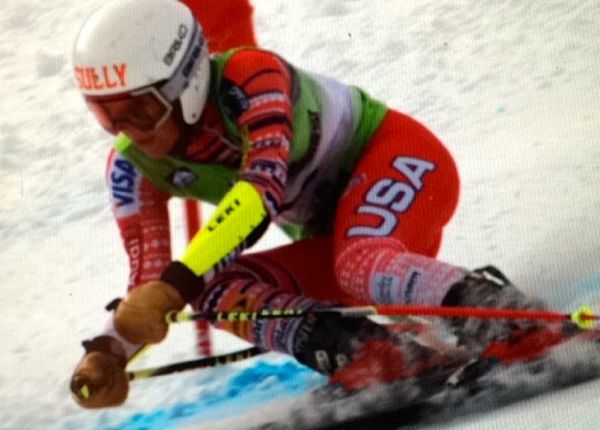
Regardless, a big pocketbook is not necessarily a requirement to be a successful ski racer. Take Cheyenne Brown of Soda Springs for example. At 15, Brown has only been ski racing for four seasons, but has racked up some pretty good finishes as a member of the Squaw Valley Ski Team. Last season she was one of six girls in her age group from the entire western region to qualify for the National Championships in Sugarloaf, Maine. At the Junior Olympics, Brown was the highest placing girl from the western region. This year she has set her sights on a spot at the Junior World Championships.

“She’s very dedicated. She sets very high goals and can reach those goals,” Schmidt, who has coached Brown for the last two seasons, told Lake Tahoe News. He said she is a good example and a leader for the other girls on the team, both on and off the slopes.

Brown was born into a skiing family; she was on skis before her first birthday. Her grandparents, Norm and Karen Saylor, were the former owners of Donner Ski Ranch. Her brother was a racer for a while, as was her mother. Now the family runs a ski shop in addition to a firewood business and a shirt printing company.

“We’re all blue collar. We work hard,” Cheyenne’s father, Mitch Brown said of his family. “You do what you can do, and Cheyenne helps out a lot.”

He estimated they spent between $5,000 and $10,000 on ski racing last season.

So why does a self-proclaimed lower middle class family dedicate so much of their income to making sure Cheyenne gets to ski race?

“For the love of the sport, you know,” he said. “You love it; your kids love it. And we wish we would have had the opportunity to do the same thing.”

So even though it’s expensive, they make it work. And Cheyenne is a big part of it. When she’s not skiing, working out in the gym or doing her schoolwork she is often working. She attends a charter school to better accommodate her racing schedule. Cheyenne is a busser and hostess at Village Pizzeria, runs the child care at a local gym, coaches softball, acts as a scorekeeper for the men’s softball league, takes babysitting jobs and works at all three of the family businesses.

After eight-hour days training on the ski slopes, Cheyenne will stop into the ski shop in the evenings to help out. She works alongside her mother, Mitzie, designing and printing T-shirts and sports jerseys. And when it comes to the firewood business, Cheyenne can run the backhoe, the loader and the saw.
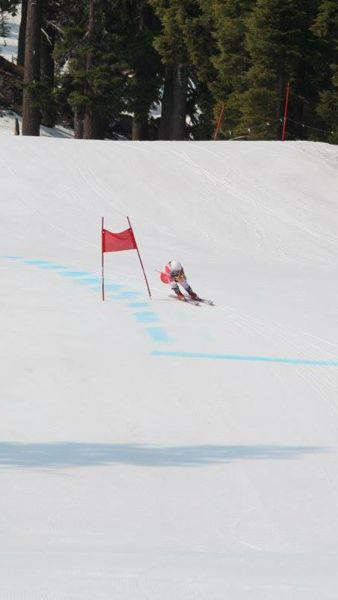
Competitive skiing is in Cheyenne Brown's blood.

Competitive ski racing is in Cheyenne Brown’s blood.

“She knows that the money we earn goes into the ski racing fund,” her father said. “She’s not afraid of hard work.”

Nonetheless, she could still use a little help. Cheyenne applies for ski racing scholarships each year and has received aid from entities such as the Squaw Valley Ski Team and Lake Tahoe Ski Club Foundation. She gets discounts on gear from her sponsors including Völkl skis, Bollé goggles, Briko helmets and Olympic Bootworks, but they don’t offer up any cash. She also accepts donations on websites she has set up with organizations such as Make A Champ and Go Fund Me.

Cheyenne has every intention of taking her ski career all the way to the U.S. Ski Team like her friend and mentor Resi Stiegler, and that means dedicating summer months to skiing as well. She has attended off-season camps in the past at places such as Mt. Hood, Mt. Bachelor and Mammoth, but this year she has made an even bigger commitment. Starting at the end of July, she will be spending almost a month training alongside big name skiers and coaches in New Zealand.

“It’s very hard here in Tahoe to get better if there’s no snow,” she said. And though a ski trip to New Zealand may seem like an unnecessary expense to some, Cheyenne said that’s not entirely true, not if you want to really take your skiing to the next level, and she does.

Cheyenne doesn’t mind giving up her summer to skiing. She would be happy if it were winter year-round. Skiing is where her heart is.

“I truly, genuinely love everything about skiing and ski racing .… I love the adrenaline of going fast and arcing the perfect turn,” she said. “I don’t even know what it is. It’s my passion, I can’t even explain it.”

—–

Notes:

To help Cheyenne pursue her ski racing dreams, donations are being accepted here and at this website.


Opinion: Calling for an end to cairns

By Robyn Martin, High Country News

Stones: We’ve built pyramids and castles with them and painstakingly cleared them out of farm fields, using them to build low walls for fencing. We marvel at the rocks in the Grand Canyon, Arches and Grand Teton national parks. Yet a perplexing practice has been gaining ground in our wild spaces: People have begun stacking rocks on top of one another, balancing them carefully and doing this for unknown reasons, though probably as some kind of personal or “spiritual” statement.

These piles aren’t true cairns, the official term for deliberately stacked rocks. From middle Gaelic, the word means “mound of stones built as a memorial or landmark.” There are plenty of those in Celtic territories, that’s for sure, as well as in other cultures; indigenous peoples in the United States often used cairns to cover and bury their dead. Those of us who like to hike through wilderness areas are glad to see the occasional cairn, as long as it’s indicating the right way to go at critical junctions in the backcountry.

Stone piles have their uses, but the many rock stacks that I’m seeing on our public lands are increasingly problematic. First, if they’re set in a random place, they can lead an unsuspecting hiker into trouble, away from the trail and into a potentially dangerous place. Second, we go to wilderness to remove ourselves from the human saturation of our lives, not to see mementoes from other people’s lives.

Read the whole story