El Dorado offering legal seminars for seniors

El Dorado County Senior Legal Services is hosting a series of legal seminars in South Lake Tahoe for seniors during September and October.

The seminar series, entitled Planning for the Future, will provide information about financial and health planning. Individuals may attend the series or just one class. Reservations are not required.

Each seminar session is free, although the county said it would accept donations. Legal services is part of El Dorado County Health and Human Services Agency.

The seminar sessions will be held as follows:

  • Estate Planning for Almost Everyone — Sept. 24 from 1:30-3pm at the Senior Center, 3050 Lake Tahoe Blvd. This training includes an overview of wills, trusts and probate. Learn how to plan for a transfer of your estate to your loved ones.
  • You Have the Power: Powers of Attorney and Advanced Health Care Directives — Oct. 1 from 1:30-3pm at the Senior Center, 3050 Lake Tahoe Blvd.. This training will help people learn the importance of advanced health care directives and powers of attorney documents, and how to prepare them.
  • Long Term Planning for Long Term Care — Oct. 8 from 1:30-3pm at the Senior Center, 3050 Lake Tahoe Blvd. This training will include a frank discussion about the likelihood of needing long term care, types of care and how to pay for it. A look at both private and public options, including Medi-Cal eligibility and recovery.

For more information about the seminars or Senior Legal Services, call 530.621.6154.


Tahoe Tails — Adoptable Pets in South Lake Tahoe

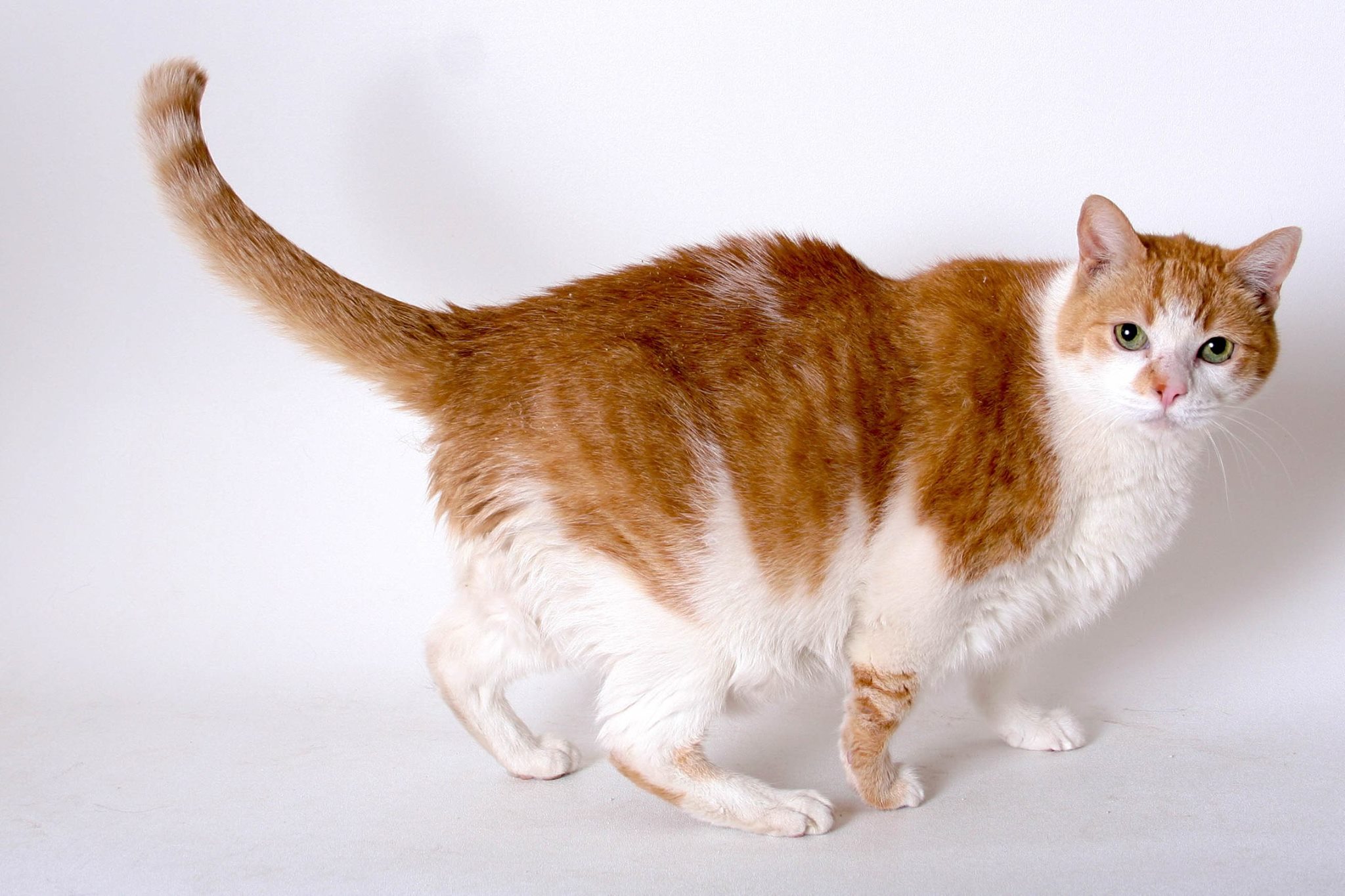
11700773_856662487704695_4994834934038659400_oKiki and Scoobie are 10-year-old male cats that are anxious to find their forever home — and they want to be adopted together.

They are curious, friendly and loving. These sweet fellows are on the chubby side, and need to find a new friend to adopt them that is savvy about cat diets and exercise so they can transform back into the svelte boys they once were. Kiki and Scoobie are also declawed, so they must live indoors. Their adoption fee has been sponsored to the right home. These guys are neutered, microchipped and vaccinated.

Kiki and Scoobie are at the El Dorado County Animal Services Shelter in Meyers, along with many other cats and dogs that are waiting to be adopted into their new homes. For more info on all the animals that are available at the shelter, go to the Tahoe Animal Shelter’s Facebook page to see photos and descriptions.

Call Animal Services at 530.573.7925 for directions to the shelter, hours or other information on how to adopt your next pet.

For spay-neuter assistance for South Lake Tahoe residents, go online.

— Dale Payne


Gatsby Festival revives 1920’s-era Lake Tahoe

By Terra Breeden

Tahoe and tourists are almost synonymous. This isn’t anything new. It was even in the case in the 1920s, though at that time it was mostly the upper echelon of society who summered here.

To capture what life was like here in the 1920s, a group of history buffs started the Great Gatsby Festival in 1985 as a tribute to the South Shore’s heritage.

“The reason we started this festival 30 years ago is for living history,” Tallac Historic Site Director Jackie Dumin told Lake Tahoe News. “We wanted to have a living history festival here at the Tallac Site, which is a 1920s era site, and what makes you think of the roaring ’20s more than the Great Gatsby?”
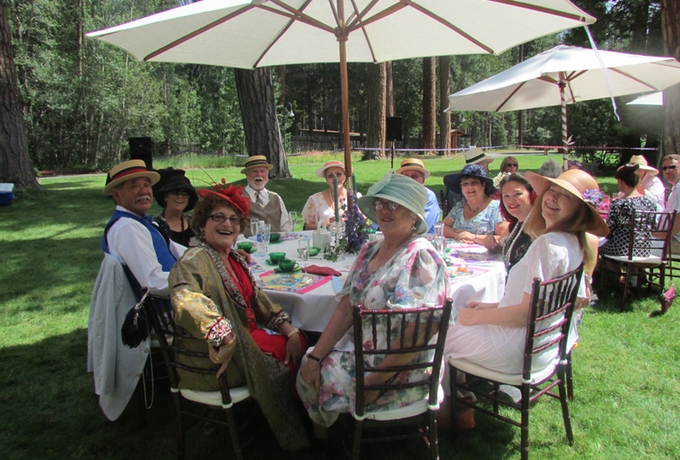
The tea is one of the highlights of the Great Gatsby Festival. Photo/Provided

The tea is one of the highlights of the Great Gatsby Festival. Photo/Provided

Many of the buildings at the Tallac Historic Site were built in the 1920s. During this era, South Lake Tahoe was an elite vacation destination only available to those who came from privileged families, namely the Bay Area’s upper-crust society. In the 1920s roads had not yet been built around the lake and the only way to reach South Lake Tahoe was by boat. Those who could afford the expensive journey often stayed at the Tallac Historic Site buildings where they experienced pristine beaches and mountain serenity at these luxury estates.

“The Baldwin property was built in 1921 by Dextra, the daughter of the infamous South Lake Tahoe forefather Lucky’Baldwin, when she was only 19 years old,” Dumin said. “The Pope Estate next door was established in the 1920s, and the Heller family built Valhalla in 1923, so all of our buildings at Tallac Historic Site are 1920s era.”

Now celebrating its 30th year, the Gatsby festival is a longstanding Tahoe tradition that has become a highlight of the summer for many attendees and volunteers alike.

“The volunteer support is what has made this event so successful,” Dumin said. “It a lot of work, but it’s even more fun.”

Grab a feather boa and snap on those suspenders because the Great Gatsby Festival is free to attend. And people are encouraged to show up in period costume. The festival runs from 10am-5pm on Aug. 8 and 10am-4pm on Aug. 9.

For those who want to fully experience the lifestyle of the South Shore in the 1920s, a high-class tea party is at Valhalla on the Sunday afternoon of the festival. Guests are served tea and gourmet snacks on vintage China by “maids and butlers” in period costume. Afterward, there is a fashion show with this year’s theme being the “grit and glamour” of the 1930s.

“We have living history tours of the Pope House every 20 minutes,”  Tahoe Heritage Foundation Director of Operations Mikan Gosuico said. “We have volunteers in character and in costume so guests are able to go through the house and meet a lot of characters from the Pope family.”

Outside of the Pope House, a jazz band will play on the lawn where people are welcome to dance and enjoy a beverage from the nearby speakeasy.

“Well, we are in the 1920s of course when alcohol is illegal,” Dumin said. “And the speakeasy really provides that immersive historical experience.”

Silent, black and white movies will be shown in one of the cabins and lots of pre-World War II vintage cars will be placed for viewing around the property. There will also be vendors selling vintage clothing, and food and drink.

Don’t forget to bring the kids. Games and crafts that are 1920s era appropriate like a watermelon seed spitting contest are part of the festivities.

Besides the high tea on Sunday there will also be a silent auction throughout the weekend to help raise money for the Tallac Historic Site. Profits from the Great Gatsby Festival are used to benefit this historic area.

—–

Notes:

·       Parking is limited at the Tallac Historic Site. Parking is also available at the Taylor Creek Visitors Center, which is a 5-10 minute walk. Or park at the Y and take the Nifty 50 Trolley. Here is the trolley schedule.

·       Tickets for the tea party and fashion show are $65.

·       For more information about the festival or to buy tea tickets, go online.


Opinion: Housing market isn’t rational

By Robert J. Shiller, New York Times

Home prices have been climbing. They have risen 27 percent nationally since 2012, even more in places like San Francisco. But why worry? If you accept the efficient markets theory — and believe that real estate is an efficient market — then these prices are based on “new information,” even if you don’t know what that information is.

The problem with this kind of thinking is that the efficient markets theory is at best a half-truth, as a voluminous literature on market anomalies shows. What’s more, even that half-truth is grounded mainly in the stock market, which attracts professional investors who sometimes do make the market behave efficiently.

The housing market is another matter. It is far less rational than even the often irrational stock market, for a couple of important reasons. First, most investors find it difficult to understand how housing supply responds to changes in demand. Only a small minority of people think carefully about such things. Second, it is very hard for the minority of smart-money investors who do understand such matters to bet against bubble-level prices in real estate markets. In housing, the smart money has relatively little voice.

Read the whole story


Selfies and wildlife not a good mix

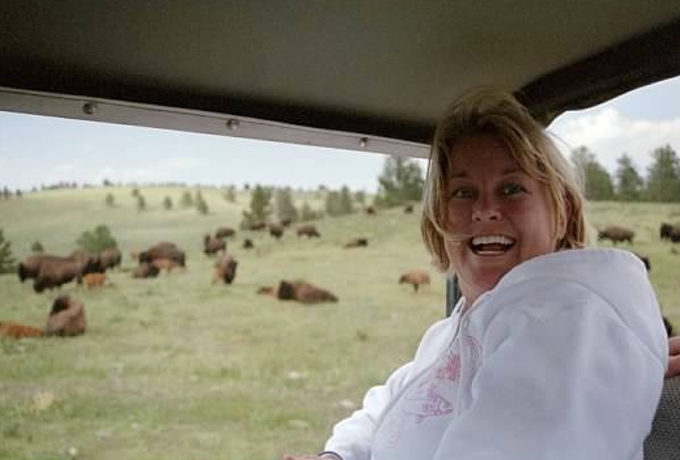
Mary Karst uses a guide company in South Dakota's Custer State Park to see bison. Photo/LTN

Mary Karst uses a guide company in South Dakota’s Custer State Park to see bison. Photo/LTN

By Katie Rogers, New York Times

Officials at Yellowstone National Park are warning visitors not to fraternize with wildlife after a woman was injured while trying to take a selfie near a bison — but that hasn’t stopped some visitors from posting their close encounters on social media.

A notice released by the National Park Service on Wednesday detailed the episode, which began when a 43-year-old and her child turned their backs to a bison while trying to take a selfie. The animal was about six yards away. (It is illegal to be closer than 25 yards to the animals, park officials said.)

The visitors tried to get away when they heard the bison approach, but the animal lifted the woman up and tossed her with its head. She is the fifth person to be injured in an encounter with one of the park’s bison this summer.

Read the whole story


Coffee may decrease diabetes risk

By Leigh Weingus, Huffington Post

Your major coffee habit may help reduce your risk of developing Type 2 diabetes, according to a study.

Researchers found that habitual coffee drinkers — meaning those who had more than 1.5 cups per day — were half as likely to develop Type 2 diabetes over a 10-year period as casual coffee drinkers, who had fewer than 1.5 cups per day.

The researchers believe that the inflammation-lowering antioxidants found in coffee beans may account for the difference. Blood samples taken from the study participants revealed that habitual drinkers had lower levels of the inflammatory marker serum amyloid.

Read the whole story


Calif. water — vanishing and widely contaminated

By Tom Philpott, Mother Jones

In normal years, California residents get about 30 percent of their drinking water from underground aquifers. And in droughts like the current one — with sources like snowmelt from the Sierra Nevada mountains virtually non-existent — groundwatersupplies two-thirds of our most populous state’s water needs.

So it’s sobering news that about 20 percent of the groundwater that Californians rely on to keep their taps flowing carries high concentrations of contaminants like arsenic, uranium, and nitrate.

When farms sprouted up, they mobilized the once-stable uranium naturally present in the soil, and the toxic element leached into groundwater.

That’s the conclusion of a 10-year US Geological Survey study of 11,000 public-water wells across the state.

Read the whole story


5 ways to become a better athlete

By Bradley Stulberg, Outside

When it comes to performance enhancement in endurance sports, we’ve all but exhausted traditional methods of physical training. That’s why an increasing number of experts believe that unlocking any remaining gains will come from innovation focused not on the body, but on the brain.

One of the foremost authorities in endurance sports, Matt Fitzgerald, doesn’t disagree. His most recent book, “How Bad Do You Want It? Mastering the Psychology of Mind over Muscle”, explores the emerging science on the psychological underpinnings of great performance.

We caught up with Fitzgerald to discuss his forthcoming book and how athletes can push their bodies further by mastering their minds.

Read the whole story


Nevada DMV cancels remote check-in

By Associated Press

The Nevada Department of Motor Vehicles and its vendor are at odds over whether a feature that allowed customers to get in a DMV line from home via smartphone attributed to longer wait times.

The agency last week cut off customers’ ability to check-in remotely at the busiest DMV offices in Las Vegas and Reno and show up only when a technician was ready for them. DMV officials say no-shows were increasing overall wait times, and the waits are down now that customers must check-in at the DMV office.

But the maker of the system called Dash Pass disagrees, attributing long waits to understaffing and the improvement to DMV reducing customers’ access.

DMV now wants some of its money back on a four-year, half-million-dollar contract with Dash Pass vendor QLess.


U.S. still leaves the disabled behind

By Ananya Bhattacharya and Heather Long, CNNMoney

Jordan Gallacher hasn’t had a job in three years. Many employers reject him with a form letter or email, but one said outright: “We don’t hire blind people.”

Gallacher, 28, is a computer expert. He has a bachelor’s degree in management and entrepreneurship from Louisiana Tech University. Yet most employers don’t give him a second glance when they learn he’s blind, even though he is able to operate a computer just fine with a screen reader.

Gallacher is one of nearly 57 million disabled people in America.

Today marks the 25th anniversary of the Americans with Disability Act (ADA), a civil rights act passed in 1990 to fight discrimination against the disabled.

Read the whole story