Sinclair Broadcast pulls TV signals from Dish Network

By Joe Flint, Wall Street Journal

Signals for one of the nation’s biggest local broadcasters went dark on satellite TV distributor Dish Network Corp. on Tuesday, the result of a dispute over a new distribution contract.

Dish and Sinclair Broadcast Group Inc. have been negotiating a contract that covers more than 150 local television stations owned or managed by Sinclair that reach more than five million customers in 79 markets. The signals were pulled from Dish after efforts to sign a new agreement or extend the existing one failed.

Besides owning 121 TV stations, Sinclair also manages 32 through partnerships. Of the 153 stations, 87 are affiliates of the four major broadcast networks — CBS, NBC, ABC and Fox — meaning customers lost access to local and national news programming as well as sports carried by those stations.

Read the whole story


Report: Calif. drivers are the nation’s most stressed

By Gary Richards, San Jose Mercury News

California’s improved economy has brought commutes to an unprecedented slowdown from one end of the state to the other, making drivers here the most stressed out in the nation.

A nationwide report released late Tuesday found that motorists in California’s congested population centers spend nearly two work weeks a year stuck in creep-and-crawl traffic — nearly double the national average.

According to the Texas A&M Transportation Institute and a West Coast traffic organization called Inrix, which surveyed traffic on 471 urban streets and highways across the country, an estimated $160 billion is lost annually in wasted fuel, lost income and lost time across the country while motorists cling to a steering wheel instead of a computer mouse.

The worst area is Washington, D.C., at 82 hours of lost time, but the top 10 is a roadmap from Northern California to Southern California: Los Angeles comes in No. 2 with 80 hours of delays, followed by San Francisco-Oakland with 78, New York at 74 and the San Jose area at 67. Riverside rounds out the top 10 at 59. Compare that to the national average of a measly 42 hours.

Read the whole story


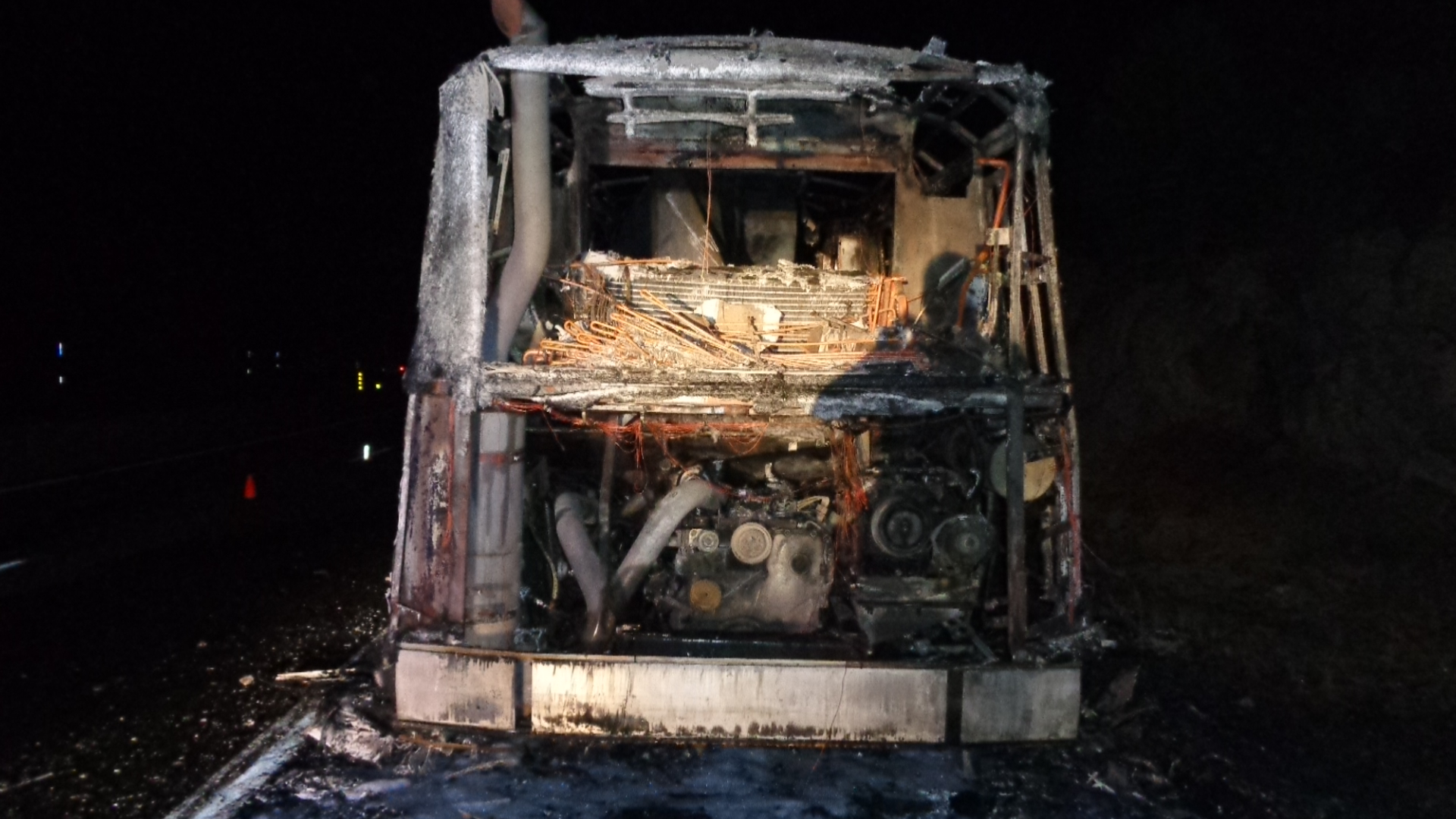
No injuries when bus catches fire on Hwy. 50


Fire completely destroyed a bus traveling on Highway 50. Photo/Provided

Fire completely destroyed a bus traveling on Highway 50. Photo/Provided

A bus heading up Spooner Summit was totally destroyed by a fire on Sunday.

“The driver was able to pull the bus safely to the right shoulder and assist the passengers in evacuating the bus before it became completely engulfed in flames,” Nevada Highway Patrol Trooper Duncan Dauber told Lake Tahoe News.

The VIP bus was traveling on Highway 50 toward Lake Tahoe about 1:24am Aug. 23 when the driver lost power and the vehicle began to smoke, Dauber said. Carson City firefighters extinguished the blaze.

Eleven people were on the bus. There were no injuries.

The cause of the vehicle fire is under investigation.

— Lake Tahoe News staff report


Barton offers group support for new moms

Mommy and Me is a new support support group offered through Barton University.

New mothers and their babies (up to the age of 1 year) are invited to attend a weekly support group to share experiences and discuss the joys and challenges of parenting, and get support from other mothers as well as professional support from a childbirth instructor and guest speakers.

Speakers and topics will vary week to week.

The sessions begin Sept. 22 and will be weekly from 10am-noon at 1077B 4th St., South Lake Tahoe.

For more information, contact Krista Carson at 530.600.1958 or emailkcarson@bartonhealth.org.


Caesars stock posts strong gains in wake of restructuring announcement

By Eli Segall, Las Vegas Sun

Amid global stock-market carnage this week, shares of Caesars Entertainment Corp. bounced higher after the casino giant announced a restructuring deal with lenders.

Caesars and its largest unit, the bankrupt Caesars Entertainment Operating Co., or CEOC, reached an agreement that “secures the support” of the unit’s “largest and most senior creditor constituencies,” according to a news release Friday night.

It’s a “key milestone” in the company’s efforts “to implement a consensual restructuring of CEOC,” Caesars said.

Read the whole story


Hues of autumn showing up prematurely

Aspen leaves at Taylor Creek on the South Shore are showing signs of stress from lack of water. Photo/Kathryn Reed

Aspen leaves at Taylor Creek on the South Shore are showing signs of stress from lack of water. Photos/Kathryn Reed

By Susan Wood

If a leaf or a cone falls in the forest, will anyone see the symptoms of change?

That’s the question botanists, foresters, climatologists and arborists may be asking in the age of an unprecedented Western drought.

Come fall, aspens represent the most recognizable tree that changes color in the Sierra Nevada. But from Rabe Meadow to Taylor Creek and Hope Valley to the Carson region, they appear stressed.

It’s August, and many leaves have either fallen to the ground, already prematurely turned yellow, started drooping or have been reduced to a crispy brown in some places.

“We’ve noticed in dry years they start to change color earlier than usual. They’ll run their course a little faster if they don’t get the moisture,” said Kelly Redmond, Western Regional Climate Center climatologist based in Reno, told Lake Tahoe News.

Manzanita bushes are turning yellow.

Manzanita bushes are turning yellow.

Redmond said there are two issues he looks at – timing and color. He’s also noticed this year the shades of colors are dimmer. Although Redmond is a regional El Nino expert, he doesn’t associate the trees trending differently with the weather phenomenon. He does point to drought, but believes more needs to be analyzed to clearly understand “phenology” – the study of plant life cycles and how they’re influenced by seasonal variations of climate.

“The whole business of what makes leaves change is not well established in the climate world,” he said.

Agreeing to some extent is Courtney Rowe, the Lake Tahoe Basin Management Unit forest botanist. She’s seen enough to assume that the aspens as well as our Jeffrey, sugar and lodgepole pines in addition to the white and red firs are in survival of the fittest mode. The willows change early anyway and haven’t deviated from that trend this year.

The aspens will drop leaves that consume too much energy to maintain with a lack of precipitation in the hopes of a better year ahead. Pine trees will unload the cones and needles because they become a pricey commodity.

“The lack of water is a cue to make the decision to get rid of leaves and wait for next year,” Rowe said of the environmental trigger. Dumping the leaves helps to reduce water use and stay alive.

It appears scientists aren’t the only ones noticing the change in the change of seasons.

Lindsay Gusses, who runs the LTBMU visitor center at Taylor Creek for the U.S. Forest Service, said visitors are often asking what is going on with the leaves in the groves characteristic of the South Shore region off Highway 89.

“Now with four years of drought we’re seeing it more and seeing it sooner,” Gusses said.

According to the U.S. Forest Service, 12.5 million trees have died off in California.

The fear is if the drought continues, the trees may produce fewer leaves or seeds, or worse yet, tree mortality could be more prevalent – whether it’s through the seedling dying or the tree itself taking a direct hit. And weaker trees tend to welcome more pathogens like the mountain pine beetle to invade.

The eco genetics of the trees weave their way into interpretive talks at Taylor Creek that Gusses hosts on the Rainbow Trail three times a week. Even children ask about the current conditions and the effects, Gusses said.

“They get curious,” she added.

And the trend travels away from Lake Tahoe.

Sorensen’s Resort in Hope Valley has built a business on mass visitation in the fall to view the leaves changing. Its customer base has already been asking questions about the tree’s abnormal behavior this summer, while noticing the wilted, fallen leaves.

“They seem a little more stressed this year. I think the whole forest is stressed,” Sorensen’s co-owner Patty Brissenden said, putting the whole West Coast into the eco equation.


Opinion: Are the Olympics anti-democracy?

By Bruno Kaufmann

Can the Olympics and democracy co-exist?

It’s a question being asked again this summer after Beijing won the bid to host the 2022 Winter Olympics. Beyond the fact that the International Olympic Committee put the biggest event in winter sports in a smog-ridden megalopolis without any real snow, people are concerned about China’s demonstrated record of human rights violations during the last Games it hosted, the 2008 Summer Olympics.

But the International Olympic Committee didn’t actually have a democratic option. The only challenger to Beijing was Almaty, capital of another Asian dictatorship: Kazhakstan. All the other potential democratic bidders — Munich, Germany; St. Moritz, Switzerland; Krakow, Poland, and Oslo, Norway — had previously pulled out, as a consequence of subjecting their candidacy to the democratic process. Each had held a popular vote on holding the Games, and it turned out the idea wasn’t very popular.

It shouldn’t be futile to reconcile democracy and the Games. Both have similar roots in ancient Greece, where they were born out of the idea that people are powerful and that participation — in decision-making or in athletics — should be broad. Today, the IOC is headquartered in one of the world’s most open, vibrant, and democratic cities: Lausanne, in Switzerland.

But democracy is fundamentally small — about individual votes, cast locally in neighborhoods — while the Olympics have become a global behemoth, wealthy and elitist. The scale of democracy has not been able to keep up as the number of athletes and nations has multiplied. The 2014 Winter Olympics in Sochi, Russia, had the kind of budget — $50 billion — that would be next to impossible to justify in a democratic place.

In fact, there may be no better example of the challenges of reconciling the Olympics and democracy than Switzerland. It’s hard to imagine a nation better suited to host the Winter Olympics than a neutral, peaceful, mountainous outpost at the heart of Europe, but the last time the country was able to host the Games was in 1948. On six occasions since then, the Swiss, who pride themselves on direct democracy, have gone to the ballot to decide whether to bid on the Games. Three of those times, the citizens voted yes: in 1969, 1995, and 1997. But each time, the IOC ended up giving the Games to other cities, in part because the debates leading up to Swiss referendum votes highlighted the weak points of the Olympics and included heavy criticism of the IOC. (In 1976, Switzerland first lost the winter games to Denver, which in turn lost the Games after its citizens rejected the bid in a local referendum, forcing the moving of those games to Austria).

Swiss sports officials haven’t given up. After being chosen to host the much smaller Youth Olympics in 2020, they are looking into yet another attempt.

In recent decades, the IOC itself has emerged as the main obstacle to hosting the Games in open and democratic societies. The problem: the organization does not meet democratic norms of transparency. The 2022 Winter Games bidding process offers powerful proof of this. In Oslo, the capital of oil-rich Norway, citizens voted yes to the candidacy for the Games during the city’s first-ever popular referendum, and the national government even offered a hefty guarantee to cover any deficits. But the IOC sabotaged the process with impossible, prima-donnish demands of the Norwegians. In a 700-page handbook, the committee requested cocktail parties with the Norwegian royal family (where the royals were expected to pick up the bill), open bars during the night, and official-only lanes in the city. For a country that previously had hosted the down-to-earth and highly successful Winter Games in Lillehammer in 1994, the investment of billions of tax crowns in such an elite event was too difficult a sell. Oslo had to drop the bid.

Democratic participation in a country’s process of preparing and conducting the Games has now become a red flag for the IOC. It does not matter if citizens are likely to vote to approve a bid; the transparency that comes with public scrutiny is not something the IOC wants to see.

This dynamic has become even more apparent this summer. Boston, the U.S. frontrunner for the 2024 Summer Olympics, pulled out after it became obvious that a 2016 statewide referendum in Massachusetts would offer critics opportunities to scrutinize and perhaps stop the bid. Germany’s national Olympic Committee chose Hamburg over Berlin because it was more likely to win a popular vote, but the vote itself still will likely dissuade the IOC. Paris, which won’t have a popular vote, is considered the favorite for 2024.

It is very hard to see how this reality could change. The Games are not likely to get much smaller, and the IOC historically has been resistant to altering its approach.

If there is to be a reconciliation of democracy and the Olympics, perhaps it could come from Los Angeles, which seems poised to take over the U.S. bid for 2024 from Boston. The big city in Southern California has reinvented the Games before; after the disastrous economic and political experiences of the 1976 Games in Montreal (with huge cost overruns) and the 1980 Games in Moscow (with the boycott), the 1984 Games in LA managed to build a bridge between civic and business leaders at the local level — and ended up with a considerable surplus. And this summer, the city hosted a successful the Special Olympics, offering a showcase of participatory and inclusive competitions spread out to communities all over the region.

Los Angeles has a special place in the history of the Olympics (it also hosted the 1932 games) and in the history of democracy. It was among the first cities in the United States to adopt the local referendum, and is the largest city in a state famous for its commitment to popular democracy. These days, both the Games (discredited by corruption and cost) and local democracy (discredited by low participation rates in elections around the world) need fresh starts. And Los Angeles — with its economic muscle and multicultural inclusiveness — has long been a place to start fresh.

Bruno Kaufmann is the editor of People2Power, a Global Democracy Media Initiative hosted by the Swiss Broadcasting Corporation. He wrote this for Thinking L.A., a partnership of UCLA and Zócalo Public Square.



NDOW kills nuisance black bear in Incline

By Jeff DeLong, Reno Gazette-Journal

A problem-causing black bear that wildlife officials said was becoming increasingly dangerous was killed Tuesday in Incline Village.

The bear, a 9-year-old, 450-pound male, was captured Monday night or early Tuesday morning, tranquilized and subsequently euthanized with drugs, said Chris Healy, spokesman for the Nevada Department of Wildlife.

The bear was determined to be the same one that had been raiding trash, breaking into cars and knocking over fences in the area and was killed as a threat to public safety, Healy said.


Read the whole story


Extra law enforcement to patrol I-80

August is the deadliest month to be traveling on Interstate 80, with the five-year average being 92 deaths across the nation.

Nevada will be joining forces with all other states that Interstate 80 runs through from California to New Jersey in an attempt to curb motorists and drivers of large trucks and buses who engage in risky driving behavior such as speeding, driving while impaired and not using their seatbelt.

Nevada and the 10 other states participating in this event hope the extra presence on I-80 will foster safe driving habits resulting in a reduction of excessive speeds, distracted and impaired driving.

The extra enforcement will be out Aug. 28-30.


STPUD takes emergency step to replace sewer line

A sewer line on Osgood Avenue that serves the Ski Run Center and Chevy’s in South Lake Tahoe has failed, requiring the South Tahoe Public Utility District board to make an emergency declaration.

This will speed up the process to fix the problem because the formal bidding procedure can be scrapped.

About 400 feet of 6-inch diameter sewer line connecting to a 12-inch diameter main behind what used to be the Fantasy Inn failed. The district discovered this using a TV camera and high-pressure hydro-cleaning work.

“Several low points appear to have the bottom of the pipe missing, possibly from the use of degreasing agents being used over the years,” Richard Solbrig, general manager of STPUD, told Lake Tahoe News.  “The wastewater flow from the commercial businesses will be temporarily bypassed, probably to the line on Ski Run Boulevard so they will be able to remain in business.”

— Lake Tahoe News staff report