Tahoe Tails — Adoptable Pets in South Lake Tahoe

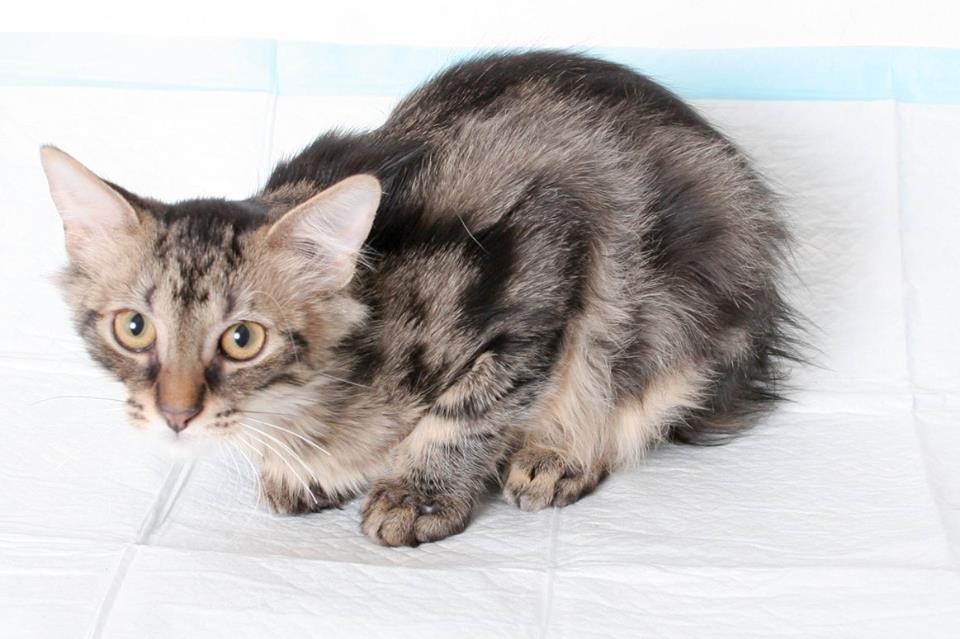
 Umbrellabird

Umbrellabird

The shelter currently has four kittens, including Umbrellabird, a 16-week-old boy who thinks he is a dog.

He loves to play with dogs and prefers them to cats. He was shy at first because he had a very brave sister named Unicorn, who he depended upon to protect him. Now that shes been adopted, he has come out of his shell and blossomed. His whiskers have even grown back, his sister used to chew them off. He loves to explore and can make a play thing out of anything he finds laying around. He is soft and always warm and will melt in your arms when you pick him up.

Umbrellabird is neuetered, microchipped, tested for FIV, and vaccinated. He is at the El Dorado County Animal Services shelter in Meyers, along with many other dogs and cats who are waiting for their new homes. Go to the Tahoe animal shelter’s Facebook page to see photos and descriptions of all pets at the shelter.

Call 530.573.7925 for directions, hours, and other information on adopting a pet. For spay-neuter assistance for South Tahoe residents, go online.

— Karen Kuentz


Problem Tahoe bears run in the family

By Scott Sonner, AP

RENO — Are some bears just born to be bad? Or do they learn from other bears that raid garbage cans, break into cars and homes and eventually have to be killed because they’ve lost their fear of humans?

Scientists have researched this classic debate over “nature” and “nurture” among black bears for decades, from Yosemite National Park in the Sierra to central Florida and the Adirondacks in upstate New York.

Now, a notorious 19-year-old female bear at Lake Tahoe with a rap sheet a mile long has become a poster child of sorts for the kind of generational cycle that experts say her young will be hard pressed to break as long as humans continue to leave garbage in their reach.

Last week, Nevada wildlife officials were forced to euthanize a young problem bear at the lake — the third offspring killed from the same litter born to the mama bear known by her tag number, Green 108.

“She’s just kind of a chronic, nuisance-type bear,” said Carl Lackey, a wildlife biologist for the Nevada Department of Wildlife. “She’s always been getting into trash, always been in the same area. We’ve captured several litters of hers. We’ve captured her several times.”
Lackey co-authored a 2008 study published in the Journal of Mammalogy about the role of genetics in bear conflict behavior.

“We sort of concluded that genetics alone could not explain a nuisance behavior in black bears,” Lackey said about the research led by S.W. Breck and C.L. Williams at the USDA’s National Wildlife Research Center in Fort Collins, Colorado.

A study led by National Park Service researchers first suggested in 1989 that problems with Yellowstone’s grizzly bears were a function of behavior passed from mother to offspring and successive generations, but it didn’t determine whether it was learned or inherited.

Another 2008 study by Rachel Mazur and Victoria Seher, researchers at Yosemite’s Division of Resources Management, documented bears “actively tutoring” their cubs to find food in human environments. They concluded that food-conditioned foraging is a skill passed from older bears to the young.

“We have observed sows pushing cubs into buildings and vehicles to retrieve food rewards,” they wrote.

Lackey said several bears that have been caught at Tahoe multiple times and released back into the wild “won’t go into a trap anymore.”

“They send their cubs into the trap or cubs into homes to get food,” he said.

Nevada Department of Wildlife spokesman Chris Healy witnessed something similar last summer at a trap set in Reno.

“Cubs showed up curious about the trap, and the sow we caught a year before would sit there and growl at the cubs to scare them away,” Healy said.

“We’re dealing with really smart animals that become habituated to food,” he said. “If you want to solve the problem, you have to change the way you deal with garbage.”

National parks across the West long have utilized bear-proof trash containers. Several communities in the Canadian Rockies started requiring bear-proof garbage cans as early as 1999. A few U.S. towns have made them mandatory, including parts of Boulder, Colorado, last year. But others — including Lake Tahoe — have rejected attempts because of costs and opposition to government regulation.

Mazur and Seher examined in 2008 whether the bears simply were adapting to their environment, or whether “previously adaptive behavior” became counter-productive, putting the animals in the way of harm by increasing contact with humans. While the garbage provides high-energy food, those bears were 5.6 times more likely than cubs of wild sows to be hit by cars, hunted or killed for safety reasons, they found.

In the end, the bears fall into an ecological trap, they wrote.

In 2004, Green 108 was first captured in Tahoe, tagged and released. Since then, she’s been trapped four times, most recently in July 2012.

“We don’t euthanize bears just for getting in trash when that’s all they’re doing,” Lackey said. “But that conflict behavior escalates from tipping over trash cans to breaking into homes, and that’s when we have to euthanize them.”

So is society ultimately to blame for problem bears like Green 108 and her cubs? Lackey thinks so.

“If we could have waved a magic wand and bear-proofed Tahoe years ago, you wouldn’t see the number of bears getting into these conflict situations,” he said.

Healy said Tahoe never had a serious bear problem until the early 1990s when food sources dwindled in the mountains during extended drought.

“That drought drove bears out of the back country, and a lot of them never left,” he said.


Downsides to doing a different workout every day

By Amanda MacMillan, Outside

When it comes to working out, most of us have no shortage of options. Most cities now have countless boutique fitness studios with services like ClassPass to let you sample as many workouts as you can squeeze into a month.

Group-training gyms like CrossFit introduce new workouts daily, with very little repetition in routine. And if you happen to do most of your exercising outside, the options are unlimited.

But like all good things, it is possible to have too much exercise, or at least too many options. Though it’s true, having variety in your training can help prevent injuries and provide your body with what’s known as “muscle confusion,” which keeps you from hitting an eventual plateau as your body adapts to the same physical stresses day after day.

But according to exercise physiologist and personal trainer Tom Holland, constantly changing your workouts may not actually be the smartest way to train because without consistency, it’s harder to make daily exercise a habit—and harder to make measurable progress in strength or skill.

Read the whole story


Truckee event combines wine, food, shopping

Wine enthusiasts, food connoisseurs and dedicated shoppers will be able to indulge in the 12th annual Downtown Truckee Wine, Walk & Shop on Oct. 3 from noon to 4pm.

Tickets are just $40 in advance or $45 day of. They are available online. A $3 service fee applies for online sales. The ticket includes wine tastings at more than 30 wineries, five food tickets, program/passport and a goodie bag.

Every year Downtown Truckee Wine, Walk and Shop partners with a local nonprofit organization. Over the past 11 years, more than $25,000 have been donated to local nonprofits. This year’s nonprofit partner is Elevate Tahoe. Elevate Tahoe investigates and spotlights true innovations happening in Tahoe and presents its findings in a series of journalistic films.

For more information, call 530.448.2774.


Police shooting protests help highlight plight of mentally ill in jails

By Mike Blasky, San Jose Mercury News 

When Michael James Tyree was killed in a San Jose jail cell, his lifeless body found Aug. 27 battered and bruised after an encounter with correctional officers, there were no Twitter hashtags, no spontaneous street protests, no national news vans parked on the curb.

The rise of powerful civil rights movements such as Black Lives Matter — and the deaths of Michael Brown, Freddie Gray and Eric Garner, all of whom were black — have steered the national narrative around police force toward the systemic abuse of minority communities.

But the swift and shocking arrests of three Santa Clara County jail guards on suspicion of murder in the death of Tyree, who was white, signals that the heightened focus on police brutality will also raise awareness on a growing crisis confronting another often-ignored part of society — the mentally ill in our country’s jails and prisons.

Read the whole story


California’s share of Indian gambling money dwindles

By Jim Miller, Sacramento Bee

Former Gov. Arnold Schwarzenegger, beginning with the recall campaign and on through his two terms in office, repeatedly linked the state’s tribal casino business to state finances.

“We want to have the Indian gaming tribes pay their fair share to the state,” Schwarzenegger said during a 2004 news conference, “and it looks like we are on that road.”

Today, tribal money is moving in a different direction. A key court decision, a switch in governors and changing casino economics mean that tribal payments to the state’s general fund – which totaled $241 million last year – are beginning to shift elsewhere.

Gov. Jerry Brown and the United Auburn Indian Community, which runs one of the country’s most profitable casinos, last month announced an overhaul of the tribe’s 2004 agreement with the state. It reduces by nearly two-thirds what the tribe pays into the general fund and directs much of the money to local projects and poor tribes. Lawmakers ratified the agreement last week without a dissenting vote.

Read the whole story


Do you love your dog more than humans?

By Anna Medaris Miller, U.S. News and World Report

P. Elizabeth Anderson once had a daughter named Grace. Like any parents would, she and her husband cared for her, nurtured her and tried to keep her out of trouble. They took her on vacations and enjoyed her company around the house. “She was my constant companion,” says Anderson, a journalist in the District of Columbia.

So when Grace died unexpectedly at age 14, the couple was crushed. But because Grace was a dog, “I was unable to talk to anyone about this immense grief,” says Anderson, who wrote the book “The Powerful Bond between People and Pets: Our Boundless Connections to Companion Animals.”

The depth of Anderson’s devastation surprised her, but it’s common to feel that way after the loss of a dog, says Lori Kogan​, associate professor of clinical sciences at Colorado State University’s College of Veterinary Medicine and Biomedical Sciences. Some people feel so sad, in fact, that they wonder if the death of a human companion would have been easier. “People feel guilty because they feel worse when their dog dies than if a family member dies,” Kogan says. “And then they think they’re a bad person.”

But in reality, it’s normal. “There’s a reason you feel that way,” she says. One of them? Unlike the mixed feelings we have toward each other – and that arise after a person’s death – “our relationship with dogs is so uncomplicated,” Kogan says. Some might​ call it​ true love.

Read the whole story


Treasury-backed nonprofit has millions for distressed Nev. homeowners

By John Kelly, Las Vegas Review-Journal

In Nevada, distressed homeowners don’t need to win big at the casino to score as much as $100,000 in order to keep their homes. They simply need a device with Internet access and a link to the U.S. Treasury’s Nevada Hardest Hit Fund, which wants to be the surest bet moving forward for the estimated 25 percent of state homeowners still under or treading water.

Officials with the nonprofit organization have simplified the process, making it entirely online while also promising to work with those without access to a computer. They believe this change will remove some of the snags that applicants experienced early on. Homeowners can click and fill out an easy assessment survey to get started.

The fund has 70 participating loan-servicing organizations eager to approve this assistance, said Tony Cammiso, marketing manager for Nevada Affordable Housing Assistance Corp. Best of all, no repayment is necessary provided the homeowner stays in the home for five years, with the main goal of the program being to keep Nevadans in their homes. That translates into free, and now more than ever, free is good.

Read the whole story


Study: More risk when slots seem humanlike

By Bobby Azarian, Slate

A study published in the Journal of Experimental Psychology: Applied has found that giving casino slot machines humanlike properties can increase one’s willingness to interact with them, thereby promoting riskier gambling behavior.

Apparently something with the appearance of a mind is more welcoming than a lifeless machine.

This finding might be good news not just for the gambling industry, but also for scientists interested in designing more engaging machine systems—like assistive robots for the elderly.

However, it also highlights a cognitive vulnerability that could easily be exploited by those who are intent on manipulating humans for financial gain.

Read the whole story


Wild & Scenic Film Festival in Truckee

The annual Wild & Scenic Film Festival hosted by MAP in Truckee is Oct. 9.

Mountain Area Preservation kicks off the film festival weekend with a special screening of Sender Films’ “Valley Uprising” at 6pm. The Wild & Scenic Film Festival will show multiple films on Saturday starting at 3pm, including “California: Paradise Burning,” “The Wilderness Act,” “Edge of Impossible” and “Drawn.”

The Wild & Scenic Film Festival is a collection of environmental films, now in its 13 year. Films screened speak to the environmental concerns and celebrations of the planet.

Films will be shown at the Downtown Community Arts Center.

For more information, call 530.582.6751.