Snippets about Lake Tahoe

truckee police·       Truckee police are beefing up patrols in the Worchester Circle and Rolands area because of several thefts from unlocked cars and garages.

·       Justin Kaplan of Cold Water Brewery and Grill won the Sierra Chef Challenge at Sample the Sierra in South Lake Tahoe.

·       The Nevada Department of Public Safety, Office of Traffic Safety’s Zero Teen Fatalities program has been granted a $10,000 gift courtesy of State Farm.

·      Truckee’s draft Trails and Bikeways Master Plan and the draft mitigated negative declaration are available online for comment.

·      The Safari Rose is the setting for Tahoe Arts Project’s sunset wine cruise. The fundraiser is Sept. 17 from 5:30-7:30pm. To buy a $65 ticket, call 530.542.3632.


Gas leak puts Tahoe City school on lockdown

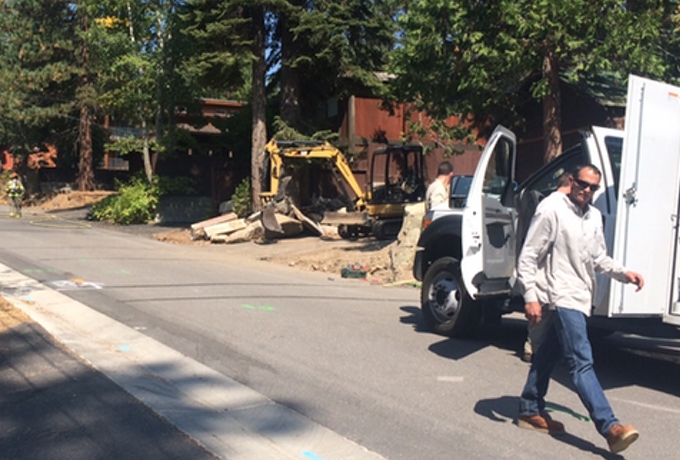
A backhoe struck a gas line in Tahoe City on Sept. 10. Photo/Provided

A backhoe struck a gas line in Tahoe City on Sept. 10. Photo/Provided

A gas leak Thursday morning forced Tahoe Lake School in Tahoe City to be on lockdown with a shelter in place.

The leak was stopped about 11:30am Sept. 10. It was at a residence on Red Cedar Street; it was first reported at 9:48am.

A backhoe struck a 2-inch gas main, which Zaski called “a big one.”

Two streets had to be evacuated. Firefighters went to nearby houses to make sure no gas had entered them.

“There was no fire or any other problems and no one was hurt. The school is back to normal operation and the streets are no longer evacuated,” Dave Zaski with North Tahoe Fire told Lake Tahoe News.

— Lake Tahoe News staff report


Insurance rates soar in high fire-risk areas

By Samantha Masunaga, Los Angeles Times

Soaring insurance rates may accomplish what the Telegraph Fire failed to do: drive the Stoffan family from their home of 10 years.

The Stoffans’ Northern California house survived the 2008 blaze, which destroyed 30 homes and 100 other structures as it charred 53 square miles west of Yosemite National Park.

But the family’s annual insurance costs doubled this year to $5,100 even though it planted a 50-foot lawn buffer around the house and installed fire-resistant landscaping.


The Stoffans are among the California homeowners living near wild lands who have seen their rates increase sharply because insurance companies are increasingly wary of high fire-risk areas. Factors fueling insurer’s fears include the drought and some huge recent blazes, such as the 2013 Rim fire that burned more than 250,000 acres in and around Yosemite.

Affected residents across the state complain of fire insurance rates leaping 30 percent or more.

Read the whole story


Lake Valley to demo fire sprinkler effectiveness

Lake Valley firefighters will demonstrate how two similarly furnished rooms — one protected with fire sprinklers and the other without fire sprinklers — often have very different outcomes.

The demo will be during Fire Fest on Sept. 26 (10am-3pm) at Lake Tahoe Airport. Officials said people will see firsthand how quickly a fire can become deadly versus the quick response and effectiveness of a fire sprinkler system in controlling or extinguishing a fire.

Lake Valley was awarded a $1,000 stipend from the national nonprofit Home Fire Sprinkler Coalition to increase its home fire sprinkler education  by conducting a live, side-by-side fire and sprinkler burn demonstration.


Classes aimed at entrepreneurs

Entrepreneurs Assembly, an award-winning mentor program that assists budding and existing entrepreneurs, is offering free monthly classes for entrepreneurs starting Oct. 1 at Lake Tahoe Community College.

This is a partnerships with Lake Tahoe South Shore Chamber of Commerce,  Tahoe Mountain Lab and the college’s Future Business Leaders club. The ongoing program is 6-9pm on the first Thursday of the month in the Aspen Room at LTCC.


Entrepreneurs Assembly is a Nevada not-for-profit corporation dedicated to educating and facilitating entrepreneurs in creating and growing their businesses.


For more information or to register, go online.


‘Death of a Salesman’ auditions at LTCC

The Theater Arts Department at Lake Tahoe Community College is seeking men and women of various ages and types for their upcoming production of the classic American drama, “Death of a Salesman” by Arthur Miller.

Auditions will be Sept. 22 at 7pm in LTCC’s Duke Theatre, inside the Fine Arts building on campus. Performances of the play will take place Nov. 13-22.

This Pulitzer Prize and Tony Award-winning play revolves around the last days of Willy Loman, an aging salesman who is losing his grip on reality and cannot understand how he failed to achieve success and, therefore, happiness. Through a series of soul-searching revelations of the life he has lived with his family and business associates, we discover how his quest for the American Dream kept him blind to the people who truly loved him.

Auditions will consist of readings from the play. Scripts are available on reserve in the Roberta Mason Library at LTCC. Opportunities for light and sound board operators, stage manager, backstage crew, and construction crew are also available.

For more information, call 530.541.4660, ext. 240.


USFS-CTC want to swap Lake Tahoe parcels

By Kathryn Reed

A significant land swap between the U.S. Forest Service and California Tahoe Conservancy will take an act of Congress to come to fruition. The two agencies are banking on the passage of the Lake Tahoe Restoration Act (LTRA) to make it a reality.

The overriding goal of the exchange is to create better management opportunities by having contiguous parcels be owned by the same entity. It also has the Forest Service getting out of the urban lot business.

  The proposal includes: ·      CTC to USFS – 92 parcels; 2,007 acres ·      USFS to CTC – 2,029 parcels; 1,918 acres ·      California State Parks to USFS – 1 parcel; 184 acres ·      USFS to California State Parks – 1 parcel; 274 acres

The proposal includes:
·      CTC to USFS – 92 parcels; 2,007 acres
·      USFS to CTC – 2,029 parcels; 1,918 acres
·      California State Parks to USFS – 1 parcel; 184 acres
·      USFS to California State Parks – 1 parcel; 274 acres

There are two bills circulating in Congress that would reauthorize the LTRA. Sen. Dean Heller, R-Nev., introduced a bill that the CTC and USFS provided technical assistance to. The land exchange language regarding retiring coverage and other development rights has been vetted by the Tahoe Regional Planning Agency legal counsel. It would follow the Burton-Santini Act by not allowing the USFS transferred properties to be built on. The bill also says the CTC would not sell the parcels nor would any of the commodities, like coverage, be able to be sold. All assets associated with the parcel would be retired.

“Our proposal is to retire all development rights,” Patrick Wright, CTC executive director, told Lake Tahoe News. “The House bill is a little looser.”

The bill Rep. Tom McClintock, R-Granite Bay, is pushing does not have all the same constraints as the Senate bill, nor is it the preferred bill by the agencies.

“Both bills contain provisions that would prevent us from selling parcels,” Chris Mertens, associated environmental planner with CTC, told Lake Tahoe News.

                  Senate Bill 1724, section 9:

·         Land exchanges shall “not result in any significant changes in the uses of the land”;

·         Prohibits the recognition or transfer of development rights associated with conveyed parcels under TRPA’s “transferable development rights” system. (In other words, the development rights of conveyed parcels would be permanently retired.);

·         If any conveyed parcel is used in a manner inconsistent with its original use, the parcel will revert to the USFS.

House Bill 3382, section 9:

·         Conveyance “shall not result in any substantial reduction in public access or reduction in availability of existing and traditional public recreation uses.”

On Sept. 9 the two agencies hosted an open house for people to give input about the proposed land swap. A similar gathering will occur tonight in Tahoe City.

The information that is gathered this week will be analyzed and passed up through the USFS ranks and to congressional offices.

Jeff Marsolais, supervisor for the Lake Tahoe Basin Management Unit, said the comments will help direct the agencies to which lots might be traded, and when and how to do so. A phased approach has been recommended, but officials don’t want the process to be dragged out. After all, talk of this land swap has been going on for years.

The bills don’t require all the parcels to be transferred, but it allows for them to be.

The Forest Service will also have to go through an environmental review process, though to what magnitude has not been determined. If things go forward, any deed restrictions on individual properties will have to be identified as well as any other constraints.

For the CTC to transfer its properties all that is needed is board approval.

Essentially what will happen is the transfer will be called a donation of land from one agency to the other to expedite the process.

If the LTRA again fails to be reauthorized, it’s possible to have a separate bill authored to deal just with the property transfer or to tie it to another lands bill. Because state’s rights are involved, it is believed the president is not able to issue an executive order to make this happen without congressional approval.

—–

Notes:

·       The Tahoe City open house is Sept. 10 from 5-7pm at the Tahoe City Public Utility District’s Lakeview Room, 221 Fairview Drive.


Opinion: Medical marijuana docs are heroes, not criminals

By Steve Kubby

California state officials are preparing to approve a broad reaching new medical marijuana bill, SB266.

The proposed bill has passed the California Assembly and is headed for the Senate Rules Committee, with the blessings of Gov. Jerry Brown. The proposed law, which is expected to pass easily this week, was crafted in part by a union official who is now under indictment and partly by the police. Patients are terrified of the proposed new law and see it as a crack down on patients and their doctors.

Steve Kubby

Steve Kubby

I’m getting calls from frightened patients who fear their own state government is planning on going after cannabis doctors as if they are some sort of dangerous threat that must be carefully supervised. Sick people cannot handle this kind of stress. Thousands of patients will die because of this mean spirited attempt to thwart the will of the people and deprive them of medical cannabis and the doctors who write recommendations to use the healing herb.

David Allen, a retired heart surgeon and expert on cannabinoid medicine, warns against the passage of the new Medical Marijuana Regulation and Safety Act. According to Allen, the proposed law “will create more crimes of cultivation, processing, storage, transportation, sales, and possession. It will create an army of bureaucrats that will increase the police state and create super drug task force solely for Cannabis and no other drug,”

Members of the American Medical Marijuana Association are offended by the outrageous introduction to this new bill,because it is targeting physicians who allow their patients to use cannabis medically. Here is the introduction to this bill:

“THE PEOPLE OF THE STATE OF CALIFORNIA DO ENACT AS FOLLOWS: This act shall be known, and may be cited, as the Medical Marijuana Regulation and Safety Act. SEC. 1. Section 2220.05 of the Business and Professions Code is amended to read: 2220.05. (a) In order to ensure that its resources are maximized for the protection of the public, the Medical Board of California shall prioritize its investigative and prosecutorial resources to ensure that physicians and surgeons representing the greatest threat of harm are identified and disciplined expeditiously.”

Our medical marijuana doctors are heroes, not criminals and this proposed new law is a disgrace.

Steve Kubby is executive director of the American Medical Marijuana Association.


Drivers often responsible for speed limits

By Tony Bizjak, Sacramento Bee

Who determines the speed limit on streets you drive daily? In a lot of cases, it’s … you.

The answer is complex. Like it or not, drivers often get to vote with their gas pedal foot.

State law requires cities to measure the speeds that drivers travel on certain – but notably not all – streets, and use the results to adjust speed limits. The streets where local officials are required to do “speed surveys” are known in the traffic engineer lingo as collectors and arterials.

Read the whole story


Calif. climate fight comes down to late negotiations

By Judy Lin, AP

SACRAMENTO — Gov. Jerry Brown has made climate change the centerpiece of his final tenure by laying out the most aggressive benchmark in North America, which would reduce California’s carbon footprint and boost the state’s renewable energy use to 50 percent in 15 years.

Securing legislation requiring that standard in the world’s eighth-largest economy would be a timely win for Brown before international leaders meet in Paris in November for the United Nations climate change conference. Brown is likely to attend the conference, but he has not said so officially.

But first, the Democratic governor has to break through a logjam in his own party in the final week of the legislative session.

Many Assembly Democrats — including moderates and those representing less wealthy districts — are concerned that the ambitious proposal to cut petroleum use by half, boost renewable electricity use to 50 percent and double energy efficiency in existing buildings will hurt California’s economy and working-class residents.

An oil industry-funded group, the California Driver’s Alliance, is running what climate law proponents call “fear-mongering” ads suggesting the bill will raise gas prices and even result in rationing, harkening back to gas lines during the oil crisis of the 1970s.

Lobbying has intensified on both fronts. Billionaire environmental activist Tom Steyer and Oscar-winning actress Halle Berryare making personal appeals urging undecided lawmakers to vote for the bill. They are joined by President Obama, California U.S. Sens. Dianne Feinstein and Barbara Boxer and a long list of fellow Democrats.

So far, the Brown administration and legislative leaders have shared little publicly as backroom negotiations come down to Friday’s deadline to consider bills.

“I think the historic weight of this measure is starting to be felt,” said Senate President Pro Tem Kevin de Leon, D-Los Angeles, during a press conference Tuesday with local bishops, who cited Pope Francis’ encyclical on the environment as a call to action.

“I think at the end of the day that many members on the Assembly side will clearly look at the short- and long-term implications of health and to the economy of California and will do the right thing,” said de Leon, who is carrying Brown’s proposal.

Californians share Brown’s environmental concerns and a majority supports his call for tougher standards. A July poll by thePublic Policy Institute of California found 79 percent of residents agree global warming is either a very serious or somewhat serious threat to quality of life.

One of the main sticking points for lawmakers reluctant to tighten climate change rules concerns the California Air Resources Board, an unelected body with broad power to set vehicle emissions and fuel standards to decide how the state will reduce oil use.

Some moderate Democrats want the Legislature to approve board regulations, but de Leon has said he is unwilling to strip the agency’s power. Sen. Fran Pavley, D-Agoura Hills, who is carrying a companion bill to extend California’s current emission-reduction targets to 2050, said she would add a requirement for the board to conduct a cost-benefit analysis of policies for lawmakers to review.

Another major point of contention is the mandate to cut gasoline use by 50 percent. The oil industry views it as a direct attack on its business, and it is fighting back through ads and lobbying in the Capitol. Assemblyman Henry Perea, D-Fresno, whose district is dominated by oil and agriculture, has been the most visible moderate. He has suggested scaling back the petroleum mandate.

Supporters say it’s possible to reduce emissions by increasing fuel efficiency standards, adding thousands of electric vehicles and adding solar and wind to the electricity grid. They say the push to use advanced technology will create a new economy of clean energy, good-paying jobs.

Still, lawmakers worry about the practical effects on residents.

Assemblyman Jim Cooper, D-Elk Grove, said when actress Berry spent a recent morning lobbying lawmakers, he told her he was undecided because solar panels and electric vehicles have largely benefited wealthier communities.

“I like the bill, I think it’s good. My kids have asthma. But my frustration is the amendments are coming in the last nine days of session and we haven’t even seen them yet,” Cooper said. “I just want to make sure the middle-class and poor people aren’t left out.”

Complicating climate change talks in Sacramento are a pair of special legislative sessions to figure out how to pay for California’s transportation infrastructure and state-funded health care. Lawmakers also have hundreds of bills to tackle in the final hours of the legislative session.