Food bank to be in South Lake Tahoe on Sept. 23

The Food Bank of El Dorado County will be in South Lake Tahoe to host a free farmers market and mobile food pantry on Sept. 23.

The 10-11am event will be at the American Legion Hall located at 2748 Lake Tahoe Blvd.

One allocation per household will be distributed. Income guidelines may be found online.


For more information on how to give or get help, call 530.621.9950 or email info@foodbankedc.org.


Opinion: Tahoe-Reno area needs clean energy

By Andy Wirth

Last week the Reno City Council voted to support the Clean Power Plan, which will help to move our country away from dirty coal power toward clean and renewable energy. With their vote, the council became yet another important entity in the region to pledge support for the Clean Power Plan, joining a great many private sector companies. These very different voices have come together to press our utilities and ultimately our society towards clean energy by way of the Clean Power Plan. I sincerely applaud their actions.

Andy Wirth

Andy Wirth

The times aren’t changing — they have already notably changed. A new, healthy, sustainable, diverse and growing economy is upon us — providing opportunity for all in the region. We’ve already made a great deal of progress in building our clean energy economy and thankfully, the companies leading the way in this transition are keeping the pressure on our utilities and elected officials. We need truly clean energy — now, not at some distant point in the future.

This is the moment … the chance for all of us to ask more from our elected officials … to ask for more than just compliance, but actual leadership. We can make this region the leader and the example on truly clean energy for the 21st century and create a healthy and stronger economy along the way. Now is the moment we should ask our elected officials to use long-term, rational and logical thinking, not give in to well-heeled special interest groups. We know that a healthy and vibrant economy is actually made possible, not hindered, by policies such as the Clean Power Plan.

The topic of clean energy is apolitical. In our region’s case, it’s about the stark reality of the unacceptably poor quality air we breathe, the drought and increased forest fires. It’s about the immutable truths of our carbon footprint and our region’s contributions to the climate woes of our hemisphere. It’s about the fact that despite having access to some of the best solar and geothermal energy in the nation, we’re still burning coal for electricity at the Valmy coal plant. But it’s also about
opportunity, the fact that we have the chance to help usher in clean energy sourcing at the same time we welcome some of the world’s leading companies, such as Tesla, Microsoft and Apple. These companies are very clearly stating that clean energy is the future while at the same time they are helping to supercharge our region’s economy with quality jobs.

I submit we find ourselves at an important moment in time, if not a crux move (as climbers put it) of a great opportunity to achieve something remarkable as a community: by supporting the Clean Power Plan and going beyond it to a truly clean energy future, we advance this important cause while also benefitting from a growing economy. Along with many others in the business community in our region, I ask our elected officials — those in Congress, those in state government and local civic entities such as the forward thinking city of Reno — to advance rapidly to maximum clean energy while we simultaneously advance a robust regional economy.

Andy Wirth is the chairman of the board of the Reno Tahoe Airport Board of Trustees and president and CEO of Squaw Valley Ski Holdings. His views are not officially representative of the RTAA board of trustees.


S. Tahoe council backs prosperity center

By Kathryn Reed

Money was the dominant subject at Tuesday’s South Lake Tahoe City Council meeting.

After multiple attempts by the Tahoe Prosperity Center to get $10,000 from the city, the council said yes on a 4-1 vote on Sept. 15. Councilwoman JoAnn Conner was the dissenting member. Conner is against giving any nonprofit taxpayer money.

Mayor Hal Cole noted the city is a voting member on the TPC board and that it is not a traditional nonprofit because of the public input, and that it is a regional body that can do things the city alone cannot do.

Councilman Tom Davis reluctantly voted to spend the money, but said without proven deliverables in the next year, he won’t do so again.

While at previous meetings the council had talked about designating what the money would be earmarked for, this was not the ultimate decision.

—

Resident Jerry Goodman brought forward a desire to institute parking permits for his neighborhood near Heavenly Mountain Resort to deal with vacation home rentals taking over city streets.

Councilman Tom Davis recused himself because his company has rentals in the area.

The vote was 2-2, and therefore died. Cole and Councilwoman Wendy David opposed the permits, while Conner and Councilman Austin Sass were for them.

“I don’t think this is the right solution for vacation home rental problems,” Cole said.

—

Jerry Bindel, chairman of the Tourism Improvement District, and Carol Chaplin, executive director of the Lake Tahoe Visitors Authority, gave a tourism report. TID collects transient occupancy tax on top of what the city mandates.

Bindel is expecting a 2 percent increase in 2016 in hotel taxes collected; this is on top of the 2 percent that has been accrued to date this year.

Cycling is likely to become a bigger piece of the marketing story, including the bike park at Bijou Community Park that opens Saturday.

The Tahoe South ad campaign is being re-thought.

Much of what Chaplin said had been covered in that day’s Lake Tahoe News story.

In other action:

·      Mark Carlson, who is in charge of the city’s finance department, is now also the assistant city manager. He will receive a 5 percent boost in pay.

·      The council approved the budget for fiscal year 2015-16.

·      The Oct. 6 council meeting has been canceled so most of the council may attend the League of California Cities conference.

·      The council approved the agreement with Lake Tahoe Unified School District regarding ball fields.


Firefighters make progress on NorCal blazes

Blue skies have returned to the Lake Tahoe Basin as firefighters continue to make inroads on two major burns in Northern California.

Fire spread was minimal overnight for the Butte and Valley fires. Cooler temps and some moisture are aiding suppression efforts.

The Butte Fire, which has brought smoke to Tahoe-Truckee-Carson-Reno for several days, is at 71,780 acres and 45 percent containment. Still, 6,400 structures remain threatened in Amador and Calaveras counties. Mandatory evacuations for Amador County have been lifted.

Lost are 233 residences, 175 outbuildings, with 15 structures damaged.

The Valley Fire, that is mostly in Lake County north of Napa County, has charred 70,000 acres and is 30 percent contained. It wiped out 585 homes and hundreds of other structures. Another 7,650 are threatened.

The cause of both fires is under investigation.

— Lake Tahoe News staff report


North Shore churches vandalized

Churches in Tahoe City and Kings Beach were vandalized between Sept. 13 and Sept. 14. One religious statue and exterior walls were spray painted with offensive statements.

This comes on the heels of a rash of church vandalism in Incline Village. Detectives in Placer and Washoe counties are collaborating.

Anyone with information regarding these crimes is urged to contact Detective John Riella at 530.581.6325. Anyone who has information but wishes to remain anonymous and be eligible for a cash reward of up to $1,000 should contact Placer County Crime Stoppers at 800.923.8191.

— Lake Tahoe News staff report


EDC ed board takes no action regarding supe

By Kathryn Reed and Joann Eisenbrandt

Jeremy Meyers, superintendent of the El Dorado County Office of Education, was not at Tuesday’s special board meeting where he was the only agenda item.

He did write a letter to the board and had spoken to each member before the meeting.

“As you know, as elected county superintendent, I am not employed by the board, nor does the board evaluate my performance. As such, I believe there is not an appropriate role for me to play at this board’s meeting,” he wrote.

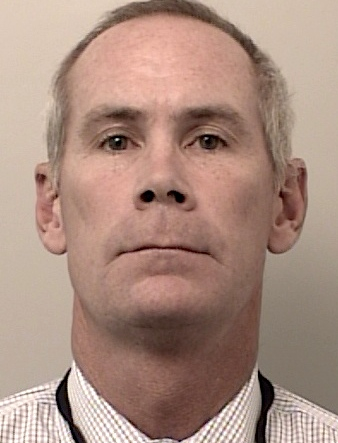
Jeremy Meyers

Jeremy Meyers

The letter was read into the record Sept. 15 by board President John Lane.

David Gerard, who is the attorney representing the board and the superintendent, cited a state Attorney General’s opinion stating it would not be a conflict of interest for him to represent both entities.

Tuesday’s special meeting was called to discuss what, if any, recourse the board might have in handling Meyers’ DUI from earlier this summer.

A California Highway Patrol officer found Meyers asleep in a construction zone on Highway 49 at 2:45pm June 9, less than three hours after he left a board meeting. The CHP recorded Meyers’ blood alcohol level at nearly twice the legal limit. He pleaded no contest to driving under the influence with a blood alcohol level of just more than 0.08.

A judge sentenced Meyers to five days in county jail that was then commuted to five days of home arrest.

In the letter to the board, Meyers wrote, “The home arrest portion of my sentence was done on personal time, not on work time. I will continue to separate my personal matter from my responsibilities as the county superintendent.”

Unlike an employee who has differentiated work and personal time, an elected official does not have a set number of work hours. Even when they are away from the office they are still accountable to the people who put them in office – the public.

Meyers did not return or decline any of his nearly $200,000 annual salary for the five days he was on house arrest.

He was driving his own vehicle at the time of his DUI. He drives his own vehicle for work and is reimbursed for mileage by the county. As is normal with a DUI arrest, Meyers’ driver’s license now restricts him to drive only for work, which given the nature of his position could be almost anywhere at anytime.

Board member Heidi Weiland, who had initiated the special meeting, asked if the county office of ed’s drug-free work environment policy mentions alcohol. It does. It says one cannot possess, use, or be under the influence of a controlled substance at a school or other district workplace. Meyers was not accused of being under the influence at a work site.

About two dozen people attended Tuesday’s 45-minute meeting in Placerville – a much larger number than is usual. Seven of them spoke.

Nick Ridout, a part-time teacher for the county, asked the board not to play politics. He adamantly defended Meyers, calling him “an honorable man and a good human being.”

A couple others echoed that sentiment.

Sherri Lum-Alarcon, though, said there should be consequences for what Meyers did, especially because he is in education.

Ken Cater, who used to work for the county Probation Department, said Meyers being released to his wife and not taken to jail was “not a sweetheart deal. It was pretty much standard stuff.”

Instead of being taken directly to jail, Meyers was released to the custody of his wife. Law enforcement officials not with probation have told Lake Tahoe News it is “highly unusual” for that to have occurred.

Girard explained in detail the relationship between the board and superintendent, all of whom are elected.

“Neither is superior over the other. They each have their own responsibilities,” Girard said. “They work as a partnership. The education codes lay out what each does. They work together in a give and take. Both are responsible to the electorate.”

The board had little to say, with members Georgie Knight and Debbie Akin saying nothing.

“I clearly understand our role. I have complete faith that Jeremy will act in the county’s best interest,” board Vice Chairman Rich Fischer said.

Lane added, “I second what Rich said.”

Meyers concluded his letter to the board by saying, “It is my belief the integrity of the elected office of the county superintendent and the elected board of education is best served by recognizing the separate functions and duties of each.”

Lane asked if the board wanted to take any action; no one responded and the meeting was adjourned.
Road beat: 2015 Lexus GS 350 — nearly perfect

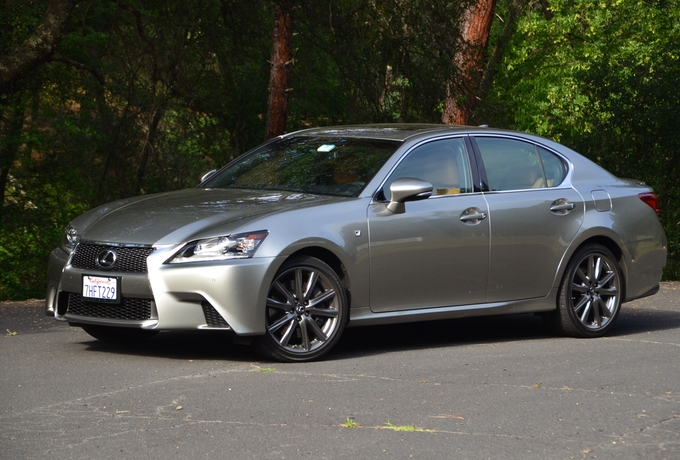
The Lexus 350 continues to shine in the luxury class. Photos/Larry Weitzman

The Lexus 350 continues to shine in the luxury class. Photos/Larry Weitzman

By Larry Weitzman

Lexus has the tagline “In the Pursuit of Perfection.” However, has the refined fourth generation hit the mark yet? In many ways it’s the perfect midsize car wheelbase of 112 inches and length of 190 inches while offering a perfect beam of 72 inches. The result is an interior of mammoth with rear seat leg room that makes transport of limousine proportions. But that only is the beginning.

Starting in the United States in 1993 as the GS 300, it was designed by ItalDesign Giugiaro but was only a modest success, perhaps lagging in performance as it was powered by an inline six of 3.0L and 220 hp. While it might be said the new GS is a super refined step back to its original roots, this fourth generation is a whole different car.

 Specifications Price $48,600 to about $58,000. Destination of $925 Engine 3.5L DOHC 24 valve V-6 306 hp @ 6,400 rpm 277 lb.-ft. @ 4,800 rpm Transmission Eight speed torque converter automatic Configuration Front engine/rear wheel drive Dimensions Wheelbase 112.2 inches Length 190.7 inches Width 72.4 inches Height 57.3 inches Track (f/r) 62.0/62.6 inches Ground clearance 5.1 inches Trunk capacity 14.1 cubic feet Fuel Capacity 17.4 gallons Weight 3,726 pounds GVWR 4,830 pounds Weight distribution (f/r) 53/47 percent Steering lock to lock 2.2-2.6 turns Turning circle 34.8 feet Wheels 19X8 (f) 19X9 (r) inch alloys Tires 235/40RX19(f), 265/35X19 (r)  Coefficient of drag 0.27 Performance 0-60 mph 5.78 seconds 50-70 mph 3.11 50-70 mph uphill 4.17 seconds Top speed Governed at 142 mph Fuel economy EPA rated 29/34/31 mpg city/highway/combined Expect 31 mpg overall in mixed driving. At 70 mph on cruise control two way run 39 mpg on longer level highway trips at legal speeds expect 37 mpg.

Specifications
Price $48,600 to about $58,000. Destination of $925
Engine
3.5L DOHC 24 valve V-6 306 hp @ 6,400 rpm
277 lb.-ft. @ 4,800 rpm
Transmission
Eight speed torque converter automatic
Configuration
Front engine/rear wheel drive
Dimensions
Wheelbase 112.2 inches
Length 190.7 inches
Width 72.4 inches
Height 57.3 inches
Track (f/r) 62.0/62.6 inches
Ground clearance 5.1 inches
Trunk capacity 14.1 cubic feet
Fuel Capacity 17.4 gallons
Weight 3,726 pounds
GVWR 4,830 pounds
Weight distribution (f/r) 53/47 percent
Steering lock to lock 2.2-2.6 turns
Turning circle 34.8 feet
Wheels 19X8 (f) 19X9 (r) inch alloys
Tires 235/40RX19(f), 265/35X19 (r)
Coefficient of drag 0.27
Performance
0-60 mph 5.78 seconds
50-70 mph 3.11
50-70 mph uphill 4.17 seconds
Top speed Governed at 142 mph
Fuel economy EPA rated 29/34/31 mpg city/highway/combined Expect 31 mpg overall in mixed driving. At 70 mph on cruise control two way run 39 mpg on longer level highway trips at legal speeds expect 37 mpg.

In this 2015 issue GS, Lexus saw fit to create the best L’Finnesse front end in their line up with an aggressive snout of a grille that says its one tough customer. It says, power, strength, and polish. Lexus also eliminated unnecessary lines and replaced them with subtle fluidity that has muscles, but a slick sinewy kind of a perfect athletic body that would have instant reactions, reflexes and responses. The smoothness of the rear window line blending into the trunk deck says it all. Coefficient of drag is a low 0.27.

While Lexus offered a 4.3 -4.6L V-8 in the second and third generation, the 3.5L V-6 Lexus GS 350 has found oodles of sublime power with 306hp at 6,400 rpm and 277 pounds of twist at 4,800 rpm which equates to 253 hp at that rpm. Power is sent to the rear wheels via an eight speed super slick automatic tranny. While the 1998 second gen GS400 with its innovative Optitron instrumentation was my favorite Lexus for year years, this new GS350 can now replace it in the midsize sedan category.  But it’s still hard to beat my favorite Lexes sedan of all which is the super high performance IS350. It’s just a bit small for some families.

Performance of this new GS350 is world-class with 0-60 mph is 5.78 seconds. Passing times are also quick with 50-70 mph happening in 3.11 seconds and the same exercise up a six percent grade only slowing the clocks to 4.17 seconds. Excellent times partially due to its extremely flexible eight speed tranny.

Fuel economy also benefits from the transmission. EPA rated at 19/29/23 mpg city/highway/combined, the GS averaged 22 mpg in overall fuel economy during 350 miles of aggressive driving, but when you relax and engaged the radar cruise control at 70 mph on a level highway fuel economy rises to a constant 31 mpg, remarkable for a 3,726 pound luxury sporty ride.

If after spending $50 large for this type of motor vehicle you want more performance and improved fuel economy perhaps you should check out the recent review of the GS 450h. It had slightly improved performance and about 25 percent better fuel economy. But fully loaded it was also about 25 percent more money.

And sporty it is. With driver selectable Adaptive Variable Suspension on my F Sport plus electronic Variable Gear Ratio steering with super quick ratios from 2.6 to 2.2 turns lock to lock and every handling acronym thought of by mankind, this GS should do the twisties like water in a hose. In addition the standard GS gets 18 x 8 inch alloys shod with 235/45 series rubber, but the F Sport adds a huge upgrade to staggered 19 x 9 (front and 19 x 9 inch (rear) alloys plus 235/40 series Summer tires up front and 265/35 tires in the rear. Even the weight distribution is an excellent 53/47 percent. The result is sport car handling that effectively places the GS in the top tier of sporting sedans. Body roll is superbly controlled and the handling is itself is remarkably good and confidence inspiring. If there is any negative its feedback is isolated requiring some attention. Overall the GS is excellent when the road bends.

On the other side of the coin is a perfect balance of ride quality. It is an extremely quiet ride with no extraneous noise, just slippery warm butter smoothness with the engine spinning a slow 1,800 rpm at 70 mph. It is extremely solid and tight, exactly what you would expect from a sporty luxury ride.

When it comes to safety, the F Sport gets huge 14 inch ventilated front discs and their performance is benchmark stopping in 40-41 feet from 40 mph. It also comes with every conceivable safety acronym ever devised by humans.  About the only improvement would be having Jeff Gordon as your chauffeur. That might be a might expensive or maybe unobtainable.

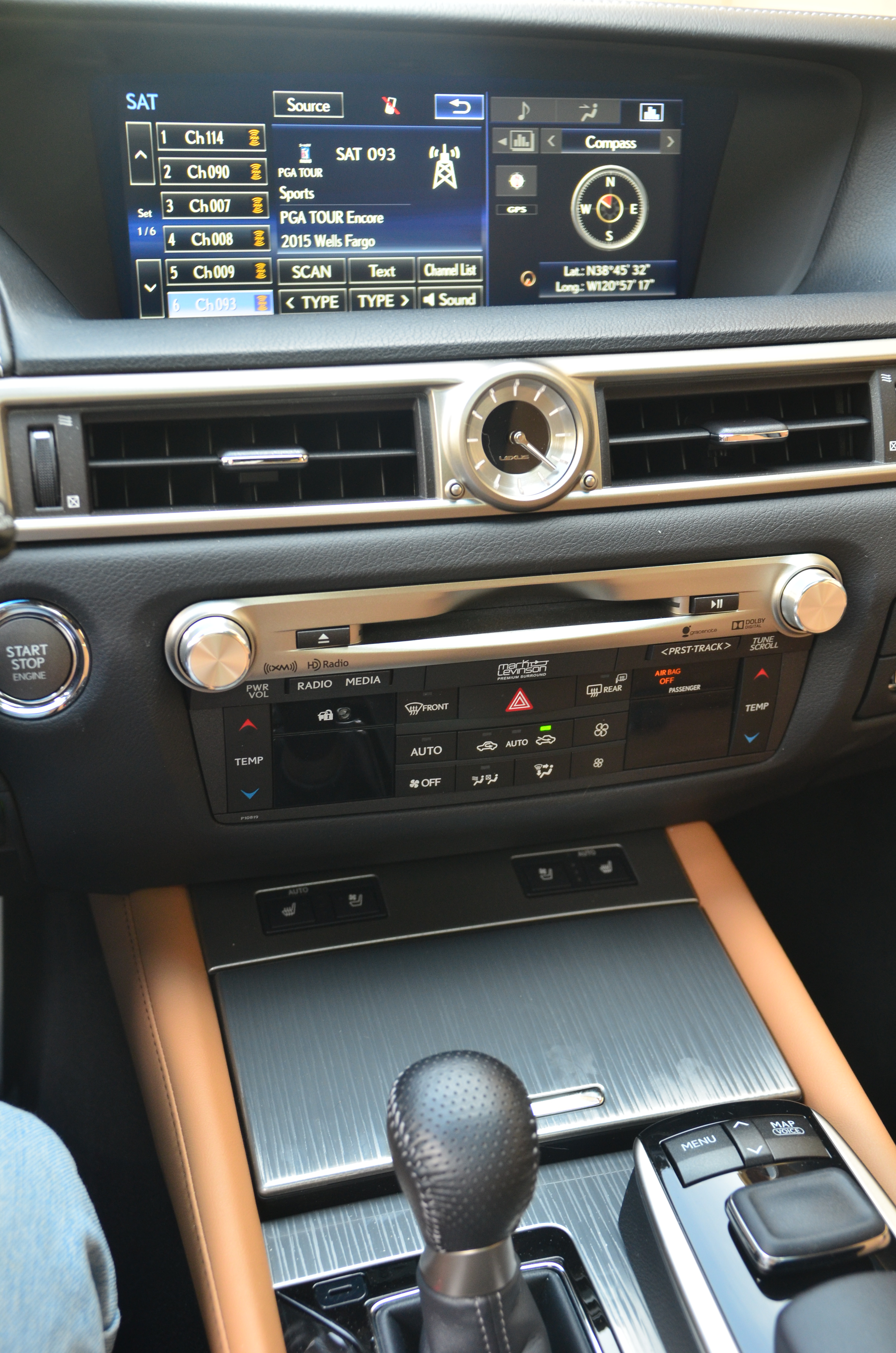
Interiors don’t get much better. The gorgeous deep tan leather is superb, and as with the outside the finishes are top quality. Front seats are sublime and rear seating is extremely generous especially considering that its exterior dimensions are of an average midsize sedan.

Instrumentation is complete but about the only knock with the GS is the mouse system used for controlling its sound system. It’s distracting and difficult to use. It may keep the radio screen free of fingerprints (good for bank robbers), but it is annoying to use.

Pricing starts at $48,600 plus $925 for a first class boat ride from Japan. The F Sport package adds another $4,825. Just about everything is standard including Bi-Xenon lighting (makes night into day) and navigation, but you can upgrade the already Carnegie Hall concert sound system with a Mark Levinson system for another $1,380. Blind spot monitoring and auto folding outside mirrors will add $700. Total package price with a couple of other items was $57,330. Never thought I would like a V-6 this much in a sporty luxo ride.

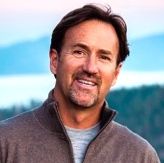
Larry Weitzman has been into cars since he was 5 years old. At 8 he could recite from memory the hp of every car made in the U.S. He has put in thousands of laps on racetracks all over the Western United States.


Pesticide to be used to decrease plague risk

The U.S. Forest Service will close several of its South Shore recreation sites Sept. 16, weather permitting, to allow county and state public health and vector control officials to conduct pesticide treatments to reduce plague risk.

Officials will dust all rodent burrows with a pesticide to reduce infestations of fleas that can carry plague.

The gates to Tallac Historic Site, Kiva Beach and Picnic Area, Valhalla and the Taylor Creek Visitor Center are expected reopen Thursday morning. The Pope-Baldwin Bike Trail will remain open, but signs will be posted where the trail crosses closed sites.

A dead California ground squirrel found at the Kiva picnic area adjacent to the Tallac Historic Site tested positive for plague in August.


Opinion: Cutting Pentagon pork could fund free childcare in U.S.

By C. Robert Gibson, Al Jazeera America

The cost of childcare is bankrupting America’s parents. But providing free, universal childcare for all parents is easily affordable by simply cutting a small handful of military programs whose absence almost nobody would notice.

Joy Richmond-Smith is a full-time social worker and mother of two small children. Her husband also works full-time, so daily childcare is essential to the couple. In the Boston area, where she lives, Richmond-Smith pays $400 for four days of childcare per week just for her 3-year-old son. If she were to put her 1-year-old daughter in childcare for two of those days, the cost would jump to $500 per week. And if she were to pay for both children to have full-time daycare at that same facility, the cost balloons to $700 per week. Richmond-Smith says her household’s childcare costs are more than double the amount she pays for her mortgage.

“These early years of life and brain development are so important,” she says. “I’m not skimping on childcare, so I’ll pay whatever I need to pay.”

Read the whole story


Growing up poor in U.S. impacts adult life

By Victoria Stilwell, Bloomberg Business

We already know that poverty disproportionately affects children, with about 20 percent of those younger than 18 impoverished versus about 13 percent of adults. New research from the Urban Institute in Washington shows child poverty is actually more common than those headline statistics suggest, and that has consequences for success in adulthood.

Some 39 percent of children are poor for at least one year before they reach their 18th birthday, according to Caroline Ratcliffe, a senior fellow and economist at Urban. For black children, that statistic is 75 percent, compared with 30 percent of whites.

A child is identified as poor if they live in a family whose gross annual money income is below the federal poverty level. For a family of three in 2015, that threshold is $20,090, according to the paper.

Read the whole story