Tahoe boat inspection fees set; could change in future

By Kathryn Reed

Fees will stay the same for boaters getting inspections before they launch at Lake Tahoe this year.

The cost of the program is split 50-50 by the boater and the states. Tahoe Regional Planning Agency oversees the program.

At the Governing Board meeting last month Austin Sass, who represents South Lake Tahoe on the board, brought up the idea of making the program self-sustaining. This wasn’t the first time he has done so. This time, though, a few more board members expressed some interest in exploring the idea.

“Boating is a luxury. Why are we underwriting boaters?” Sass asked.

He said it could be a gradual easing of subsidies.

Matt Driscoll, TRPA staff member making the presentation, explained how the inspection program is part of the environmental improvement program. The EIP by nature is a public-private partnership.

Board member Shelley Aldean wondered if there would be less compliance if the fees were dramatically increased.

Clem Shute, another board member, pointed out how the governorships in California and Nevada will be changing this year, and wondered if support for the states would be continuing.

“There is no guarantee the $375,000 will be there. We may not get that money. We need to anticipate the possibility of not getting that money,” Schute said.

Executive Director Joanne Marchetta said a logical time to discuss the fees will be when the draft environmental impact statement for the shoreline is released later this year.


Letter: EDC should comply with immigration laws

To the community,

On April 3, many from the El Dorado County Republican Central Committee, State of Jefferson and other county citizens will be appearing before the EDC Board of Supervisors, requesting that they adopt a resolution declaring that El Dorado County will comply with federal immigration law and does not constitute a sanctuary jurisdiction.

Joining them will be a representative from Rep. Tom McClintock’s office, who will be reading a letter from the congressman. This is also supported by Sheriff John D’Agostini, who last year publicly vowed he would comply with federal immigration law and uphold the U.S. Constitution. As well, District Attorney Vern Pierson, who testified in opposition of SB54, before the state Assembly Judicial Committee.

Counties that have adopted resolutions include Tehama, Orange, Siskiyou, Shasta and Kern and the cities of Anderson, Lincoln, Colusa and Los Alamitos. The effort is spreading through the 23 counties of aka the State of Jefferson, to include Placer and Calaveras, who have also approached their county supervisors.

The El Dorado County Republican Central Committee has also reached out to other state elected officials.  

The meeting is at 9am at the county supervisors chambers, 330 Fair Lane, in Placerville.  

Terry Gherardi, El Dorado County Republican Central Committee


Water content improves, but only 52% of average

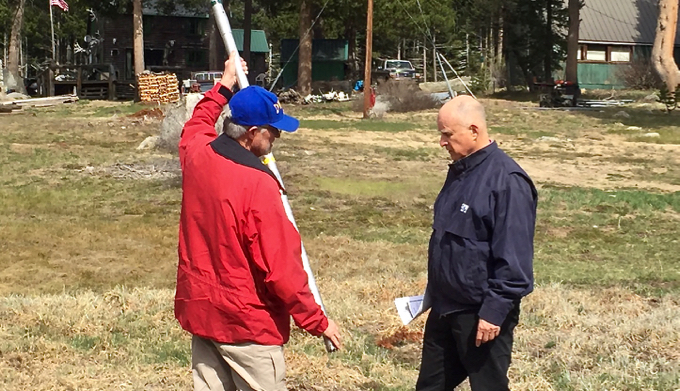
Three years ago Gov. Jerry Brown found dirt, not snow during the April survey. Photo/LTN file

By Kathryn Reed

March was good, but it wasn’t a miracle. That was the conclusion Monday of the snow survey.

While the water content increased dramatically in a one-month period, it is only at 52 percent of average for the state.

The manual measurement that was taken April 2 near Echo Summit recorded a depth of 32.1 inches of snow, 12.4 percent water content, for an average of 49 percent.

A month ago the water content was at 23 percent of average.

The water content is more important than the snow depth because that is what will melt this spring and be consumed by about one-third of the state’s water users downstream. Reservoirs throughout the state are the catch basins for the Sierra runoff, which then is filtered out for municipalities and farmers throughout California throughout the summer.

“The early April snow survey is the most important for water supply forecasting because the snowpack is normally at its peak before it begins to melt with rising spring temperatures,” officials with the state Department of Water Resources said.

The good news is that the reservoirs in the state are doing well because of the record rain/snowfall from last winter. Most are still at above average levels despite this winter’s dismal rain/snow.


Road Beat: Scoot, speed, safety, style, sumptuousness and civility

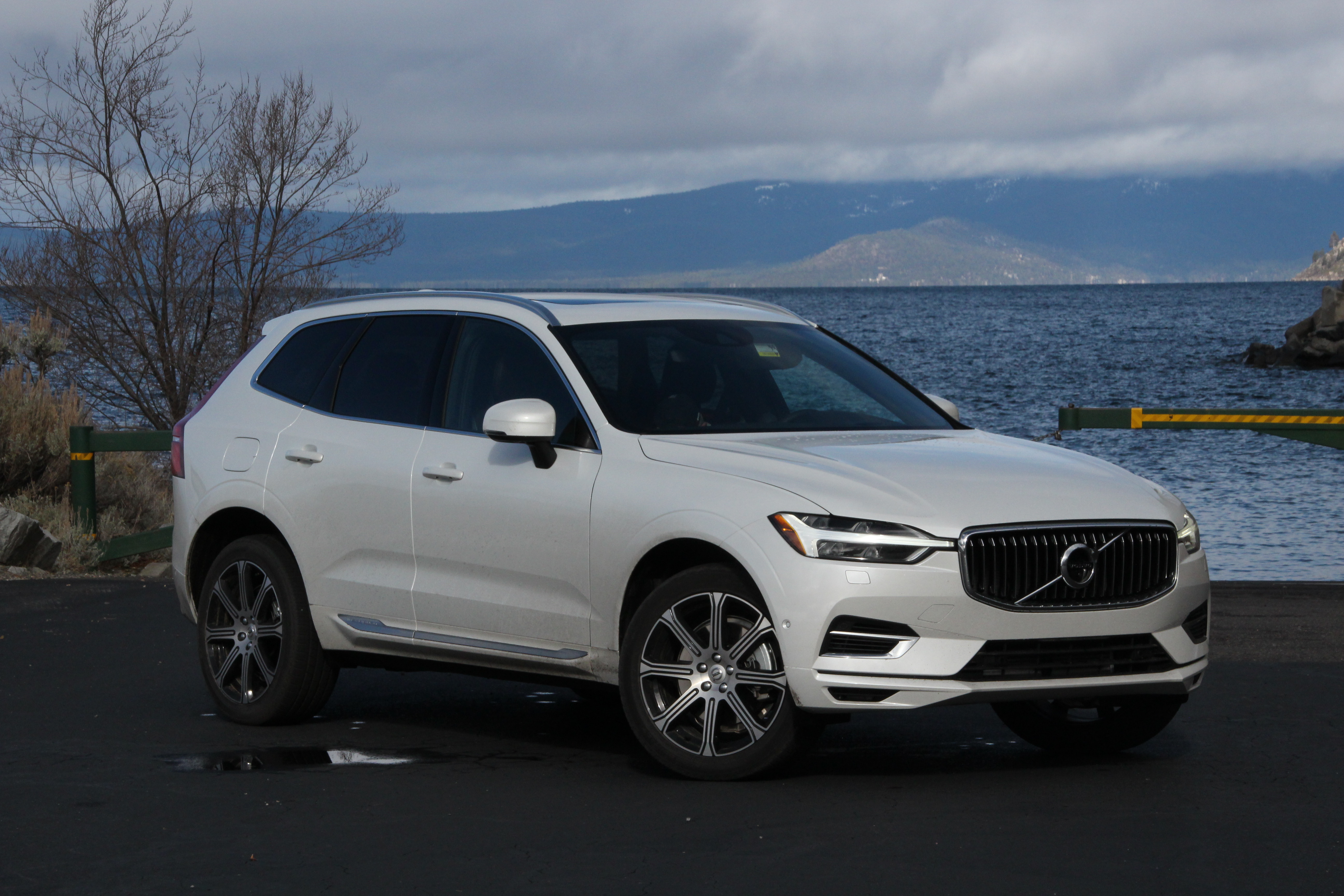
The 2018 Volvo XC60 full of superlatives for the driver. Photos/Larry Weitzman

By Larry Weitzman

Let’s face it, I like alliterations. I know, civility starts with a “c,” but it sounds like an “s.” But this new Volvo meets all the criteria of the title of this Road Beat. It is that good. Who would of thunk it from a company that used to build cars that were built like battleships and looked like boxes that were pieced together.

The Chinese company, Geely, that recently bought Volvo for a song ended up with the equivalent of Beethoven’s Fifth, Sixth and Seventh symphonies. And, yes, Volvos are still manufactured in Gothenburg, Sweden.

Actually, for the past 15 years, Volvo has produced some stylish vehicles starting with the second generation S80 and the first XC90. Now their lineup is replete with great looking rides like the new S90, the V90, the new XC40 and now the XC60 with its perfect proportions, superb window line, massive front end, broad shoulders and some rippling muscle. It is a great looking vehicle.

While a perfect small mid-size in length at 185 inches, XC60 is wide at 75 inches and its wheelbase is long at 112.8 inches. Standing at 65-inches tall, it looks bigger because of its massive shoulders and high character line. That expansiveness pays dividends in interior spaciousness.
Specifications
Price $53,495 to about $71,590
Engine 2.0L, DOHC, 16 valve supercharged and turbocharged inline four 313 hp at 5,700 rpm
296 lbs.-ft. of torque
Electric power system
87 hp, 10.4 kWh L-I battery
87 hp electric motor
Combined max power 400 hp
Transmission
Eight-speed torque converter automatic
Configuration
Transverse mounted front engine/FWD/AWD
Dimensions
Wheelbase 112.8 inches
Length 184.6 inches
Width 75.4 inches
Height 65.3 inches
Track (f/r) 64.9/65.1 inches
Ground clearance 8.2 inches
Wading depth 15.7 inches
Weight 4,668 pounds
GVWR 5,863 pounds
Max trailer weight 4,628 pounds
Turning circle 35.4 feet
Steering lock to lock 3.0 turns
Performance
0-60 mph 4.99 seconds
50-70 mph 2.46 seconds
50-70 (uphill) 3.14 seconds
Top speed (manufacturer and quite believable) 144 mph
Fuel economy No EPA rating as of this date, but expect 26 mpg in suburban driving and about 30-31 mpg on a level highway at legal speeds.

Volvo is the only auto manufacturer that combines supercharging and turbocharging simultaneously to enhance the power of their engines, a common technique used in aircraft engines starting in the late 1930s, which used supercharging and turbocharging in massive radial engines like those that powered the B-17 Flying Fortress. As a result, this Volvo with just a 2.0L inline DOHC, 16 valve inline four-cylinder engine produced 313 hp at a low 5,700 rpm and 296 pounds of twist from about 1,600-4,000 rpm.

But Volvo isn’t done yet as with the T8-E AWD model that was my tester. Volvo adds a huge kicker, a 10.4 kWh L-I battery system located centrally in the tunnel area of the car and an electric motor that can add up to 87 hp which drives the rear wheels and brings the combined power to 400 hp and 472 pounds of twist. That is massive power. This T8-E is a full-on plug in hybrid that is capable of about 25-30 miles of pure electric driving and even in a low state of charge is capable of pure electric motoring at over 70 mph.

Power is transmitted through a slick 8-speed cog-swapper to all four wheels and it is prodigious power with an average 0-60 mph time of just 4.99 seconds. That is world-class performance. Passing performance is also world-class with 50-70 mph simulated passes averaged a scant 2.46 seconds and a steep grade only slows that exercise to 3.14 seconds. If the Volvo has even small wings, it would fly. Nail the throttle and it will get your attention in a nano second with its ferociousness. This is an extremely high-performance vehicle and it does this while weighing 4,668 pounds.

Performance on pure electric also is quite satisfying with strong linear acceleration.

With the PHEV system, this Volvo gives you very good fuel economy. There are no EPA numbers yet, however my tester averaged 26.1 mpg over about 450 miles of varied driving including plenty of dipping into that delicious throttle. On a level highway at 70 mph on cruise control without much battery, the XC60 averaged 31.6 mpg in a two-way run. In my run from Placerville to Reno via Highway 50 and Echo Summit, the big Volvo averaged 28.9 mpg. But the battery was all done a couple of miles short of Kyburz on the outbound leg, meaning it was good for about 30-35 miles of pure electric. But remember from Pollock Pines to Ice House Road is mostly downhill, which regenerates the battery. However, I got about a quarter of the battery back from Echo Summit into South Lake Tahoe and in the nine-mile downhill run from Spooner Summit into Carson City the Volvo recaptured about a one-third of the battery which allowed for electric motoring in the Carson City area. The fuel tank could be larger at just 13.2 gallons.

On pure EV, the Volvo has decent performance and will motor along at 70 plus mph for about 20-25 miles.

Think about it. Here is a vehicle that can blast from 0-60 mph in less than 5 seconds and average 25-26 mpg in suburban driving. That is amazing.

But not everything is perfect. While this XC60 has state of the art suspension with double wishbones up front and optional four-corner air suspension in the rear which provided one of the best riding vehicles the Road Beat has ever encountered, because of all the electronic interventions handling feels a bit artificial. All the credentials are there, like steering that is three turns lock to lock, huge 20-inch alloys shod with 255/45 rubber and tremendous cornering power and grip, it just needs guidance as “feel” is the missing component. But point it and it will obey your commands, just not in a natural fashion.

But it’s the ride quality that the XC90 has that will wow you. It is extremely quiet and it handles road imperfections in a remarkable manner. You have to experience it to understand, that’s how good it is. And it doesn’t float. Kudos to Volvo. There is no tire, mechanical or wind noise as well.

Volvos are safe and the XC60 is no exception. It has just about every conceivable mechanical and electronic safety intervention device known to man. Lane departure warning and lane keep assist, check. Semi-autonomous driving is also touted. Surround view camera, check. Braking intervention, something invented by Volvo, check.  LED Headlights with auto high beam are fantastic. But never let these systems lull you into forgetting as driver attention and awareness are the largest and most important safety factors.

I have written glowingly about Volvo interiors and this new XC90 follows in that tradition of the finest leathers and seats. A thick, dark saddle leather resides on the seating surfaces which are shaped for maximum comfort, never mind their superb design. While all the instrumentation is there, including a tach which appears in Sport Mode, it is the computer like center stack vertical screen that is just too confusing. Perhaps after a month it would become second nature, but after a week and this is my third time with this system, it is still difficult to operate and at times downright frustrating.

In a car that exudes safety, this system is most distracting and the learning curve is long and difficult and perhaps dangerous in its distractions. Nothing like knobs and buttons.

Interior volume is also cavernous. Going to Home Depot could be dangerous to your bank account.

And then again, so could be buying this Volvo with a base of $52,500. plus $995 for the boat from Gothenburg, Sweden. While that price is reasonable, my test was loaded up with about $18,000 in options bringing the total to a rather shocking $71,590. Included in that $18 large were a Bowers and Wilkins sound system ($3,200) and air suspension ($1,800) which I would go for. The Inscription package added $3,800, the Convenience package added $2,000 (how inconvenient), the Luxury seat pack adds $3,000 (there’s your nappa leather upgrade), the Advanced pack with its 360-degree view is $1,800 and the Vision pack is $1,100.

Larry Weitzman has been into cars since he was 5 years old. At 8 he could recite from memory the hp of every car made in the U.S. He has put in thousands of laps on racetracks all over the Western United States.


Tahoe Tails — Adoptable Pets in South Lake Tahoe

Pasha

Pasha is 5-years-old and has been at the shelter for two months. She loves to be petted and has an outgoing personality. 

Pasha needs a home with no other cats. The $20 adoption fee has been paid.

Pasha is spayed, microchipped, tested for FIV, and vaccinated. She is at the El Dorado County Animal Services shelter in Meyers, along with other dogs and cats who are waiting for their new homes. Go to the Tahoe animal shelter’s Facebook page to see photos and descriptions of all pets at the shelter. 

Call 530.573.7925 for directions, hours, and other information on adopting a pet. 

For spay-neuter assistance for South Tahoe residents, go online

— Karen Kuentz


SLTFD back on the waters of Lake Tahoe

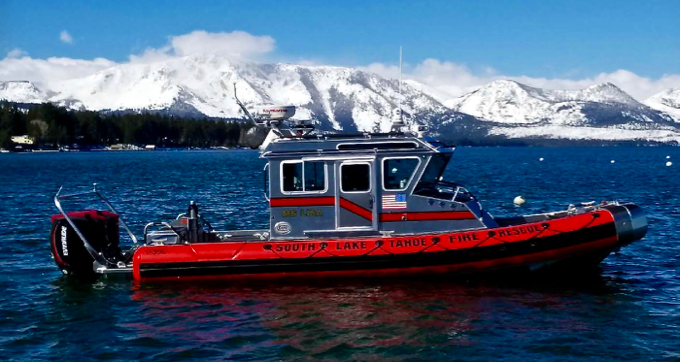
Ms. Lisa, the South Lake Tahoe fire boat, will be christened April 2 at 1:30pm at Tahoe Keys Marina. Photo/Provided

By Kathryn Reed

Lives are expected to be saved. Structures might be as well, but the primary purpose of South Lake Tahoe Fire Department’s new vessel is to be a rescue boat.

Advanced life support will be able to be administered on the water. In the past only basic first aid was rendered.

The boat is the difference. The old one, which beavers destroyed, was an inflatable. This new one is more stable, larger and will allow IVs to be administered, bleeding to be stopped and splinting among other medical care.

Lakeside Marina is likely to be its permanent home. From there it can reach Emerald Bay in eight minutes.

The Tahoe Regional Planning Agency Governing Board passed an amendment in September 2016 allowing for one public safety pier in each county. South Lake Tahoe Fire Chief Jeff Meston is a proponent of this. He would like to see lifts at the piers so boats can stay in the water year round. This will allow for aid to be rendered that much faster.

“There have been some conversations between TRPA, Tahoe Douglas Fire, and Douglas County sheriff about ideas for a new pier, but no applications submitted at this point,” Tom Lotshaw with the bi-state regulatory agency told Lake Tahoe News.

The SLTFD vessel is a SAFE Boat, the same type the Coast Guard uses. It’s near impossible to tip over, and will be able to handle Lake Tahoe when it resembles the ocean.

Infrared gear will allow first responders to find people in the water. Night vision is also a component.

A medic will be on board. The nine fire engineers are being trained in navigation and how to handle the boat. Firefighters are going through training from the state Division of Boating and Waterways as well as the U.S. Coast Guard.

“The boat has played a pretty important role in our delivery system,” Meston told Lake Tahoe News. The agency has been without its own boat for three years.

Meston cited how on Fourth of July boaters – motorized and non – get turned around after the fireworks, drownings are an annual occurrence, and freak accidents like tourist vessels getting stuck on sandbars where passengers need rescuing are all calls his team responds to.

This boat also has better firefighting capabilities than the previous one. When a hose was used on the old boat it pushed the vessel away from the flames. This vessel will be strong enough not to move.

This new boat was completely funded with a $390,000 donation by philanthropist Lisa Maloff.

“The reality is this boat will save someone’s life. She will have directly contributed to saving someone’s life,” Meston said of Maloff.  

Maloff is expected to be at today’s christening of the boat named after her – Ms. Lisa – a bit of a play on words with boats often having MS (motor ship) before the name. This was her choosing.


Letter: Make voices heard regarding SnowGlobe

To the community,

On April 3, the city of South Lake Tahoe will consider the permit requirements for the 2018 SnowGlobe event. As of this writing there are no contractual changes to sound levels which were arbitrarily created the second year of SnowGlobe. 

Given the existing sound restrictions have not been violated beyond short-term peaks above 95 dB and a laughable requirement for sound to be at sustained levels for a time frame that is longer than any song played (10 minute sound restrictions for 6-minute songs), SnowGlobe would be within their rights to turn the sound up and not see so much as a fine or be asked to turn it down.

To be fair, SnowGlobe is changing the event and will attempt to mitigate sound. Like a speeding car who has seen the waiting police car, they have applied the brakes to are trying to prevent from being held accountable for their violations. They are making token changes to try and appease the complaining masses and are doing so of their own volition. The city, in the roll of the waiting police, continues to be asleep at the wheel. They neither register the violation of their own rules nor attempt to enforce them. They have handed off the need to take action to others who haven’t the authority to do anything. We can only hope they wake up in time to do what is required.

The No Globe Alliance has tried to be fair. We have asked for modest changes and asked for measurable enforceable regulations that would allow this event to continue and provide a means to relieve the impact on local residents. We have reminded the city of its obligation to follow and enforce existing regulations with the TRPA, El Dorado County and the city itself. To date we have received no acknowledgement from anyone at the city that the Bijou/Al Tahoe Community Plan even exists, that El Dorado County has noise limits or that the MOU with the TRPA requires the city to both measure and enforce these ordinances. 

Like a child who does not want to hear that they have homework to do, the city continues to pretend none of this exists and wants to keep playing. It is well past time for the voting public to recognize these childish actions and elect to play the parent, elect to enforce the rules and elect different City Council members.

We will be speaking on Tuesday about this event. We ask that anyone interested to join us to support measurable, enforceable change that is defined in the contracts and not just asked as a favor. No city can function without written defines requirements that are measurable and enforceable.  The time for half measures and looking the other way is over.

Sincerely,

Scott Ramirez, South Lake Tahoe


Water providers fighting Calif. ban on watering sidewalks

By Dale Kasler and Ryan Sabalow, Sacramento Bee

It seemed like the sort of thing any drought-wary Californian could support.

The state’s water cops were poised last month to pass a set of rules prohibiting what most everyone agrees are wasteful water uses –like letting water from a hose without a nozzle flow into a storm drain.

But no change in California water policy ever comes easily. The State Water Resources Control Board’s proposal to impose permanent conservation rules – such as prohibiting hosing down driveways, watering lawns less than two days after it rains and washing a car without attaching a shut-off nozzle to the hose – ran into a cascade of opposition.

Read the whole story


Work to resume on Kingsbury Grade upgrades

On April 2, the Nevada Department of Transportation will begin the second scheduled construction season of roadway drainage pipe improvements on Kingsbury Grade.

Between early April and fall, single lane closures with a traffic flagger will periodically be in place on the Carson Valley side of Kingsbury Grade between mileposts 3 and 11. The single lane closures will primarily take place Mondays through Fridays between 7am and 5pm, with periodic Saturday and late evening lane closures. Motorists should anticipate travel delays of no more than 30 minutes through the work zone, with the majority of travel delays being less than 10 minutes.

Construction will not take place during major special events.

The project began in early September 2017 before a scheduled winter construction shutdown. Thus far, approximately 450 linear feet of storm drain pipe has been installed and roughly 1,300 linear feet of pipe reinforced.

In total, approximately 15,000 feet of eroding roadway drainage pipe will be reinforced with a cured-in-place pipe liner. A flexible pipe liner is inserted into existing drainage pipes. Resins in the liners are then hardened, creating a durable pipe able to last decades. The reinforcing pipe liners are often more cost-effective and less disruptive than traditional “dig and replace” pipe repair methods. The project will also replace certain roadway drainage inlets and add manholes for additional drainage access.

The cost is approximately $4.4 million.


Culture of trust is key for school safety

By Calvin Morrill and Michael Musheno, The Conversation

When we first visited the school that is the focus of our forthcoming book “Navigating Conflict: How Youth Handle Trouble in a High-Poverty School” back in 1995, students were free to move about campus during lunch and other free periods and a culture of trust prevailed.

All that changed during the 1999-2000 school year. That’s when a new principal arrived at the school – a racially diverse, urban school in the Southwest. School renovation started with funding secured in the name of “safe schools.”

Bushes, trees and lockers were deemed security hazards and removed. Security gates and metal detectors were installed. School officials hired more security personnel and cut back students’ freedom of movement on campus dramatically. The school implemented “sweeps,” which meant any student without a signed pass found outside of class or the designated eating area would be escorted to a room called the “tank,” where they would be detained for the remainder of the school day. Students who violated restrictive rules related to movement on campus faced heavy discipline, which included an automatic parent conference followed by up to five days of out-of-school suspension.

Teachers and students began to voice concerns about the tightened security to each other and protested to the administration. All this set up an interesting case for us to examine as field researchers who study conflict in organizations.

Ironically, what we found is that the tightened security measures eroded the ethos of trust that facilitated peace among students. Notably, whereas before students settled conflict peacefully among themselves, now peer violence increased on campus, which is something we discovered in our field research and that was corroborated with school district and local law enforcement data. The average annual number of police calls from the campus nearly quadrupled after the implementation of the new security measures. Before the tightened security, school district data revealed that the school was as safe as any in the district, including suburban schools in the surrounding area.

We continued to observe the high school in the 2000s, returning for intensive fieldwork in 2008 after we learned the school had a new principal. Heavy disciplinary measures were relaxed, and students regained some freedom to move about campus.

The new principal recognized the importance of youth-centered teachers. Students once again turned to predominantly peaceful actions to handle conflicts, as found by our field data and corroborated by institutional data.

Why trust matters

From our perspective, what our 16 years of field experience at this particular school shows is that target hardening, more police presence and heavier discipline all have a corrosive effect on school culture and security. Our finding squares with other researchers who have found that schools with robust social trust experience less peer violence and conflict than schools where distrust prevails. The question is why?

Social trust leads to freedom of association and movement on campus for youth, which in turn enables youth to cross social divides and develop relationships with other kids. In a trusting environment, like the campus we studied, youth learn to empathize with peers who are different than they are, taking the hard edge off of stereotypes based on race. Inclusive student clubs, supported by teachers, reinforced a sense of social belonging on the campus. Even in this environment, some peer groups faced difficulties tied to their social identities, especially new immigrant youth from Mexico.

Youth skills

Another important lesson from our book is that youth continuously work on their skills at handling peer conflict. Coupled with the socialization learned from senior students and teachers, youth in schools where trust runs high develop skills for working out their troubles by talking, getting support from those not directly involved in disputes, avoiding one another until emotions cool, and educating or correcting troublesome youth.

Our point is not that youth should be left alone, or that they’re perfectly rational (they’re not) and will work out all their problems on their own.

Rather, it is our contention that youth have a pretty good fix on dangerous threats among their peers and can peg these threats, distinguishing them from the everyday troubles they face with one another. Adults need to pay close attention to the knowledge and skills of youth in handling peer conflict, and keep their ears to the ground as to what youth are saying about who’s truly dangerous and who’s not.

Youth-centered teachers

Another lesson is the importance of youth-centered teachers operating actively in the social environment of the school. These teachers are highly attentive to the education and safety of their students. They care about students’ lives, learning and comportment, and regard the entire school campus, not just their classroom, as their place.

Youth-centered teachers monitor students in and out of the classroom in supportive ways that facilitate building social trust. Student clubs figure prominently. This is because clubs offer opportunities for youth-centered teachers to open their classrooms as meeting spaces and collaborate with young people to formulate goals that respond to the changing needs of diverse students.

Youth-centered teachers also show a strong inclination to keep their commitments to youth and an inclusive school culture. They defend these practices during times of adversity.

Effective leadership

School principals are most effective when they know how to develop a shared vision with students and staff. In our view, these shared visions must be sustained from the bottom up rather than the top down. The most effective principals we observed knew how to empower youth-centered teachers and meaningful, inclusive youth agency in student governments and clubs. This led to social trust and a shared ability to respond to problems when they arose.

The bottom line, in our opinion, is that in an era of budgetary constraints, fostering an environment for youth-centered teachers and students to build cultures of trust will likely have better payoffs for school safety than further investments in the fortification of public school campuses.

Calvin Morrill is a Stefan A. Riesenfeld professor of law and professor of sociology at UC Berkeley. Michael Musheno is a professor of law at University of Oregon.