Plan designed to reduce highway fatalities

California launched the next phase in its plan to further reduce fatalities and severe injuries from collisions on public roadways.

Strategic Highway Safety Plan is a national blueprint created for states by the American Association of State Highway Transportation Officials in partnership with the Federal Highway Administration to develop strategies that save lives and reduce severe injuries. It helps states identify their specific safety challenges, and guides investment decisions toward strategies with the most potential to save lives and prevent severe injuries.

Under the original SHSP developed in 2005 California experienced a 30.4 percent reduction in roadway fatalities from 2005 to 2012, and a 17.5 percent reduction in severe injuries. The new plan, just like the original, is largely data-driven, where safety and other significant data is used to help define problems, develop solutions and measure progress.

This SHSP update also comes as a result of requirements under the federal Moving Ahead for Progress in the 21st Century Act. The act not only asked all states to update their SHSPs but to expand the scope beyond highways to include all public roads and to put a greater focus on safety for users of all forms of transportation, including bicyclists and pedestrians.


Wine event celebrates end of Prohibition

The Blind Barrel is an El Dorado Winery Association event celebrating the repeal of Prohibition with the passage of the 21st Amendment on Dec. 5, 1933.

Marshall Gold Discovery State Park will become a speakeasy.

A gourmet soup-line and wine tasting are part of the event. Guests will be able to mix and match bottles from the “black market” as well dance the night away. Prizes will be awarded for best Prohibition-era outfit.

A portion of the proceeds will be donated to MORE, Mother Lode Rehabilitation Enterprises.

The event is Dec. 5 from 6-10pm. The $50 tickets may be purchased online.


Ironman calls it quits at Tahoe after 3 years

Ironman has decided three years at Lake Tahoe is enough.

The triathlon, which has been on the North Shore, had its last hurrah on Sunday.

“After careful consideration, Ironman Lake Tahoe will not be extended. We appreciate the efforts and support of the city, volunteers, sponsors, and everyone else involved in putting on this triathlon. We would also like to thank all of the athletes who have raced with us here,” Ironman said in a statement on its website.

The event spanned Kings Beach, Tahoe City, Truckee and Squaw Valley.

In the 1980s there was an Ironman on the South Shore. Before it started on the North Shore in 2013, California had not had the triathlon since 2001.

Weather — as in snow and subfreezing temperatures the first year, and massive traffic issues — which resulted in course changes in subsequent years — contributed to the organization not wanting to continue with Lake Tahoe as a location.

— Lake Tahoe News staff report 


Road beat: 2015 Lexus RX450h electrons can push

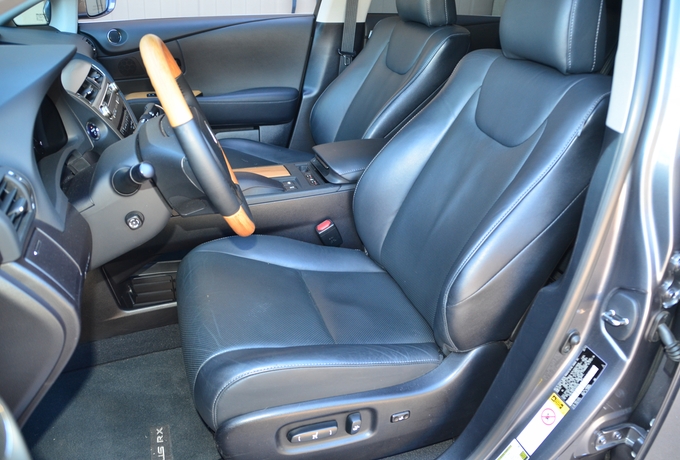
The 2015 Lexus RX450h continues to be a stellar ride. Photos/Larry Weitzman

The 2015 Lexus RX450h continues to be a stellar ride. Photos/Larry Weitzman

By Larry Weitzman

Besides the hybrid drive system, other than some badging and some other small details like a 2-gallon smaller gas tank, there are not a whole lot of differences between the RX350 and the RX450h, except for fuel economy, which is obviously better in the RX450h. Of course there is a price differential of about $6,600 as well in favor of the RX350. Let’s see how they line up.

RX as reported before is in its sixth year of its third generation and this third gen didn’t fall very far from the second gen tree. It remains Lexus’ bestseller and for good reason. It is all Lexus in quality and design. It is sublimely quiet with this hybrid really acting like a bank vault. You haven’t driven a quiet car until you’ve tried a Lexus hybrid, any of them will do for the ultimate quiet experience.

Specifications Price $41,880 to about $58,315 Engine-conventional  3.5L DOHC 24 valve V-6 245 hp @ 6,000 rpm                                            234 ft.-lb. of torque @ 4,800 rpm Electric motor front axle 155 hp Electric motor rear axle 67 hp Sealed nickel metal hydride (Ni-MH) 50 hp Transmission CVT Configuration Transverse mounted front engine/front wheel drive/ all wheel drive (rear axle is electrically powered) Dimensions  Wheelbase 107.9 inches Length 187.8 inches Height 66.3 inches Width 74.2 inches Weight (AWD) 4,652 Track (f/r) 64.2/63.8 inches Ground clearance 6.9 inches GVWR  5,974 pounds Tow capacity 3,500 pounds Fuel capacity 17.2 gallons Cargo volume (second row up/second row folded) 40.0/80.3 cubic feet Seat belts (passenger capacity) 5 Wheels (std/0pt) 18X7.5/19X7.5 inch alloys Tires (std/opt) 235/60X18/235/55X19	 Turning circle 40.0 feet Steering lock to lock 2.79 turns Coefficient of drag 0.33 Performance RX450h AWD 0-60 mph 6.75 seconds 50-70 mph 3.72 seconds 50-70 mph uphill 5.75 seconds Top Speed Electronically limited to 112 mph Fuel  economy EPA rated at 30/28/29 city/highway/combined mpg (AWD). Expect 27-28 mpg in rural country driving with some stop and go and 30 plus mpg on the highway at legal speeds.

Specifications
Price $41,880 to about $58,315
Engine-conventional
3.5L DOHC 24 valve V-6 245 hp @ 6,000 rpm
234 ft.-lb. of torque @ 4,800 rpm
Electric motor front axle 155 hp
Electric motor rear axle 67 hp
Sealed nickel metal hydride (Ni-MH) 50 hp
Transmission
CVT
Configuration
Transverse mounted front engine/front wheel drive/ all wheel drive (rear axle is electrically powered)
Dimensions
Wheelbase 107.9 inches
Length 187.8 inches
Height 66.3 inches
Width 74.2 inches
Weight (AWD) 4,652
Track (f/r) 64.2/63.8 inches
Ground clearance 6.9 inches
GVWR 5,974 pounds
Tow capacity 3,500 pounds
Fuel capacity 17.2 gallons
Cargo volume (second row up/second row folded) 40.0/80.3 cubic feet
Seat belts (passenger capacity) 5
Wheels (std/0pt) 18X7.5/19X7.5 inch alloys
Tires (std/opt) 235/60X18/235/55X19
Turning circle 40.0 feet
Steering lock to lock 2.79 turns
Coefficient of drag 0.33
Performance RX450h AWD
0-60 mph 6.75 seconds
50-70 mph 3.72 seconds
50-70 mph uphill 5.75 seconds
Top Speed Electronically limited to 112 mph
Fuel economy EPA rated at 30/28/29 city/highway/combined mpg (AWD). Expect 27-28 mpg in rural country driving with some stop and go and 30 plus mpg on the highway at legal speeds.

The dimensions of the RX hybrid are essentially identical to the conventional model with a wheelbase of 108 inches and a length, width and height if 188, 74 and 66 inches, respectively; slightly on the small size of a mid-size SUV, except for its wide berth.

Its design is Lexus L’finesse and it is quite attractive or maybe I am just use to it as there seems to be hundreds of thousands on the streets and when you think about it, even 15-year-old models look clean, fresh and well taken care off.

Hybrid power means a combination of conventional gasoline engine plus an electric motor which powers the 450h via the gas engine, both or pure electric at speeds below about 30 mph. It can seamlessly do this via their trick CVT which uses a sun gear, planetary gears and a ring gear which mesh both power systems together absolutely perfectly. About the only thing you can feel only once in a while is the starting of the 3.5L DOHC 24 valve V-6. That powerplant makes  245 hp at 6,000 rpm and 234 pounds of twist at 4,600 rpm (205 hp). The normal V-6 does better 270 hp and 248 torque) even though the hybrid V-6 sports a 12.5:1 compression ratio. As an Atkinson cycle engine a late closing intake valve effectively lowers the compressio9nj ratio , making for a better expansion cycle ratio and therefore more efficiency. Anybody understand that?

Now here is where it gets interesting. The RX hybrid has three electric motors. One for running tranny gear ratios, engine starting and a generator. Motors two and three each perform the same function except the larger 155 hp drives the front axle and the third smaller motor generator (67 hp) drives  the rear axle. The gas engine doesn’t drive the rear axle, that’s left to electric motor number three and it makes perfect sense. Who needs the extra weight and complexity and meshing system of a drive shaft and complex rear axle? The RX450h system will do the job and then some with its brilliant, simple system.  But don’t think the total power of the RX hybrid is 467 hp or like the massively powerful Lexus RC-F. Because the maximum battery output is 50 hp, the combined power is limited to 295 hp (245 hp+50 hp). When the engine is under a load at full power, there is no surplus electrical energy to feed the electric motors or battery.

One of the reasons that Toyota/Lexus hybrid systems are basically fail-safe is that they tightly control battery recharge and discharge rates and levels.

Performance is very good knocking off 0-60 mph benchmark in 6.75 seconds. Passing times also reflect this level of performance with a level 50-70 mph run of 3.72 seconds and the same run up a 6 percent grade slowing the time by two seconds to 5.75 seconds. By themselves those are excellent numbers of a very high performance vehicle. But even with a 25 hp advantage over the regular RX350 AWD,  the hybrid isn’t as quick as the conventional AWD RX350 as the 450h carries a 300 pound weight penalty (4,652 pounds). The RX350 posted its three relevant numbers of 6.30, 3.59 and 4.66 seconds. Except for the hill climb pass the differences are insignificant and because the hill climb is still well under six seconds you could consider that insignificant as well. Why, the RX350 posted a phenomenal number in that department.

However, when it comes to fuel economy, the RX shines. EPA rates the 450h at 30/28/29 mpg. Most hybrids have a hard time meeting EPA numbers in real life tests. Not the 450h as it posted 30.3 mpg in the highway test and an overall number of 27.4 mpg with little stop and go where the RX achieves its best fuel economy as it can spend more time on pure electric mode. The average speed during my entire test period was an astounding 37 mph.  Almost half of the test was a 60 mph road trip to South Lake Tahoe and with not much hybrid help returned 27.6 mpg in that sojourn.

This model is all about comfort.

This model is all about comfort.

While handling is not the 450h’s strong suit, it is good. Suspension is state of the art, its track is wide at 64 inches and the optional 19 x 7.5 inch alloys are shod with 255/55 rubber. Steering is quick too at 2.79 turns lock to lock. However, turning circle is a bit wide at 40 feet. In routine and aggressive driving the 450h was predictable with no vices, but pushed beyond eight tenths and you could feel the vehicle rotate and start to move around on its underpinnings. But 99.99 percent of RX drivers won’t ever push their cars like that and left to its own devices (lots of electronic intervention) it won’t let you.

When it comes to ride quality, there is nothing more comfortable or quiet. I mean quiet. It’s a true anechoic chamber. The solidity of this vehicle is amazing. It’s not a floater but an absorber. Fabulous ride quality.

Braking performance  is excellent; stopping the 450h in 42 feet from 40 mph. Discs are large (over a foot in diameter) and ventilated in front. It has practically if not every electronic intervention safety device know to humans. Certainly more than the space station return vehicle.  Headlights are terrific.

Inside is sumptuous soft leather seating that literally ensconces your entire backside in comfort. These would make great office chairs. Ditto for rear seating. Shoulder room is so wide it makes three across seating without complaints. Just as a note, the dreaded mouse was easy to use, but preset buttons are easier to use, much easier.

Instrumentation is good, no tach but everything else you such as a trip computer is easily accessible. All the interior materials are beyond first quality and all soft touch. The dash and doors materials are like the seats. Lexus does a great job and are second to none it these areas.

Pricing starts at $48,645 plus $910 for shipping from Detroit. My AWD RX350 tester stickered for about $6,600 less. Shipping was the same although the Monroney said the 350 came from Japan. The 450h had about $9,000 in options including $3,060 that included leather, moonroof, BSM and a bunch more. The question becomes whether the hybrid is worth the extra $6,600.

While your mileage is up by about 20 percent its only 5 to 6 mpg. If you drive 15,000 a year, you will save about 140 gallons a year or about $450 annually. If you lease one for three years or so, your payments for the hybrid will probably exceed that number. Performance between the two is essentially the same, except the hybrid offers an exceptional quiet, even more so than the extremely quiet RX350. RX is not the best selling Lexus without reason. It’s relatively inexpensive, not too big with huge utility, great performance and then there is the quiet and quality. You need to decide how much the extra quiet is worth.

Larry Weitzman has been into cars since he was 5 years old. At 8 he could recite from memory the hp of every car made in the U.S. He has put in thousands of laps on racetracks all over the Western United States.


CalSTAR — A fall from 14 hands high

By Lisa Jarvis

It was a beautiful day for horseback riding in March. The sky was a sharp blue, and a light breeze swept over the meadow grass, cooling Sharon Gonzalez and her riding partner, Petra Van De Hey, while they rode. The two were out riding a groomed trail, surveying a section of their employer’s 1,300–acre private ranch outside of Mt. Aukum in El Dorado County. Every so often, they stopped to take pictures of the breathtaking scenery around the property for the owners who were out of town.

Sharon had chosen to ride Bosco that day — a Tennessee Walker/Peruvian Paso of 27 years. “He is the oldest and gentlest of horses, which is why he’s my riding buddy,” says Sharon. “It was a day like any other.”
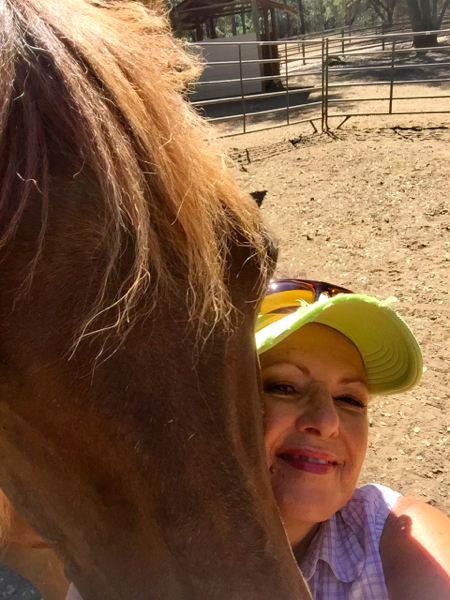
Bosco and Sharon Photo/Sharon Gonzalez

Bosco and Sharon Gonzalez
Photo/Sharon Gonzalez

Then, everything changed.

Twenty minutes into their ride, on a straight and level section of trail, something happened. Sharon cannot remember exactly what that “something” was, as her memory of the event eludes her to this day. However, she does remember awaking to find her face in the dirt. “At the time, I wasn’t in any pain, but I couldn’t move. I didn’t know where I was or what was going on. And then I lost consciousness again.”

Petra, who had been riding ahead of Sharon at the time, had just turned to say something over her shoulder and saw Bosco in mid-fall. The horse had been in good health and spirits that morning, and was not prone to misbehavior or accidents; but something had caused him to stumble hard, knocking Sharon to the ground in the fall.  The force of the blow crushed her ankle, fractured her ribs, and caused her helmet to crack open and separate from its lining.

Kneeling beside her, Petra tried to determine the extent of Sharon’s injuries, and soon realized that emergency services would be needed. The main ranch house was at least a mile away, and as in many remote regions, cellphone reception was unreliable for those in the area. The decision that Petra made next was both brave and terrifying. She would have to leave Sharon alone to find help.

“It’s one of the few things I remember after the fall,” states Sharon. “Petra very calmly said to stay still … she was going to get help.”

Miraculously, Bosco seemed uninjured by the fall, but Petra worried that he may accidentally injure Sharon further if left alone, so she got him up and tied him to her own horse for the ride back.

“I tried ponying him [i.e. lead a horse while riding another], but he was slowing us down. When we were far enough away, I threw Bosco’s reins over his saddle horn and continued without him, knowing he would either go find grass or go back to the barn,” she added. Luckily, Petra had received wilderness/rescue training during her career, and she knew her decision to quickly locate help would ensure the best possible outcome for Sharon.

After riding back to the ranch, Petra sought the help of fellow co-worker, Stephanie—a retired ER nurse—who traveled back to look after Sharon while Petra called 911 and made her way out to the main road to direct first responders. By the time fellow caretakers Troy and Mandy McCabe arrived on site, paramedics were already caring for Sharon, and CalSTAR pilot—Harry Holt—was just landing the air ambulance in an adjacent field.

After nine minutes surrounded by emergency services, Sharon was stabilized for transport and loaded into the helicopter by EMS crews and CalSTAR flight nurses (Jeff Wallen and Heather Summerby). Nineteen minutes later, the CalStar team landed at Sutter Roseville Medical Center. Sharon remembers very little of the friends and first responders who had arrived to help her. In fact, other than the brief memories of being carried on a stretcher and flight nurse Jeff Wallen speaking to her before takeoff, Sharon remembers nothing of her preparation on the ground or her short flight.

She spent the next five days in the Neuro ICU at Sutter Roseville Medical Center, receiving treatment for her traumatic brain injury (TBI) and other injuries caused by the blunt force trauma.

“Never having been in a hospital before, I had nothing to compare it to,” she says, “but I can tell you that the care I received at Sutter Roseville was completely beyond anything I expected. They treated me like a precious princess when I awoke. It was wonderful.”

In a humorous turn, Sharon’s physician was also named Bosco. “When you’re in the hospital for a traumatic brain injury and your doctor shares the name of the horse that threw you, it can lead to some fairly amusing interactions between patient and hospital staff,” relays Sharon.  “A horse is a horse, of course. Of course?”

“It’s still remarkable to me that I was only there for a week. After returning home, my emotions fluctuated greatly. Now, I’m feeling more like myself, although my sense of taste and smell is still a bit off. I understand that condition may improve with time.”

She credits her expedited recovery to the quick, multi-agency response of EMS crews, the CalSTAR flight crew, and her care at Sutter Roseville Medical Center. “At some point, I would love to reunite and thank everyone who cared for me. They are my life-savers.”

Has the accident affected her love of riding? “Absolutely not,” says Sharon, “although I will most likely never ride Bosco again because the reason for his fall could not be identified. He was vet-checked shortly after the accident, and other than biting his tongue, he suffered no injuries. To this day, we have no idea what caused his fall. It was simply a fluke.”

We can all learn a valuable lesson or two from an experience like this. “I want to encourage your readers to take every precaution when riding, even if they are experienced,” instructs Sharon. That includes the following:

·       Never ride remotely alone. If you don’t have that option, tell friends or family where you are headed as well as the time they should expect you back.

·       Take along safety/survival gear and a means of communication, if available.

·       Most important, wear a helmet.

“One or all of these things may help save your life. Two saved mine.”

Lisa Jarvis works for CalSTAR.    


Opinion: Pensions eating more of local budgets

By Pete Constant, Orange County Register

As more and more tax dollars are siphoned off to pay escalating public pension costs, local governments across California are increasingly struggling to provide quality services to their residents. And the problem gets worse with each passing year.

Last month, the California Public Employees’ Retirement System indicated it is raising required contribution rates by more than 9 percent, a move that will cost state and local governments nearly $600 million. This is just the first in a series of rate hikes that CalPERS plans over the next several years in an effort to become fully funded. CalPERS was just 70 percent funded after 2013, but double-digit investment returns helped it rise to 77 percent funded in 2014. But the largest pension system in the U.S. still has a long way to go before it is fully funded and able to actually pay for all of the retirement benefits that have been promised to government workers.

As these state and local pension payments and debts continue to rise, the pathways to pensions reform continue to vanish. Efforts to reform broken pension systems have been blocked by the Public Employees Relations Board and the courts.

Read the whole story


Rep. Santini, leader in mining and tourism, dies

By Ray Hagar, Reno Gazette-Journal

Former Rep. Jim Santini, the last man to represent the entire state of Nevada in the House of Representatives, died Tuesday at a hospice center in Rockville, Md., after being diagnosed with advanced-stage esophageal cancer.

Santini was a graduate of Bishop Manogue High School, the UNR and the University of California Hastings College of Law in San Francisco. He was 78.

“Today, Nevada lost a historic figure,” Senate Minority Leader Harry Reid, D-Nev., said on the floor of the Senate Sept. 22. “Early this morning, former Congressman James Santini of Nevada died. He was a remarkably good person, a tremendous person who understood Nevada so well.”

Santini, who was born in Reno in 1937, served as Nevada’s lone U.S. representative in Congress as a Democrat from 1974 until 1983. He left politics after losing a close battle with Reid for a U.S. Senate seat in 1986.

Read the whole story


Camp Rich taking on a German theme

Oktoberfest — the yearly celebration of all things German — will have a taste of California at Camp Richardson Historic Resort and Marina Oct. 3-4.

This event will feature German beers brewed in the Golden State. Saint Archer Brewery of San Diego created a beer infused bratwurst exclusively for the event with its IPA. And another San Diego firm, Ballast Point’s Longfin Lager, will be on pour.

Now in its 21st year, Oktoberfest at Camp Richardson offers a little something for all ages of the family from 10am-5pm each day.

The resort is offering a free bike valet in front of the Mountain Sports Center, across from the Historic Hotel. Admission and parking is free for Oktoberfest.

Activities include German food and desserts, an owner and dog dress up contest, craft booths, face painting, pumpkin patch, balloon art, bouncy house, bungee platform, climbing wall, live music featuring the polka styling’s of the Gruber Family Band, and the beer and wine garden.

There’s also sausage eating contest. Interested contestants need to sign up by 1:30pm at the pumpkin patch on Sunday. The showdown will take place at 3pm on the main stage.


S. Tahoe students get a dose of ag education

Chris and Tom Celio of Meyers talk about how they use pack animals today in the Tahoe basin. Photos/Kathryn Reed

Chris and Tom Celio of Meyers talk about how they use pack animals today in the Tahoe basin. Photos/Kathryn Reed

By Kathryn Reed

CAMP RICHARDSON – Small hands are sifting through the sand, dirt and top soil; others are getting a lesson in how pack animals are still used in the basin; another group is getting educated about fire.

These were just a few of the 29 presentations that nearly 700 third- and fourth-graders were visiting at Camp Richardson on Sept. 22 as part of Ag in the Classroom day. Each group was able to go to six of the stations throughout the day.

Ryder Preston is pouring a container of water into grass that looks like it is growing out of a gutter that has been cut in half. It’s taking a while for the water to reach the bucket at the other end. This is proving how grass absorbs a ton of water. And at the end the water is yellowish. It started out pristine. Nutrients in the fertilizer help cause the discoloration.

Students get to feel soil as Brian Hirdman teaches them about what materials are good for growing plants.

Students get to feel soil as Brian Hirdman teaches them about what materials are good for growing plants.

Aaron Hussmann with the League to Save Lake Tahoe is demonstrating what a winter storm does when it hits different things on the ground – dirt, grass, wood chips with plants, and then what the water looks like that comes out at the other end.

This is the third year Tahoe students have been able to participate in the hands-on lessons, whereas it has been going on in Placerville for 14 years.

Avis Jolly, who runs the program, said this age group is targeted because they are able to grasp the various lessons that are being taught and it introduces them to things they may not have been aware of. Teachers are given curriculum they may use before and/or after the field trip to continue on with science and other lessons.

Aaron Hussmann with the League to Save Lake Tahoe has third-grader Ryder Preston demonstrate how long it takes water to pass through soil.

Aaron Hussmann with the League to Save Lake Tahoe has third-grader Ryder Preston demonstrate how long it takes water to pass through sod.

One of those things is how important agriculture is to El Dorado County’s economy. Apples are the No. 1 commodity, with grapes and timber near the top.

Chris and Tom Celio are on the far side of the grounds with their horse Dusty. He is used for packing and riding. Celio horses have been working in the basin since the 1800s when they used to bring milk from Meyers to Camp Richardson. Today, they carry tools, water and gravel for crews who are doing trail work for the Tahoe Rim Trail Association and U.S. Forest Service.

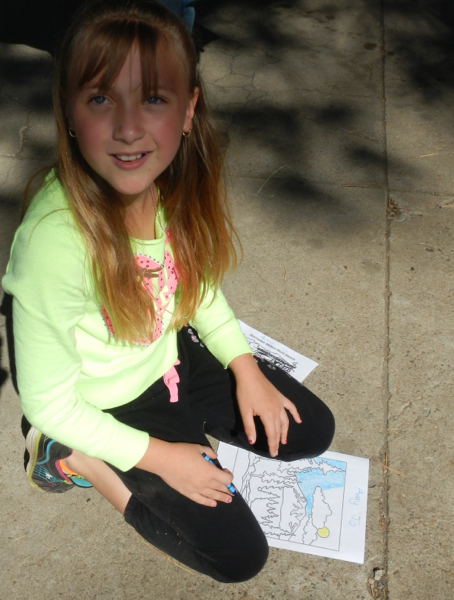
Amy Jo Storlie colors a watershed.

Amy Jo Storlie colors a watershed.

For Amy Jo Storlie, she liked the nutrition station where she learned she should probably be eating more protein, vegetables and fruits. At the watershed area she and her Sierra House Elementary third-grade classmates were coloring a photo to demonstrate what a watershed is.

“It’s important for kids to learn the lifecycle of food,” Adam Jones, Lake Tahoe Unified School District board member, told Lake Tahoe News as he toured the various stations. “This helps connect students to the land.”


‘Reading’ the history of California’s climate

By Valerie Trouet

In 2005, I moved to the United States from Belgium to study the influence of climate on wildfires in the Sierra Nevada over the last five centuries. As part of this work, I traveled for three months all around the mountain range to collect samples of trees and tree stumps. I stayed in remote service barracks and spent my days tromping through meadows and hiking up steep creeks to find trees that were scorched by past fires. On more than one occasion, I found myself wondering whether a nearby roar I heard was from a mountain lion or a bear. In urbanized Belgium, nature had been a thing I only learned about in school. The Sierra’s snowy peaks, vast forests, and towering trees—Giant Sequoias, I learned, actually are giant—all made a lasting impression.

Thanks to the ample snows that usually fall, the Sierra have been California’s most efficient water storage system. In normal years, the mountain range’s snowpack provides 30 percent of the state’s water. It is the primary source for reservoirs that supply drinking water, agriculture, and hydroelectric power. But this year, the snowpack was at just 5 percent of its 50-year average. This statistic, which was announced by the California Department of Water Resources on April 1, became the poster child for the extreme drought conditions that have plagued California for the last four years. When Gov. Jerry Brown declared the first-ever mandatory statewide water restriction, he chose a Sierra Nevada snow-measurement station as his  backdrop. For the first time in 75 years, that station was surrounded only by dirt.

For me, Brown’s announcement worked as a call for action. After my time in the Sierra, I had realized that my main research interest—the interaction between climate and forest ecosystems—could best be pursued amidst the majestic landscapes of the American West, so in 2011, I became a professor at the University of Arizona in Tucson, where I now lead a team that uncovers the past climate of California by studying its trees. I knew my research could put this year’s 2015 snow drought in a much longer context.

While there are no written documents about the climate in California from centuries ago that anyone knows of, nature itself has been writing the story of its past in many places—caves, shells, lakes, and, of course, trees. My job as a paleoclimatologist is to decipher this story. Trees are remarkable creatures: In California’s Mediterranean climate, they form a growth ring every year, and the width of that ring depends, to a large extent, on that year’s climate. After a wet winter, the ring that forms is relatively wide; after a dry winter, the ring is narrow. By measuring the widths of these rings in trees that have lived for centuries, my team can “read” what the climate was like in each year over that time span. And we can extend this outlook even further by collecting older dead wood.

The amount of snow on the ground at the end of the snowy season in the Sierra is largely determined by two climate components: how much precipitation fell during winter, and how warm or cold the winter was. Temperature determines how much of the precipitation that fell was rain versus snow, and affects the speed of snowmelt. We put two tree-ring data sets together to represent precipitation and temperature over the last 500 years. By measuring the width of the rings of more than 1,500 blue oak trees in central California, some of the most climate-sensitive trees on the planet, we were able to reliably trace Pacific Ocean storms that have traveled east over central California and brought precipitation to the Sierra Nevada. We complemented this data with a 500-year-long winter temperature record derived from tree-ring data from a variety of trees throughout the American West, which was provided by the National Oceanic and Atmospheric Administration.

By comparing these two data sets to Sierra Nevada snowpack records dating back to the 1930s, we were able to reconstruct the history of snowpack in the region all the way back to the year 1500. The results, which we published last week, made national headlines: The mountain range’s 2015 snowpack level is the lowest it has been in the last 500 years.

To put that in perspective, this means this winter has been the worst since the first European explorer, Juan Rodriguez Cabrillo, explored California in the 1540s—about 150 years before the first mission was established. When my team started our work, we thought this year’s snow drought would be extreme, but we did not expect it to be the absolute lowest.

Sadly, while this research sheds light on the past, it’s actually not a very good barometer for the future. It very likely will not take another 500 years to reach the next record snowpack low. California temperatures are only projected to rise over the coming century. Even if the projected strong El Niño in the Pacific dumps loads of rain on Southern California this year, chances are that the Sierra Nevada snowpack will be a less reliable water source for the state going forward. This means fish and wildlife communities will suffer and, of course, California’s growing population of farmers, gardeners, skiers, and residents are only going to keep wanting more, much more.

As I write this, the summer monsoon is rolling in over Tucson, and I am reminded that it brings a chance of redemption after a dry winter in Arizona. But California doesn’t have monsoons. Instead, in the last few days, my Twitter feed has been filled with pictures and stories of the Butte and Rough fires. To me, they demonstrate the well-studied link between low snowpack, earlier spring snowmelt, and the increased risk of wildfire.

Now the ancient Giant Sequoia trees that left me in awe when I first saw them are at risk of being felled by drought, and even under the immediate threat of the Rough fire. To a tree-ring scientist, these 3,000-year-old trees are the enigmatic face of the power and resilience of nature. They have doubtless survived many threats and disturbances that we are not even aware of. To walk amongst these giants for the first time was a dream come true.  Little did I realize then that I’d be keeping my fingers crossed for their survival less than a decade later.


Valerie Trouet is an associate professor in the Laboratory of Tree-Ring Research at the University of Arizona. She received her doctorate in bioengineering at the KU Leuven in Belgium. She wrote this for Zocalo Public Square.