Plastic: It’s what’s for dinner

By Amy Quinton, Capital Public Radio

A study has found plastic or fibrous debris in the guts of nearly one of every four fish sold at fish markets in California and Indonesia. The research raises concerns for human health.

UC Davis researchers sampled fish and shellfish from Indonesia and California. They thought the results would vary widely given the difference in recycling and wastewater treatment between California and Indonesia.

Instead, the amount of debris was the same. But in Indonesia most of the debris was plastic, in California it was fibers. The fibers could be microplastics or synthetic fibers that come from wastewater in washing machines.

Read the whole story


Snippets about Lake Tahoe

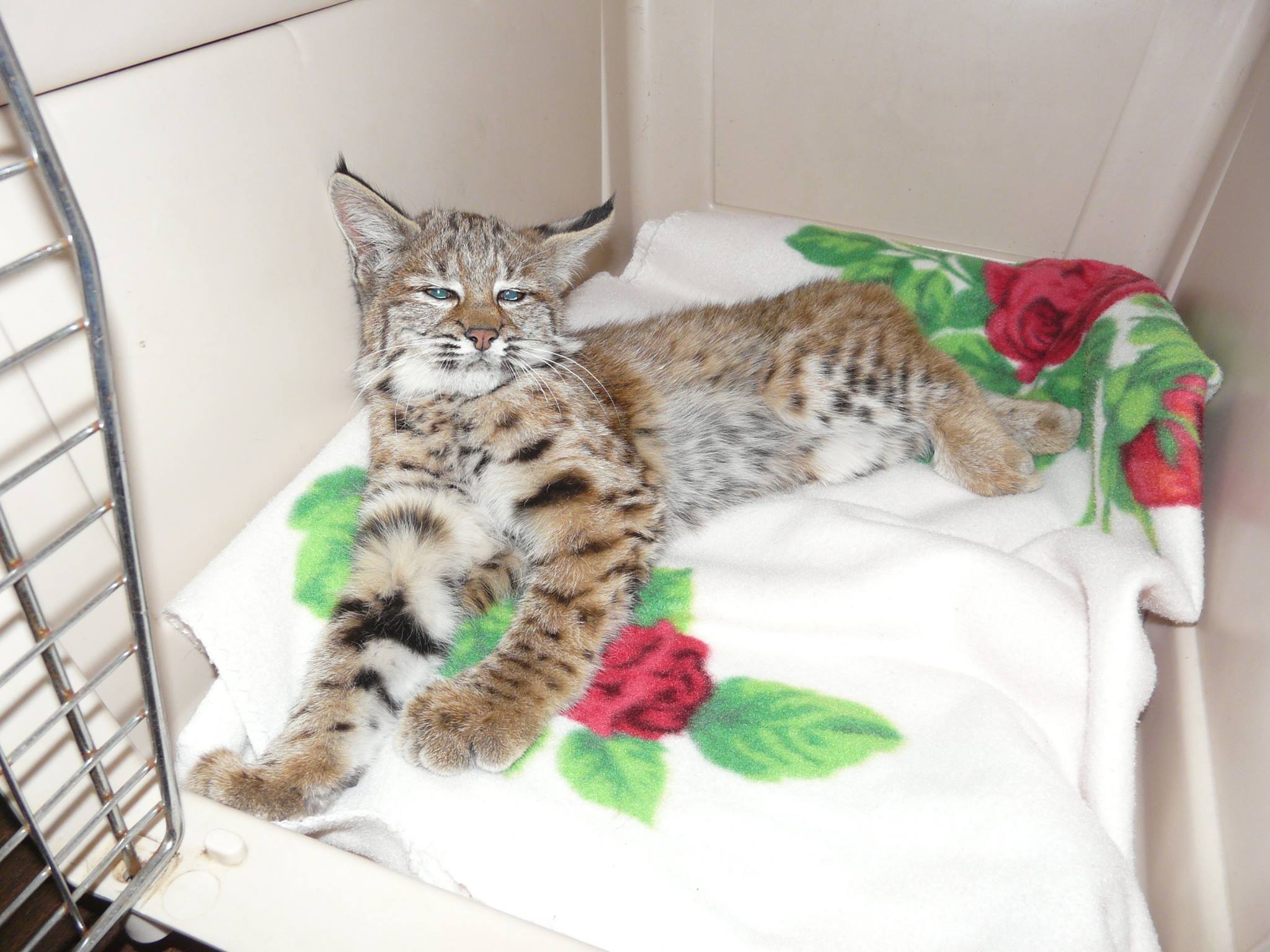
bobcat·      Lake Tahoe Wildlife Care on Sept. 25 received a 5 months old bobcat that had just been hit by a car near Truckee. Someone picked up the cat, took it into the nearest vet clinic, where an LTWC volunteer happened to be working. They took X-rays and sent him to Kevin Willitts, LTWC’s vet.

·      All three South Lake Tahoe fire stations will be hosting interactive activities for community members on Oct. 10 starting at 10am. For more information, call 530.542.6160.

·       Here are the Caltrans roadwork schedules this week for El Dorado-Tahoe and Sierra.

·       Stewards of storm water drains are needed to sweep storm drains free of debris and pick up trash, and install English and Spanish markers onto storm drain grates. Meet at Regan Beach parking lot in South Lake Tahoe on Oct. 17 at 9am. End time is 5pm.

·      Check out this video from Squaw Valley-Alpine Meadows of Jonny Moseley getting ready for ski season:


Then and now: Tahoe Beer still on tap

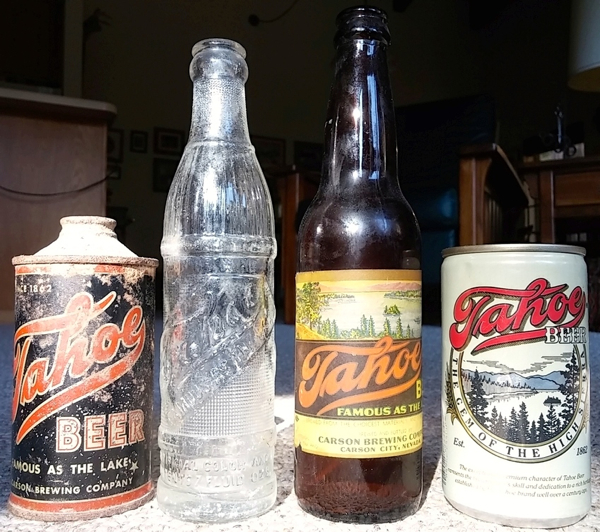
(#1) Tahoe cans & bottles chronologically L-R.

Tahoe Beer cans and bottles through the years since the mid-1800s. Photo/Bill Kingman

Various microbreweries have produced beers with Tahoe-like names, but the original 1860s patented brand “Tahoe Beer — Famous As The Lake” has been dormant for decades.

This National Park Service website offers an enlightening one-page pictorial history of Tahoe Beer and its origination in Carson City, two years before Nevada became a state. Today, the Tahoe Beer brand is being restored, albeit gradually.

Chris Bayer, a musician and historian in Carson City, says that one of the succeeding owners of the Carson Brewing Company in 1910 was a German vaudeville yodeler and brewer named Max Stenz. Stenz came to Carson City from Goldfield, Nev., and from a brewery in Santa Cruz. His Carson Brewery on King Street was on the “Tahoe Auto Route” of the historic Lincoln Highway which Stenz believed was a concept of romantic adventure important to Tahoe. But when nationwide Prohibition was imposed, the brewery briefly closed.

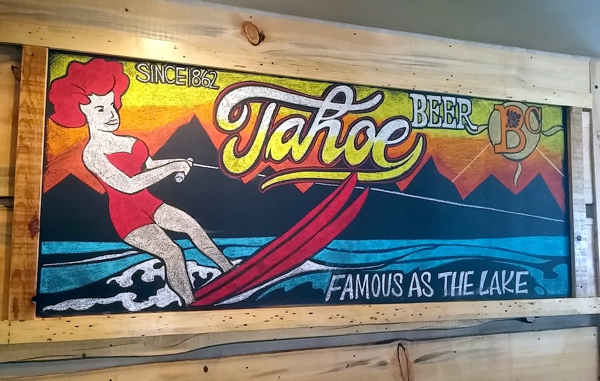
Brewer's Cabinet new Tahoe Beer label. Photo/Bill Kingman

Brewer’s Cabinet new Tahoe Beer label. Photo/Bill Kingman

A year later, the clear glass Tahoe-brand bottle (shown second from left) omitted the word beer because Stenz was bottling only soda pop and drinking water, primarily for central Nevada and hard rock mines.

Then Arnold Millard, also an owner, began producing near-beer by boiling-off the alcohol content of actual “Tahoe Beer.”

Carson Brewing Company survived after Prohibition ended in 1932. But during World War II, the shortage of metal to make bottle caps and beer cans hampered production, and as mentioned in the above website, large breweries were absorbing small independents. Arnold Millard closed the Carson Brewing Company in 1948.

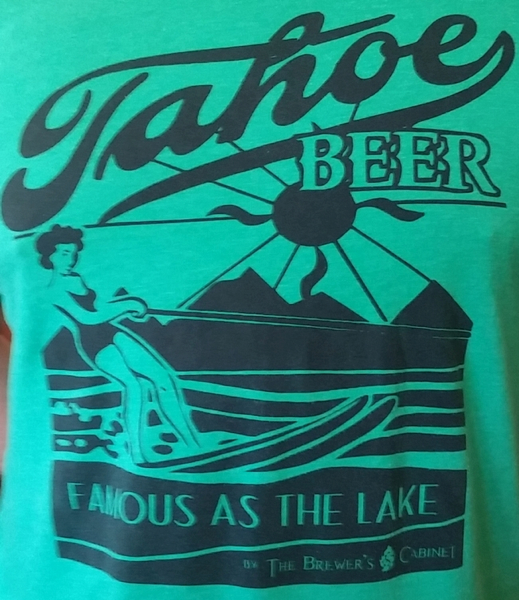
Brewer's Cabinet sell T-shirts touting Tahoe Beer. Photo/Bill Kingman

Brewer’s Cabinet sell T-shirts touting Tahoe Beer. Photo/Bill Kingman

In 1982, the Jacob Leinenkugel Brewing Company of Wisconsin produced a short-lived re-incarnation of Tahoe Beer for CBC Incorporated of Carson City. A six-pack typically sold for $2.60 (far-right can in above photo).

Today, a microbrewery in Reno named Brewer’s Cabinet exhibits ownership of “Tahoe Beer – Famous As The Lake,” which it currently serves on-tap only.

A new Tahoe Beer label design is depicted in their bar and on T-shirts. Retaining the classic logo lettering, the new design includes a waterskier and “BC” notation. Plans to initiate distribution of Tahoe Beer are yet to be announced.

— Bill Kingman


Pro sports venues beckon Tahoe-ites

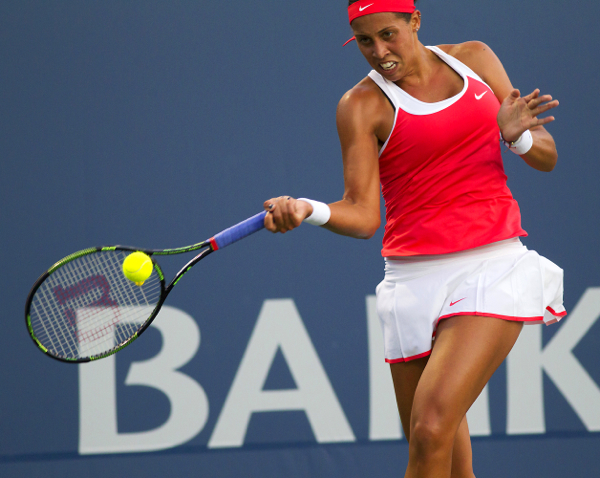
Misaki Doi is ready to crush the ball at the Bank of the West tournament in Stanford. Photo/Carolyn E. Wright/Copyright

Misaki Doi is ready to crush the ball at the Bank of the West tournament in Stanford. Photo Copyright 2015 Carolyn E. Wright

By Kathryn Reed

Appreciation of athleticism, physique, conditioning, speed, eye-hand coordination, fluid-graceful movement, mental toughness – those are some of the advantages of watching professional sports live compared to sitting in front of the television.

There are things to hear and see, and nuances that TV cameras don’t capture.

Watching professional sports does not have to break the bank. There are a plethora of opportunities throughout the year for people in the Lake Tahoe Basin to watch the pros.

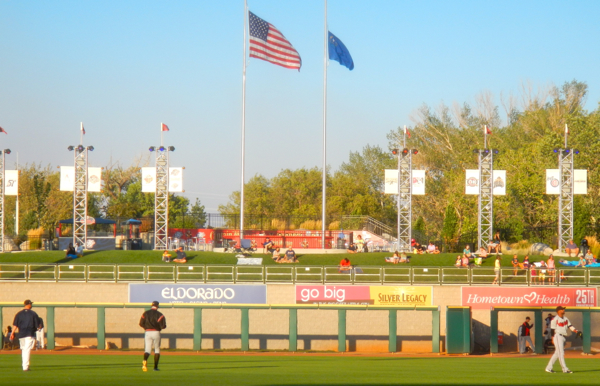
Reno Aces seats are close the field and include an outfield grass area. Photo/LTN file

Reno Aces seats include an outfield grass area. Photo/LTN file

AAA baseball is east (Reno) and west (Sacramento) of here. An advantage to the minor league ballparks is they are much more intimate than the big leagues’. It’s reminiscent of going to spring training in Arizona, only cheaper.

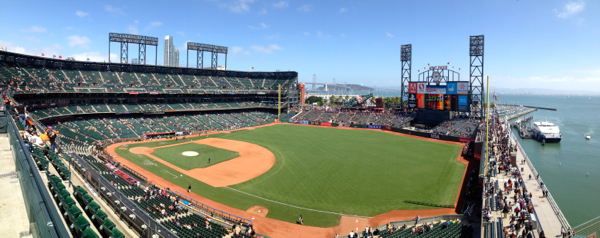
AT&T Park, home of the San Francisco Giants, has views of more than just the field. Photo/LTN file

AT&T Park, home of the San Francisco Giants, has views of more than just the field. Photo/LTN file

Still, two Major League Baseball teams are an easy drive – the A’s in Oakland and Giants in San Francisco. It’s possible to do a down and back without incurring the cost of a hotel room.

A couple years ago the Giants instituted a program where games are valued based on the opponent. This brings the price down when they play a team like the Florida Marlins and up when the LA Dodgers are in town. What it does is make professional baseball affordable.

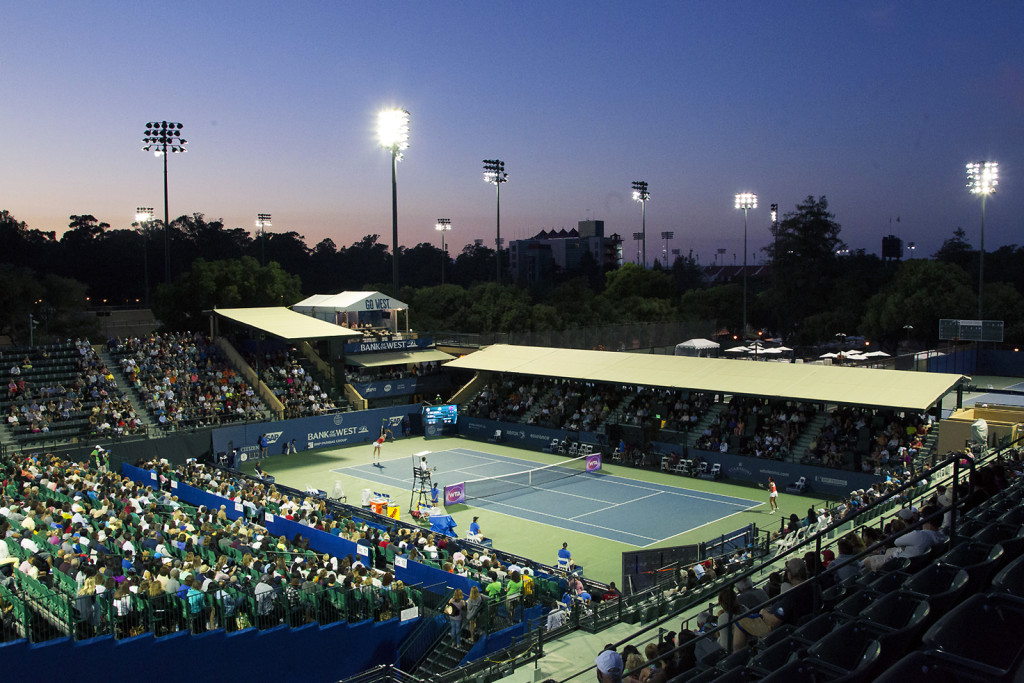
Stanford is an intimate venue for the Bank of the West tournament. Photo/Carolyn E. Wright/Copyright

Stanford is an intimate venue for the Bank of the West tournament. Photo Copyright 2015 Carolyn E. Wright

While pro football is expensive, there are two teams within driving distance to Tahoe – the Raiders in Oakland and 49ers in Santa Clara.

Taking youngsters to see pros can inspire them to excel in their respective sport. There may be a teaching moment about sportsmanship or strategy; it’s also a chance to witness idols or up-and-comers in action; it may even be an opportunity to get an autograph.

Forty-niner great Steve Young mixes it up with fans at the ACC celebrity golf tournament. Photo/Carolyn E. Wright/Copyright

Forty-niner great Steve Young mixes it up with fans at the ACC celebrity golf tournament. Photo Copyright 2015 Carolyn E. Wright

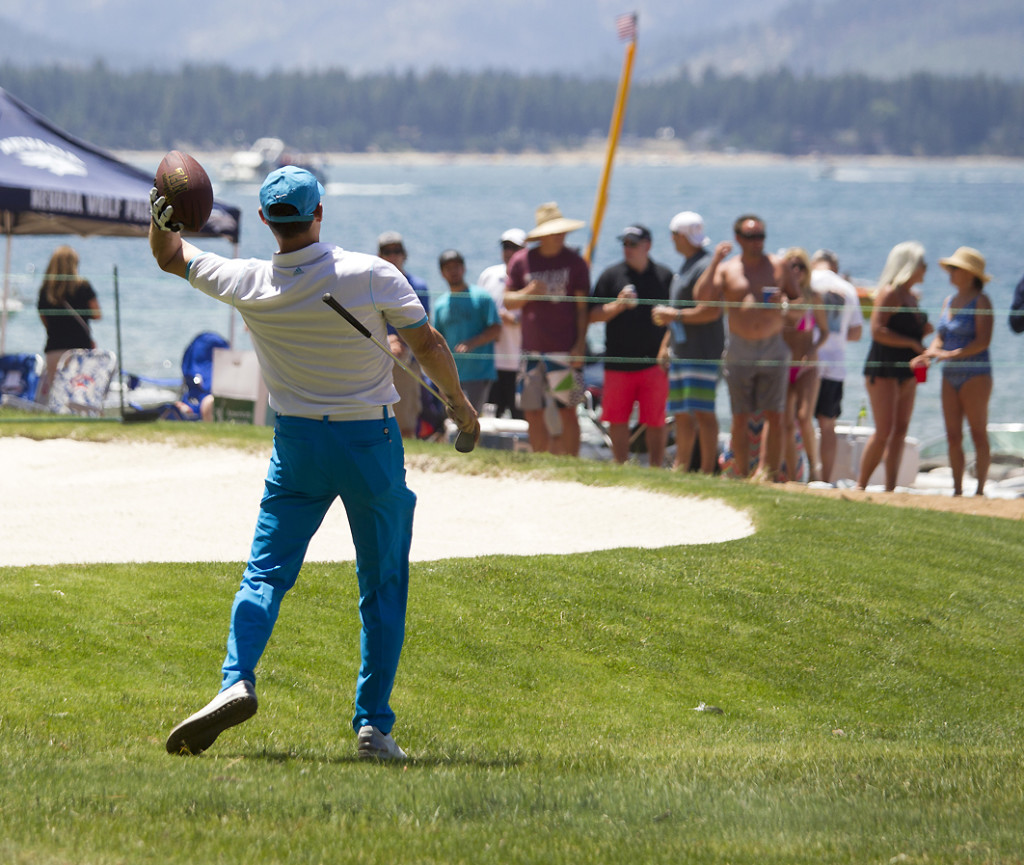
One of the best places to get a signature is at the American Century Championship. The annual celebrity golf tournament at Edgewood Tahoe in Stateline brings out a mix of retired and active athletes, albeit golf is not what brought them fame. Even so, the play is impressive by the top third of contenders.

To see an entire field of serious golfers, one only needs to head to Reno for the annual Reno Tahoe Open. This is a PGA stop. The U.S. Open has been played in San Francisco. Then there’s always the option to take a little longer road trip to the AT&T Pebble Beach National Pro-Am.

Live sports allows fans to see the intensity of athletes like Madison Keys. Photo/Carolyn E. Wright/Copyright

Live sports allows fans to see the intensity of athletes like Madison Keys. Photo Copyright 2015 Carolyn E. Wright

Sticking with Reno, each June it hosts a rodeo. Each October is the Grand National in Daly City. While the whole cowboy thing isn’t a big deal in the basin today, there was a time when it was the norm. Getting around on horseback was common and dairy cattle filled the meadows.

Reno also often has professional boxing. There was a time when the South Shore did, too.

The Bank of the West Tennis Classic at Stanford University, which started in 1971, is the longest running all women’s tennis tournament in the world. The stadium is intimate. It’s easy to see muscles flex and faces contort with exertion.

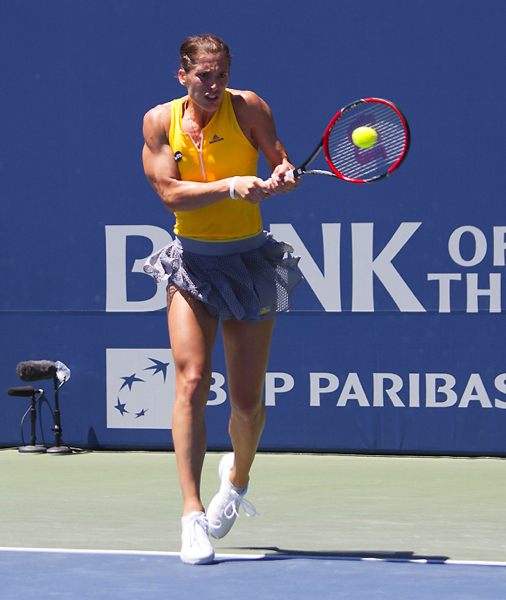
Andrea Petkovic's ripped physique is evident more so in person. Photo/Carolyn E. Wright/Copyright

Andrea Petkovic’s ripped physique is even more evident in person. Photo Copyright 2015 Carolyn E. Wright

Former world No. 1 Lindsay Davenport is on the practice court coaching Madison Keys. They are so close it’s like fans can practically touch them.

It’s free to watch the doubles being played on the outside court.

World Team Tennis is played in Citrus Heights each summer. It’s fast, loud, and has different rules like playing let serves. Each team has a recognizable pro play for a season. It was the Bryan brothers’ doubles team who played down the road this summer.

Other opportunities include soccer – San Jose Earthquakes; basketball – Kings in Sacramento, Warriors in Oakland; hockey – San Jose Sharks.

All of these venues are much grander than anything the basin has to offer – except for the ski slopes, which are steeped in history and if others have their way, could see the Winter Olympics in 2026. Each year the resorts bring more competitions to the area, potentially inspiring the next Jaime Anderson or Maddie Bowman.

And while few recreational athletes will turn pro, watching professional sports — especially live — can be invigorating and inspirational.


Opinion: Junipero Serra wasn’t Calif.’s founding father

By Joe Mathews

Could sainthood be bad for Junipero Serra’s reputation?

Serra has long been a singular figure in California, hailed as the state’s “founding father” for the Catholic mission system he started in the 18th century. Schools, parks, and one of the state’s most beautiful stretches of freeway (I-280 from Daly City to San Jose) are named for him. California schoolchildren are still taught his story.

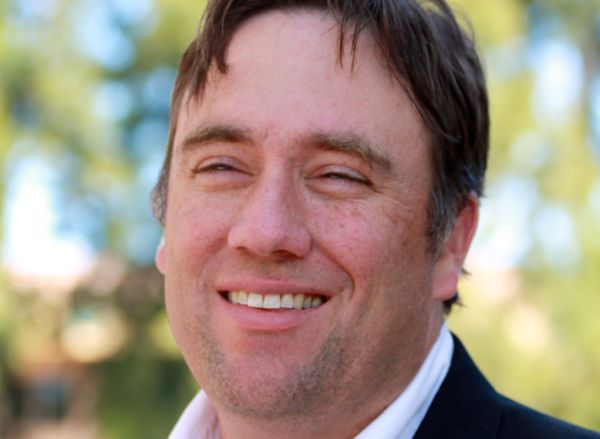
Joe Mathews

Joe Mathews

Pope Francis will canonize Serra this month — making him one more saint in a church with thousands of them.

Could sainthood transform Serra into a more explicitly religious figure — and, in time, a lesser one? California is a secular and diverse place, where the story of an evangelizing colonizer like Serra shouldn’t wear well. And California has long been a place that forgets its saints, even those whose names grace our cities. Ask yourself: Do you know anything at all about the saints honored by Santa Barbara, San Diego, or San Luis Obispo?

At the very least, Serra’s canonization should make clear that we needn’t treat the man as a secular founding father of California. As I reread accounts of Serra’s life recently, his religious devotion stood out as his defining trait. Steven Hackel’s terrific biography portrays an almost supernaturally religious man with a relentless focus on evangelizing up and down California, despite health problems that made travel very painful. He spent nearly every day trying to save souls — establishing nine missions in California and baptizing 6,000 Indians.

But — for all the power of his faith — it’s also fair to say that Serra’s work as an administrator and builder was a failure. His mission system was supposed to serve Indians, but it was a disaster for them. In the mission system, native Californians lost culture, communities, food sources — and lives. Tens of thousands of Indians died in the mission system, mostly from disease.

For all his religious fervor, when it came to temporal matters Serra was — to put it charitably — out of touch, ignoring the miseries of others. He made little effort to understand the culture or customs of the Indians. And he was no democrat. When Gov. Felipe de Neve, who wrote that Serra treated the Indians worse than slaves, sought to establish local governance and elections in the missions, Serra blocked him.

“He knows how to feign compliance in matters put before him, as well as how to avoid it,” one Spanish governor complained of Serra.

And, contrary to popular mythology, Serra did not found the state. The real impact of his mission work was to clear away much of native California so that future Californians had a freer hand to do as they wished. The state of California that we live in today began long after Serra’s death with the Gold Rush, and was re-founded by waves of wealth and migration, driven by oil, mining, war, aerospace, weather, and the lure of our cheap, high-quality higher education. The most important network of institutions in California history is our system of public universities, not the missions that were preserved by generations after his death.

Serra’s new sainthood, and the controversy over it, is good for today’s California, and we should thank Pope Francis for both. The controversy, in particular, suggests that we might move to a more mature understanding of the mission period, and that we might eventually recognize that Serra, even as he receives a sacred promotion, deserves a demotion in our secular histories.

One positive sign: An effort is under way to replace the statue of Serra in the U.S. Capitol — each state gets to have two statues in the Capitol (our other one is of Reagan) — with a far more admirable and representative figure, the late astronaut Sally Ride, the first American woman in space. Sexual politics are helping drive this — Ride was gay — but the best case for replacing Serra with her is that she embodies the secret of California’s success: our faith in science. (I also suspect Reagan is destined is to be supplanted by a more politically correct secular saint, like Cesar Chavez or Steve Jobs).

Legislation to make the switch from Serra to Ride was shelved this summer — in deference to the pope’s visit this month — but it should be revived before too long. Perhaps after Gov. Jerry Brown, who once studied to be a priest and has opposed the switch, leaves office in 2018.

Serra may deserve his reward from his Catholic employer, but we don’t need to keep honoring him as a hero for all Californians. Here’s praying that his sainthood proves to be a moment for us to correct the record. This state had no founding father. We had founding impulses. We had greed. We had ambition. We had crazy dreams.

And now we have a saint. Let’s leave it at that.


Joe Mathews is California and innovation editor for Zócalo Public Square, for which he writes the Connecting California column.

Burden of health care costs shifts to workers

By Noam N. Levey, Los Angeles Times

American workers saw their out-of-pocket medical costs jump again this year, as the average deductible for an employer-provided health plan surged nearly 9 percent in 2015 to more than $1,000, a major new survey of employers shows.

The annual increase, though lower than in previous years’, far outpaced wage growth and overall inflation and marked the continuation of a trend that in just a few years has dramatically shifted healthcare costs to workers.

Over the past decade, the average deductible that workers must pay for medical care before their insurance kicks in has more than tripled from $303 in 2006 to $1,077 today, according to the report from the nonprofit Kaiser Family Foundation and the Health Research & Educational Trust.

That is seven times faster than wages have risen in the same period.

Read the whole story


Book surveys oncology research on man’s best friend

By Paul Barrett, Bloomberg Businessweek

Dogs suffer similarly to humans from certain cancers. The emerging field of comparative oncology seeks therapies for people that build on treatments effective in canines (and vice versa).

In the book “Heal” dog lover and science journalist Arlene Weintraub conducts a brisk and often-moving tour of the frontier of comparative oncology. She describes cutting-edge research aimed at treatments for such ailments as lymphoma, breast cancer, and gastric cancer, the last of which took the life of Weintraub’s older sister, Beth, at the age of 47—a loss that animates the author’s account.

Dogs, Weintraub explains, “make ideal models for studying human cancer because, like us, they develop cancer naturally.” Mice and rats, the main lab subjects for generations because of their low cost (and lack of personal charm), rarely develop cancer on their own. Rodents have to be genetically manipulated or implanted with tumors to mirror human cancer experiences. Even then, 9 out of 10 experimental drugs that cure rodents of cancer fail in humans.

Read the whole story


Future of Speedboat Beach to be discussed

Placer County is having a meeting Oct. 19 to gather feedback for the Speedboat Beach Master Plan.

It will be from 6-7:30pm at the North Tahoe Event Center in Kings Beach.

The Placer County Board of Supervisors and the North Lake Tahoe Resort Association provided $50,000 in March to develop a master plan for Lake Tahoe’s Speedboat Beach. The public beach is located at the intersection of Harbor Avenue and Lake Street in Kings Beach, near the Nevada state line.

There are concerns about traffic circulation and parking, along with general misuse of the beach and surrounding areas. Enforcement of rules, informational and interpretive signs, the potential for a kiosk and options for restroom facilities will be topics of discussion presented by multiple Placer County agencies.


New Calif. water bond seeks to plug funding holes

By Rory Carroll, Reuters

California environmentalists plan to file a new water bond proposal with the secretary of state next week, a measure backers say will provide critical money for programs that were under funded by the $7.8 billion bond passed by voters last year.

The exact amount of the new water bond has yet to be determined but will be less than $5 billion, Jerry Meral, director of the California water program at the Natural Heritage Institute, told Reuters this week.

If backers can collect the necessary number of signatures, the proposal will be put to voters during the November 2016 election, when voter turnout is expected to be high.

Read the whole story


Squaw to host Reebok Spartan Race World Championship

The 2015 Reebok Spartan Race World Championship is Oct. 3-4 at Squaw Valley.

More than 10,000 athletes from across the globe will scale some of the most challenging mountain terrain to compete for more than $100,000 in cash and prizes.

NBC will televise the Reebok Spartan Race World Championship on Dec. 20 at noon – a culmination of the network’s comprehensive seasonlong that began in early July.

The two-day event will include the Reebok Spartan Race World Championship Beast (13-plus miles/30-plus obstacles) on Saturday, in addition to a Spartan Sprint (3-plus miles/20-plus obstacles), a Spartan Beast, Ultra Beast (26-plus miles/60-plus obstacles), and Charity Challenge (3-plus miles/20-plus obstacles) on Sunday. Spartan Kids races will  take place Saturday and Sunday.

The weekend will also feature brand presentations by Reebok, and interactive experiences for fans

For more info, go online.