Calif. DMV offering ticket amnesty program

The California Department of Motor Vehicles has created an amnesty program designed to assist qualified drivers with paying unpaid traffic or non-traffic infraction tickets, by reducing fines by 50 or 80 percent.

The 18-month program begins today.

Applicants must contact the superior court in the jurisdiction where they received the traffic ticket to find out if they are eligible to participate.

California drivers with outstanding infraction tickets originally due for payment on or before Jan. 1, 2013, and those seeking to have their driver’s license reinstated may qualify for the program. This amnesty program does not apply to parking tickets, reckless driving, and DUI offenses.

Courts, counties, and other authorized collection agencies may charge a $50 amnesty program fee.


Nev. tourism campaign aimed at Millennials

By Associated Press

CARSON CITY — Nevada is launching a fresh tourism campaign focused on attracting Millennials to the state.

The Nevada Commission on Tourism voted Wednesday to approve the new fall-winter advertising blitz, including two new commercials that will run in Nevada and in neighboring states.

The spots feature travelers who make friends with a wide array of memorable Nevada characters, including bikers, famous chefs and cowboys. They close with the tagline, “Go home with more stories than souvenirs.”

The commercials use a cover of the song “Don’t Fence Me In” that was recorded by the Las Vegas-based band the Killers.

State tourism director Claudia Vecchio says Nevada has improved its return on investment and is now bringing in $33 in tourism revenue per $1 spent on advertising.

The campaign will begin running in mid-November.


Public: Transit on South Shore failing riders

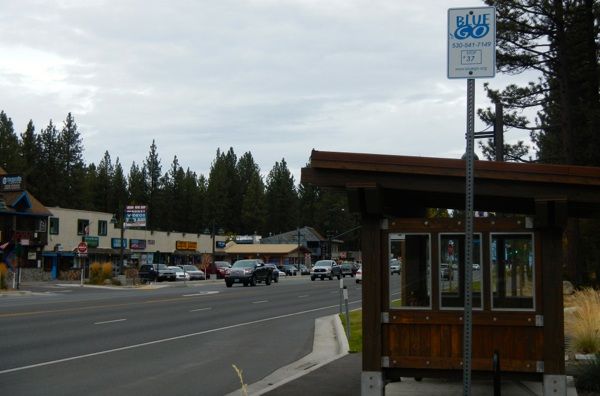
Some BlueGo stops have shelters, but none uses the words "bus stop".  Photos/LTN

Some BlueGo stops have shelters, but none uses the words “bus stop”. Photos/LTN

By Kathryn Reed

Public transportation on the South Shore is a nightmare that is not serving those who need it most.

That was the message delivered by nearly two dozen people on Sept. 30 to Tahoe Regional Planning Agency and Tahoe Transportation District personnel. The purpose of the meeting was to gather information about unmet transit needs.

When asked what happens after Wednesday’s meeting, Judy Weber, TRPA associate transportation planner, said a report would be written. Then it would be decided what short- and long-range items, if any, could be tackled. Short range was defined as up to five years.

Basically, the workshop was convened to mark off an obligation of the bi-state agency’s transportation protocols.

El Dorado County Supervisor Sue Novasel joined the meeting an hour after it started and just before it ended. She is on the TTD board, but said she didn’t know about the meeting until someone at the Soroptimist gathering that day asked her about it.
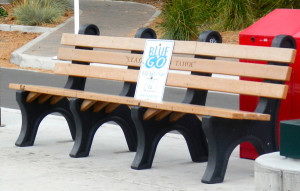
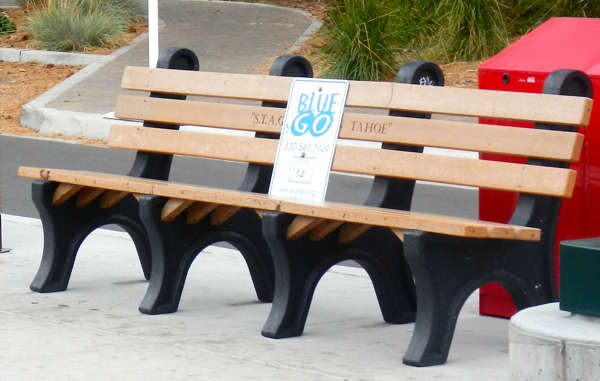
Bus riders are supposed to know this bench with a BlueGo sign is a stop.

Bus riders are supposed to know this bench with a BlueGo sign is a stop.

Some in the room, especially those associated with the Kelly Ridge housing complex, said they might not be around in five years if that’s how long it takes for change to happen.

An obstacle to getting anything done is money.

Weber said the BlueGo bus system on the South Shore is now almost exclusively funded by the federal government via pass-throughs to California and Nevada. Douglas County puts in money. Vail Resorts pays TTD to provide free bus service to Heavenly Mountain Resort on certain routes – mainly the ones servicing lodging properties. There was a time when South Lake Tahoe, El Dorado County, the casinos and Ridge Tahoe supported the bus system.

The Kelly Ridge residents and administration wonder why the bus stop that used to be outside the South Lake Tahoe senior-disabled housing complex was eliminated.

Lake Tahoe Community College students and faculty asked why a bus services the South Lake Tahoe institution every other hour instead of more often.

The on-demand service is unreliable, many said. They added that it is expensive.

Garry Bowen, top right, asks why maps can't be created for the bus shelters so people know where each line goes.

Garry Bowen, top right, asks why maps can’t be created for the bus shelters so people know where each line goes.

Others expressed concerns about inconsistent schedules.

It was pointed out that tourists could get from Stateline to the Y, but that the trolley then only goes a short way past Emerald Bay. Plus, the time to transfer is extremely short. There is no opportunity to access the beaches in Nevada via public transit.

Some wanted to know why something like the East Shore Express in Incline Village isn’t used on the South Shore to provide access to beaches.

Several asked about creating a transfer program.

Meyers doesn’t even have public transit anymore. Getting to Reno is not easy. Bus service is not available 24 hours even though this is a 24-hour community. Additional buses are not added during peak hours or days.

Tapping into Lake Tahoe Unified’s well-oiled bus system was broached.

Others wanted to know why some bus shelters are covered and other are not, as well as why some have seats and some don’t.

Bus stops don’t have their name on them. Routes are not listed at the stops. Schedules aren’t at the stops and not all buses have them on board. The signs just say BlueGo – not even bus. For those who don’t know what a BlueGo is, it makes it even more difficult. Then there is the fact that more buses are coming online that don’t say BlueGo; they say Tahoe Transportation District.

The result of a bus system that does not meet riders’ needs is that it is pushing people into vehicles – which goes against TRPA’s air and water quality thresholds.



Letter: LTN trades ‘ink’ for aprons

Lake Tahoe News spends a Monday helping at Bread & Broth; from left -- Susan Wood, Bill Kingman, Frank Conaboy, Carolyn Wright, Kathryn Reed, and Linda Fine Conaboy. Photo/Provided

Lake Tahoe News spends a Monday helping at Bread & Broth; from left — Susan Wood, Bill Kingman, Frank Conaboy, Carolyn Wright, Kathryn Reed, and Linda Fine Conaboy. Photo/Provided

To the community,

“Helping at Bread & Broth is just an extension of what Lake Tahoe News is all about – just serving the community in a different way,” said Kathryn Reed, LTN publisher and B&B volunteer.

Reed and her crew representing Lake Tahoe News were the Adopt A Day of Nourishment sponsor team for B&B’s Monday evening dinner on Sept. 7 at St. Theresa Church Grace Hall.

Serving along with Reed on Lake Tahoe News’ sponsor crew were reporters Susan Wood and Linda Fine Conaboy, historian Bill Kingman, photographer Carolyn Wright, and Frank Conaboy. The crew kept busy putting together give-away bags filled with fruit, veggies, dairy products and pastries-bread, serving dinner and helping with the dinner’s cleanup.

“We were all happy to be here to help in any way we could,” Reed said.

Bread & Broth would like to thank Lake Tahoe News for the outstanding service as the only daily news source of information about our community and the concern of its staff for the members of our community who struggle with hunger. As a nonprofit, all volunteer organization, B&B appreciates the support that Lake Tahoe News has provided us through the years both in news coverage and hosting Adopt A Day sponsorships. Kudos to Lake Tahoe News.

For more B&B information, find us on Facebook.

Carol Gerard, Bread & Broth


Colo. court weighs avalanche risk in ski-area wrongful-death case

By Jason Blevins, Denver Post

Colorado’s Supreme Court on Tuesday heard oral arguments in a wrongful-death case that could shake the foundation of the law that shields ski areas from liability for on-slope injuries and deaths.

Lawyers were grilled by the justices weighing this question: Are avalanches an inherent risk of skiing or should resorts be liable for injuries caused by sliding snow within their boundaries.

It depends, they said, on how you interpret dangers listed in the Colorado Ski Safety Act — which doesn’t specifically name avalanches, but does include the conditions that create them.

The Ski Safety Act, created in 1979 and amended in 1990 and 2004, was created to protect Colorado ski areas from excessive litigation, allowing them to operate without onerous liability insurance premiums. It cites changing weather, nine different types of snow conditions, terrain variations and more than two dozen other dangers that are inherent risks of skiing. A skier injured under those risks cannot sue the ski area.

Read the whole story


Illegal gambling threatens casinos, association leader says

By J.D. Morris, Las Vegas Sun

The persistence of illegal gambling in the United States is a major threat to the casino industry that must be addressed, the head of a major casino lobbying group said Tuesday.

Geoff Freeman, president of the American Gaming Association, kicked off the first full day of the industry’s annual Global Gaming Expo, or G2E, with remarks that focused heavily on illegal gambling and his organization’s attempts to fight it.

Freeman said that despite laudable economic strides casinos have recently made, some policymakers hold outdated views about them, partly due to the popularity of “another industry that operates in the shadows.”

Read the whole story


Drought nightmare — the fire that wouldn’t die

By Mark Grossi, Fresno Bee

Firefighting commander Rocky Opliger can dial directly into the Rough Fire on his iPhone 6s to track his location via satellite as he walks the perimeter for a detailed look. He can stream live video feeds from helicopters and aircraft – in 3-D.

From any angle, this monster wildfire east of Fresno is a zombie. Opliger, a highly experienced incident commander, and other leaders who preceded him here, say the Rough Fire has repeatedly come back from the dead.

Over seven weeks, the fire has found unexpected ways to stay alive. It has burned parched moss on boulders to slip through defenses, blasted through cracks in fire lines and made an unlikely crossing of the Kings River.

As San Joaquin Valley cities filled with smoke for several days in September, firefighters waged a desperate war against a fire cutting through moisture-starved grasses, chaparral and timber.


Public land managers feared this type of blaze from the very beginning when a lightning strike sparked it in the early evening hours of July 31. At the time, the fire had burned only a few acres on a remote ridge between Rough Creek and Deer Creek at the southern edge of the Sierra National Forest.

Contrary to rumors, there was never any thought of allowing the fire to burn vegetation to thin out an overgrown forest, Opliger and other authorities say. They say they were always in suppression mode with this fire.

They had good reason to be concerned after four years of drought. California fires already have torched more than twice the acreage burned in 2014, according to CalFire.

Read the whole story


ZCES losing the man who personified Cubby

Zephyr Cove students give Cubby a farewell hug on Sept. 30. Photos/Kathryn Reed

Zephyr Cove Elementary School students give Cubby a farewell hug on Sept. 30. Photos/Kathryn Reed

By Kathryn Reed

ZEPHYR COVE – Cubby is going into hibernation indefinitely.

The man who has been Zephyr Cove Elementary School’s mascot for the last 16 years is turning in his bear suit uniform.

Pedro Kinner never expected to have this “job” for so long. Nor is it one he every applied for. It all started when his daughter attended the school and Kinner noticed no one was out there to greet the students. There were all these cars either dropping off kids or whizzing by to get to Whittell High School.

“It just makes you feel good,” Kinner told Lake Tahoe News of the volunteer job.

Being self-employed allowed him to adjust his schedule to make the school a priority.

Kinner remembers one time running after a kid who was chasing his dad’s car because he had left his lunch in it. Then the principal at the time started chasing Kinner. It was a kid, a bear and a principal running toward Highway 50 in what looked like a comedy show.

Cubby has endured being pelted with water balloons. Then there was the green pinecone incident that ended with a broken class window. He attended so many special events – it wasn’t just an early morning job.

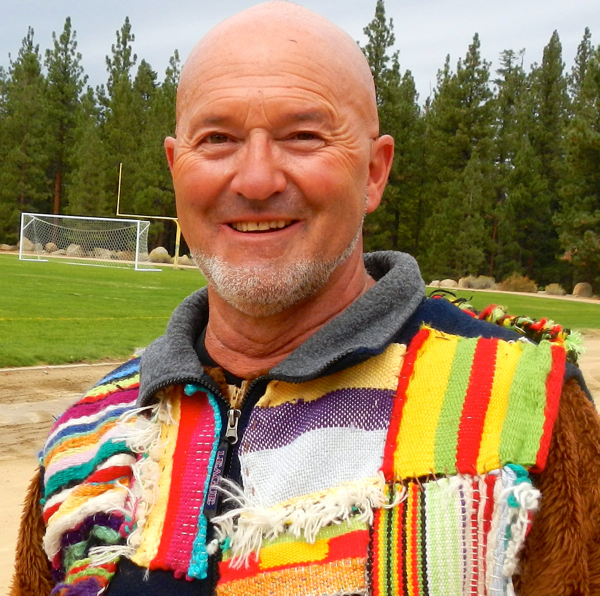
Pedro Kinner has been ZCES's mascot for 16 years.

Pedro Kinner has been ZCES’s mascot for 16 years.

The mascot uniform was at the school before Kinner began his daily ritual. However, it is the same one from Day 1. It gets dry cleaned regularly. The head has been repaired, with glue being a dominant tool to keep it looking OK.

Two years ago he and some of the students created a vest of sorts. Kinner started a weaving group at the school, which is how the vest came about.

Cubby is such a fixture at the school that at his farewell sendoff on Wednesday it was hard to know if the adults were sadder or the kids to know he will no longer be out there each morning. Many said it wouldn’t be the same without him.

(Kinner has family obligations that prevent him from continuing on as Cubby. The school may look for someone else to take on the persona of Cubby.)

On Sept. 30 big and little kids filled the bleachers at Whittell to say goodbye to Kinner, aka Cubby. Most only know him as Cubby and few have ever seen his face.

Still, they all know his voice. He’ll be at the grocery store and kids will run up to hug him when they hear him. Parents are wary, he said, wondering who this strange man is hugging their kid. Then he explains who his alter ego is.

Those hugs may still happen, there just won’t be any Cubby hugs to start the school day.


Teen mystery party at Douglas library

The Douglas County Public Library Teen Advisory Board is putting on Don Carrasino and the Murdered Mobster, a buffet dinner party and teen mystery play on Oct. 16 from 5-8pm at the Minden library.

Guests will be regulars at The Joint, Don Carrasino’s personal hangout. Everything will appear to be going well until suddenly Don’s righthand man falls over dead. Then it will be up to the guests to figure out who killed him.

The teen mystery party is sponsored by the Friends of the Douglas County Public Library and the Teen Advisory Board.  The Minden Library is located at 1625 Library Lane.

For more info, call 775.782.9841.


Nevada takes steps for earthquake preparedness

About 100 years ago Nevada was rocked by the largest earthquake in its history, the Oct. 2, 1915, magnitude 7.3 Pleasant Valley earthquake south of Winnemucca. Only a few large earthquakes since then have rumbled the state, but nothing near the surface scar – with a vertical offset as high as 19 feet – that stretched 35 miles across Nevada’s Great Basin.

October is also the month for the Great Nevada ShakeOut. It is a simple, coordinated “drop, cover and hold on” exercise on Oct. 15 at 10:15am. Last year more than 570,000 Nevadans participated.

More than 568,000 Nevadans already are registered to participate this year in the annual statewide public earthquake drill. To register as an individual, business, school or government agency or organization, go online.

Participants of the drill are instructed to drop, cover, and hold as if there were a major earthquake occurring at that very moment, and to stay in that position for at least 60 seconds. Participants are also encouraged to practice other aspects of emergency plans and to “secure your space,” which includes retrofitting buildings to reduce damage and securing things within a building to prevent injury.