Storms filling up Lake Tahoe, nears legal limit

By Benjamin Spillman, Reno Gazette-Journal

It took a near-miracle but Lake Tahoe is once again holding enough water to supply Reno for as many as three years.

That’s after a dismal start to winter during which snowpack in the Lake Tahoe basin was just 25 percent of the median peak on March 1.

“We will expect to be brim-full at both Boca and Stampede, just like last year,” said Dave Wathen, chief deputy water master in Reno. “If we have a full Tahoe that typically gets us through three dry years.”

During a snow survey on Monday at Slide Mountain, Wathen said Lake Tahoe is within about a foot of its legal storage limit with more rain and snow on the way.

Read the whole story


Police: No foul play in woman’s death in SLT

Pamela Suwinsky

It took South Lake Tahoe police officers a year to determine that the drowning death of a Sacramento woman was just that – a drowning.

Pamela Suwinsky, 62, was reported missing by her ex-husband on April 3, 2017. Her body was recovered six days later by the El Dorado County dive team in the Upper Truckee River.

Suwinsky and her husband had been staying at the Motel 6 on Highway 50 in South Lake Tahoe when she left on foot without her dog, purse, cell phone or car. She had her ID and credit cards with her.

According to the police department, they “initiated a full homicide investigation into her death.”  In the end, it was determined no crime was committed.

The El Dorado County coroner has ruled her death as an accidental drowning.

— Lake Tahoe News staff report


Smoke expected from large prescribed fire project

The Eldorado National Forest will begin implementing the Power Fire Fuels Maintenance project today.

Approximately 1,350 acres will be burned this week. These units are south of Highway 88 between Bear River Reservoir and the Mokelumne River in the 2004 Power Fire burn scar. 

Each prescribed fire operation follows a prescribed fire burn plan, which considers temperature, humidity, wind, moisture of the vegetation, and conditions for the dispersal of smoke. This information is used to decide when and where to burn. This project is targeting primarily the bear clover in the burn scar which is a light fuel that dries out sooner and burns quickly.
 
Smoke from prescribed fire operations is normal and may continue for several days after an ignition depending on the project size and environmental conditions. S


EDC-SLT not rushing to solve 56-acre conflict

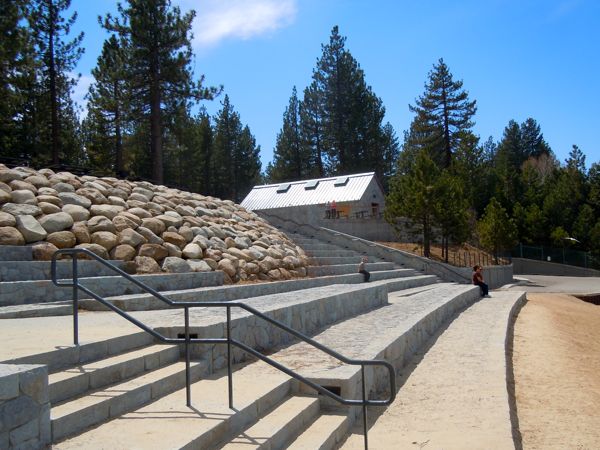
Twenty El Dorado County families bought this area in the 1920s for $7,500 from D.L. Bliss. Ever since they leased it to South Lake Tahoe the two government bodies have been squabbling. Photo/Kathryn Reed

By Kathryn Reed

It will be 12 years ago this fall that four design teams vied for the opportunity to develop what is known as the 56-acre parcel in South Lake Tahoe. The future of much of that land is still undetermined because the city and county are not on the same page.

The county owns about 41 of those acres, which is home to El Dorado Beach (Lakeview Commons), Campground by the Lake, Tahoe Art League, South Lake Tahoe Senior Center, Lake Tahoe Museum, and Lake Tahoe Visitors Center.

The city owns about 15 acres in the area, which is where the rec center, ice rink and heavy equipment yard are located.

A lease was entered in 1968 giving the city the right to use about 38.8 acres in this central location of South Lake Tahoe. The county retained 1 acre for the library.

A revision to the lease was made in 1972. That agreement expires on June 30, 2023. It in part says the purpose is to “provide recreational, social, and cultural facilities on the property located in such a manner as to enhance the natural beauty of the property.”

Through the years changes have been made and documents added to the file, especially as Lakeview Commons was developed. That was a $6.5 million investment by the California Tahoe Conservancy.
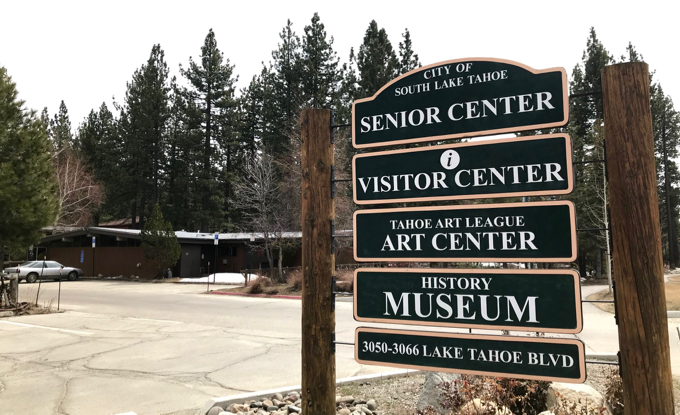
Here are some of the provisions in the lease:
· The city is responsible for all financing, maintenance, and development of all facilities to be constructed or placed on the property. 

· The city is responsible to maintain the entire leased area at no cost to the county. 

· The responsibility and authority for the management and control of the leased premises and all the structures thereon is vested solely in the City, provided there is no breach of the lease. 

· If the city fails or refuses to carry out the lease provisions, the city shall nevertheless remain obligated to pay for maintenance of facilities and improvements while the lease is in effect. 

· Either the city or the county may terminate the lease if the other party fails to remedy a default of the lease terms and conditions within 90 days of receiving written notice of the default. 

· If the city brings legal action to obtain title to the leased property, the county may terminate the lease. 

· Upon termination of the lease for any reason including at the end of the 55‐year term, the ownership of all improvements constructed or placed on the property vest in the county. 

· The city assumes all risk of personal injury and property damage in connection with city occupation of the lease property, and indemnifies the county against related claims and liabilities. 

· The city agrees to pay for all utilities and services provided to the leased premises.
· The city agrees to provide free water service from the well located on the lease premises to the mosquito abatement facilities. 

· The city shall not assign lease or sublease without county’s approval. 

· The prevailing party in any legal action shall receive reasonable attorney’s fee.

A study commissioned and paid for by South Lake Tahoe and El Dorado County was prepared by Foothill Associates. While portions have done since late last year, it is not expected to before the City Council until May 1.

Acting City Manager Jeff Meston only recently obtained copies of the report. “I believe that staff will take direction from City Council, and then do what they wish. It is pretty clear to us this is a council decision/direction issue.”

El Dorado County CAO Don Ashton told Lake Tahoe News, “At this time there are no plans for a formal discussion with the Board of Supervisors since the city is responsible for the management and maintenance of the property for at least the next five years, and longer for Lakeview Commons.”

Lake Tahoe News also asked Ashton: Does county staff agree with the preferred recommendation of the city operating the facilities with a long term lease from the county? Why or why not? Would the county consider selling the property to the city? Why or why not? At what price? Would the county consider being a partner in developing the land in ways that were proposed in the charrette that was done a decade or so ago? If the city were to want to develop the site in some manner, what would the city (other than presumably footing the bill) need to do? In other words, what “permission” would the county need to give for future development? Where will vector control be relocated and when? Does the county expect to contribute to any of the maintenance needs prior to entering another lease with the city — assuming one is agreed to? What will the county do if the city says it doesn’t want anything to do with the 56 acres or even select areas? What if the city only wants responsibility for part of the area — say the campground and Lakeview Commons?

Ashton’s response was: “(Those) questions are speculative and hypothetical in nature so I’m unable to answer.”

Ultimately it will be up to the elected bodies on how to go forward.

South Lake Tahoe Mayor Wendy David told LTN, “I have not digested and read in detail enough yet to comment on the recommendations.”

El Dorado County Supervisor Sue Novasel was on the community committee back in 2006. She did not respond to Lake Tahoe News’ inquiry asking what she thought of the study and its recommendations.

The city doesn’t want to invest in the property if it won’t have control over it for a long period of time, and the county doesn’t want to part with what is prime real estate. The city as the renter believes the county as landlord ought to be paying more of the upkeep.

Until the two government bodies find a resolution the approach is more like putting a Band-Aid on problems instead of a whole knee replacement. That scenario isn’t working well, especially at someplace like Campground by the Lake that needs to have the restrooms/showers replaced at an estimated cost of $600,000.

“As indicated in the report the county needs to maintain ownership of the acreage in order to be compliant with our General Plan requirements,” Ashton said.

Of course general plans can be changed if elected have the will to do so.

The consultants recommend the city continue as the lessee and managing the facilities as one unit so the income could be moved around as needed. Changes to the subleases are also suggested to include regular and deferred maintenance agreements, utilities, annual repairs, and a five-year budget.

The report states, “… the success of this approach will require a commitment on the part of all parties to provide oversight, expense and revenue tracking, and record keeping in accordance with their respective roles. Annual updates to the operating budget and CIP should be made, and periodic facility assessments conducted to ensure preventive maintenance is being done and to identify upcoming major maintenance projects.”


Editorial: Common-sense moves on California wildfires

Publisher’s note: The editorial is from the March 29, 2018, Sacramento Bee.

After one of the deadliest and most destructive wildfire seasons in California history, it would add travesty upon tragedy if officials don’t take significant steps to prepare for the next fire season.

Thankfully, it appears that lawmakers and officials are learning some of the right lessons, even as families and communities continue trying to recover and rebuild.

Congress finally fixed a major flaw in federal funding that took money away from crucial wildfire prevention programs. The sweeping budget deal that President Donald Trump signed last week sets aside $2 billion a year for battling wildfires, treating them more like the natural disasters they are, just like hurricanes.

Read the whole story


MLK’s vision matters today for the millions in U.S. living in poverty

By Joshua F.J. Inwood, The Conversation

On April 4, 1968, Martin Luther King Jr. was assassinated in Memphis, while fighting for a 10-cent wage increase for garbage workers. These efforts by King were part of a broader and more sustained initiative known as the Poor People’s Campaign.

King was working to broaden the scope of the civil rights movement to include poverty and the end of the war in Vietnam. King and his leadership team planned to bring thousands of poor people to Washington, D.C., where they would camp out on the National Mall until Congress passed legislation to eradicate poverty.

King was convinced that for the civil rights movement to achieve its goals, poverty needed to become a central focus of the movement. He believed the poor could lead a movement that would revolutionize society and end poverty. As King noted, “The only real revolutionary, people say, is a man who has nothing to lose. There are millions of poor people in this country who have little, or nothing to lose.”

With over 43 million people living in poverty in the United States today, King’s ideas still hold much power.

The Poor People’s Campaign

In the last three years of his life and ministry King had grown frustrated with the slow pace of reform and the lack of funding for anti-poverty programs. In 1966, for example, King moved to Chicago and lived in an urban slum to bring attention to the plight of the urban poor in northern cities. His experiences in the South had convinced him that elimination of poverty was important to winning the long-term battle for civil and social rights.

It was also at this time that King began to think about leading a march to Washington, D.C., to end poverty. King explained the campaign saying,:

“Then we poor people will move on Washington, determined to stay there until the legislative and executive branches of the government take serious and adequate action on jobs and income.”

King was assassinated before he could lead the campaign. And while the effort continued, the campaign could not meet King’s goals of poverty elimination, universal access to health care and education, and a guaranteed income that would keep people out of poverty.

Why it matters today

At a time when millions in the U.S. are poor and disenfranchised, the Poor People’s Campaign remains as relevant for the U.S. as it was 50 years ago. Consider the evidence:

  • At least 1.5 million households in the United States with about 3 million children are surviving on cash incomes of no more than $2 per day.
  • A 2017 United Nations report found infant mortality rates in the U.S. to be the highest in the developed world. Children alone comprised 32.6 percent of all people in poverty.
  • The World Income Database found that the U.S. has the highest rate of inequality among all Western countries.

Making this situation worse, many of the welfare and poverty elimination programs have been cut back or eliminated. A recent Washington Post investigation found that extreme poverty has nearly doubled since major welfare reform efforts in the 1990s under then-President Bill Clinton.

How can King’s ideas help today?

At the core of King’s anti-poverty message were two key ideas. The first was a guarantee that the federal government would provide every able-bodied American with a job. The second was for the federal government to provide a national basic income that would ensure a minimum concrete sum of money for every American regardless of their employment status.

In his 1967 speech at Stanford University, King argued that the time had come to “guarantee an annual minimum – and livable – income for every American family.” The idea was to ensure every U.S. citizen would be able to live above the poverty line. King was assassinated before he could present a fully developed policy proposal.

Currently, several Nordic nations, most notably Finland, are considering such a proposal. Two economists, Debraj Ray and Kelle Moene have argued that a universal income has the potential to boost GDP and productivity. The premise is that if you give people who currently lack means more money to spend, they will contribute to the economy through increased consumption of goods and services.

On the anniversary of King’s death, as Americans ponder the unfinished work of the Poor People’s Campaign, I believe a guaranteed national income is one idea that needs to be examined.

Joshua F.J. Inwood is an associate professor of geography and senior research associate in the Rock Ethics Institute, Pennsylvania State University.


Nev.’s death rate from meth, other stimulants highest in nation

By Jessie Bekker, Las Vegas Review-Journal

Nevada’s amphetamine death rate is highest in the nation and will soon eclipse the state’s prescription opioid death rate if current trends continue, according to a new report from the Centers for Disease Control and Prevention.

The death rate in Nevada attributed to “psychostimulants” — a class of drugs that includes methamphetamine, ecstasy and ADHD prescription drugs like Adderall and Ritalin — hit 7.5 per 100,00 in 2016, up nearly 32 percent from 2015. Prescription opioid deaths fell about 9 percent in the same time period, from 9.8 per 100,000 to 8.9 per 100,000, the CDC said.

The CDC report studied data from 31 states and Washington, D.C.

Read the whole story


Study: Little chance of new affordable housing at Tahoe

By Associated Press

A new study on housing availability in western Nevada says there’s little hope of expanding affordable rental opportunities for residents on the shore of Lake Tahoe.

The study concludes the “sheer expense” of development in Douglas County from south of Sand Harbor to the California line “makes it impractical for the development of affordable housing.”

Read the whole story


CalFire helicopters cost twice as much as expected

By Adam Ashton, Sacramento Bee

CalFire wants to swap its fleet of “Apocalypse Now”-era firefighting helicopters for something a little more “Zero Dark Thirty.”

The trouble is the machines the department is ready to buy cost twice as much as the Legislature expected when it set aside money two years ago to start buying new choppers.

It took three rounds of bidding over two years to complete a process that rejected the low bidder, Italian manufacturer AgustaWestland, each time.

Read the whole story


Controlled burns this week throughout Tahoe

Members of the Tahoe Fire and Fuels Team, which includes local, state and federal agencies, will resume prescribed fire operations this week in multiple locations around the Lake Tahoe Basin. 

Weather and conditions permitting, Tahoe Douglas Fire Protection District, California State Parks, California Tahoe Conservancy and the U.S. Forest Service will conduct prescribed fire operations in Sugar Pine Point and Burton Creek state parks on the West Shore, near Carnelian Bay and Kings Beach on the North Shore, near Logan Shoals on the East Shore and on Kingsbury Grade near Edgewood Creek and urban lots off Ski Run Boulevard on the South Shore. 

Smoke may be present. 

Whenever weather and conditions allow, prescribed fire operations are conducted by the TFFT to reduce overgrown vegetation, which decreases the severity of future wildland fires and protects communities.