Study: Wine may help control type 2 diabetes

By Allison Aubrey, NPR

If you’re in the habit of drinking wine with dinner, there may be a bonus beyond the enjoyment of sipping a glass at night.

A study published in the Annals of Internal Medicine adds to the evidence that drinking a moderate amount of wine can be good for your health. The evidence comes from a two-year-long study on people with diabetes.

Researcher Iris Shai of Ben Gurion University says in Israel and elsewhere, lots of people with diabetes get the message that alcohol — even in moderation — can be harmful.

Shai found that compared to people who drank mineral water with dinner, the wine drinkers — both those who drank white and red — benefited from improvements in blood sugar control.

Read the whole story


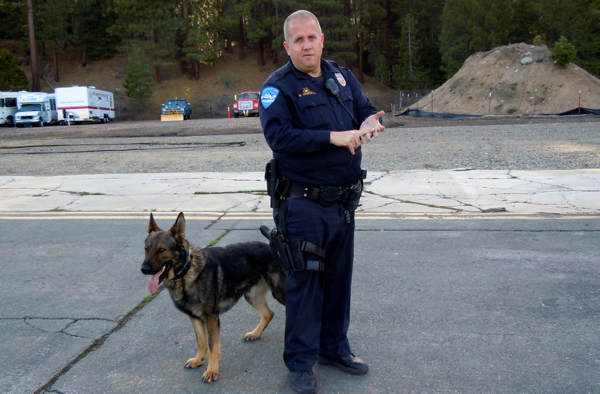
Mourners gather for S. Lake Tahoe officer, wife

Mark Hounsell was a K9 handler during part of his tenure at South Lake Tahoe Police Department. Photo/LTN file

Mark Hounsell was a K9 handler during part of his tenure at South Lake Tahoe Police Department. Photo/LTN file

By Seth A. Richardson, Reno Gazette-Journal

A procession of police officers, firefighters, family and friends escorted Mark and Jeanne Hounsell underneath a flag hanging high over Stephanie Way in Minden to their memorial service.

Mr. Hounsell, 42, and Mrs. Hounsell, 34, died Oct. 17 in a rollover accident on Highway 50 near Fallon. Laura Fisher, 33, of Washington, Ill., also perished in the crash.

Mourners gathered at LifePoint Church on Saturday to remember the Hounsells. Media were not permitted to enter the service. Dozens of cars, police and civilian alike, were adorned with commemorative stickers that looked like the Chicago Cubs logo – Mr. Hounsell’s favorite team – with “MH 189” for his initials and badge number.

Read the whole story


‘Death of a Salesman’ to be staged at LTCC

“Death of a Salesman” is coming to Lake Tahoe Community College in November.

Arthur Miller’s famous play circles around traveling salesman Willy Loman, who finds himself at the end of his career and the end of his rope. Tortured by his own sense of failure and his crushed hopes that his sons will achieve greatness, Loman’s mind slips more and more into the past, where the future still held great promise and achieving the American Dream seemed possible. Willy’s family struggles to keep him in the present, even as relationships are strained and forgiveness seems impossible.

Susan Boulanger, director of theater at LTCC, in a press release, said, “I have almost completely done away with a standard set. I don’t want to give it all away, but I think what we are doing is going to be unique, surprising, and will serve the play very well.”

The cast includes familiar as well as new faces to the Duke Theatre stage. Chris Taylor plays the iconic Willy Loman, with Aletha Nelligan as his devoted wife, Linda; Matthew Ault as his estranged son, Biff; and Thomas Lopez as his self-absorbed son, Happy.  The cast also includes Ryan Adams, Bailey Anderson, Stephanie Grigsby, Kurt Munger, Shana Noel, Frank Riley, and Chris Scott.

Performances will be Nov. 13, 14, 19, 20 and 21 at 7:30pm, and Nov. 15 and Nov. 22 at 2pm. Post-show discussions with the actors and director will take place after the first Sunday matinee, and by request.

This play contains some strong language and adult subject matter, and is not recommended for audiences younger than 16.

Tickets are $10 general admission, and $5 for seniors, groups of eight or more, and students with a valid student ID. Tickets may be purchased in advance at LTCC’s Bookstore starting Nov. 2. LTCC’s Box Office will be open for ticket sales one hour prior to all performances.

High school students may attend the Nov. 19 performance for free with a valid student ID.


Money for Hwy. 89-Fanny Bridge project in hand

The remaining $4.9 million needed to reroute Highway 89 around Fanny Bridge in Tahoe City has been secured from the state.

The California Transportation Commission is providing $4.9 million of the $33 million needed for the project. Other funds include $25 million from the Federal Lands Access Program and $3 million from Placer County.

The project is expected to break ground in 2016 and take two years to complete. It will include a new two-lane bridge, similar in size to the existing Fanny Bridge, east of the existing Caltrans yard.

The existing section of Highway 89 between Fanny Bridge and the eastern roundabout on West Lake Boulevard north of Granlibakken Road will become a county road.


What happens to old casino chips?

By Chris Kudialis, Las Vegas Review Journal

Millions of casino chips have been taken out of Nevada resorts this year by tourists and local visitors. Hundreds of thousands more expire when a casino ,like the Las Vegas Club, closes.

But while the final destination of the casino chips in the hands of tourists is anybody’s guess, the fate of expired chips, or ones from casinos on the way out, is more specific.

Casino chips are most often sent to their vendors and ground to pieces by large industrial machines, said Karl Bennison, chief of enforcement at the Nevada Gaming Control Board.

Read the whole story


Snippets about Lake Tahoe

·      Gogobot ranks South Lake Tahoe among the top 10 eco-friendliest cities in the United States.

·      Energy retrofits at Granlibakken in Tahoe City are expected to save the resort 43 percent in energy use annually, which would equate to $44,000 a year.

·      There will be a Veterans Day Celebration on Nov. 11 at 11am at the Victory Plaza in Truckee. A light lunch reception at the Veterans Hall will follow.

·       An application to build the Rail House Theater, a mixed-use building with retail shops and restaurant spaces on the ground floor, a six-screen movie theater on the second and third floors and residential condominiums was recently submitted as part of an amendment to the Railyard Master Plan in Truckee.


Mapping poverty can inform public policy

By Daniel Bendtsen, Deseret News

Cities have used mapping to help smooth traffic snarls for years.

But tackling poverty with maps? That’s a tougher issue. For a time, analysts only had “sad maps,” which showed that the city’s slums had a uniform concentration of poverty-related variables.

“Maps for crime rates, school retention and infant mortality measures all tell similar geographical stories: the darkest shades of the map, indicating the most severe disparities, represent the same few neighborhoods,” according to economist Matthew Tyler.

Read the whole story


Tahoe artist’s paintings dance to nature’s rhythms

By Amanda Horn, Reno Gazette-Journal

Ascending the stairs to the second floor of the Nevada Museum of Art, Donald W. Reynolds Center for the Visual Arts, E. L. Wiegand Gallery fuels anticipation for the visual symphony playing in the galleries above. A leftward glance through the glass into the second floor hallway reveals a stunning cerulean canvas flanked by whimsical golden flowers. The bold, colorful, 6-foot-5-inch painting dances on the wall, an affirmation that “Tahoe: A Visual History” evokes a mellifluous tone.

The eye-catching painting seems oddly familiar. Though you may not recognize the vista, the sentiment conveyed by Phyllis Shafer’s Above Cave Rock resonates at a subtle level. Shafer, one of 175 artists represented by 400 artworks in the Nevada Museum of Art feature exhibition, “Tahoe: A Visual History,” is part of a select group of Tahoe-based contemporary artists included in the museumwide show.

Since 1994 Shafer has taught art at Lake Tahoe Community College in South Lake Tahoe. The job prompted her relocation from the San Francisco Bay Area. This beloved artist has called Tahoe home ever since. She now co-chairs the art department and directs the college’s art galleries.

Read the whole story


E. coli found in Apple Hill juice

Several cases of E. coli have been traced back to unpasteurized apple juice purchased from High Hill Ranch in El Dorado County.

The Camino business has voluntarily recalled apple juice produced on or after Oct. 6.

El Dorado County was notified this week by Sacramento County officials of at least seven cases of E. coli that have been trace back to the unpasteurized apple juice from High Hill Ranch.

— Lake Tahoe News report


Opinion: Bullying needs to be abolished

By Nancy Kerry

Recent articles and studies across America provide evidence that bullies are costly to our society. Bullies in the schoolyard have resulted in a substantial increase of suicide among children. After the 1999 Columbine massacre, the federal government passed anti-bullying legislation that swiftly swept across the nation with similar legislation adopted by all states.

However, most of those laws apply specifically to schools.

Nancy Kerry

Nancy Kerry

It is thought that by the time we become adults and enter the workforce, we would have matured enough to treat each other with respect, professionalism, and communicate effectively. Unfortunately, that isn’t always the case as evidenced by the need for anti-harassment laws.

A bully in the workplace can do substantial damage to an organization. Bullying is harassment and is just as costly in the workplace as the schoolyard, if not more so. Bullying is most often demonstrated in abuse of authority by those in leadership positions; it results in high turnover, lost productivity, emotional damage to those victimized, stress claims against employers and millions in settlements paid by employers who failed to take action.

The Declaration of Independence was adopted 239 years ago, setting forth the foundation of principles guiding our government as to how we should respect one another. Although the United States is much more complicated today, the tenets remain the same: “We hold these truths to be self-evident, that all men are created equal, that they are endowed by their Creator with certain unalienable Rights that among these are Life, Liberty and the pursuit of Happiness.”

What does the right to “life, liberty and the pursuit of happiness” mean in the workplace? It includes the right to pursue one’s civil liberties; it means employees have the right to enjoy a workplace free from harassment, bullying and discrimination. Following the 1883 Pendleton Act, it also means the right for government employees to retain employment based on competency instead of political connections and influence.

The evidence of bullying is found by listening to the receiver’s point of view, not the bully. A bully will likely have many friends and family members who don’t agree with a victim’s perspective of the conduct because they may not have experienced the same behavior. Bullies often deflect the concerns of those who have the courage to confront them and typically characterize their victims as complainers.

An employee who finds themselves bullied at work often has little recourse. It’s very difficult to prove your perspective; after-all it is the victim’s opinion of the conduct that is at issue. Multiple people witnessing the same conduct will have multiple perspectives. When the bully is a supervisor or leader in an organization, the perceived risk by the employee for reporting is increased. When it is from the highest level in the organization, the risk is real. As a result, employees are reluctant to speak up about the abuse they have suffered.

Workplace bullying is more prevalent than most employers realize. A 2014 study by the Workplace Bullying Institute found that nearly one-third of all employees experienced abusive conduct at work; “72 percent of employers deny, discount, rationalize or defend the conduct and in the absence of legal prohibitions against it, employers are failing to take responsibility for its prevention and correction.” Sometimes, a bully is not aware of the impact of their behavior, which is why it’s important for employers to address the issues early on to provide opportunity for change. If the behavior doesn’t improve, corrective actions will likely intensify. A person who fails to acknowledge how their behavior impacts and causes harm others may either be a bully or become one if left uncorrected.

A bully may defend their behavior as just being “their style” of communicating. Outside of an employment situation, their style may only be a societal harm. However, in the workplace, it’s not acceptable and can result in litigation for an employer. Being rude is not the same as being a bully; a bully is abusive. Abusive bullying behavior is typically persistent, aggressive, denigrating, hostile and intimidating. A bully seeks to shift a real or perceived imbalance of power through the misuse of their authority creating a climate of fear among employees. A bully will often strive to dominate with tactics to humiliate and belittle others using both subtle and blatant threats to restrain efforts to stand against such treatment.

When the behavior is a persistent pattern of conduct, it interferes with the employee’s ability to perform their jobs to the best of their ability. When it’s pervasive, it affects the organization’s legitimate business interests and undermines confidence. When it’s left unaddressed, the bullying may increase and victims can experience a variety of illnesses including anxiety, depression, migraines, stomach ailments and worse.

Whether bullying is illegal or not, it is the employer’s moral and leadership responsibility to protect their employees from all forms of harassment. Occasionally, all it takes is a conversation so everyone is aware of the problem and changes can be made. If that doesn’t work, putting an end to bullying in the workplace should be a high priority for every employer.

Nancy Kerry is the city manager of South Lake Tahoe.

—–

Publisher’s note: Lake Tahoe News has chosen not to allow comments on this article because of all the bullies who troll this site. If anyone wants to respond, there is always the option to write your own letter/column with your full name attached to it. Send it to info@LakeTahoeNews.net for consideration.