4 hot books for powder lovers

By Troy Hawks, Liftopia

If it’s true that you are what you eat, then I’m also hoping it’s true that you are what you read. And if that’s the case, then I just got a whole lot cooler.

I mean, just check out the titles of the hottest new ski books to hit the shelves: “Higher Love, Skiing the Seven Summits,” “The God of Skiing,” and “Powder, the Greatest Ski Runs on the Planet.”

These are titles that are sure to leave an impression on anybody snooping through your bookshelf or coffee table. Here’s a closer look at the recently published works of Kit DesLauriers, Peter Kray, and Patrick Thorne, with a bonus shout-out to Louise Hudson and Dr. Simon Hudson who also recently published “Winter Sport Tourism: Working in the Winter Wonderlands.”

Read the whole story


Mental health issues a concern in S. Lake Tahoe

By Kathryn Reed

There is no magic pill to cure mental illness. There is no one-size-fits-all diagnosis. There is no single cause.

The complexities of the illness and limited resources in South Lake Tahoe can exacerbate the problem or delay diagnosis. And being in a small town may mean those in need feel intimidated about asking for help for fear they will be mocked or run into the person who is helping them at the grocery store or elsewhere. Added to the equation, Medi-Cal options are limited.

These were some of the revelations to come out of last week’s mental health workshop sponsored by Tahoe Regional Young Professionals at Lake Tahoe Community College. Panelists were Cheyenne Lane with Tahoe Youth & Family Services, Sabrina Owen from El Dorado County Mental Health Services, and Betsy Glass, social worker with Barton Health.

Lane has noticed that while her agency’s crisis line is receiving fewer calls, experts don’t believe this is because the need has diminished.

“I think now we need something more like a text help line. We would get more younger people to talk to us,” Lane said.

With there being no psychiatrist in South Lake Tahoe, Barton Health uses telemedicine to reach specialists. This month Barton started offering telepsychology as well. Patients are able to interact with these medical professionals remotely and in turn receive care and prescriptions.

TED Talks are another resource, according to the panelists. This is for those in need of help and those wanting to learn what can be done.

Cheyenne Lane with Tahoe Youth & Family Services, Sabrina Owen from El Dorado County Mental Health Services, and Betsy Glass, social worker with Barton Health.

Cheyenne Lane with Tahoe Youth & Family Services, from left, Sabrina Owen from El Dorado County Mental Health Services, and Betsy Glass, social worker with Barton Health, talk about metal health issues. Photo/LTN

All three said it’s imperative for each member of society to learn compassion, to listen to people and then try to provide help. Help can be a shoulder to cry on, getting the person care or alerting authorities.

Those with mental health issues are prone to hurting themselves as well as others – sometimes fatally either by committing suicide or homicide.

Owen said car accidents don’t always get recorded as a suicide or the deliberate killing of someone else. Without a note left behind or a survivor to tell the story, these deaths get labeled merely as a vehicle “accident”.

About one-third of the audience admitted to having had thoughts of suicide in the past. The professionals guessed even more sitting there were afraid to raise their hands.

Depression is a mental issue with many gradients to it. It is something everyone will experience. It’s the degree and how one copes with it that varies so greatly.

“A lot of times people with mental health issues are always in a state of anxiety,” Lane said.

How a past trauma translates to mental health issues is a relatively new area of study. Glass said conversations and studies about physiological impact on mental health are just starting.

Trauma could be a car accident, military experience, sexual abuse, childhood upbringing or something else.

“Your history affects how you respond to current situations,” Owen said.

The presenters noted that on the South Shore the level of poverty (more than 60 percent of students in Lake Tahoe Unified School District qualify for a reduced or free lunch) is contributing to mental health issues. It may be manifested with alcohol or other drug use, domestic violence or child abuse.

Poverty often means poor nutrition and living conditions. This can all lead to stress. Stress is a mental issue and can escalate into unhealthy situations.

Lane said one of the problems with today’s society is people are desensitized.

People seem to accept certain behaviors that a few years ago would have come with consequences for the aggressor.

“When we are in pain we hurt others. We hurt ourselves,” Glass said.

Mental issues also can come in the form of bullying and lashing out. That type of inflicted pain is harder to define. It’s something akin to knowing what pornography is when one sees it, but not always being able define it cerebrally. Mentally stable individuals don’t routinely act in a bullying manner.

“Bullies are often diagnosed with anti-social personalities,” Owen said.

She said children who are bullied tend to have issues as adults.

But it’s not just adults who have mental health issues.

According to the gun-control advocacy group Everytown Gun Safety, there were an average of two shootings a month in K-12 schools in 2013.

There is a growing desire by some in law enforcement and mental health circles for the media to not use the names of the shooter. This way their deadly act is not glamorized. For the media, though, the First Amendment is a concern.

Owen said it’s important to talk about what goes on, but at the same there is a need to be careful what the media shows.

School shootings aren’t just something local law enforcement deals with. The FBI has a behavior-analysis team working with schools that have identified students they believe pose a potential threat. The federal government has also made $45 million available for armed school resource officers.

South Tahoe High School for years has had such an officer on campus – at least sporadically.

California requires all law enforcement officers to receive some training in how to handle calls involving mental health issues. A select number of El Dorado County sheriff’s deputies have received extra training to be more specialized in these types of situations.

—–

Notes:

·      South Lake Tahoe 24-hour crisis hot line – 530.544.2219.

·      National 24-hour crisis hot line – 800.273.8255.

·      There will be a free Mental Health First Aid for Youth class through Barton University on Nov. 22 from 8am-4pm. For more info, go online.



Opinion: California, where less costs more

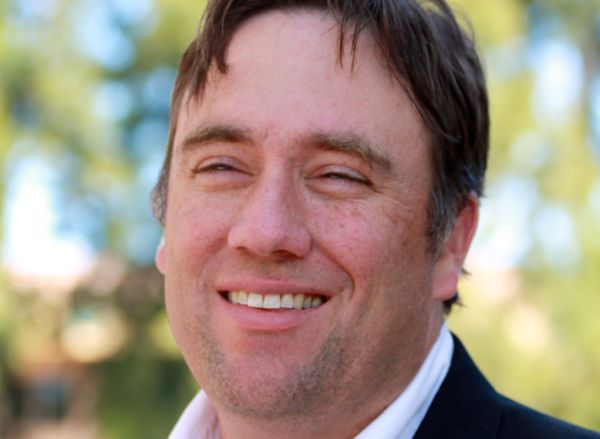
By Joe Mathews

Pay more and get less.

That’s the bad new California deal that underpins so many daily transactions. The price of the fundamentals of life keeps going up, even as our money buys less of them.

Joe Mathews

Joe Mathews

Watch your water bill rise even as you take shorter showers and let the lawn die. Reach deeper into your pocket to pay for electricity even as you switch to energy efficient light bulbs and appliances. Borrow twice as much for tuition at a state university even as you struggle to find enough classes to graduate in four years.

More for less defines our collective spending. We raise local taxes so that the cuts in library hours or police force won’t be as bad as originally planned. The state is paying more to house fewer criminals in its prisons. We pay more in tolls to cross the same decaying bridges.

And don’t get me started on California schools. We raised state taxes in 2012 to help education, but you’d be hard-pressed to see that money in more classes or instruction time at your kid’s school. Much of it went to cover yesterday’s IOUs and teacher pensions and salaries. Public schools constantly demand more money from parents to compensate for budget cuts or cover costs. At this fall’s back to school night at our local elementary, parents were on the business end of no fewer than half-a-dozen fundraising pitches, including a strongly suggested donation of $125 for classroom supplies.

This “more for less” ethic seems out of step with a time when so many consumer goods—and almost anything involving technology—cost less and provide more in applications or computing power. “More for less” is also a frustrating dynamic for those of us in professions—like mine, journalism—where people work more but are paid less.

“More for less” in California is the consequence of long-term trends and public policies. The gist: Generations of excessive frugality and underinvestment have created various forms of scarcity in public services. The response to that scarcity is conservation, which is expensive in two ways. For one, higher prices can force people to use less of something. For another, successful conservation can force prices up.

The drought provides the most prominent example. The state asked us to conserve water, so we buy less water from the agencies that provide it. But that means less money for water providers, who raise prices to make up the difference.

There has been too little pushback against this “more for less” reality. And our politicians have been skillful at selling both higher payment and lower service as forms of civic virtue. Gov. Jerry Brown, who is especially good at this kind of spin, this year said at a June event on water that “you have to find a more elegant way of relating to material things. You have to use them with greater sensitivity and sophistication.”

That’s beautiful bunk. There is nothing sophisticated or sensitive about charging someone more for less of the same thing. And at the risk of being inelegant, I must point out that it isn’t fair to be adding new minimum costs for life’s basics in a state with the nation’s highest poverty rate.

California is a proudly progressive place where majorities are wisely willing to pay more for social goods. But we shouldn’t be played for fools. Which is why we need a clear, collective stand: When we must pay more, we must get more.

The right time to establish a firm “More for More” public ethic would be next year, as we consider several ballot measures to raise taxes.

Ask yourself as you read about each tax: Will this new levy really produce more revenues that can be tapped to pay for the schools, health and other programs we all depend on? Or will it merely take money from our pockets and siphon it to the narrow causes of the initiative sponsors?

Among the initiatives filed so far, a proposed tobacco tax—backed by doctors, health groups, and the billionaire Tom Steyer—looks like a more for less. It puts the proposed new tax dollars into the funds of politically favored programs, and even includes a new constitutional prohibition against any of the new taxes going to the general fund, which supports core state programs.

Such more-for-less schemes are not just bad policy. They inspire cynicism and undermine trust—and thus make it harder to get people to pay for the expensive new investments California will need to support its people, grow its economy, and tackle big challenges like climate change.

“More for less” will lead us into the trap of being cheap. Let’s not go there. Instead, we need to be firmer about getting more of what we pay for.

Joe Mathews is California & Innovation editor for Zócalo Public Square, for which he writes the Connecting California column.


Why it’s so hard to find a mental health professional

By Lena H. Sun, Washington Post

Woman sitting on sofa and crying with therapist taking notes (Bigstock)
The demand for mental health services is growing nationally, and comprehensive mental health legislation is gaining momentum in Congress for the first time in years. But both forces could run up against a counter-force: a shortage of psychiatrists, psychologists, counselors and therapists in much of the country.

More than half of U.S. counties have no mental health professionals and so “don’t have any access whatsoever,” according to Thomas Insel, director of the National Institute of Mental Health.

The implications are significant.

Read the whole story


Flood repairs to Scotty’s Castle in Death Valley may cost $20 mil.

By Lawren Linehan and Brett LeBlanc, Las Vegas Review-Journal

Scotty’s Castle will require millions of dollars in repairs for flood damage, a Death Valley National Park spokeswoman said Saturday.

“I’d say $10 million is a conservative estimate, $20 million is a conservative estimate,” said spokeswoman Abby Wines.

Fortunately, the main building and attraction, the castle itself, suffered only minor water damage from a small leak in the roof, according to spokeswoman Linda Slater. The rest of the damage could take up to six months to repair.

Part of the road leading to Scotty’s Castle was washed away and covered in debris. Roads were secure enough for four-wheel-drive vehicles to make it to the castle Saturday.

Read the whole story


Smoke from controlled burns drifting into basin

Smoke filling the southern of the Lake Tahoe Basin on Monday night is from the Eldorado National Forest.

Crews have a number of controlled burns going.

For more info about where the fires are, go online.


The offshore game of online sports betting

By James Glanz, Agustin Armendariz and Walt Bognaich, New York Times

Hard by the High Line, in a vintage industrial building with a Romanesque arch, lights flash on powerful computers in row after row of metal cabinets and cages. Power lines connect the equipment to diesel generators on the roof. Cables route data through the building to conduits beneath New York City streets.

This is one small corner of the Internet, unremarkable except for the confluence of two facts: Sports betting is largely illegal in the United States. And this Manhattan building, on 10th Avenue in Chelsea, is one node in a vast network used by a major offshore sports book — ever faster, ever more sophisticated and harder to track or regulate.

The network is traversed by United States customers of pinnaclesports.com, a hugely successful Internet sports-gambling company with headquarters until recently in a shopworn hotel in the tiny Caribbean island nation of Curaçao. The unlikely chief of Pinnacle Sports is a granddaughter of a former North Dakota governor who famously engaged in a bit of Cold War diplomacy with Nikita S. Khrushchev.

For years, offshore sports books like Pinnacle have used technology and other means to keep prosecutors at bay. In the United States, field agents are arrested, money is forfeited and the illegal gambling rings are seemingly dismantled. Yet they rise again, with different street soldiers and a new arsenal of deception. The one constant is the Internet, which allows for the electronic brain of these sports books to evolve, beyond the reach of American prosecutors.

This pattern raises a persistent question: Are the successes of law enforcement tantamount to cutting off a lizard’s tail only to see it grow again, and if so, is the battle even worth fighting? Is the better way — with gambling increasingly woven into the fabric of American sports — to simply legalize it so it can be regulated?

Read the whole story


2 bear cubs to spend winter at LTWC

By Kendra Kostelecky , KOLO-TV

Lake Tahoe Wildlife Care Sanctuary has two new residents for the winter , and these tiny cubs won’t have time to hibernate.

“They are so much underweight we’re going to have to feed them all winter to try to get them up to that 50-60 pounds,” explains Tom Millham, Secretary Treasurer of LTWC.

The male and female cubs recently came in from Sequioa National Park near Bakersfield, California.

One of the young bears weighed as little as 7 pounds when it arrived.
Now the goal is to get them to eat as much as possible.

Read the whole story


Nevada writers to be honored

Mark Maynard, who grew up in Incline Village, will be awarded the 2015 Silver Pen award in November.

He is the author of “Grind”. Maynard is the program coordinator the Nevada Humanities Reno Literary Crawl, and the co-founder of the Sierra Literary Alliance. He lives in Sparks.

Laura McBride, author of “We Are Called to Rise”, is also receiving the Silver Pen award.

The Silver Pen Award is given to emerging and mid-career writers of promise.

Ellen Hopkins, author of 11 bestselling novels, numerous stories and more than 20 children’s nonfiction titles will be inducted into Nevada Writers Hall of Fame.

Hopkins has been living in the Tahoe-Reno area since 1985, settling near Carson City in 1990. In 2012, she founded Ventana Sierra, a nonprofit youth housing and resource initiative, as a way of helping young people in need. She also mentors other writers through her position as a regional adviser for the Nevada chapter of the Society of Children’s Book Writers and Illustrators.

Former Friends of the University Libraries President Marilyn Melton conceived the Nevada Writers Hall of Fame. She envisioned two purposes: an annual event honoring Nevada’s finest writers and a stimulus to encourage excellence among emerging writers in the Silver State.

The names of the authors who have been inducted into the Nevada Writers Hall of Fame are displayed on a wall of honor in the Leslie Harvey and Robert George Whittemore Tower Entry and Reception Gallery of the Mathewson-IGT Knowledge Center at UNR.

Honorees are selected based on their body of work, critical recognition and a strong connection to Nevada through the themes of their writing or residence in the state.

The reception and silent auction begin Nov. 19 at 6pm; followed by the program at 7pm. Tickets are $40. For more information or to make reservations, contact Breanne Standingwater at 775.682.6022 or bstandingwater@unr.edu.


EDC retail center took 2 decades to break ground

By Brian van der Meer, Sacramento Business Journal

Many development projects put on hold during the recession have reemerged recently. But not many go back to the 1990s.

That might be the most surprising thing about the Crossings at El Dorado retail project, which broke ground earlier this week. The 425,000-square-foot project outside Placerville first got entitlements in 1998 — predating even the dot-com recession of the early 2000s.

Among the confirmed tenants are Petco, Sports Authority, Michaels, Ulta and Verizon Wireless. The first phase should start opening in late summer 2016.

Read the whole story