Opinion: The world needs more darkness

By Joe Mathews

Remember the good old days when Californians were scared of the dark? When Hollywood was king and we all knew there was no monster or ghost scarier than the one we couldn’t see—the one lying somewhere in the dark?

Those days are over. Today, the light is scarier than the dark ever was.
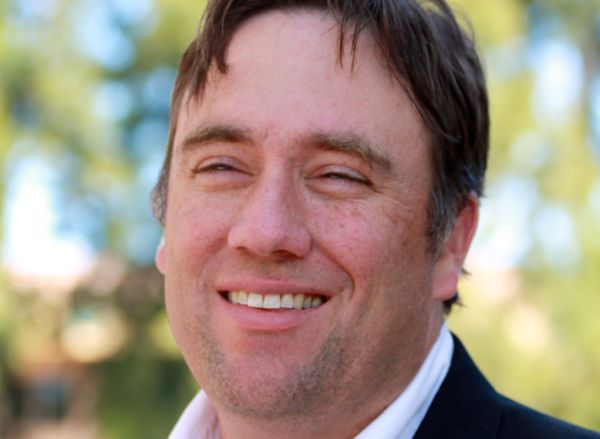
Joe Mathews

Joe Mathews

It’s not just because the sun shines so hot that California is drying up. Or because growth has brought lights into once dark and undeveloped inland valleys. Or that Californians’ days are so full of traffic and meetings that if you want to get anywhere or get anything done, you have to travel or work at night.

What’s scary is that Silicon Valley rules us now, and the lights it shines never really turn off.

They are the lights of the smartphone and the tablet and the router, keeping us up with their glow. They are the lights of digital appliances, informing their manufacturers about our consumption. And they are the lights of social media, luring us to share and read and step into the light of a community, when we’d be better off exercising or seeing friends or making love.

And they are the lights of transparency, that new god. The best companies are transparent. We demand that our governments be transparent. We, they, all pledge to be transparent—let the light shine everywhere.

But we pledge transparency so often we’ve turned it into a club. Woe to anyone who won’t disclose—you must be hiding something! Let’s convene a grand jury or a legislative hearing. Or file a ballot initiative to force disclosure.

It’s scary how much we can see now. At the same time, there is so much out in the light that we can’t see it all. So we struggle to prioritize what’s most important. And it’s frighteningly hard to tell, in all that light, what information is correct and what’s perilously wrong. There’s too much dangerous stuff out there where credulous people can see it. And so they might believe that immigrants are criminals or vaccines threaten children or that having a gun in the house makes you safer.

Remember the Night Stalker? Remember when danger came with crime or violence or drugs in the night? Well, murders are less common, and drugs are on their way to being legal. Now we most fear exposure, the scary reality that all our personal information is out there for someone to grab. Identity theft is the crime of these sun-splashed times.

It’s not only the bad guys who can get you in the light. It’s the good people, too.

They want to give us fair warning of everything, and so our lives have endless forms to fill out, boxes to check, labels to read, means of confirming that we have acknowledged what they are disclosing.

If we miss anything, if we forget anything, if we read too fast—well, it’s our own darn fault, isn’t it? And so we toggle between all the screens and lists and emails we’re supposed to monitor, anxious that we’ll miss some message we’re not supposed to miss.

Online communities grow like weeds—every organization and hobby has one. In my own life, with a wife and three kids and a 21st century job that’s really five different jobs, I’m supposed to be signed into and contributing to a couple dozen permanent online huddles—for preschool, elementary school, after-school, Little League and two different soccer teams, and my main work (with its different email lists) and a global democratic forum I run and the university where I teach.

The light swallows up time and everything, even Halloween. Remember when costumes were black and covered your whole body? Today—call me a prude if you like—the nurses and witches expose so much skin there’s nothing left to the imagination.

With the light revealing so much, I love the dark now. And I bet you do, too.

The dark doesn’t cause sunburn or skin cancer. The dark allows you to think, and maybe, if the weather is good, search the sky for a few stars.

My favorite moments now are when I leave the mobile phone at home and steal away for a short walk after the kids have gone to bed. At work, I treasure sneaking out to lunch for a few minutes without telling colleagues where I’m going. I love hiding in the shady corners of theaters and coffee shops where I can feel safe from the light, in dark anonymity, for just a moment.

I hope you find some dark place like that during this big and very bright Halloween weekend.

I hope I don’t you see there.

Joe Mathews is California and innovation editor for Zócalo Public Square, for which he writes the Connecting California column.




Car infotainment systems distract even with voice commands

By Dee-Ann Durbin, AP

DETROIT — Car infotainment systems that use voice commands may let drivers keep their hands on the wheel, but they’re still highly distracting.

It takes drivers up to 27 seconds to return to full attention after using voice commands to make a hands-free call, turn on the radio or perform other tasks, according to two studies released this month by the AAA Foundation for Traffic Safety. Traveling at 25 mph, that would equal the length of three football fields.

The studies, done for AAA by the University of Utah, compared various voice-operated systems from 2015 model-year vehicles.

Infotainment systems in the Chevrolet Equinox, Buick Lacrosse and Toyota 4Runner were the least distracting, because they were more intuitive and better at understanding voice commands. Systems in the Ford Taurus, Chevrolet Malibu, Volkswagen Passat, Nissan Altima, Chrysler 200 and Hyundai Sonata performed less well.

The system in the Mazda6 was the most distracting. The researchers found that Mazda’s system required multiple steps, had poor voice detection and took longer to complete tasks. To select a radio station, users had to say “frequency” and then the station number.

Practice with the systems didn’t necessarily help. The 257 research subjects took the cars home for five days, but the tasks that were difficult on the first day remained difficult a few days later, the researchers found.

The least distracting systems still impaired drivers for at least 15 seconds, the studies said. Older drivers took a longer time to resume full attention than younger ones. Researchers measured the return to full attention by timing participants’ response to a flashing light.

Researchers also studied the level of distraction when drivers use mobile phones with voice commands. They found Google Now was more intuitive — and slightly less distracting — than Apple’s Siri and Microsoft’s Cortana. The phone study had 65 participants.

Joel Cooper, a research assistant professor of psychology at the university and one of the studies’ authors, said voice command systems tend to be rigid, forcing drivers to use very specific commands to do various tasks. Even when drivers use the right commands, the systems don’t always understand them. When the systems don’t work, drivers get distracted trying to diagnose the problem.

“They’re just not good enough,” Cooper told the Associated Press. “They make a promise that they are a safe alternative, but they just don’t always function as promised.”

Mazda said a more advanced system that should minimize distraction is being used in the 2016 Mazda6 and other new models.

“We’re always looking for new ways to make that interface between user and machine smoother and more intuitive,” the company said in a statement.

While these studies focused on hands-free voice command systems, future studies for AAA will try to compare those systems to more traditional infotainment systems that require drivers to use their hands and look down at the dashboard, Cooper said.

AAA said it is sharing its findings with lawmakers and government agencies. It urged drivers to be cautious with voice command systems, even if the car is stopped at an intersection.

“The reality is that mental distractions persist and can affect driver attention even after the light turns green,” said AAA President and CEO Marshall Doney.


Snippets about Lake Tahoe

chp·       California Highway Patrol is implementing a yearlong statewide campaign to reduce by at least 5 percent the number of fatal and injury traffic collisions where speed, improper turning, and driving on the wrong side of the road are primary collision factors. To achieve this goal by Sept. 30, 2016, the CHP will combine statewide-targeted enforcement with an active public awareness campaign, which includes at least 600 radar trailer deployments and a minimum of 200 traffic safety presentations throughout the state.

·       Barton’s Fit Program integrates a variety of workouts designed for all fitness levels and all community members ages 14 and up. For more info, go online.

·       Diamond Peak General Manager Brad Wilson has accepted a job in Idaho. Mike Bandelin will serve as the interim general manager starting Nov. 6.

·       Nevada Museum of Art will be free Friday in honor of Nevada Day. This includes the multi-gallery exhibition Tahoe: A Visual History.


CalFire: Threat of wildfire still high

Outdoor debris burning remains suspended for residents in the Amador-El Dorado Unit of CalFire.

This is because the foothills have not experienced a shift in the overall moisture content of the brush and timber due to the lack of a significant rain event. Even though the temperatures are cooler, the fire danger is still high, officials said.

October is statistically when California experiences its largest and most damaging wildfires. Four years of drought and bark beetle infestations have taken their toll on California’s forests and wildland areas.

CalFire offers these tips to help prevent a wildfire:

Camping:

• Obtain a campfire permit

• Check for local fire restrictions

• Clear away grass, leaves and other debris within a 10-foot perimeter of any campfire

• Have a responsible person in attendance at all times

• Ensure all campfires are completely extinguished before leaving

• When barbecuing, never leave the grill unattended.

Vehicles:

• Never pull over in dry grass

• Make sure your vehicle is properly maintained

• When towing ensure chains are not dragging on the ground

• Check your tire pressure to avoid driving on an exposed wheel.


Voters seek to recall EDC supervisors

Novasell-RanalliBy Kathryn Reed

A group of residents disgruntled with how the El Dorado County Board of Supervisors is working is attempting to recall all five elected officials.

Today at their meeting in Placerville, Supervisors Sue Novasel and Michael Ranalli were served with the notice of intent for their recall. Supervisor Brian Veerkamp was not at the Oct. 27 meeting, but petitioners said he would be served upon his return.

The group is calling themselves El Dorado County Total Recall, and has said the intent is to recall every member of the board.

“Last year’s battles over a rural or urban future for El Dorado County pitted grassroots community groups against the huge financial backing of special interests. As a result, it is clear that citizens must rise up together from all over the county to fight for better representation,” a press release from the group said. “This may be our last opportunity to save our most important asset, the rural character of El Dorado County.”

County resident Kevin McAllister, who is quoted in the release, is part of the State of Jefferson movement that would like various counties to secede from California.

The actual notice says, “Whereas the voters of El Dorado County are a people of fairness, but when money or influences take precedence over the wishes of its citizens, we the people have a right to remove any or all of the elected officials.

“We the voters are seeking relief from the tyranny of our elected officials. They have failed to effectively and efficiently operate county government.”

Dan Kelly, spokesman for the recall group, did not return a phone call.

“This isn’t about anything specific. They don’t like our processes and our processes are working,” Novasel told Lake Tahoe News.

She believes some of the complaints people have relate to things before she was elected a year ago.

Novasel said she has been meeting with people, listening to concerns, but said it’s impossible to do what everyone wants because there are always multiple sides to an issue.

At least 20 verified signatures were required for the recall process to have gotten to this point. They must be from people in the supervisors’ respective districts.

Signing Novasel’s notice of intent were:

JoAnn Conner (South Lake Tahoe City Council member), Kenny Curtzwiler (defeated supervisorial candidate), Judy Clot (Tahoe Paradise Resort Improvement District member, and Recreation JPA member), Pam Curtzwiler, Marshall Curtzwiler, Jennifer Quashnick, Moya Sanders, Diane Verwoest, Ermel Herrmann, Matthew Adams, Tyler Baldwin, Luke Adams, Julie Ann Cavanaugh, Dov Shafer, John Oney, Mary Oney, Wayne McBride, John Adamski, Francesca Dionne Duchamp, Monica Givens-Day, Vincent Tanzi, Constance Hinton, Sue Abrams, Andrea Marion, and Dave Marion.

Novasel and Ranalli have seven days to respond to the petition in 200 words or less. The same will go for the other supervisors if and when they are served. (Ranalli did not return a phone call.) Those responses will go on the official petition. However, they are not required to respond.

The proponents then have 10 days to get other documents to the county Elections Department. The county works with the proponents to ensure a legal petition with both sides’ arguments is crafted. The proponents then have 120 days to seek the required number of signatures.

For Novasel, that is approximately 3,545 signatures, and for Ranalli it is 4,597. The figures are based on a percentage of registered voters.

Assuming the correct number of certified signatures is obtained, the recall election is then set for between 88 and 125 days after certification. The cost of the election comes out of the county’s general fund. The Elections Department could not provide what that figure might be. The next regularly scheduled election is the June primary, which if the recall could be on that ballot, would make the process less expensive.

“There was an attempt to recall a supervisor some years back, but it failed. It failed to get the requisite amount of signatures,” Linda Webster with the county Elections Department told Lake Tahoe News.

As for the supervisors, business goes on as usual.

“All I can do is concentrate on the job I am doing,” Novasel said.


Woman accused of wielding machete in assault

A South Lake Tahoe woman is accused of slashing an acquaintance with a machete.

Deborah Darr,

Deborah Darr

Deborah Darr, 51, was arrested Oct. 24 on assault with a deadly weapon charge.

El Dorado County sheriff’s deputies found a man on Brockway Avenue bleeding from multiple cuts on both arms. He told deputies he was awakened about 6:45am Saturday when someone was pounding on his front door. A woman he know was reportedly on the other side with a machete. She allegedly demanded money,and charged him. He was injured fighting over the machete.

Deputies tracked the woman to an address on Tata Lane in South Lake Tahoe where she was located and detained. She, too, had injuries as a result of the fight.

Darr has been released on a $25,000 bond.

— Lake Tahoe News staff report


NDOT trying to curb private runoff onto public roads

Nevada Department of Transportation wants the public’s help when it comes to runoff flowing onto state roads.

Illicit discharge is anything entering a roadway drainage system that is not natural stormwater, according to NDOT. This includes pesticides, construction dirt or materials, as well as materials from neighboring properties and roadway runoff containing fertilizers, vehicle oil and chemicals.

Legislation allows NDOT to issue permits for certain water discharges onto state roadways, as well as assess fines if needed.

“It’s important to remember that, in much of Nevada, any water reaching a storm drain directly enters our water system or natural environment with no filtration,” Steve Cooke, NDOT environmental division chief, said in a press release. “We want to educate and work side-by-side with community members to keep that water as clean as possible. It’s about helping to preserve water quality for everyone in Nevada.”

Illicit discharges may be reported by calling 775.888.7013 with the location and type of drainage or discharge.

Tips to reduce water pollution:

·         Keep your car in good repair. Leaking vehicle oil and chemicals can be transported into local waterways with stormwater runoff.

·         Recycle used oil and antifreeze at service stations and other recycling centers. Never put used oil or other chemicals down storm drains or in drainage ditches. (One quart of oil can contaminate up to 2 million gallons of drinking water.)

·         Used vehicle batteries should be disposed of at appropriate recycling centers and not as general refuse. Spent vehicle batteries contain acid and heavy metals and therefore need to be disposed of properly. Do not store them outside where they can be exposed to precipitation and stormwater runoff.

·         When washing your vehicles, take them to a commercial car wash facility. Wash water from vehicle washing can contain a variety of pollutants, including detergents, oils and grease, salts and dirt. Car wash facilities drain their wastewater into sewer systems, so it gets treated before it is discharged back into the water system.

·         Perform vehicle maintenance inside or under cover whenever possible.  Immediately clean up spilled vehicle fluids, solvents and other chemicals to prevent water and soil contamination.

·         Be aware that many chemicals commonly used around the home are toxic. Apply household chemicals per manufacturer recommendations. Use non-toxic substitutes and low-phosphate or phosphate-free detergents whenever possible.

·         Fertilizers contain nutrients that can degrade local waterways and readily leach through the soil. Take care not to over-fertilize and avoid spreading fertilizer onto areas that are subject to stormwater runoff. Sweep up fertilizer that ends up on your driveway or sidewalk areas. Avoid overwatering your landscaped areas where excess runoff can transport these nutrients into the storm drain system.

·         Never pour unwanted chemicals on the ground or down the drain. Soil cannot purify most chemicals, and they could eventually contaminate runoff. Take them to hazardous-waste collection centers instead.

·         Keep storm gutters and drains clean of leaves and yard trimmings. Decomposing vegetative matter leaches nutrients and can clog storm systems and result in flooding.

·         Clean up pet waste on a regular basis. Pet waste can be a source of bacteria and other pathogens in our waterways if exposed to stormwater runoff.


Outdoors industry muscles into politics

By Benjamin Spillman, Reno Gazette-Journal

The backcountry can be a great place to escape – except when it comes to politics.

That’s especially true in western swing states such as Nevada and Colorado where political experts and special interest groups are already trying to galvanize allies and marginalize enemies for the 2016 campaign cycle.

And when it comes to winning votes from outdoors enthusiasts public lands become the political battlefield.

Look no further than a recent push from the Outdoor Industry Association to highlight swing state voters’ affinity for keeping public land in Nevada and Colorado in the hands of the federal government.

Read the whole story


Food drive benefits North Shore-Truckee

Chase International is teaming up with Boy Scout Troop 37 and Project MANA to help with Scouting for Food, the organizations’ annual food drive on Nov. 7.

Scouts will pick up food items between 8am and 2pm.

All donated food will be distributed to families throughout the North Tahoe-Truckee area by Project MANA at its weekly mobile food distribution.

Due to the limited size of the troop, homes located north of Lake Tahoe, east of Highway 431 and west of Country Club Drive will be visited. Residents living outside that area are encouraged to call 775.298.1856 in advance to request a special pickup.

Items may also be be dropped off at Chase International’s Incline Village office at 917 Tahoe Blvd., Suite 100.

Food items needed include canned fruits, canned vegetables, canned tuna, nuts, peanut butter, dry pasta, soup, chili, instant oatmeal, rice, and dried beans (no glass containers and no expired items).

For information about the food drive, call 775.831.7300.


Snippets about Lake Tahoe

barton·       The 45th annual Barton Auxiliary Holiday Faire is Nov. 8 from 9am-3pm at St. Theresa’s Grace Hall in South Lake Tahoe. Santa Claus will stop by between 10am and 2pm.

·       Douglas County Public Library in Zephyr Cove and Minden will be closed Oct. 30 and Oct. 31 for Nevada Day.

·       The alternative dance duo Matt and Kim will headline the free Winter Ignite concert in Heavenly Village on Dec. 12 at 7:30pm.

·      There will be a public hearing on the Martis Valley West project on Nov. 19 at 10am at the Kings Beach Events Center.

·       “Cinderella” will be shown for free Nov. 7 from 2-3:45pm in the Minden Library meeting room.