Mayor’s arrest brought SLT unwanted notoriety

Tahoe Daily Tribune headlines in June 1989 were all about Operation Deep Snow. Photo/LTN

Tahoe Daily Tribune headlines in June 1989 were all about Operation Deep Snow. Photo/LTN

Publisher’s note: This is one in a series of stories Lake Tahoe News will be running leading up to the 50th anniversary of South Lake Tahoe on Nov. 30.

slt 50th logoBy Kathryn Reed

June 11, 1989, started out like any other Sunday in the basin – sunny, blue sky, uneventful. Before it was over South Lake Tahoe was making headlines internationally.

Mayor Terry Trupp, 46, his 24-year-old wife Kim (who at one time was his foster daughter), and 17 others were arrested that weekend on a slew of drug and money laundering charges. Many were South Shore residents. Even more were arrested down the road as the case unfolded.

The display of weaponry, cash and drugs at the South Lake Tahoe police station was impressive.

Stacks of one-hundred and thousand dollar bills were confiscated. Automobiles, motorcycles, jewelry, bank accounts, real estate, and gun cases – all seized – all believed to have been obtained by drug money.

Money was laundered using offshore banks, real estate and local businesses.

It was retired El Dorado County sheriff’s Lt. Pete Van Arnum who put the handcuffs on Trupp. (He was working for South Lake Tahoe Police Department at the time.) Both Trupps were arrested at Lake Tahoe Airport where they had gone to pick up friends.

This is one of the biggest stories to happen in South Lake Tahoe in the last 50 years and is certainly the largest criminal act involving a member of the City Council.

Trupp was first elected in 1978 after serving several years as executive officer of the Council for Logic. That was the group opposed to the formation of the Tahoe Regional Planning Agency. He was re-elected in 1982 and 1986. In 1984, he made an unsuccessful run for the El Dorado County Board of Supervisors.

His last day as a member of the council was July 31, 1989. He had submitted his letter of resignation earlier in the month, on the same day his one-year stint as mayor ended. This negated the recall drive that had been initiated.

Bruce Grego was appointed to fill Trupp’s unexpired term.

Trupp initially faced 21 counts, including allegations of laundering $845,000 in drug profits and bringing in 220 pounds of cocaine to Tahoe. He was looking at spending the rest of his life in prison if convicted.

Terry Trupp was in his third term on the South Lake Tahoe City Council when he was arrested in June 1989. Photo/South Lake Tahoe

Terry Trupp was in his third term on the South Lake Tahoe City Council when he was arrested on June 11, 1989. Photo/South Lake Tahoe

In August 1990 he pleaded guilty to two counts – conspiracy to launder money and unlawful use of communications for drug deals. On Oct. 11, 1990, he was sentenced to nine years in federal prison.

An Associated Press story at the time said, “(Trupp) said he pleaded guilty because he could not prove it was the fear of death and not the money that motivated him. Trupp read a long, involved statement accusing federal agents of using patriotism, fear, death threats and sympathy for persecuted Jews in coercing him to sell cocaine and launder drug money in the Lake Tahoe resort.”

Trupp was released before he served his full sentence. He later remarried and worked in sales.

He died Aug. 20, 2008, of a staph infection. He was 65 and living in Southern California at the time.

Kim Trupp pleaded guilty to money laundering, which earned her a 21-month prison sentence. She could have faced 10 years behind bars and a $500,000 fine. She was Terry Trupp’s fourth wife. Trupp and his third wife became foster parents to Kim Trupp when she was 14.

In court documents Terry Trupp bragged of laundering money for 20 years.

People in town often wondered where he got his money. While he lived in a modest ranch-style house on Glenwood Way, he did have a Maserati. He had a bit of a pompadour, wore flashy gold chains and unbuttoned shirts. The couple were members of the local Church of Latter-day Saints.

On his 1987 and 1988 financial disclosure forms Trupp reported no income. The 1989 form lists more than $10,000 coming from consulting work for Heavenly Valley Resort Hotel, now the Tahoe Seasons Resort.

He was pro development and one of the leaders of the initial redevelopment efforts in South Lake Tahoe. Much of his campaign money came from the Stateline casinos, some of which he was doing consulting work for while on the council.

At the height of the investigation there were two dozen Drug Enforcement Administration agents and 30 Federal Bureau of Investigation agents on the case. South Lake El Dorado Narcotics Enforcement Team had formed the previous October.

The FBI-DEA investigation, which included U.S. Customs, U.S. Treasury and local law enforcement, was known as Operation Deep Snow. The name for the 20-month investigation came from all the cocaine that was exchanging hands.


Opinion: My dark California dream

By Daniel Duane, New York Times

California’s over, everything I love about this place is going to hell.

I knew there was something familiar about this thought from the moment it occurred to me in Yosemite National Park. My sister and I started going to those mountains 40 years ago with our parents, who taught us to see the Sierra Nevada as a never-changing sanctuary in a California increasingly overrun by suburban sprawl.

Once we had our own families, we indoctrinated our kids in the same joys: suffering under backpacks, drinking snowmelt from creeks, jumping into (and quickly back out of) icy lakes, and napping in wildflower meadows. Yosemite remains my personal paradise, but the impact of drought and climate change has become overwhelming — smoky air from fires, shriveled glaciers leaving creeks dry and meadows gray, no wildflowers.


Confusing one’s own youth with the youth of the world is a common human affliction, but California has been changing so fast for so long that every new generation gets to experience both a fresh version of the California dream and, typically by late middle-age, its painful death.


Kevin Starr, a professor of history at USC and author of a seven-volume history of the California dream, told me recently that he considered the mid-1960s — 1963 specifically — the end of modernist California, that period for which it makes sense to speak of “an agreed-upon, commanding” version of the dream. In Starr’s view, around the time I was born, in 1967, California entered a postmodern phase with multiple dreams in parallel: back-to-the-landers on communes; migrant farmworkers organizing in the San Joaquin Valley; gay and lesbian life proudly out in the open; and, of course, the outdoorsy-liberal existence that my parents found in Berkeley.

Read the whole story


Misdemeanor charges filed against journalists in Tesla altercation

By Anjeanette Damon, Reno Gazette-Journal

The Storey County district attorney has decided to forgo felony charges against a Reno Gazette-Journal photographer, opting instead to charge him with two misdemeanor counts of battery and one count of trespassing in the wake of an altercation earlier this month between the photographer and two Tesla security guards, according to court documents this week.

The district attorney also filed a misdemeanor charge of trespassing against RGJ reporter Jason Hidalgo, who was with photographer Andy Barron when the incident took place outside Tesla’s battery gigafactory east of Reno.

Barron’s lawyer, John Arrascada, said Barron intends to plead not guilty to the charges. Hidalgo declined to comment.

Read the whole story


CHP trying to improve bike, pedestrian safety

The California Highway Patrol has received a federal grant to improve the safety of pedestrians and bicyclists throughout California.

California has seen an increase in the number of traffic-related pedestrian and bicyclist collisions.  The most recent data from the CHP reveals 752 pedestrians and 164 bicyclists were killed in collisions statewide in 2013, a 6.6 percent increase in pedestrian fatalities and a 10.6 percent increase in bicyclist fatalities from the previous year.

The California Pedestrian and Bicyclist Safety Enforcement and Education Project III grant runs from Oct. 1 through Sept. 30, 2016. During this campaign, CHP officers will use pedestrian and bicyclist collision information to enhance enforcement and public education campaigns. Funding for this program is provided by a grant from the California Office of Traffic Safety through the National Highway Traffic Safety Administration.

The CHP’s enforcement efforts will include California’s 3-Feet for Safety law, which requires drivers to keep a minimum distance of three feet between any part of a motor vehicle and a bicycle.

The CHP’s educational efforts will include presentations that promote safe pedestrian, bicyclist, and motorist behavior; bike rodeos; and distributing pedestrian and bicycle safety materials.


Fantasy sports group aims to stem regulation by fixing self

By Kimberly Pierceall, AP

The trade group representing both daily and season-long fantasy sports companies is hoping to head off outside regulation by regulating itself.

The Fantasy Sports Trade Association announced Tuesday it would form the Fantasy Sports Control Agency led by former acting U.S. Labor Secretary Seth D. Harris.

The attempt to self-regulate comes as legal scrutiny of the daily fantasy sports industry led by DraftKings and FanDuel grows and questions are raised about consumer protections including what information employees have access to and when. Until recently, employees at one site were able to play on other sites.

Paul Charchian, president of the association that was started in 1998 and now represents about 300 companies, wrote in a separate email to the group’s membership that for those sites offering paid fantasy contests, “the necessity for some form of regulation is upon us.”

“We can establish and enforce these systems ourselves, or we can put our industry in the hands of outside entities who do not understand the industry as we do — outside entities who are not as able nor as committed to establishing rules and regulations that ensure integrity and transparency while allowing the industry to continue to thrive,” he wrote. “Simply put, the leadership of the FSTA believes that we cannot and shot not allow the future of our industry to rest in the hands of others.”

Nevada regulators recently decided that daily fantasy sports is a form of gambling and companies would need to be licensed with the state in order to keep doing business there. Other states are considering legislation that would regulate and tax the industry.

“The first step, when you run into a scandal like this, is we’re going to self-regulate,” said I. Nelson Rose, a professor of gambling law at Whittier University in Southern California. “It’s a good (public relations) move. It won’t do much to prevent legislation and court cases.”

He said the agency should find a friendly state and volunteer to be taxed so states become allies rather than potential enemies.

Having overseen multiple regulatory and enforcement agencies, former U.S. Labor Secretary Harris said he’s seen first-hand government’s limited resources.

“The hope is the government won’t need to intervene,” Harris said.

He said he hopes to have the agency up and running within three to six months.

The group said its agency would operate independently and establish auditing procedures as well as incentives and penalties to enforce the industry standards it creates.

Harris said he envisions the agency issuing certified seals to companies that play by the agency’s rules.

“We think that that seal is going to have immense value,” he said, adding that he expects players, lawmakers and industry members will pay attention to who gets one and why.

He said he’s not sure, yet, if the agency itself will be responsible for auditing the companies to ensure they’re complying or if they’ll be required to hire outside auditors to do so.

“The central premise of this effort is prevention, not punishment,” he said.

As for punishment, if any member were breaking the law, “nothing we’re going to do is going to foreclose on law enforcement intervening,” he said.


Nevada’s wealthiest take private school money

By Trevon Milliard, Reno Gazette-Journal

The state’s offer to families was $5,000 per child.

The promise: Nevada’s poor families would be afforded a new choice – private school.

But only 7 percent of students applying for the money live in areas reporting low household income, while nearly a third of takers reside in the state’s richest ZIP codes where median household incomes exceed $75,000 at the least.

A vast majority of applicants – 80 percent – live in neighborhoods where median household incomes outpace the state median of $51,000, according to the Reno Gazette-Journal’s analysis of information released about the 3,000 students seeking public money for private school.


A little more than half of Nevada’s public school students are low income, according to the Nevada Department of Education, but only 20 percent of program applicants identify as low income, according to the State Treasurer’s Office overseeing the program.

Read the whole story


EPA funds Calif., Nev. native tribe water projects

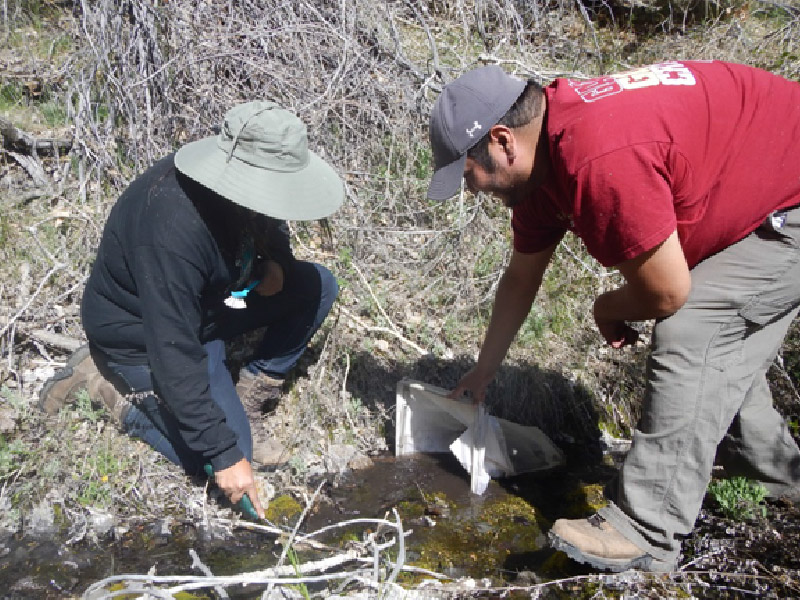
The Pyramid Lake Paiute Tribe conducted a bio assessment of streams around Pyramid Lake in early 2015.  EPA / Courtesy

Pyramid Lake Paiute members conduct a bio assessment of streams around Pyramid Lake earlier this year. Photo/EPA

By Ed Joyce, Capital Public Radio

The U.S. Environmental Protection Agency announced more than $30 million in funding to native tribes in California and Nevada.

The announcement came at the 23rd Annual Regional Tribal Conference on Tuesday in Reno.

The funds provided to Nevada tribes will pay for water quality and other environmental projects. The Pyramid Lake Paiute Tribe was awarded $35,000 to reduce nitrogen loading on the Truckee River through a constructed wetlands project.

The EPA says half of federally-recognized U.S. tribes are concentrated in California, Nevada and Arizona.

Read the whole story


SLT Library looking for music donations

South Lake Tahoe Library is seeking donations of compact discs of local music to be included in its collection.

Artists or band members of a musical act based in the South Lake Tahoe area (including Meyers, Stateline, Kingsbury, Zephyr Cove, and Cave Rock) who would like their work included in the collection, are asked to contact Chris Seal at chris.seal@edcgov.us, or bring the CD to the library at 1000 Rufus Allen Blvd., South Lake Tahoe.

Donors are asked to include basic information with the contribution, such as artist or band name, album title, and contact information.


Southwest Gas rates may be going up

By Kyle Roerink, Las Vegas Sun

On Nov. 17, the state Public Utilities Commission will hear testimony on whether Nevadans will see heftier bills from Southwest Gas. The commission will rule on a request made by the company in June to raise rates by an aggregate of $29.4 million, which it said was necessary to compensate for decreased demand stemming from warmer-than-expected weather.

As a regulated monopoly, the company could ask the PUC to raise rates to collect revenues it planned to earn but didn’t receive. This year’s request followed a $7.4 million rate hike the PUC approved three years ago after reviewing the company’s investments, operations costs and expected sales based on historical weather patterns.

If approved as requested, the new rates would amount to a 6.3 percent increase in Northern Nevada and a 5.6 percent increase in Southern Nevada. Southwest also provides gas to the California side of the Lake Tahoe Basin.

Read the whole story


Bear hit by car expected to recover

By Associated Press

WASHOE VALLEY — Officials say a female bear was struck by a car in Interstate 580 in Washoe Valley but is expected to recover from its injuries.

A driver was exiting the highway on Tuesday when the car hit a bear. Officials say the bear suffered some road rash and swelling, but should be fine.

Members of the Nevada Highway Patrol, Truckee Meadows Fire Protection District and Nevada Department of Wildlife responded to move the bear to safety.

The sow was traveling with two cubs. All three bears were sedated and wildlife officials say they expect to release them into the wild on Thursday after tagging the cubs.

Troopers say no charges will be filed against the driver, who was not injured.