Cops to be out in force Halloween night

The El Dorado County Avoid the 6 DUI Task Force is deploying DUI saturation patrols with extra officers in the cities of Placerville, South Lake Tahoe the the unincorporated areas of the county Halloween night to supplement routine patrol officers on one of the most deadly nights of the years.

Officers will be looking for the tale-tell sign of alcohol and or drug impairment.

According to the National Highway Traffic Safety Administration, 43 percent of all people
killed in motor vehicle crashes on Halloween night (6pm Oct. 31 to 5:59am Nov. 1) from 2009-13 were in crashes involving a drunken driver. On Halloween Night 119 people lost their lives over that same period nationwide.

Children out trick-or-treating and adults accompanying them are also at risk, as 19 percent of fatal pedestrian crashes on Halloween night (2009-13) involved drunken drivers.


Snippets about Lake Tahoe

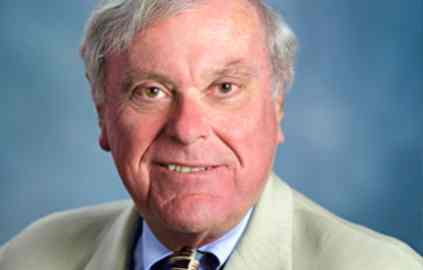
Clem Shute

Clem Shute

·       The Environmental Law Section of the State Bar of California presented San Francisco-based attorney Clem Shute with the Lifetime Contribution to the Field of Environmental Law award. Shute is a member of the Tahoe Regional Planning Agency Governing Board and founding partner of the environmental and land use law firm Shute, Mihaly & Weinberger.

·        Tesla Motors recently selected Sorensen’s Resort in Hope Valley as a charging station site. It’s open to other vehicles, too.

·       Douglas County Public Library in Zephyr Cove will be closed Nov. 11 for Veterans Day.

·       Sierra Nevada College honored long-time Lake Tahoe-resident and SNC Tahoe community member Lane Murray with the first distinguished alumni award.

·      California Highway Patrol offers free Age Well, Drive Smart classes. For more info, go online.


Online sales set to soar 11% this holiday season

By Ananya Bhattacharya, CNN Money

This Thanksgiving, bargains will be at your fingertips — literally.

For the first time, the majority of holiday shoppers will turn to their mobile phones to browse online retail sites this shopping season, according to Adobe’s new holiday shopping forecast. Mobile will account for almost a third of online sales.

Total online sales are projected to be up 11 percent since last year, totaling $83 billion, Adobe predicted. Cyber Monday is set to rake in a record $3 billion this year.

Read the whole story


Nature becomes classroom for ZCES students

By Jenay Aiksnoras

More than 180 Zephyr Cove Elementary students stepped outside the classroom and into nature to learn more about Lake Tahoe.

During the field trips students participated in hands-on activities that taught them about a variety of topics including native and invasive animals, the food web, water cycle, photosynthesis, and how to protect Lake Tahoe.

“I liked how we learned about food chains, bugs, and water.  Once you learn about science you can start your own experiments,” said Colin Pilcher, a second-grade student.

The field trips are part of a greater effort by the South Tahoe Environmental Education Coalition to educate local students in the Tahoe basin. STEEC is made up of local organizations and agencies aimed at inspiring the next generation of community leaders and scientists. Participating agencies include the Tahoe Regional Planning Agency, United States Forest Service Lake Tahoe Basin Management Unit, Tahoe Institute for Natural Sciences, and Lake Tahoe Humane Society.

Zephyr Cove Elementary has begun to focus on place-based learning with a goal of teaching students about their home environment.

During their field trips the students visited the shores of Zephyr Cove. The primary grades studied water molecules, lake food chains and insects. The students were enthusiastic and engaged in learning about the environment. Third- and fourth-graders participated in bird watching and learned about invasive species and adaptations.

“It was fun, we got to play games and saw a duck with its little babies,” said fourth-grader Armani Nweke.

In fifth grade, the students learned about how animal waste can pollute the lake. They also spent time looking at “crawdads” or crayfish.

Anna Silverman said, “We had to make different gases like H20 and we learned about molecular bonds.”

Jenay Aiksnoras is a counselor at Zephyr Cove Elementary School.


Maritime museum set to move to Tahoe City

Tahoe Maritime Museum closed escrow this month on the Tahoe Tree Company property located at the corner of West Lake Boulevard and Granlibakken Road in Tahoe City. The Log Lodge and the adjoining 10-acre property will be the future home of the Tahoe Maritime Museum campus.

Contractors have started making minor modifications to the Log Lodge to prepare the building for the museum’s relocation this fall. The plan is to move the museum offices in the coming month and set up a temporary exhibit for the winter in the main gallery space.

The exhibit will showcase the diverse range of the museum’s collection. The new building and exhibit will be open to the public by Thanksgiving. The current exhibition, Racing Tahoe, installed in the Homewood building, will be available to the public for viewing on the weekends through April 1.


Snowpack tests could lead to better decisions

By Chris Lundy, Backcountry

Early in my avalanche career I was in the field one day with a local forecaster. Based on the snowpack tests we performed at the edge of an avalanche path, we agreed that conditions on that slope were borderline, but we didn’t think it would slide. Stepping into my skis, I triggered a large collapse and watched in horror as a three-foot crown shattered the slope inches from our pit.

That event went down in my memory as a powerful lesson on the limitations of snowpack tests.

Backcountry skiers and riders have been taught to dig pits for years, but the elephant in the avalanche education room has always been what role they play in your decision making. All too frequently we use them to judge whether or not a slope is safe to ski—what do you expect when they’re often called “stability tests?” These tests, however, have serious limitations—both in the accuracy of their results and their interpretation—and, when applied incorrectly, can cause more harm than good.

Read the whole story


CVS burned by tobacco ban

By Chris Isidore, CNN Money

Sales at CVS were once again burned by the chain decision not to sell cigarettes.

CVS Caremark reported that its general merchandise sales fell in the most recent quarter mainly as a result of its decision to pull cigarettes and other tobacco products from its shelves. due to their negative impact on health.

This was the fifth straight quarter that CVS took a hit to merchandise sales.

Still, total sales improved, climbing 10 percent, or $3.6 billion, thanks to a jump in spending on prescription drugs. But those drug sales face their own headwinds as several generic brands have hit the market in the last year.

Read the whole story


Mental health advocates request scrutiny of health insurance mega mergers

By Carolyn Y. Johnson, Washington Post

Advocates are asking regulators to carefully scrutinize two massive health insurance mergers to make sure they won’t harm some of the most vulnerable people in the health care system: mentally ill people, who already struggle to get access to treatment in many places.

The proposed mergers would turn the top five insurers in the country into the top three, combining Aetna with Humana and Cigna with Anthem. The billion dollar deals will have uncertain effects on consumers, which have been a point of debate. Some argue that larger insurers will be able to take advantage of economies of scale to negotiate better prices with hospitals, while others worry that bigger companies will drive up premiums for consumers and reduce choice, particularly in certain geographic areas.

What gets easily left out of that conversation — and many conversations about health care — is mental health. Although the Affordable Care Act put in place a parity requirement that care for depression or schizophrenia be covered, advocates worry about inequalities that could be exacerbated as insurers grow larger and face less competition.

Read the whole story


Opinion: Explaining potholes on Tahoe streets

By Richard Solbrig

Potholes in our streets are a popular discussion item in Tahoe. Some potholes are simply holes in the asphalt paving, while others are actually low spots located over a utility pipeline. This summer, several articles have addressed potholes at various lengths.

The South Tahoe Public Utility District would like to provide some information concerning the “utility” potholes. There are multiple types of “utility” potholes:

1.    Manhole structure on sanitary sewers (stamped STPUD)

2.    Manhole structure on storm drain sewers (usually slotted)

3.    Slotted drains on storm sewers (usually on side of road)

4.    Valve box covers on water pipelines (smaller lids than manholes)

5.    Manhole or steel plates on electrical vaults (stamped electrical).

The district is responsible for manholes on sanitary sewers and valve box covers on water lines. Storm drains are the responsibility of either the city of South Lake Tahoe, El Dorado County Department of Transportation, or Caltrans.

Due to freeze/thaw cycles in Tahoe, road surfaces move up and down with changes in temperature.  This movement can leave the utility cover higher than the surrounding road surface in winter even if it was flush with the surface in summer. These elevated covers can then be hit during snow plowing operations, causing severe damage, or complete removal, of the utility cover, and significant damage to the snow plow and possible injury to the operator.

To reduce the risk of damage and injury, the top of the cover is typically installed one-half inch below the road surface. The county project on Black Bart this year is a good example of this work. On typical county or city paving projects, the district will reimburse the agency the costs of having their contractor adjust the elevation of the lids to the one-half inch depth below the new asphalt surface.

On new waterline or sewer line projects, in addition to repaving the lane where the pipe is installed, the District requires that our contractor install all of the covers. Typically, during the active pipeline installation, the top of the backfilled trench will be covered temporarily with a pliable, cold mix of asphalt. This surface can be bumpy, similar to temporary asphalt used on the trenches this summer on Highway 50, where Southwest Gas installed a new pipeline. Speed should be reduced when driving over these areas. At the end of the project, the contractor returns and replaces the temporary asphalt with a permanent, hot, compacted, smooth rolled asphalt product. The extent can vary, on Highway 50 and in city streets; the district is typically required to pave the entire travel lane, or half the street, respectively. On county streets, just the pipeline trench is usually repaved to match the surrounding asphalt.

While we would all prefer a smooth ride, these “utility” potholes are a necessary evil. As members of the public, you can assist in increasing public safety by notifying the proper agency of an issue with a “utility” pothole. Please report lids that are excessively deep (greater than 2.5  inches), missing lids, or lids projecting above the surrounding asphalt surface. To notify the district of an issue with a sanitary sewer or water valve lines, please call 530.544.6474.

Richard Solbrig is general manager of South Tahoe Public Utility District.


Safety urged during Halloween revelry

According to the National Highway Traffic Safety Administration, between 2009 and 2013, 43 percent of all traffic fatalities on Halloween night involved an impaired driver. In 2013, 26 percent of all pedestrian fatalities on Halloween night involved an impaired driver.

Law enforcement says whether out trick-or-treating for the night or heading to a party, it is equally important for adults and children to take necessary safety precautions. For those walking door-to-door, consider using light producing or reflective devices to remain visible to cars. Only cross the street at crosswalks or corners and only when it is safe to do so. Costumes should be kept short enough to avoid tripping, and masks should be lifted or removed while on or crossing a street.

Drivers need to pay extra attention to pedestrians – especially small children – as they may be unaware of their surroundings and trick-or-treaters can appear out of nowhere. Party hosts need to be ready with non-alcoholic drinks, food, and the responsibility to make sure their guests get home safely.