EDC superintendent arrested on DUI — again

By Kathryn Reed

Jeremy Meyers, El Dorado County superintendent of schools, was arrested Nov. 5 on charges of driving under the influence.

This is the second time in five months that the 45-year-old has been arrested on these same charges by the California Highway Patrol. Both times were in the middle of a workday.

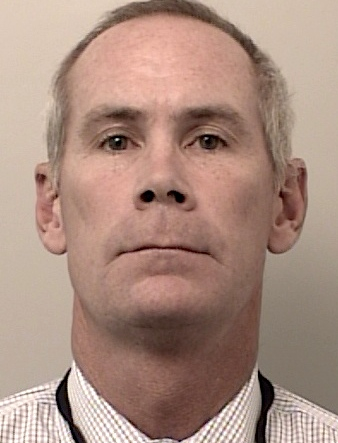
Jeremy Meyers when he was booked Aug. 22.

Jeremy Meyers when he was booked this summer.

He was arrested about 2:50pm after being involved in a single-vehicle accident. The CHP would provide no information Thursday night.

Meyers was booked into the El Dorado County Jail in Placerville about 5pm after first having been taken to Marshall Hospital in Placerville. Meyers as of Thursday evening had not posted the $17,500 bail.

The first incident on June 9 occurred about the same time of day. A California Highway Patrol officer found Meyers asleep in a construction zone on Highway 49 at 2:45pm. He had attended a board meeting earlier that Tuesday that lasted about 15 minutes and ended at 11:59am. People who were at the meeting said he did not appear to be impaired.

Meyers’ blood alcohol level, according the CHP report, was 0.15 percent – nearly twice the legal limit. Instead of being taken directly to jail, Meyers was released to the custody of his wife. He was sentenced to five days on house arrest. During that time he was earning all of his nearly $200,000 salary.

Because Meyers is an elected official the board of education does not have a great deal of say in what can happen to him. However, the county office of ed could be liable if Meyers were to hurt someone or cause property damage. If the board were to discuss Meyers’ latest run-in with the law, the soonest a special meeting could be called would be this weekend.


Sport fishing at Tahoe subject of history talk

Learn the history of hatcheries and sport fishing at Lake Tahoe at a talk on Nov. 10 at the Camp Richardson Lodge.

Hear David M. Long tell the tall tales, mysteries, fun facts, and stories about intriguing people.

The talk is free for Lake Tahoe Historical Society members, $3 for others.

The event starts at 7pm.


Nev. grappling with severe teacher shortage

By Neal Morton, Las Vegas Review-Journal

A formidable list of who’s who in Nevada education circles soon will start meeting with state lawmakers and business leaders in an attempt to solve the chronic shortage of public school teachers in the Silver State.

Starting in January, more than three dozen officials from the state’s largest school districts, labor unions, Nevada Legislature, gaming industry and nonprofit sector will spend five months drafting solutions to the alarming number of classrooms vacancies in schools across Clark County and Nevada.

The independent group plans to present the proposals publicly in May, with a focus on drafting legislation before lawmakers return to Carson City in 2017. The group also will recommend regulations that state agencies can adopt sooner and changes that school districts could make before the next school year starts in August.

Read the whole story


Soroptimist looking for teens to honor

Soroptimist International of Tahoe Sierra and Soroptimist International of South Lake Tahoe are accepting applications for the Violet Richardson award.

Each year the two South Shore Soroptimist clubs honor young women in the community ages 14-17 who are engaged in volunteer deeds such as fighting drugs, crime and violence; cleaning up the environment; or working to end discrimination or poverty.

Each recipient will receive $100.

Interested applicants may go online to SITS or SISLT for information and an application. Applications are due Dec. 1.


Snippets about Lake Tahoe

dixie·       Lake Tahoe Cruises is offering a free sightseeing cruise to Emerald Bay aboard the M.S. Dixie II for active or retired military at noon Veterans Day. For more info, go online.

·       Kirkwood expects to open Nov. 21, Squaw Valley on Nov. 25, and Alpine Meadows and Tahoe Donner Downhill on Dec. 21, assuming conditions are OK to do so.

·       North Lake Tahoe Fire Protection District has lifted the seasonal fire restrictions on outdoor. Permits for open burning of pine needles, slash pile burning, construction warming fires, open wood-burning camp and cooking fires, are available for free at the district’s administration office, 866 Oriole Way, Incline Village.

·      Mountain Magic’s 17th annual dance convention is at MontBleu in Stateline Nov. 5-8. Go online for more information.

·       Tahoe Toastmasters is having an open house Nov. 23 at 6:30pm in South Tahoe Public Utility District’s board room, 1275 Meadow Crest Drive, South Lake Tahoe. The club meets the second, fourth, and fifth Mondays of each month from 6:30-7:45 pm in the STPUD board room.


Author to give reading at SNC

Author Chris Millis will read from his work on Nov. 6 at Sierra Nevada College’s Tahoe’s Tahoe Center for Environmental Sciences building, room 139.

The free event is from 7-9pm.

On Nov. 7, Millis will put on a writing workshop 10am-noon. Cost is free for students, $50 for others. Go online to register.

Millis is the Sierra Nevada College visiting writer and distinguished professor for 2015-16. He is a prize-winning novelist, screenwriter, producer, and cartoonist. His first novel, “Small Apartments”, won the 23rd Annual International 3-Day Novel Contest, and became a feature film starring Matt Lucas, Billy Crystal, Johnny Knoxville, James Caan, and others. His most recent novel is “God and California”.


‘Food studies’ elevates subject beyond the plate

By Kristin Reynolds and Julian Agyeman

Well-known New York restaurateur Danny Meyer announced recently that he intends to eliminate tipping at his New York restaurants with an across-the-board increase in prices to fund “hospitality.” Meanwhile, fast food workers, nationally, have been fighting for a $15 minimum wage. A recent series in the Los Angeles Times revealed how farm workers in Mexico—many of them children—have endured rat-infested camps while picking tomatoes.

We are all starting to realize that a plate of food is never just a plate of food. There is a whole set of issues beyond gastronomy or foodie trends—labor, what to do with food waste, water scarcity, and international trade agreements, to name a few. Food touches almost everything in our society today. “Food studies” is a growing academic field that seeks to understand and to improve these systems.

There’s no question that demand is there. The number of undergraduate degree programs in food studies in the United States is growing. One of the first began at New York University in 1996, inspired by a master’s program in gastronomy (the study of relationships between food and human culture) at Boston University that began a few years earlier. By 2013, there were at least a dozen four-year colleges and universities nationwide offering a major, minor, or concentration in food studies. Hostos Community College in the South Bronx will soon launch an associate’s degree in food studies, making it one of the first two-year programs in the country to take a liberal arts approach, rather than one of professional development (e.g., culinary or horticulture training). The study of food is no longer a small specialty interest.

Student interest has often (though not exclusively) driven the development of food studies. UC Davis’ Sustainable Agriculture and Food Systems major, which produced its first graduates in 2013, was designed by a committee of faculty and students drawing inspiration from the campus’ 35-year-old student farm. At the New School in New York, students often design their own food studies projects in elective courses and the school’s new food studies degree program. At Tufts University, the Friedman Justice League, a student organization, has been pushing for more courses in food justice—that is, social justice related to food and agriculture—as well as more student and faculty diversity at the Friedman School of Nutrition and Science Policy.

Such interest points to the double task of good food studies education. It is crucial for students to learn about the complex issues in the food system—say, the controversy over genetically modified organisms (dangerous to human health or the answer to global food insecurity?), or the problems of food production under climate change (extreme weather events like drought and floods make agriculture more economically risky, thereby prompting migration from rural to urban areas or across national borders). But it is equally important to help students develop the analytical, interpersonal, and leadership skills to change food systems for the better. How well do food studies programs position graduates to create change? Do they prepare students for work in the growing sector of “good food”? Are the people enrolled in food studies programs representative of those who work for low wages in the food system? Or those most affected by injustices like racial discrimination? Or those who have experienced the economic challenges of agricultural communities?

Marion Nestle, a public health expert and NYU faculty member (no relation to the Nestlé food company), has written about the parallels between food studies and the food movement, a loose coalition of interests involved variously in a more socially just and ecologically sustainable food system. Scholarly work has been useful to activist initiatives beyond the academy on important issues: for example, improving school food or teaching about corporate influence over agricultural production. In many cases, academics have also engaged with food movements by lending research skills to community-led initiatives, helping to document patterns of food inaccessibility, or providing information needed to successfully advocate for policy change.

If food studies is to continue to be responsive to the growing food justice movement, graduates need to be able to translate concepts of social justice and food to post-college careers. This is all the more important for students of color and working-class students who may have experienced firsthand the food injustices that are examined conceptually in the classroom. Studies of food and social justice should help all students understand the dynamics of injustice while also shifting the demographics of both the movement and the related economy.
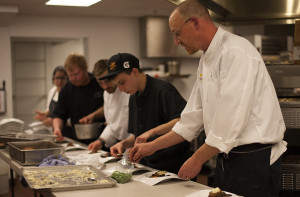
People are thinking about food in ways that go beyond what we eat. Photo/Carolyn E. Wright

People are thinking about food in ways that go beyond simply eating. Photo Copyright 2015 Carolyn E. Wright

Food studies can do three important things to make this happen:

·      First, critical analysis of the food system should be part of food studies courses and programs. Rather than fostering simple mastery of food-system facts (for example, how many more mouths we will have to feed by mid-century), programs should help students develop deep understandings about the social and political structures underlying food and environmental injustices (for example, how global political patterns foster food shortages in low-income countries).

·      Degree programs should also be designed to help graduates obtain and create “good food jobs” – jobs that pay a living wage, offer safe working conditions, promote sustainable economic development, and make healthier food more accessible to all. Food studies graduates may in fact create their own jobs, devising new ways to address food challenges as they evolve. (The New York City Food Policy Center has offered recommendations for how the mayor’s office could create 10,000 new good food jobs in the city by 2020.) Yet while some students may possess the economic and/or social capital to do this, many also face an immediate need to pay the bills. While helping to foster an expanded good food jobs sector, food studies programs should prepare students to identify and obtain jobs that are safe, financially viable, and fair.

·      Finally, food studies should be accessible to students whose communities bear the brunt of food inequities – communities of color and low-income communities in both urban and rural areas – so they can gain skills to lead change. Institutions with a higher proportion of low-income students and students of color should consider creating or expanding food-related degree programs. Colleges and universities with existing food studies programs should strive to make entry more feasible for lower income students through targeted grants and scholarships. Food studies faculty should ensure that curricula address the diverse educational and professional development interests and needs of all students.

Many of the programs cited here are already doing many of these things. And there is also room for growth. Food studies could thus help respond to the broad need for more socially and environmentally just food systems and help communities that have experienced injustices for too long already. This would be transformational food systems education at its best.

Kristin Reynolds is visiting assistant professor in environmental studies and food studies at the New School in New York City, and the author of the forthcoming book, “Beyond the Kale: Urban Agriculture and Social Justice Activism in New York City”. Julian Agyeman is a professor of urban and environmental policy and planning at Tufts University in Medford, Mass.



Designers planning for Festival of Trees and Lights

MontBleu Convention Center is about to be transformed into a winter wonderland with trees and wreathes decorated by schoolchildren and local designers. The seventh annual Festival of Trees and Lights is Dec. 2-6.

All proceeds will support prevention programs and trauma services for Barton Memorial Hospital’s Level III Trauma Center.

During the day, as well as Friday evening, attendees can watch live holiday performances, purchase holiday gifts at Mrs. Claus’s Gift Shop, and bid on items in the silent auction. Each child receives a teddy bear and is invited to visit the Teddy Bear Hospital for an animal-friendly check-up. Barton Health’s nurses and doctors will be available to hear teddy bear ailments and provide X-rays, assessments, and bandages. Children can also write a letter to the North Pole, create crafts at the Gingerbread Junction, or take a family photo with Santa Claus.

Adults interested in an elegant evening may attend the gala on Dec. 5, Barton Health’s largest annual fundraiser for community health. It features a formal four-course dinner, a live and silent auction, and dancing.

Children, along with their parents, are encouraged to bring their teddy bears to a Teddy Bear Brunch on Dec. 6. Every child will receive a goody bag and a visit to the teddy bear hospital.

For a day-by-day schedule and more information, go online.

Entrance for public viewing is $3 for children or seniors and $5 for adults. The Teddy Bear Brunch and Gala, which typically sell out in advance, can be purchased online.


Hilton Hotels investigated for blocking Wi-Fi

By David Goldman, CNN Money

The Federal Communications Commission has fined Hilton Hotels for stonewalling an investigation into whether it blocked customers’ personal Wi-Fi hotspots.

In August 2014, Hilton guests began complaining to the FCC that the hotel was blocking their ability to use their own Wi-Fi hotspots unless they paid a $500 fee.

In order to avoid pricey hotel Wi-Fi charges, many guests opt to use hotspot devices, which transform 4G data from their cell phone provider into Wi-Fi signals. Some smartphones are also able to beam out Wi-Fi.

Read the whole story


Senate blocks bill to undercut EPA clean water rules

By Mary Clare Jalonick, AP

WASHINGTON — Democrats have blocked a Senate bill that would have forced the Obama administration to withdraw new federal rules to protect smaller streams, tributaries and wetlands from development and pollution.

Supporters of the legislation — and opponents of the rules — did not get the 60 votes needed Tuesday to stop debate and consider the bill. The vote was 57-41, meaning Democrats have blocked the bill, for now.

Most Democrats argue that the Obama administration rules will safeguard drinking water for 117 million Americans and say they should remain in place. The White House threatened a veto of the bill, saying the regulations are “essential to ensure clean water for future generations.”

Republicans and a handful of Democrats from rural states say they fear a steady uptick in federal regulation of every stream and ditch. Senate Majority Leader Mitch McConnell, R-Ky., said on the Senate floor that the regulations are “a cynical and overbearing power grab dressed awkwardly as some clean water measure.”

The Senate bill, similar to legislation passed by the House earlier this year, would force the Environmental Protection Agency to withdraw and rewrite the rules. Four Democrats voted with Republicans on the measure — Sens. Heidi Heitkamp of North Dakota, Claire McCaskill of Missouri, Joe Manchin of West Virginia and Joe Donnelly of Indiana.

Opponents of the rules said they would continue to fight them. Shortly after Democrats blocked the bill, the Senate voted to proceed to a so-called “resolution of disapproval” sponsored by Iowa Sen. Joni Ernst that would scrap the rules if signed into law. Only a simple majority is needed to pass the resolution.

The White House issued a second veto threat against that resolution, saying it would “sow confusion and invite conflict at a time when our communities and businesses need clarity and certainty around clean water regulation.”

Federal courts have already put the rules on hold as they consider a number of lawsuits that were filed immediately after the EPA and the U.S. Army Corps of Engineers issued the regulations in May.

The rules clarify which smaller waterways fall under federal protection after two Supreme Court rulings left the reach of the Clean Water Act uncertain. Those decisions in 2001 and 2006 left 60 percent of the nation’s streams and millions of acres of wetlands without clear federal protection, according to the EPA, causing confusion for landowners and government officials.

The EPA says the new rules would force a permitting process only if a business or landowner took steps that would pollute or destroy the affected waters — those with a “direct and significant” connection to larger bodies of water downstream that are already protected. For example, that could include tributaries that show evidence of flowing water.

Farm and business groups are among the rules’ chief opponents, and more than half the states have sued the government in an attempt to block them. Officials from states such as Georgia, New Mexico and Wisconsin have suggested the regulations could be harmful to farmers and landowners who might have to pay for extra permits or redesign their property to manage small bodies of water on their private land.

The EPA has argued the criticism is overblown. Since the rules were originally proposed last year, the agency has been working to clear up some misconceptions, like some critics’ assertions that average backyard puddles would be regulated. Current exemptions from the Clean Water Act for farming practices, including plowing, seeding and the movement of livestock, among other things, will continue.

Republicans and landowners concerned about the rules’ reach say they believe they won’t eventually go into effect.

“While we may have fallen short today, this is not the end of this issue,” said Wyoming Sen. John Barrasso, the GOP sponsor of the bill. “One way or another, Republicans won’t stop until this rule is withdrawn or the courts ultimately strike it down for good.”