Gaming association, FBI ask the public to report illegal gambling

By J.D. Morris, Las Vegas Sun

The American Gaming Association is asking the public for help with one of its top priorities at the moment: fighting against illegal gambling.

The Washington, D.C.-based casino industry lobbying group said Tuesday that it’s cooperating with the FBI in asking the public to use the Internet Crime Complaint Center to report illegal gambling activities. The complaint center, also referred to as the IC3, allows individuals to submit information to the FBI about suspected criminal activity fueled by the Internet.

Those who fill out forms do not need to be victims of such crimes — the IC3 says it accepts reports from third parties, too.

Read the whole story


STHS grad paying for college players’ school

By Jeff Goodman, ESPN Insider

After UAB could not cover the full cost of attendance for its student-athletes this year, coach Jerod Haase decided to pay the bulk of players’ stipends — for both the men’s and women’s basketball teams — out of his own pocket.

Haase is a graduate of South Tahoe High School.

Sources said Haase’s donation was $46,000, or $23,000 to each program. He did not initially want to speak to ESPN for the story but did confirm that he and his wife made a donation to the school that was earmarked for the players on both teams.

“We are extremely excited about doing the full cost of attendance,” said Haase, who makes $1 million annually. “For the vision that the administration has for the program, it’s important we do the full cost of attendance.”

Read the whole story


TDPUD offering free LED holiday lights

Truckee Donner Public Utility District will swap out old, incandescent holiday lights for free energy efficient LED holiday lights.

The program begins Nov. 25 at 8am and will continue during regular business hours at the TDPUD office located at 11570 Donner Pass Road.

Customers are asked to bring in a copy of their current TDPUD electric bill along with up to three strands of old incandescent holiday lights. The TDPUD will replace them with  up to 60 feet of warm white or multicolor LED lights.

These energy-efficient holiday lights can save between 80-98 percent on energy costs versus the old-style incandescent lights.

While in the office, eligible customers can also receive other free light bulbs (CFLs, 7 types) and information on the district’s energy and water savings programs. This program is only available while supplies last.


Study links Champagne to dementia prevention

By Fox News

Red wine usually gets the most praise for its health benefits due to one of its powerful ingredients, resveratrol, which has been linked to improved mental health and a stronger heart. But a 2013 study out of the United Kingdom that has resurfaced recently on social media suggests a similarly buzz-worthy benefit from Champagne. However, health experts say the sparkling drink isn’t the best way to improve memory.

In the original study, an animal model, researchers found that the bubbly has compounds in common with red wine, and argued that those properties may help prevent forms of dementia such as Alzheimer’s disease and promote things like spatial memory.

Study authors at the University of Reading observed that Champagne has relatively high levels of phenolics, which primarily derive from two red grapes, Pinot Noir and Pinot Meunier, and are used to make Champagne.

Read the whole story


Officials: Public needs to be engaged because threat of catastrophic fires keeps growing


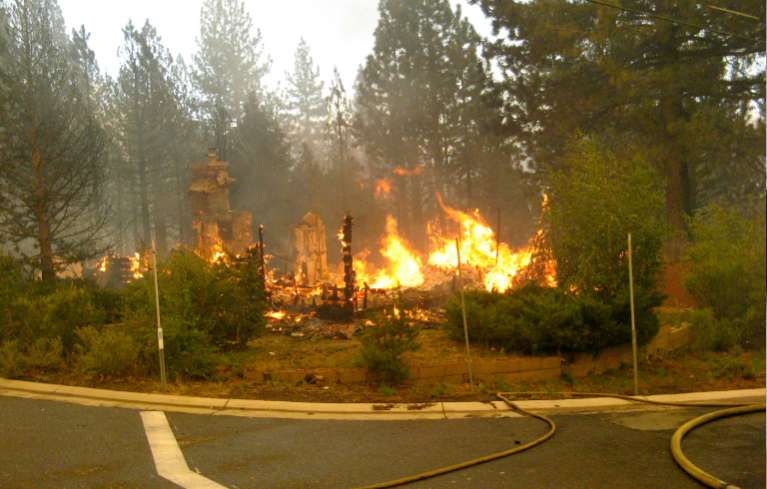
2007 was the worst fire season in the Lake Tahoe Basin when 254 houses on the South Shore were destroyed. Photo/Lake Valley Fire

The Angora Fire destroyed 254 houses on the South Shore in 2007. Photo/Lake Valley Fire

By Linda Fine Conaboy

RENO – It may seem nonsensical to be thinking about wildland fire now that snow has fallen and skiers are gearing up for the season. But putting 2015’s fire year to bed and preparing to confront 2016 head-on with a new action plan is what the Nevada Network of Fire Adapted Communities aims to do. And to their way of thinking, the time is now, not when fire is again an ugly threat.

The University of Nevada Cooperative Extension’s Living with Fire Program hosted its second annual conference this week at the Atlantis hotel-casino in Reno.

“Our forests are not museums just sitting out there,” Elwood Miller, the event coordinator, said. “They are changing. We must learn to live with fire, not continually suppress it. It’s a part of our natural world, like wind, rain and sun. Fire is an enormous issue, particularly in the West.”

In 2015, Miller said, 9.5 million acres burned with costs chewing through more than half of the U.S. Forest Service annual budget, costing upward of $4 billion and going higher.

“We cannot afford this. Last year was a perfect storm of threat, devastation and destruction,” Miller said. “Collaboration is the foundation of the national wildfire cohesive strategy, with a sustainable partnership containing a common goal, equal footing among the stakeholders and a sense of mutual obligation.”

According to each of the speakers, fire is a natural element; however, it is beginning to exhibit behaviors not seen before.

“We have unbounded development—an invasion of people, which is not compatible with fire,” Miller said.

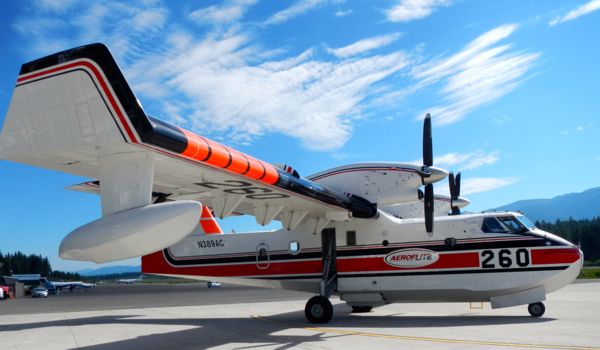
The Super Scooper is a new tool in the U.S. Forest Service's tool of suppression. Photo/LTN file

The Super Scooper is a new tool in the U.S. Forest Service’s box of suppression. Photo/LTN file

The collective wisdom of each of Monday’s speakers allowed that fires occur naturally about every century and the burn is a good thing for the forests. But now, Miller said, fires are hotter, bigger and faster than ever before and firefighters are being asked to risk their lives to fight them.

“We should let fire play more of a role, but we also need to keep people safe,” he said.

Miller mentioned the Native American view of fire in the wild—a fire will let you know when it’s ready to be fought. Consequently, there is little loss of life on Indian land, he said.

Many recent Western wildfires were discussed, including the devastating 2012 Waldo Canyon Fire in Colorado. Miller said in this disaster the recipe for death and destruction was in place: high temperatures, high winds and low humidity.

The fire covered more than 18,000 acres, caused the evacuation of 32,000 people, destroyed 346 homes and resulted in insurance claims of more than $450 million.

The largest fire in Washington state’s history and described in detail by Carlene Anders, executive director of the Carlton Complex Long Term Recovery Group, occurred in July 2014.

In an emotional talk, Anders said the fire moved in a massive tidal wave, first burning sagebrush, then bitter brush and finally trees. To add to the misery a fierce rainstorm began, not enough to douse the fire, but not letting up until considerable destruction occurred from the downpour.

“The impact of the fire is immense,” Anders said. “Now we’re facing going on two years of cascading effects. People still have emotional issues, we lost our tourist base, and wildlife has been decimated. Nearly 750,000 acres burned. We’re now having to do surveys to re-establish property lines.

“You will never be made whole again after a fire,” she said. But her sense of humor showed itself when she laughed and said, “Amazingly, not one marijuana crop was lost.”

Along with the fact that fire is a natural element and suppression is not always the best medicine, speakers concluded that not everything can be saved by the fire department. Most agreed that the reality is people must learn to protect themselves.

How can individuals keep fire from knocking on our doors? By creating defensible space around their properties and removing debris from forest floors.

Mike Brown

Mike Brown

Mike Brown, North Lake Tahoe Fire Protection District’s chief, said everybody has a fire problem, cities as well forest communities; however, some of those city folk don’t agree.

“Think about the Caughlin Fire and the Washoe Drive Dire [both in Washoe County],” he said. “In the Caughlin Fire, embers were blowing around the city, setting fire to people’s junipers. We all need to be responsible to take care of our property. Fuel beds [like junipers] are susceptible to embers.

“Citizens must realize they have a responsibility to prevent fires. People need to assist us so we can assist them. They must be engaged with their firefighters, get to know them. We all need to be educated.”

He commented on the 2007 Angora Fire on the outskirts of South Lake Tahoe, which he was a part of. There were 254 homes destroyed, $11.7 million in direct firefighting costs and $1 billion in lost tourist trade. It took nine days to knock down the fire—some people have rebuilt, but not everyone.

Firefighters will do everything possible to fight a fire, Brown said, including triage work. We make decisions on what we can defend, we train and we know our objectives.

“Safety and suppression is our No. 1 issue. But we don’t have enough suppression personnel to put someone in front of everyone’s home. Fire doesn’t discriminate. We decide what’s savable and what’s defendable,” Brown said. “Suppression costs are surging and insurance companies are starting to decline coverage in some areas.”

He described the hidden logistics involved in fighting the recent massive and lengthy fires that have happened in the West —things like food, toilets, laundry, security, medical personnel, helicopters, securing local water for suppression and housing among myriad details.

Brown said this is why everyone needs to work together to establish fire-adaptive communities.

The free conference drew people from all venues committed to establishing fire-adapted communities. Attendees included community leaders, homeowners, governmental officials, landscape professionals and others representing volunteer firefighting groups as well as fire professionals.

When asked what she would take away from her day at the conference, Julie Habara from Reno said she attended because she’s an interested homeowner and thought this would be a good way to get fire information for both she and her neighbors.

“The sessions expanded my expectations. I think every resident should have this knowledge; it’s good for the community at large. I think the awareness of what I need for emergency preparedness, like cleaning up my yard, defensible space, maintaining my property in excellent condition and having emergency contact information is vital,” Habara said.

A fire-adapted community is one located in a fire-prone area that requires little assistance from firefighters during a wildfire. These residents know the dangers of living in a potentially hazardous area and understand that the responsibility for living there is theirs. Additionally, they have educated themselves and learned the skills needed to survive wildfire. They know that they must evacuate early and effectively and how to survive if trapped.

Like every state, Nevada has specific rules and regulations pertaining to insurance, all covered succinctly by Rajat Jain, chief insurance examiner in the property and casualty section for the Nevada Division of Insurance.

State Forester Bob Roper said that fire-adapted communities represent a culture change, something that takes time to achieve. It doesn’t happen overnight, he said, but “we try to get everyone who’s a stakeholder to understand their roles.”

According to Roper, government involvement is not the answer; the public is the No. 1 ingredient in fire strategy.

The steps to make a community fire safe are:

·      Remove the huge fuel loads that have been allowed to accumulate in the forests

·      Create defensible space

·      To improve smoke management determine the proper time to do prescribed burns

·      Ensure communities become fire adaptive so that structures can survive fire.

“Fires don’t respect jurisdictional lines. We can’t let those barriers inhibit success,” Roper said.

He added there needs to be better fire-response times and to make sure that the closest resource is the one that responds to a fire.

Alicia Reban, executive director of the Nevada Land Trust said her agency was established to preserve the open spaces in Nevada for people and wildlife. The group has three goals: land restoration and stewardship, education, and acquisition. To that end she says there’s a big need for fire-adaptive communities.

“We want to bring all the stakeholders together and not simply apply Band-Aids after a fire,” she said.

—–

Notes:

·      For more information on this program or to join the Fire Adapted Communities Network, go online or call 775.784.4848.


Opinion: Power plants threaten Utah’s ski industry

By Angel Collinson, Outside

My younger brother John and I grew up in Snowbird Ski Resort’s employee housing, high in Utah’s Little Cottonwood Canyon, 30 minutes drive from downtown Salt Lake City and home to Snowbird and Alta, two of Utah’s premier ski resorts. My dad was a ski patroller at Snowbird. We were lucky: Our childhood was filled with fresh air and, in winter, fresh snow. But that’s been changing for the worse.

From kindergarten through high school, my mom homeschooled us, along with four other canyon kids. We rarely left the canyon in winter, we just skied.

It was a child’s utopia, except for the fact that, most days, the border between our life in the canyon heights and the Salt Lake Valley below was clearly demarcated by a thick layer of brown-gray haze.

Read the whole story


LTCC soccer coach relieved of all duties

Lake Tahoe Community College’s board of education on Nov. 10 voted to terminate Ben Wade as the student outreach and equity director effective Nov. 30.

Wade has had the position since the start of the calendar year. He was on probation for one year.

Ben Wade

Ben Wade

He was also the men’s soccer coach. He was put on paid administrative leave starting Nov. 5 for the rest of the month. Reasons for his dismissal have not been released.

Neither LTCC President Kindred Murillo nor board President Kerry David would comment Tuesday night about the action taken.

Wade was not at the meeting and could not be reached for comment.

College officials have been meeting with players, especially sophomores who will be seeking four-year institutions to transfer to next fall, to ensure their needs are met.

— Lake Tahoe News staff report


Snippets about Lake Tahoe

tryp logo·      Tahoe Regional Young Professionals is having two mixers this month. TRYP is teaming up with the Hard Rock Cafe this month for Imagine There’s No Hunger – an effort to understand and raise funds to fight poverty. The event is Nov. 11 from 6-9pm at the Hard Rock Cafe inside Harveys. The other mixer is Nov. 17 from 5:30-8pm at Elevate Blue in Incline Village. Cost is $10 for each one, and free to members.

·      Western Nevada College Specialty Crop Institute offers a Growing Greens in Hoop Houses workshop Dec. 5, 9am-2:30pm at UNR’s Knudtsen Resource Center. Cost is $25 before Nov. 28, and $35 afterward. Lunch is included, and seating is limited. Online registration is available.

·       The deadline to comment on the proposed residential development in Martis Valley has been extended to 5pm Dec. 22. Comments should be emailed to cdraecs@placer.ca.gov. There will be a public hearing Nov. 19 at 10am at the North Tahoe Event Center in Kings Beach.

·       South Tahoe Public Utility District exceeded the state’s mandated 20 percent water conservation goal. June saw a 24 percent reduction, July 27 percent and August 21 percent.


Vet haunted by guilt, smell of blood and gunpowder

By Rick Martinez

It has been 45 years since I returned to the U.S. from Vietnam. I was only 19, but the year I spent there made me feel like I had already lived 10 lifetimes. My family said, “Welcome Home,” but I have never fully come home.

Why do I still carry so much pain from that war? I have been told more than 100 times: “Put it behind you and move on with your life.” But Vietnam hangs onto my innermost thoughts like a newborn to its mother’s warmth.

The friends I left behind wouldn’t want me to be in this bad state of mind. They would want me to cherish life. Sometimes I think: Why didn’t I die with them? They are the lucky ones. They are at peace now. I wonder if I will ever know what it is like to be truly at peace.

*****

The clinical name for what I’m struggling with is post-traumatic stress disorder (PTSD), an anxiety disorder where the “fight-or-flight” responses triggered by a terrifying event can’t be turned off.

PTSD reminds me of an evil thief who tries to steal everything from you—your life, your family, and your mind. It won’t let you get close to people. It eats you alive from the inside out. PTSD has no mercy and its only goal is to devour your mind, body, and spirit. It’s a beast that never sleeps.

The first 13 years after I returned from the war were tough. My first wife left me after we lost our second child to miscarriage; I think the miscarriages might have been related to my exposure to Agent Orange. I remarried four years later. My second wife and I had two beautiful children together, but she left me when they were 4 and 6. I wanted love and yet, I pushed it away. It was hard for me to show my emotions. My heart couldn’t take losing anymore, so I built a wall around my feelings.

I could go on and on about the things that went wrong after I came back from Vietnam, but that was nothing compared to what happened over Memorial Day in 1983. That is always a hard time for me, and in 1983—after years of just barely holding it together—I snapped. I was back in Vietnam. I could smell gunpowder and blood.

Every day when I wake up, the PTSD monster says, Just stay in bed. Don’t get up. I finally listened to the monster. I could not get out of bed. I became dead to the world. I shut down.

My schedule for nine months was: Wake up at 7:30am. Take a hot shower for my crippling arthritis. Make a bowl of ramen soup and eat it. I was back in bed by 9am, and I’d stay there until 7:30 the following morning, only to repeat the routine once again.

At the end of the ninth month, my brother knocked on my bedroom door. I had just finished my soup, and was back in bed and about to nod off. He insisted on taking me to the Veterans Affairs hospital in West Los Angeles. The next day, I was admitted to the VA hospital for severe PTSD.

*****

Growing up in the Antelope Valley north of LA, I wanted to be a priest. But at 17, I decided instead to serve my country. I joined the Marine Corps. In December 1968, I went to boot camp at the Marine Corps Recruit Depot in San Diego. The drill instructors really knew how to make men out of boys! Every day, we did hundreds of brutal squat thrusts, sit-ups, chin-ups, and pull-ups. There was lots of running, going through the obstacle course, and marching in formation.

The drill instructors called us “maggots” “pukes,” “scum bags,” “slimy worms.” And they always put motherf—– in front of everything. The verbal abuse was at full volume, from the time we woke up until we went to sleep.

Next I went through intense combat training at Camp Pendleton. That’s where they teach you tactical field maneuvers, weapons training, how to kill, how to survive, and—you guessed it—more running, physical training, marching in formation, and of course, verbal abuse.

They transformed us into “lean, mean fighting machines.” I became part of a polished, synchronized team. Your life depends on what they teach you in the classroom and out in the field. We were trained in a replica Vietnamese “village” with about six or seven palm huts, a fenced animal pen, a water well, an ox cart, and large woven baskets that contained rice and/or weapons. We were made aware of the areas of possible booby-traps and the fact that the enemy lurked on the perimeter of the “village.” They actually had us in Vietnam before we even left the States.

At the end of our training, we were told that we were prepared to enter the battlefield. That some of us might not come back—and that some of us might come back and wish we hadn’t.

*****

When we landed in Vietnam and the stewardess opened the door of the plane, I was blasted with the largest dose of high-humidity heat that I have ever experienced in my life.

By the time I hit the tarmac, I was drenched in sweat. I smelled a new smell, like nothing I had ever smelled before. It was a combination of campfires, diesel fuel, jet fuel, sweaty Marines, the stewardess’ perfume, a jungle smell, gunpowder, and burning rubber … Rubber? My boots? The concrete tarmac at that hour was about 130 degrees. Enough to literally fry an egg. I thought: This is going to be my home for the next 365 days?

*****

After I had finished my Marine Corp training, I thought I was prepared for the Vietnam War. Looking back on that experience now, nothing could have prepared me for the death and destruction of that insane war. I saw more death than I could have ever imagined.

I saw a young boy, about 12 years old, on a bike toss a grenade into a moving jeep, killing a young officer and his driver. It happened right in front of my truck, but I could not stop. I was transporting ammunition, and the attack could have been an ambush for my cargo.

I lost a friend who died in my arms. We were in a firefight, and I was praying for him to live. But then the flares went off overhead, and I saw blood coming out of his eyes, nose, and ears. I saw where his skull was cracked. I realized if he lived, he would be a vegetable … and I found myself praying for him to die.

Of all the painful things I had to deal with in therapy, watching my friend die is up there at the top of the list. The camaraderie in a combat zone is stronger than even blood ties.

Once, while on a search-and-destroy mission, we had unknowingly set up our camp right on top of a Viet Cong underground tunnel complex. The enemy kept popping up in the middle of the night shooting AK-47 rounds into our camp and bunkers. After meticulously searching the area for two days, we finally found the trap doors that led down into the tunnel complex.

Someone had to go in and take care of business and I was small enough to fit into the 2-foot-wide trap doors. I became a “tunnel rat,” with a flashlight in my left hand, and a .45 in my right. My goal was to search and destroy, and to clear the tunnel.

Those tunnel complexes were heavily booby-trapped and designed to take out intruders. For every 10 military dogs that got sent into the tunnels, an average of only two survived. It was a low survival rate for soldiers, also.

When I went in, my movements were very slow. My eyes were trying to adjust to the darkness; my ears seemed to be able to hear the sand move under my body. My hearing seemed to stretch out into the darkness. I could hear myself breathing and thought, I’m too loud. As I moved forward, feeling with my hands the sides, the top, and the floor, I thought, Stay calm, careful. Be ready for anything. God, please help me.

There were trip wires and little grass mats covered by sand to conceal bunches of sharp bamboo sticks that had been dipped in poison. But they didn’t get me—I made it out.

I felt hands patting me on the back as we knelt down to examine the treasures I had brought up—some old, worn maps; three Chicom grenades; a M1 carbine rifle. After that day, everyone (including the officers) called me “Snake.”

It was the third tunnel I entered later that would haunt me the most. It had enemy inside. The three Viet Cong decided to escape through another exit and perish at the hands of my fellow Marines instead of confronting me—why they chose to do this is a question I can never answer. I acknowledge it as Divine Intervention.

It is a miracle that I made it out of that insane war.

*****

When I was at the VA hospital in 1984, part of my treatment was exposure therapy where you relive a painful experience to get control over your feelings about the trauma. In “flooding,” you talk about a lot of bad memories at once. It’s called flooding for a reason: the tears.

Therapy triggered so many memories and opened up my mind like a river. The sight of dead Viet Cong soldiers, especially the children and elderly, kept coming back to me. The Viet Cong child soldiers (some as young as 12) and the grandma and grandpa soldiers made it really hard for me to put the Vietnam War behind me. How can you really justify war? It was a no-win war for them and for us. They fought for a cause that they thought was right, and so did we. They fought with courage and tenacity, just like us.

Talking about what happened in Vietnam took me right back there. The adrenaline would kick in, and I’d go into combat mode. I felt locked up with anxiety and all these emotions. Then, instead of sleeping around the clock, I hardly ever slept.

Slowly, I started to talk with other patients, the therapists, and nurses. I was discharged from the hospital after three months of treatment.

*****

But Vietnam remained at the surface. Once I was on the outside again, I was really afraid. Now all my issues weren’t buried and repressed. The flashbacks were just as intense as the experience itself. I was alone in a world that did not seem to care about or understand me as a Vietnam veteran.

I still had a hard time sleeping. I still felt extremely anxious in crowds. I had zero tolerance for listening to people talk—whatever they said seemed so unnecessary and unimportant. I completely shut myself off from my family, my (few) friends, and society. I was out of sync with everyone. Thoughts of suicide began to whirl about in my mind. I had no hope of ever living a productive life again.

On my way back to the States, I saw a jacket—I think it was in a shop at the Da Nang Airport. On the back of the jacket was a map of Vietnam and it said: “When I die, I am surely going to heaven because I served my time in hell.” I bought the jacket.

Vietnam was hell, but it turned out I had to fight in another war. In 1984, I headed into the war within.

Rick Martinez lives with his wife, Maria, in San Antonio. Together, they have 16 grandchildren. This essay is part one of The War I Never Stopped Fighting, a project of Zócalo Public Square.


Barton Foundation awards grants to nonprofits

At Barton Foundation’s annual Philanthropy Day celebration on Nov. 6 area nonprofits were awarded $35,550.

The projects and programs being highlighted represent the community’s most pressing health needs, including mental health, substance abuse, and access to care. Many projects and programs focused on prevention and education. Projects include counseling services, dental assistance, drug prevention programs, healthy activities and mentor programs for at-risk youth, a teen support group, safe lock boxes for prescription drugs, and support for family members and caregivers affected by loved ones with mental illness.

Organizations receiving grants include Drug Store Project,  A Balanced Life, Live Violence Free, National Alliance on Mental Illness, SOS Outreach, South Lake Tahoe Police Activities League, South Tahoe Drug Free Coalition, Tahoe Magic, Tahoe Turning Point, and Tahoe Youth & Family Services.