Tears, tequila and an attempt at mountaineering history

By Benjamin Spillman, Reno Gazette-Journal

When Adrian Ballinger of Squaw Valley and crew reached high camp at Makalu the weather was more like a pleasant, bluebird day in the Sierra Nevada than what he expected to find on the fifth-highest peak on the planet.

Ballinger, 39, was leader of a crew of five ski mountaineers from the Lake Tahoe area, Colorado and Wyoming who were seeking to make the first-ever ski descent off the Himalayan peak.

Also at camp were Emily Harrington, 29, of Squaw Valley, a professional climber since her teenage years who made her name in the sport as the first female on numerous difficult routes; Hilaree O’Neill, 42, of Telluride, Colo., the first female climber to climb two 8,000 meter, or 26,000-foot, peaks within 24 hours; Jim Morrison, 40, of Truckee, an accomplished adventurer and professional skier who was making his first attempt on an 8,000-meter peak, and four Sherpa guides, a cook and his assistant. Kit DesLauriers, a professional ski mountaineer from Wyoming and the first person to have skied from the highest peak on each continent, the so-called “Seven Summits,” started with the crew but bowed out at base camp due to severe altitude sickness.

On Makalu the team was enjoying conditions that are nearly unheard late in the fall climbing season at that altitude. The ideal weather and good health of the climbers made for an almost perfect setup to their pending summit attempt.

“It was the best day I had ever seen for climbing a mountain,” said Ballinger, who was making his second attempt to ski from the Makalu peak. In 2012 Ballinger and a client abandoned an attempt due to bad weather. “With those factors in mind certainly I felt a strong desire this had to be the year. We had to go for it.”
Read the whole story


Parents upset BlueGo won’t stop at WHS

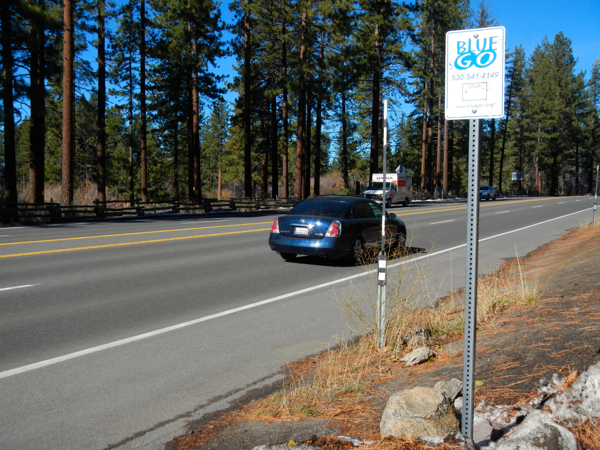
The nearest BlueGo stop to Whittell High is along Highway 50 near the senior center. Photo/LTN

The nearest BlueGo stop to Whittell High is on Highway 50 by the senior center. Photo/LTN

By Kathryn Reed

INCLINE VILLAGE – For the last five years BlueGo bus drivers have dropped off Whittell High School students at the school. That ended recently and the parents of these students are not happy.

“Complaints from commuters prompted staff to review the stop. It was determined the stop only generated ridership four days a week, less than 10 months a year, and that the ridership was often nonexistent,” Carl Hasty, Tahoe Transportation District executive director, wrote in the Nov. 13 staff report.

The four days a week and 10 months reflect how often WHS is in session.

Three parents showed up to the Friday board meeting at Sierra Nevada College in Incline Village asking for the district to keep trying to find a solution. They believe moving the stop to the senior center along Highway 50 is too dangerous. Plus, they don’t understand what the big deal is to take the students less than one mile to school, especially when the BlueGo bus is already crossing the highway to stop at the senior center.

TTD is not allowed to do specialized school bus transportation. An express route only services this section of Douglas County and the route is Highway 50 – not any offshoots.

The fact that WHS has been serviced in the past was a mistake, according to Hasty.

It is students who live in the Carson Valley who are using BlueGo as a means to get to school. The parents estimated about 11 students make the commute, though not all desire to ride BlueGo.

The parents don’t believe the senior center stop is safe. The bus sign is extremely close to the highway and had snow near it days after the storm last week. When people stand under the breezeway of the senior center bus drivers don’t see them.

“We would pay a monthly fee whether our children ride the bus or not,” parent Tara Burke told the board.

A school bus won’t transport the kids from the senior center to the school because it is Douglas County School District policy for those less than 1.5 miles away to have to walk.

DCSD does not charge any of its students to ride the bus.

What hasn’t been looked at is if the valley students could be dropped off by BlueGo at a designated school bus stop and ride from there – for free or a fee.

“I’m not opposed to working something out,” DCSD Superintendent Teri White told Lake Tahoe News. But at the same she said, “I’m not hearing from the school that it is an issue.”

Principal Crespin Esquivel has communicated with TTD, saying the senior center stop is not safe and asking for students to be brought to and from the Zephyr Cove school.

Parents also brought up that these students should be treated like any other member of the public and that there is no difference if they commute for school while other riders commute for work.

The fact that students are going between DCSD, Lake Tahoe Unified School District and Lake Tahoe Community College was also broached, pointing to the need to perhaps look at how all students are getting to and from and between the educational facilities.

The TTD board, staff and parents agreed to keep talking.


Editorial: High-speed rail plan needs more transparency

Publisher’s note: This editorial is from the Nov. 13, 2015, San Jose Mercury News.

If a sunny outlook and the ability to ignore bad news were the only attributes needed to run a huge enterprise, California’s high-speed rail project would be rolling along.

Because there’s no doubt that Dan Richard, the California High-Speed Rail Authority’s chairman, and Jeff Morales, the authority’s chief executive, excel on both counts.

Richard’s irrational exuberance was on full display when the bullet train bosses solicited companies worldwide to form a partnership with the authority and got no takers — at least none willing to risk any of their own money.

Read the whole story


Calif. olive oil industry ripe for expansion

By Robert Rodriguez, Fresno Bee

California’s burgeoning olive oil industry is expected to have a record-breaking year in 2015 as demand and acreage continue to grow.

This year, the state’s olive growers are estimated to churn out 4 million gallons of California extra virgin olive oil, nearly double the amount milled in 2014.

Much of the growth is coming from new, higher-yielding orchards that have been planted statewide, including in the central San Joaquin Valley. The region is now home to nearly a dozen companies crafting high-quality oils.

Even foreign growers have recognized California’s potential. Australia’s largest olive oil company, Boundary Bend, opened its first U.S. facility earlier this year in Woodland and has plans to expand over the next several years.

Read the whole story


Many California lakes are shockingly low

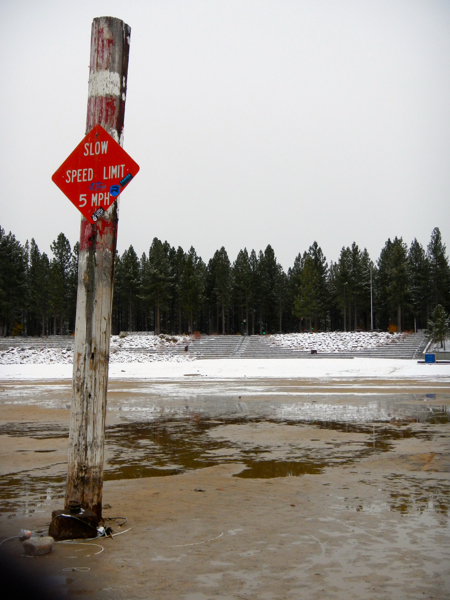
El Dorado Beach in South Lake Tahoe on Nov. 9. Photo/LTN

El Dorado Beach in South Lake Tahoe on Nov. 9. Photo/LTN

By Tom Stienstra, San Francisco Chronicle

In 35 years, nobody’s seen numbers like these.

In a personal survey last week of 125 recreation lakes, 33 are under 25 percent full, and that includes 19 that are less than 10 percent full and four that are empty.

The big picture is this: On the eve of what’s forecast to be an El Niño-driven winter, it appears most of California has gone to the bank of chances and is going all-in on the hopes of a big winter of rain and snow to bail it out.

The Tahoe region provides a bleak scene, though a fast start to winter also provides hope.

Read the whole story


How proposed trade alliance would impact Nevada

By Megan Messerly, Las Vegas Sun

The Trans-Pacific Partnership — a major trade accord struck by President Obama with 11 Pacific Rim nations in October — is far from a done deal, but it could have a major economic impact on Nevada.

To highlight the economic advantages of the trade alliance, U.S. Secretary of Commerce Penny Pritzker released a series of reports Thursday detailing how the accord would impact each state’s economy.

It would be months before the deal could be approved. The president notified Congress he intends to sign the agreement within 90 days. But the deal still needs congressional approval, and Congress could take additional time to vote on the agreement.

Read the whole story


Calif. water cutbacks likely to be extended

By Dale Kasler and Phillip Reese, Sacramento Bee

Despite forecasts of a wet winter, Californians can expect another year of water conservation in 2016 under an executive order issued Friday by Gov. Jerry Brown.

Californian are currently under orders to reduce consumption by an average of 25 percent, as compared with 2013. Brown’s order would extend the cutbacks through next Oct. 31 “if drought conditions persist through January 2016.”

Many experts and state officials said it’s almost a certainty the conservation order will continue through next fall. While El Niño is expected to drench the state this winter, many forecasters believe it won’t create enough precipitation to repair water supply problems created by four years of drought.

Read the whole story


Loop road, redevelopment ideas shaping up

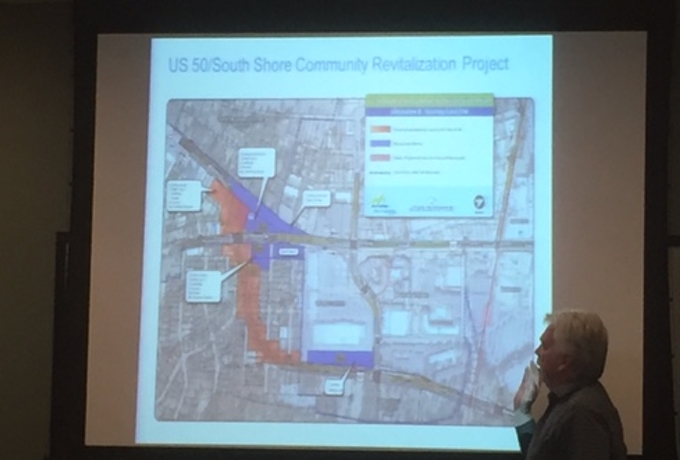
TTD Executive Director Carl Hasty explains how the portion in red is land that needs to be acquired, while the blue are would be repurposed if the loop road goes through. Photo/LTN

TTD Executive Director Carl Hasty explains how the portion in red is land that needs to be acquired, while the blue area would be repurposed if the loop road goes through. Photo/LTN

By Kathryn Reed

INCLINE VILLAGE — Douglas County is all-in when it comes to the loop road on the South Shore. A portion of the recently approved gas tax will be going toward the Highway 50 realignment.

Tahoe Transportation District officials are tweaking some of the five alternatives to be studied in the environmental impact statement. The first draft is expected out the first quarter of 2016.

Carl Hasty, TTD executive director, told his board on Nov. 13 that meetings have been taking place with property owners that would be affected by changing the alignment of Highway 50 in the state line area.

Three of the five alternatives call for a four-lane highway behind Harrah’s-MontBleu, with the current highway from about Pioneer Trail to Lake Parkway becoming a city-county street.

Housing is being proposed in the area for the residents who would be displaced.

“We are fine-tuning what is in the development,” Hasty said.

He said with tourist accommodation units being able to be converted to commercial floor area and residential units this opens up opportunities.

Money is in hand to get through the environmental studies. Construction dollars are easier to get once the EIS is done.

Douglas County commissioners heard the presentation earlier this month and South Lake Tahoe City Council will next month.

“We want to do it. We are putting in a redevelopment area there too,” Nancy McDermid said. She is the Douglas County commissioner who sits on the TTD board. “We just hope the city comes through because they are the key to this happening.”

—–

Notes:

·      On Dec. 1 at 5:30pm there will be a public workshop regarding the loop road at Lake Tahoe Resort Hotel in South Lake Tahoe.

·      South Lake Tahoe City Council will hear a presentation on the loop road status on Dec. 7. The meeting starts at 9am at Lake Tahoe Airport.


Then and now: Crossing the Truckee River

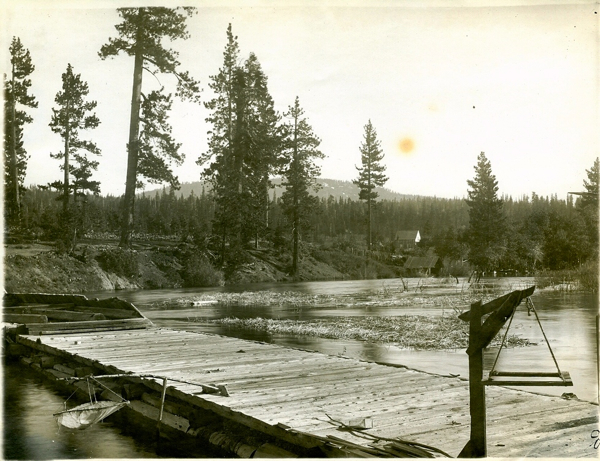
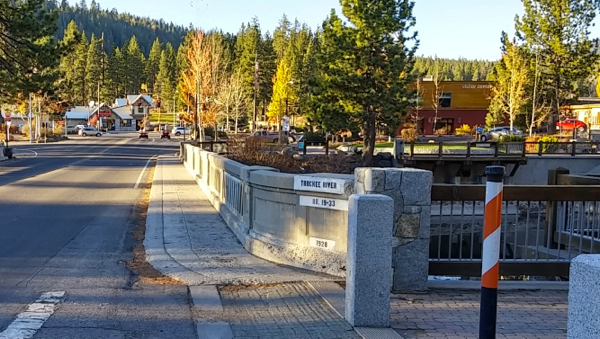
The various crossings over the Truckee River in Tahoe City have evolved through time.

An early crossing of the Truckee River near Tahoe City in the 1800s. Photo/Lake Tahoe Historical Society

An early crossing of the Truckee River near Tahoe City in the 1800s. Photo/Lake Tahoe Historical Society

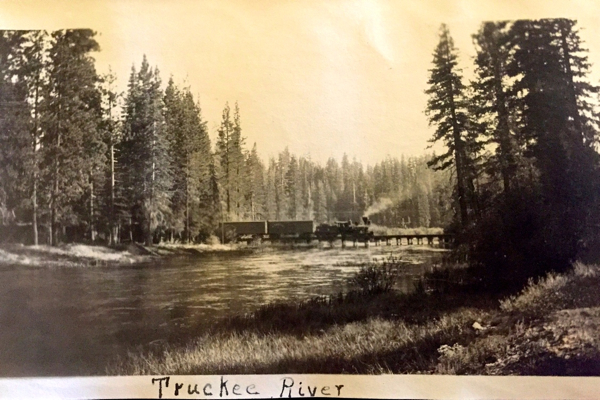
(#2) In 1925, the Lake Tahoe Railway and Transportation Company route from Truckee crossed the river approaching Tahoe City. Photo/Cherie Boulton collection

In 1925, the Lake Tahoe Railway and Transportation Company route from Truckee crossed the river approaching Tahoe City. Photo/Cherie Boulton collection


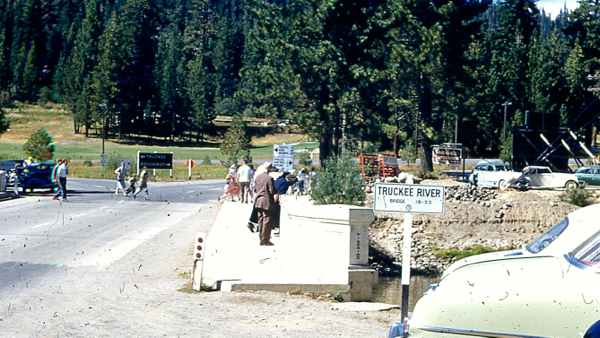
Fanny Bridge was built in 1928 parallel to the Tahoe City dam, which was built 15 years earlier. The dam became listed on the National Register of Historic Places in 1981.

Fanny Bridge in the early 1950s. Photo/Del Laine collection/Lake Tahoe Historical Society

Fanny Bridge in the early 1950s. Photo/Del Laine collection/Lake Tahoe Historical Society

Directly north of the bridge was the original Tahoe City Y. Veering left is Highway 89 that leads to Truckee, veering right is Highway 28 and the heart of Tahoe City and other North Shore towns.

Fanny Bridge in 2015 with its expanded Y intersection and islands. Photo/Bill Kingman

Fanny Bridge in 2015 with its expanded Y intersection and islands. Photo/Bill Kingman

The Tahoe Transportation District has acquired $33 million for the Highway 89/Fanny Bridge Community Revitalization Project and Meeks Bay Trail Project. There will be a public presentation Nov. 18 at 5:30pm in Tahoe City. Proposed plans, photos, animations and details are online.

— Bill Kingman


Snowboard manufacturer carving out a future

By Paul Nelson, KTVN-TV

Jay Quintin has been hitting the slopes for most of his life. As a kid, he became a pro snowboarder, known as “Smokin Jay.” Six years ago, Quintin got into the business of manufacturing snowboards, naming his business “Smokin Snowboards”.

What started in his Lake Tahoe basement has grown into an international business, based in Sparks. Each snowboard takes about 3.5 hours to build, made from a handful of materials like wood, fiberglass, plastic and epoxy.

“It’s all made here at our factory from start to finish,” Quintin said. “We do everything. We print the graphics here, we make the wood cores, we do the finishing and we do all the marketing here as well.”

Read the whole story