Billions depend on water from shrinking snowpacks

By Sindya N. Bhanoo, New York Times

Snowpacks are a vital source of water for humans, but they may shrink in some regions as the climate warms. A study estimates how changes in showfall will affect water supplies.

Justin S. Mankin, an earth scientist at Columbia University, and his colleagues analyzed 421 drainage basins in the Northern Hemisphere that depend on rainfall and snowmelt, and then combined the data with several different climate models.

They found that 97 basins, currently serving 2 billion people, depend heavily on snowmelt. The scientists calculated that the likelihood the basins would receive less snow in the coming century was 67 percent.

Read the whole story


1 person hurt in Hwy. 50 collision

A two-vehicle accident this morning closed Highway 50 in both directions near Round Hills Pines Beach.

One person was transported to Barton Memorial Hospital with non-life threatening injuries.

One of the vehicles involved in the crash was an Apple vehicle collecting data for maps. The roof apparatus with the cameras was sitting in the middle of the road.

A black Dodge pickup ran into the silver Dodge van that was attempting to make a U-turn, NHP Trooper Dan Lopez told Lake Tahoe News.

The driver of the truck, a man in his mid-40s, was injured. The two male occupants in their mid-30s in the van were not injured.

Traffic started moving about 10am Nov. 19.

— Lake Tahoe News staff report


Lake Valley Christmas truck ready to roll

The Lake Valley Fire Protection District holiday truck is about to roam the streets.

Here is the schedule:

Dec. 11 – Echo View Estates, Tahoe Mountain Road, Mule Deer Circle
Dec. 12 – Lake Tahoe Boulevard from Boulder Mountain Drive to Grizzly Mountain Drive
Dec. 13 – West side of North Upper Truckee from Zuni Street, Highway 50, Chiapa Drive
Dec. 14 – East side of North Upper Truckee from Grizzly Mountain to West San Bernardino Avenue
Dec. 15 – Christmas Valley from Highway 50 to Grass Lake Road
Dec. 16 –North side of Highway 50 in Meyers (lower Apache, magnet school), behind Station 7
(Cornelian Drive, Navahoe Drive, Cheyenne Drive).
Dec. 17 – North of Pioneer Trail from Highway 50 to Elks Club (Southern Pines Drive, Tionontati
Street, Meadow Vale Drive), Player Drive
Dec. 18 – Upper Apache Drive and Mandan Street
Dec. 19 – Pioneer Trail from Busch Way to Washoan Boulevard (Glen Eagles Drive, Hekpa Drive)
Dec. 20 – Pioneer Trail from Washoan Boulevard to Jicarilla Drive (Apalachee Drive, Nadowa Street,
Susquehana Drive)
Dec. 21 – Kokanee Estates (Marshall Trail, High Meadow Trail)
Dec. 22 – Golden Bear Trail, Meadow View Estates (Plateau Circle, Cattleman’s Trail)
Dec. 23 – Cold Creek Trail, Del Norte Street, Black Bart from Pioneer Trail to Meadow Crest Drive.


Snippets about Lake Tahoe

Bread & Broth Thanksgiving 2010·       Tahoe Community Thanksgiving Celebration on Nov. 26 will also serve as the Toys for Tots kickoff party. Everyone is welcome from 2-6:30pm at the North Tahoe Event Center in Kings Beach. For more info, email nttoysfortots@gmail.com.

·       Elevated Fitness is hosting a scavenger charity dash on Nov. 22 from noon-4pm to benefit Lake Tahoe Humane Society. Teams of two will “dash” around town to solve clues and scavenge items. For more info, go online.

·       Sugar Bowl Resort will open Nov. 21 with top-to-bottom skiing. It will close Monday through Wednesday next week, then reopen for the Thanksgiving weekend.

·       Shannon McIsaac has been hired as director of sales at Lake Tahoe Hard Rock.

·       Beginning Nov. 20 recreational and commercial bobcat trapping will no longer be allowed in California.


Tahoe Fund looking for projects to finance

The Tahoe Fund is looking for environmental organizations that would like to partner with the Tahoe Fund to restore lake clarity, improve outdoor recreation and inspire stewardship of the Tahoe basin.

Project ideas may be submitted online. The Tahoe Fund Projects Committee will review proposals on a rolling basis, but any projects seeking 2016 support should submit by Jan. 31.

Since 2010, the Tahoe Fund has raised funds from private donors for 15 environmental improvement projects including bike paths, watershed restorations, removal of aquatic invasive species and environmental stewardship programs. The Tahoe Fund’s biggest project to date is the Incline to Sand Harbor Bike Path that is still open for donations.

Eligible projects must be able to demonstrate that all environmental permits will be obtained, enjoy strong community support, and have other sources of funding identified.


Integrated transit in Tahoe far from reality

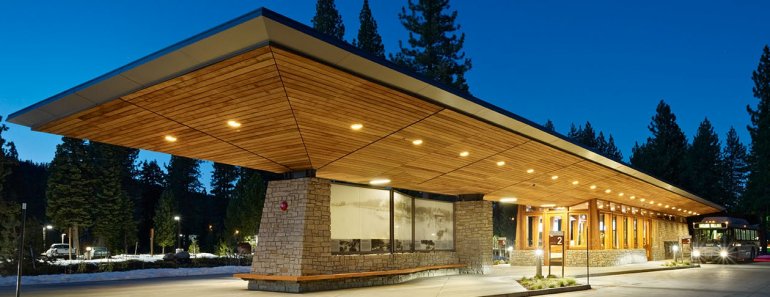
Tahoe City's transit center   is an integral component of the North Shore bus system. Photo/Provided

Tahoe City’s transit center is an integral component of the North Shore bus system. Photo/Provided

By Kathryn Reed

Free, integrated regional transit in the Lake Tahoe Basin is the ultimate goal of those who are in the business of getting people out of their vehicles and those who are involved with tourism.

Money is the hurdle that still needs to be cleared in order for that dream to become a reality.

That was the message from a panel of four who spoke Nov. 18 during the monthly Tahoe Talks Brown Bag Lunch Series at Lake Tahoe Community College. George Fink with Tahoe Transportation District, Sandy Evans-Hall of North Lake Tahoe Visitors Authority, Tom Fortune from Heavenly Mountain Resort and Jaime Wright with the Truckee-North Tahoe Transit Management Association touched on a range of transit issues during the discussion.

Heavenly provides free transit for skiers and employees when they are working. The bus is also free to anyone who gets on those particular buses.

Fortune said a future goal is to use the 1,200 spaces at California Lodge in the summer as a park and ride, with buses then going to Heavenly Village where guests would take the gondola up to the resort’s rope courses and other amenities.

The North Shore and Truckee are combining their resources. TART now stands for Truckee Tahoe Area Regional Transit. Buses are painted the same for the most part, with the Truckee ones having a little more green to embrace the town’s green initiative and Tahoe buses having blue to recognize keeping the lake blue. One phone number will be used.

This all eliminates confusion for riders who don’t understand the geographic boundaries of towns and states.

Panelists reiterated the need for a seamless system.

Joanne Marchetta, executive director of the Tahoe Regional Planning Agency, said that will be hard to do with one city, five counties and two states. It was pointed out how ski resorts can’t even figure out how to cooperate to get riders to the various resorts using shared transit.

Evans-Hall said it is time to look at transit as an amenity. She said that is what other resort destinations are doing – and it’s paying off. People are parking once and not getting in their vehicles until their vacation is over.

South Lake Tahoe City Councilman Austin Sass, who is also on the TTD board, said, “We are a parking deficient town. The long-term solution to get people out of their cars is to have parking.”

To pay for free transit in places like Park City, Vail and Steamboat a variety of taxes have been put in place. They range from hotel to recreation to lift ticket to sales taxes.

Placer County is looking at raising its transient occupancy and sales taxes.

When TOT is raised it can be done so with 50 percent plus one voter passing it. If the funds were to be earmarked for something specific, like transit, it then requires a two-thirds majority. How some jurisdictions are getting around this is to put the TOT to a vote and having a secondary question asking voters to prioritize where the money goes.

North Shore did a study that says it would cost $7.2 million to run a free transit system with buses stopping every 30 minutes. The bus system today has a budget of $4.5 million. The consultants said it is likely the difference would be made up in the first year based on the increase of people coming to the area and spending money.

Evans-Hall and her people are moving in that direction, with the goal of having free bus service in five years.

The South Shore isn’t anywhere close to doing the same.

Fink said the goals on this end of the lake with BlueGo are to have buses go to Meyers and into neighborhoods.


Opinion: Why ISIS declared war on soccer

By Andrés Martinez

It’s not surprising that the crazed “Soldiers of the Caliphate” terrorists selected the France-Germany soccer match at the Stade de France as the central target in their assault on Paris. For starters, the match was a high-profile attraction bringing together 80,000 fans, including French President Francois Hollande.  As American moviegoers across generations can tell you (see “Black Sunday” or “The Sum of All Fears”), televised sports events present dramatic, desirable targets for terrorists.

Indeed, the Stade de France was the one target in Paris last Friday night where the terrorists must have known they’d encounter a level of security they might not (and ultimately did not, thankfully) overcome. Still they deemed it a worthwhile attempt.  At least one and possibly up to three suicide bombers sought to enter the stadium. The first bomber detonated his vest upon being stopped at a security perimeter. Two other suicide bombers blew themselves up outside the stadium; the thwarted bombers only took the life of one victim. The gruesome plan probably entailed sequencing the explosions inside the stadium in such a way that would have killed not only people seated nearby, but also thousands more in an ensuing panicked stampede.

There is another reason why Islamist fanatics intent on a war between civilizations would target a major soccer match: the sport’s singular role in bridging western culture and Muslim youth.

Soccer is one form of global pop culture not driven by the United States, but it’s still a potent Western influence.  If terrorists in the Middle East spend any time fantasizing about attacking an NFL or NBA game, it’d only be because they know Americans care about those games. But soccer — the global sport centered on Europe’s major leagues but drawing in players, fans, and business interests from most of the planet — is an obsession throughout the Muslim world.

The game also offers the most prominent example of successful cross-cultural assimilation within Europe. Some of the most prominent French and German stars in recent years – Germany’s Mesmut Özil and Sami Khedira; France’s Karim Benzema and Bacary Sagna – are Muslim celebrities of immigrant backgrounds.

The impressive diversity of Europe’s soccer leagues and national teams has long been a potent force for disarming xenophobic anti-immigrant sentiment and racism across Europe. North African immigrants have never felt more welcome in France than when the entire nation rallied around Zinedine Zidane, the captain of the 1998 World Cup winning French squad. And it is no small cultural milestone for Turkish immigrants in Germany to have millions of German fans wearing jerseys bearing the name of midfield artist Özil.

But the converse often gets overlooked: the impact of immigrant players on the mindsets of soccer fans across the Middle East and North Africa — and of crazed terrorists who thrive on the narrative that there is no compatibility between degenerate infidel societies and righteous Muslims.

The sport is a seductress of Muslim youth much to the chagrin of those eager to fend off Western influences. Across the Middle East, soccer has been a galvanizing force in the debates over whether girls should be allowed to play sports. Just look at any photos of large crowds milling about anywhere in the region – whether at a Syrian refugee camp in Jordan or an upscale mall in Dubai or Saudi Arabia – and you will invariably see some people sporting Real Madrid, Barcelona, Bayern Munich, or Manchester United jerseys.

European games are avidly watched across the region, courtesy of Qatari-owned beIN Sports, the same TV network broadcasting Spanish and French games to U.S. audiences. The success of so many Muslim and immigrant players in the English, Spanish, French, and German leagues provides a constant counter-narrative to tales of immutable estrangement and alienation between West and East. And it isn’t just about players — business interests from Muslim countries (most prominently the airlines from the Gulf states) brand themselves through the sport, to a point where people in the Middle East (and as far away as Malaysia, in the case of some teams) proudly feel that certain fabled European clubs belong to them.

In some cases, they literally do. Paris’ own iconic team, Paris Saint-Germain F.C., is now owned by Qataris.

The targeting of soccer by jihadists fighting modernity should only intensify as the game’s influence continues to expand in the Muslim world. And when you look at the calendar of upcoming major tournaments—with the next two World Cups slated for Russia and Qatar, and next summer’s Euro Championship hosted by France, kicking off in the targeted Stade de France—security forces everywhere, not to mention lovers of the game, should consider last Friday night a declaration of war by the terrorists against the world’s most beloved sport.

Andrés Martinez writes the Trade Winds column for Zócalo Public Square, where he is editorial director. He is also professor at the Walter Cronkite School of Journalism at Arizona State University.


FCC chairman suggests expanded wiretap laws in response to the Paris attacks

By Brian Fung and Andrea Peterson, Washington Post

The nation’s top telecom regulator recommended broadening America’s wiretapping laws Tuesday, in response to the recent attacks in Paris by the Islamic State that left more than 120 people dead.

While the Federal Communications Commission cannot take direct actionagainst the Islamic State, such as shutting down its Web sites or social media accounts, Congress could do “specific things” allowing the FCC to assist law enforcement more effectively, agency Chairman Tom Wheeler told a House subcommittee.

That includes revisiting the wiretap legislation, said Wheeler. The 1994 law, known as the Communications Assistance for Law Enforcement Act, or CALEA, provides for the “lawful intercept” of a suspect’s telephone and online communications. It requires telecom companies and Internet providers, not to mention some online voice services, to build their networks in ways that grant authorities easier access to those communications.

Read the whole story


Nevada riding shotgun in self-driving car industry

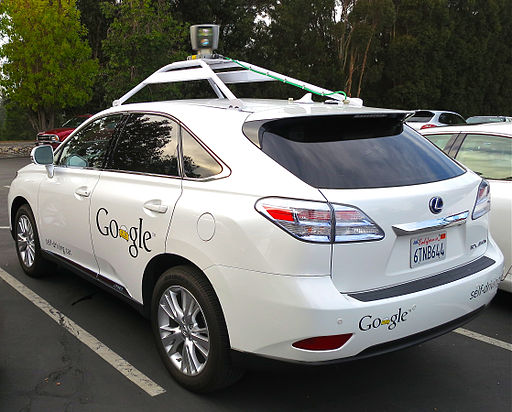
Nevada wants to keep its lead in the driverless car  Photo/Steve Jurvetson

Nevada wants to be the leader in the driverless car industry.
Photo/Steve Jurvetson

By Daniel Rothberg, Las Vegas Sun

In 2011, at the behest of Google, Nevada became the first state to legalize autonomous vehicle road-testing.

Seeing the potential economic benefits, several states followed, including California, Michigan and Florida. At least 15 more now are considering legislation related to the cars.

With more states embracing autonomous cars and the hype surrounding next-stage vehicles increasing exponentially, Nevada wants to protect its lead on autonomous testing.

Read the whole story


Sierra-at-Tahoe to open Friday

Sierra-at-Tahoe will open Nov. 20, the earliest it has done so in 11 years.

Nob Hill, Easy Rider Express, Rock Garden, Slider and Magic Carpet will be running, providing access to beginner and intermediate trails and the Broadway terrain park.

An added bonus is season passes and additional products from 2014-15 will be valid through Dec. 20. Activation of the passes is through the season pass office.

Snow play will be available next to Slider surface lift on Broadway and near the base area (no tubes or sleds will be provided).