Vets being targeted in phone scam

The El Dorado County Sheriff’s Office has received information from the California Department of Justice regarding “pension poaching” – specifically related to military veterans. These incidents target the financial assistance offered through the Veterans Administration Aid and Attendance Program.

Individuals posing as insurance agents, unpaid volunteers or Veterans Affairs representatives offer to help senior veterans apply for VA pension benefits.

What to watch out for: Anyone who asks you to pay money or move assets in connection with applying for a VA pension benefit is likely not a VA-accredited representative. He or she may be an insurance agent or representative who receives a sales commission for selling annuities or irrevocable trusts.


If approached by someone offering to help with VA pension benefits, contact the local VA (530.573.7955, ext. 5892) to determine whether this assistance is reputable.


Young scientists prove theories with creativity

Ruby Hackett tests the best surface for a Hot Wheel to go the fastest. Photos/Kathryn Reed

Ruby Hackett tests the best surface for a Hot Wheel to go the fastest. Photos/Kathryn Reed

By Kathryn Reed

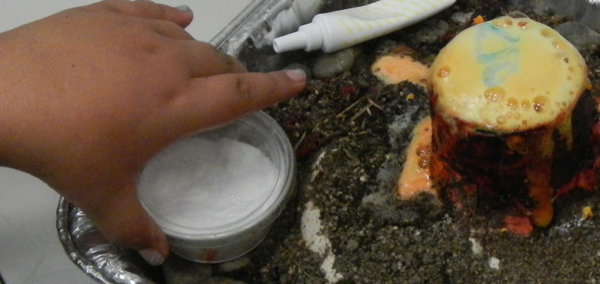
Yarelly Hernandez was all business when it came to explaining why the volcano was exploding.

The yellow lava spilled forth just as she intended. That’s what happens when baking soda, water and dish soap are combined. A little food coloring added to the drama.

The Bijou Community School first-grader was showing off her project during the annual science fair. The multipurpose room became a science lab the afternoon of Nov. 19. The only thing missing was white lab coats.

Each student had to start with a question. From there a hypothesis was developed. The materials they used had to be listed. The results were documented as well as their conclusion.

For the students in the two-way immersion program their projects were all done in Spanish.

“They are talking and building a vocabulary in science,” teacher Laura Chappel told Lake Tahoe News.

The whole process started about three weeks ago when a packet about the event and what was expected was sent home. Parents could help, but the students were to do the bulk of the work.

Yarelly Hernandez  uses baking soda to make her volcano erupt.

Yarelly Hernandez uses baking soda to make her volcano erupt.

Presentations were made before their peers in class. On Thursday it was time show off their expertise to parents, teachers, classmates and school board members who roamed the room.

Ruby Hackett had a Hot Wheels contraption where she shot a car on a track to see how fast it would go in various conditions. It was a definite Tahoe-esque test to see if the vehicle went faster on dry conditions or with salt water. The brine solution was the fastest surface.

For Diego Palacios he wanted to create lava lamps.

“I learned vegetable oil and water never mix because of the molecules,” Diego told Lake Tahoe News.

He came up with the idea for the project by doing some research on the Internet.

Diego combined water, oil and antacid tablets to get a fizzy sensation that resembled lava lamps. Food coloring completed the effect.


Opinion: Transportation a conundrum in Tahoe

By Joanne Marchetta

This past summer was Lake Tahoe’s busiest tourist season in recent memory. With the economy rebounding and major population growth projected for nearby metropolitan areas, this summer is also a harbinger of change. We must be prepared to meet the challenges of increased visitation in the future.

Lake Tahoe has growth caps. But Reno, Sacramento, the Bay Area, and other nearby cities are all expected to continue growing over the next 20 years, putting millions more people within a day’s drive of Lake Tahoe. If those projections prove accurate, we can expect to see many more people visiting Lake Tahoe for its world-class scenery and recreation.
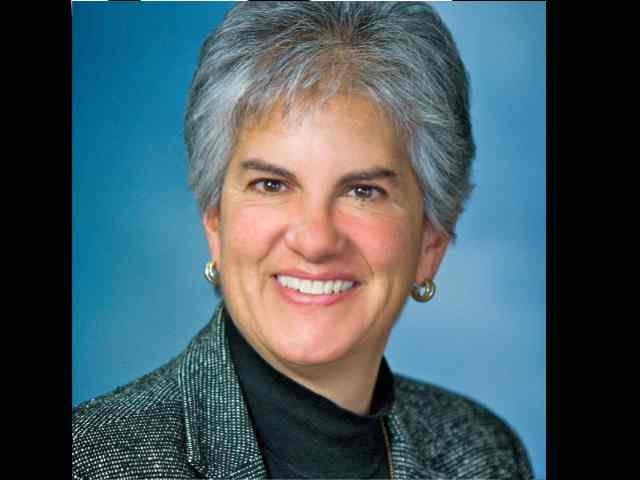
Joann Marchetta

Joann Marchetta

Tourism sustains Lake Tahoe’s businesses, economy, and communities. But visitation to our rural area also poses challenges for our environment, limited infrastructure, and public services.

Residents know that every tourism season the highways around Lake Tahoe become congested with vehicles. As hundreds of thousands of people travel here, we see increased demand for access to our favorite recreation sites, creating challenges for parking, travel, and, ultimately, the well-being of our treasured natural resources.

We must continuously confront the question of how to keep people from loving Lake Tahoe to death, ensuring that it remains healthy while also ensuring it remains available for people to enjoy, particularly since approximately 90 percent of the Tahoe basin is publicly-owned land.

More than a century ago, the federal government decided not to make Lake Tahoe a national park, so we cannot simply put up a gate and limit entry to the Tahoe basin. It is imperative for us to be prepared to meet the challenges of increased tourism, and improving our transportation system is a critical part of that work.

A water quality improvement project Caltrans completed this autumn illustrates some of the competing needs we must balance to improve our highway corridors. This important project reduces erosion and stormwater pollution along seven miles of Highway 89. But the improvements also eliminated some roadside dirt parking areas that people have long used to access popular backcountry skiing on the West Shore.

That loss of parking created an outcry among backcountry skiers. The Tahoe basin offers world-class backcountry skiing, but while the sport has grown, parking and access to popular peaks have become increasingly challenging.

To make up for the lost parking, Caltrans and TRPA approved a project revision to create a 25-by-180 foot paved pullout. California State Parks announced it will plow the visitor center parking lot at D.L. Bliss State Park to provide winter parking. For longer-term solutions, TRPA, skiers, and land management agencies are partnering to have a comprehensive conversation about ways to improve access to skiing locations.

Reducing stormwater pollution is and will remain a top priority because fine sediment from roads and developed areas is the leading cause of the decline in Lake Tahoe’s famed clarity. But we believe that by working together those needs can be better balanced with the needs for summer and winter recreation access.

Fortunately, as we face these challenges, we are again updating our Regional Transportation Plan and taking steps to improve our transportation system.

The 2012 Regional Plan lays out the vision and incentives to make our community centers walkable and bikeable so people can get to work, school, stores, transit centers, and recreation areas without getting in a car. We’re seeing progress on that front with new multi-use trails and new sidewalks and bike lanes on roads in our communities.

This summer, El Dorado County completed a shared use trail linking South Lake Tahoe and Meyers. And California recently awarded nearly $9 million in active transportation grant funding for the South Tahoe Greenway Shared Use Trail, Al Tahoe Boulevard Safety and Mobility Enhancement Project, and Fanny Bridge/State Route 89 Community Revitalization Project – projects that will make our communities more pedestrian and bicycle friendly.

Our ongoing highway corridor planning process is identifying projects and strategies to improve transit service and recreation access around Lake Tahoe so more people can get where they want to go without getting in a car.

We won’t solve Lake Tahoe’s transportation needs and environmental challenges by building bigger roads to handle more traffic. To maintain quality of life and recreation experiences at Lake Tahoe, we need a comprehensive transportation system with vastly improved travel options: More options to and from the Tahoe Basin, regular transit service between our communities and recreation destinations, and walkable and bikeable town centers. That’s just the sort of system we’re working hard to develop. While we are making progress, it is time to double-down and come together around comprehensive funding and transit solutions to manage our growing number of visitors. Please join us in the effort and support transportation and transit funding in your community.

Joanne Marchetta is executive director of the Tahoe Regional Planning Agency.



Cops: Marijuana least of the nation’s drug worries

By Christopher Ingraham, Washington Post 

America’s cops overwhelmingly do not see marijuana as a major threat to their communities, according to results of a survey released this week as part of the Drug Enforcement Administration’s “2015 National Drug Threat Assessment Summary.”

The DEA asked a nationally representative sample of over 1,000 law enforcement agencies what they saw as their biggest drug threats. Marijuana came in at the bottom of the list, named by only 6 percent of survey respondents. The share of law enforcement agencies naming pot has been declining steadily since the mid-2000s, even as states have moved to legalize medical and recreational marijuana during that time period.

By contrast, nearly three quarters of police departments named heroin and meth as their top drug threats this year. The perceived threat of heroin has more than quadrupled since 2007, according to the survey. And after rising sharply from 2007 to 2013, the threat posed by prescription painkillers has subsided considerably in the past two years.

Read the whole story


LTCC men’s soccer team wins conference

Lake Tahoe Community College men’s soccer team won the Golden Valley Conference championship for the second time in two years.

The Coyotes are seeded No. 5 going into playoffs. They take on No. 12 Lassen College on Nov. 21 at 2pm at home.

If they win, the Coyotes would play at home again on Nov. 24 at 7pm.


CHP to stress motorcycle safety, awareness

The California Highway Patrol has been awarded a grant to promote motorcycle safety and awareness from now through Sept. 30.

Goals are to reduce the number of motorcycle-involved fatal and injury traffic collisions statewide. California continues to experience high numbers of motorcycle-involved collision deaths and injuries . In 2013, motorcycle-involved fatal and injury collisions increased approximately 4.5 percent and 6.1 percent, respectively, during the previous 12 months.

The CHP will deploy officers on enhanced motorcycle safety enforcement operations in regions with a high number of motorcycle incidents. Periods of traditionally heavy motorcycle activity such as May, which is Motorcycle Safety Awareness Month; Memorial Day; Fourth of July; and designated motorcycle events in 2016 will also be targeted. A year-long series of motorcycle traffic safety education events will be conducted.

CHP will emphasize the “share the road” message.


Nev. students outscore expectations, but few tested

By Trevon Milliard, Reno Gazette-Journal

Students performed better than expected on Nevada’s new and more challenging standardized tests aligned to Common Core, but state officials are taking the results with a grain of salt.

“We can’t make an inference of how the state really performed,” said interim State Superintendent of Public Instruction Steve Canavero, releasing 2015 scores to public schools on Tuesday with many caveats.

The state – like all others across the nation – must annually test all third through eighth grade students in math and English language arts, but only a third of Nevada’s 213,500 students did so this spring. Schools were plagued by repeated crashes to the online exams, with both the testing company and test-maker unable to fix the problem.

Read the whole story


Radon kits available in Nevada

Free, easy-to-use radon test kits will be available Dec. 1-Feb. 29 at University of Nevada Cooperative Extension offices and partner locations throughout Nevada.

Radon, a naturally occurring radioactive gas, comes from the ground and can enter homes and accumulate to elevated concentrations. At elevated concentrations, the odorless, colorless gas can raise the risk of lung cancer for unsuspecting homeowners.

Lung cancer kills more individuals than any other cancer, and the Environmental Protection Agency estimates 21,000 Americans die each year from radon-caused lung cancer, killing more people than secondhand smoke, drunken driving, falls in the home, drowning or house fires. Once diagnosed with lung cancer, there is only a 15 percent five-year survival rate.

In Nevada, one in four homes tested found radon concentrations at or above the EPA action level of 4 picocuries per liter of air. According to experts, living in a home with radon concentrations at the action level poses a similar risk of developing lung cancer as smoking about half a pack of cigarettes a day.

For more information or a list of free kit locations, call 888.723.6610.


Food bank looking for volunteers

The Food Bank of El Dorado County is in need of 10 to 15 volunteers on Nov. 25  from 9:30-11:30am to help with the Mobile Food Pantry.

Volunteers will be assisting in handing out food and signing people in during the South Lake Tahoe distribution.

For more info, call 530.621.9950 or email volunteer@foodbankedc.org.


Sandoval questioning refugee resettlement

By Associated Press

Gov. Brian Sandoval says he doesn’t think he has power to halt refugee resettlement in Nevada, but he’s seeking a second opinion.

He’s asking the attorney general for a legal opinion on how much authority the governor has over refugee resettlement, and the implications of the state taking any action.

Sandoval’s office issued an update Wednesday, two days after the governor asked President Obama not to send more Syrian refugees to Nevada until the White House thoroughly reviews the refugee screening process.

The request comes after deadly terrorist attacks in Paris.

Sandoval had a conference call with Obama and other governors Tuesday, and said he left convinced that refugee security clearance needs review and federal officials need to coordinate more with states on refugee placement.