Study: Sleeping in may be unhealthy

By Nicholas Bakalar, New York Times

Sleeping later on weekends may be bad for you.

Several studies have shown that there is an association between shift work and an increased risk for heart disease and diabetes. Now a new study, in the Journal of Clinical Endocrinology & Metabolism, has found a similar association in people whose sleeping schedules change on the weekend.

For seven days, 447 men and women ages 30 to 54 wore devices that measured movement and tracked when they fell asleep and woke.

Read the whole story


Lake Tahoe chambers tout shop local campaigns

By Kathryn Reed

It pays to shop local.

To keep sales tax dollars in the Lake Tahoe Basin and Truckee areas groups are making it potentially profitable to not leave the hill to shop.

This is the inaugural year for Lake Tahoe South Shore Chamber of Commerce’s shop local campaign, while the North Shore-Truckee area started a similar campaign in 2013.

“We are encouraging people to change their habits by offering some prizes,” Shannon Earley with the South Shore chamber told Lake Tahoe News.

Awareness is the first step – for people to realize shopping outside the area, even online, is hurting local businesses as well as tax coffers.

“When you spend money locally, significantly more​ money stays and circulates in the community through payroll, taxes, and other expenditures, thus strengthening the economic base and well being of our community,” the North Lake Tahoe Chamber says on its website. “Local businesses help sustain vibrant, walkable town centers, which in turn improve​​ water and air quality. Even though things appear​ ​to ​cost less elsewhere, when you​ factor in the cost of shipping, ​driving and your time, a local purchase may be the best choice and helps to ​reduce your footprint.”

According to an economic report released this fall by the Tahoe Prosperity Center, retail spending has not reached prerecession levels in South Lake Tahoe, Incline Village, Stateline and Zephyr Cove. However, Northstar and Squaw Valley are posting numbers better than when the economy collapsed. This is attributed a new mix of retail at those villages.

The South Shore chamber say, “Money spent at a local business generates 3.5 times more wealth for the local economy compared to money spent at a chain.”

The incentive programs are different at each end of the lake.

On the South Shore – which goes from Zephyr Cove to Meyers to Camp Richardson – the shop local campaign requires customers to submit their receipts online. For five weeks the person spending the most money that week will win a prize. Grand prizes at the end of the promotion will go to the overall biggest spender as well as to the person who has the most number of receipts no matter the total.

Shopping does not have to be done at a store that belongs to this particular chamber. There are a few limits on what counts as shopping – insurance and mortgage payments don’t count, buying a new car does.

On the North Shore shoppers collect stickers for every $25 spent at a participating store. Each card with four stickers is then entered into a drawing.

The South Shore campaign runs Nov. 28-Jan. 1. The North Shore dates are Nov. 27-Dec. 24.

—–

Notes:

·       For more info on the South Shore program, go online.

·       For North Shore-Truckee info, go online.


Humane society donations benefit homeless pets

The Humane Society of Truckee-Tahoe is launching its second annual Giving Tuesday campaign, Fozzy’s Gang, on Dec.1 with hopes of raising $13,000 to help care for the community’s homeless pets.

Every gift will be matched two-to-one by one of the organization’s generous supporters, making each dollar donated having three times the life-saving impact.

Giving Tuesday happens each year on the Tuesday immediately following Black Friday and Cyber Monday.

The campaign centers on a lost little Yorkie named Fozzy who was found as a stray wandering the streets of Reno. Fozzy had a microchip but numerous attempts to contact his owners went unanswered. That’s how Fozzy found himself all alone in a big shelter with no one coming to reclaim him.

Due to lack of space and budget constraints, some shelters are unable to find a home for hard-to-adopt pets. Because Fozzy is rather mature at almost 15 years old, had some dental issues and looked a little rough, he fell into the hard-to-adopt category. The shelter reached out to neighboring facilities and HSTT was able to answer the call. HSTT has the resources necessary to care for and rehome pets that take longer to find just the right home.

To make a contribution, call 530.587.5948.


Lake Tahoe in store for a white Thanksgiving

Enjoy the blue sky and 50 degree weather in Lake Tahoe because all of that will change on Tuesday.

“Early Tuesday strong gusty winds could create significant turbulence for anyone flying in for the thanksgiving holiday. Strong cross winds of up to 50 mph are also possible on north to south oriented roads making travel hazardous for high profile vehicles,” the National Weather Service in Reno said in a statement.

Forecasters predict the higher elevations could get more than a foot of snow from Tuesday into late Wednesday. Six inches is predicted at lake level.

Highs will drop to the high 20s and low 30s through Thanksgiving, with overnight lows in single digits on Wednesday night.

— Lake Tahoe News staff report


Variety of music to be performed at LTCC

Lake Tahoe Community College’s Duke Theatre will be home to two musical experiences in early December.

The Tahoe Choir and LTCC Chorus, conducted by Anna Helwing, will put on a double performance of “Christmas Around the World,” a multicultural feast of traditional carols and lullabies including Russian, German, English, Polish, and American musical flavors sung in original languages. The audience will hear “Ave Maria,” a movement from Rachmaninoff’s “Vespers,” “Carol of the Bells,” and many others holiday favorites. The concert will culminate with “Carols and Lullabies: Christmas in the Southwest,” arranged by Conrad Susa for the choir, marimba, harp, and classical guitar. These are songs from various regions in Spain, and other Spanish-speaking countries such as Mexico and Puerto Rico. The concert will also include Spanish dance, a children’s choir, and special guests Ukuleles of Tahoe.

Performances of “Christmas Around the World” are Dec. 4 at 7:30pm in LTCC’s Duke Theatre, and Dec. 6 at 3pm in St. Theresa’s Catholic Church on Lyons Avenue. Tickets are $12 general admission, $10 seniors and students, and children younger than 5 are free.

If traditional rock and roll and heavy metal is more your musical taste, head to LTCC’s Duke Theatre on Dec. 9 at 7pm for a final exam concert by students enrolled in the Rock Ensemble classes at the college. Instructor Eric Hellberg’s students will perform classic rock hits, and the Heavy Metal students will perform old school metal hits by Ozzy Osbourne, Deep Purple, and more. Tickets for this concert are $5 at the door.


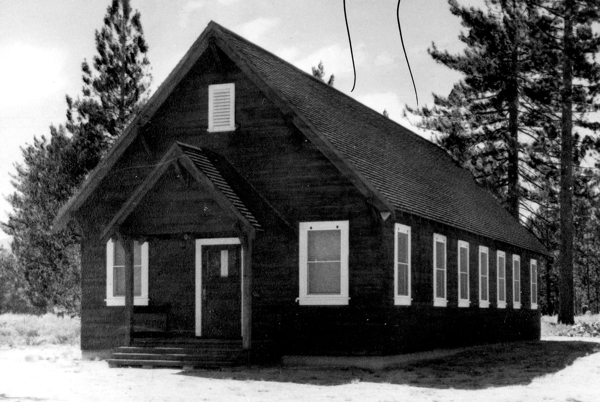
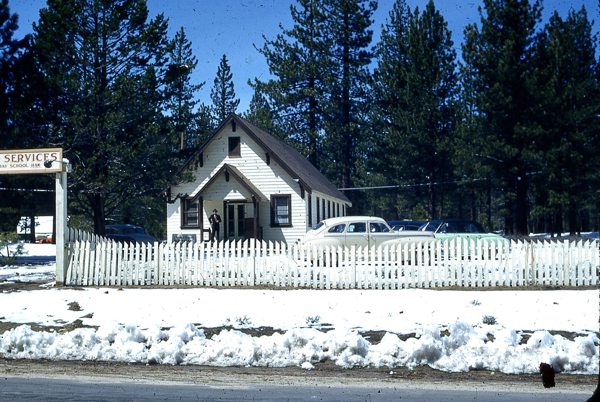
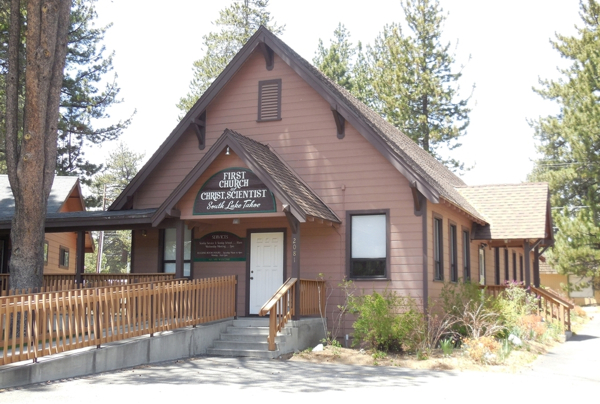
Then and now: Church still stands 80 years later

(#1, Lake Tahoe Historical Society)  Lake Tahoe Historical Society)

Christian Science Church at the Y.
Photo/Lake Tahoe Historical Society

The Christian Science Church on Highway 50 near the Tahoe Valley Y was built in 1935 by Lora Knight of Emerald Bay. She is most famous for building the historic Vikingsholm and the teahouse atop Fannette Island. She also was a benefactor of Christian Science churches in Reno and Santa Barbara.

The church building in teh 1950s. (#2, Del Laine Collection, Lake Tahoe Historical Society)

The church building in the 1950s. Photo/Del Laine Collection, Lake Tahoe Historical Society

In the early 190s the church had vacant land on both sides. Highway 50 was a two-lane road.

A reading room was added at left, and South Lake Tahoe Fire Station #3 is just to the right of this photo. Photo/Bill Kingman

A reading room was added at left, and South Lake Tahoe Fire Station No. 3 is just to the right. Photo/Bill Kingman

Still in continuous use after 80 years, this is the oldest church at Lake Tahoe.

My thanks to Cindy Cowen for her research assistance.

— Bill Kingman


Sensory overload with BC’s natural beauty

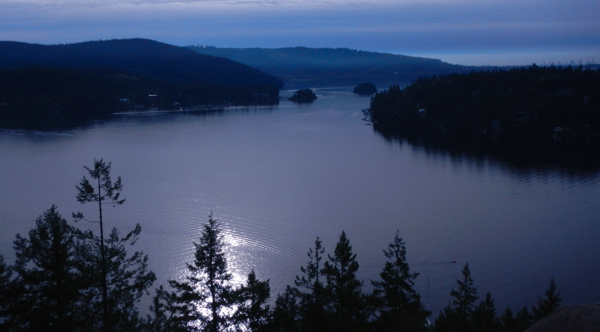
View from Quarry Rock in British Columbia. Photos/Kathryn Reed

View from Quarry Rock in British Columbia. Photos/Kathryn Reed

By Kathryn Reed

VANCOUVER, British Columbia – For people who can’t decide if they prefer the ocean, mountains, or city, Vancouver is the place to visit.

A certain vibrancy fills this Canadian city of 603,502 people. It’s easy to walk throughout downtown. Then there is the natural beauty that is reminiscent of the Sierra.

A long weekend last month barely scratched the surface of what there is to see and do. Fortunately I had my good friends Kim and Dan to play tour guide. I had driven through Vancouver in January 2010 to get to Whistler, but didn’t stop.
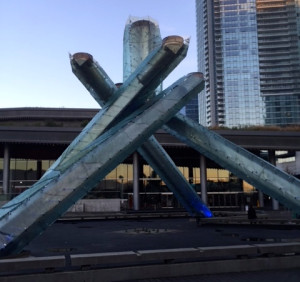
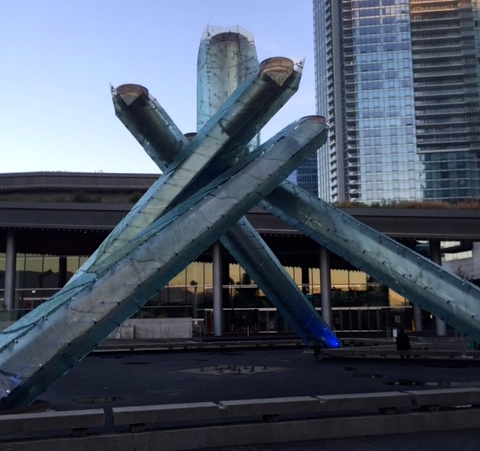
The flame is rarely seen at the Olympic cauldron along the Vancouver watefront.

The flame is rarely seen at the Olympic cauldron along the Vancouver waterfront.

There are few overt signs the Olympics were here nearly six years ago. A stop on the train from the airport to downtown has some reference to the Games, but my friends said all the Olympic Village housing is now condos.

Near the waterfront, in Jack Poole Plaza, is the glass and steel cauldron for the Olympic flame. It was relighted during part of the Sochi Games last year. It costs about $5,000 to light it for four hours, so it is mostly dark.

Seaplanes dot the harbor unlike any water city I’ve been too. It shows the common choice of transport to get to neighboring islands.

Lions Gate Bridge was completed in 1938.

Lions Gate Bridge was completed in 1938.

My friends live on the other side of the 77-year-old Lions Gate Bridge. I had to agree with their description of it – it’s like crossing the San Francisco Bay Bridge, except instead of being dropped into Oakland it’s more like Tahoe.

At the end of their street is a forest. While we didn’t do it, going up would have delivered us to Cypress Mountain where the Olympic snowboarding events were staged.
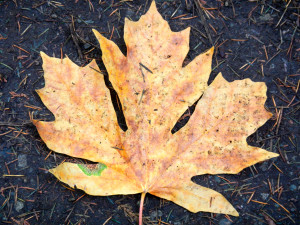
Canadian maple leaf

Canadian maple leaf

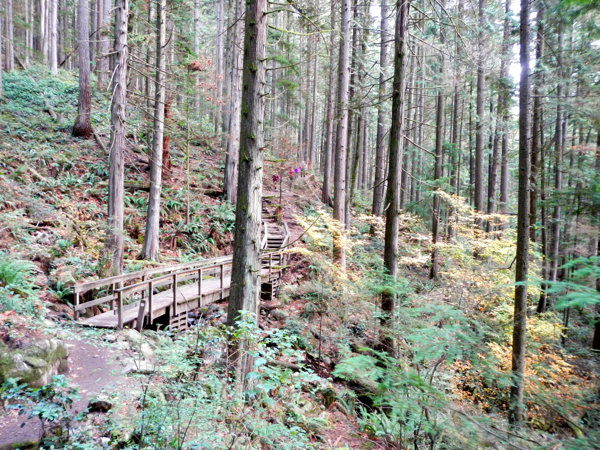
We went on a few walks/mini hikes in the region. One was the 2.4-mile round-trip trek to Quarry Rock from Deep Cove. This is a little town on what is called the North Shore. Walking through the woods it’s lush. It’s almost tropical.

Vancouver gets an average of 57.3 inches of rain a year. To put this in perspective, Sacramento averages 21 inches a year.
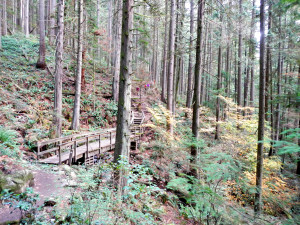
Beauty is everywhere on the way to Quarry Rock.

Views along on the way to Quarry Rock.

Beauty is everywhere. What is nice it that it isn’t super dense, so it’s possible to see the forest through the trees. Hemlock and Douglas fir are the predominant trees. And those Canadian maple leaves, they are huge – bigger than any I have seen in New England.

The end, well, it’s just stunning. The rock provides views of fjords that make this oasis of the world so captivating.
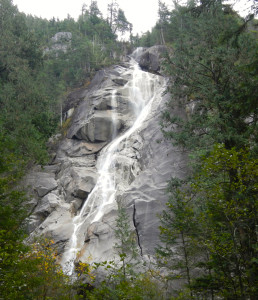
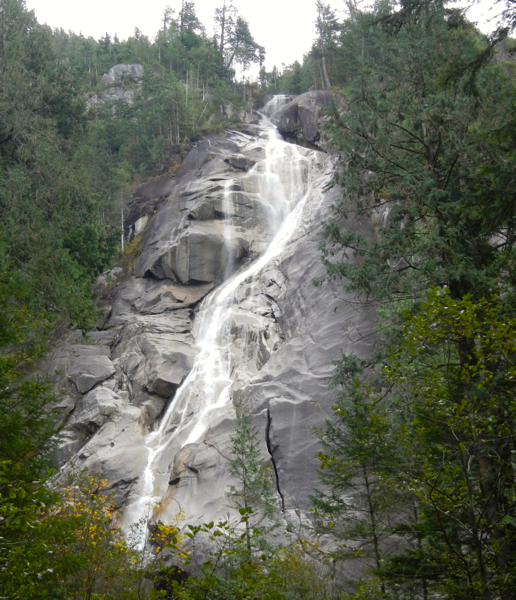
Shannon Falls

Shannon Falls

Another day we took a little road trip toward Whistler. We stopped in Squamish where Shannon Falls is located. The Sea to Sky Highway, which was overhauled for the Olympics, is worth driving on even without a destination.

The falls drop nearly 1,100 feet – making it the third tallest falls in British Columbia. It’s like a ribbon of white rushing water.

From here we could have hiked Sawamus Chief, but the brewery sounded better. It’s easy here to get distracted by good beer. It’s a nice reward after enjoying the outdoors.

Opinion: Using cannabis to beat cancer

By Steve Kubby​

Back in February 2012, I began preparing and using a cryogenic extract from fresh green cannabis plants. Not just any plants, but a medical strain that I have been breeding for the past 10 years that clearly had powerful medicinal benefits for me.

I had read a paper by Raphael Mechoulam, the discoverer of the most active ingredient in cannabis, tetrahydrocannabinol. In his paper, Mechoulam said that important cannabinoids are lost whenever cannabis is dried. That gave me the idea to make a full spectrum extract, using a cryogenic procedure I invented and my special strain of cannabis. I then took the resulting extract, kept it frozen, and then treated myself with a quarter teaspoon once each day.

Steve Kubby

Steve Kubby

On May 16, 2012, I suffered a mysterious and traumatic onset of violent vomiting. The attack lasted for four days and left me with severe ribcage pains and an inability to take more than a half breath. At the time I thought it was food poisoning, but since that event, all my cancer symptoms have ceased and it appears that this may have actually been the result of tumor necrosis, brought on by my use of this new form of cryogenically extracted cannabis medicine.

Apparently, the cartilage in my rib cage had been badly stretched by all the vomiting, creating an extraordinary level of discomfort. I could not sleep more than an hour and only then in a special position that did not push against my rib cage.

I conferred with my doctor, who diagnosed my issue as chondritis, an inflammation of the ribs’ junctions to the breastbone or sternum that causes chest pain. No broken ribs, but because it was cartilage, I was told it would take much longer than a fractured rib to heal. Even worse, he diagnosed me with first stage pneumonia as a result of the restricted breathing in my left lung. I’ve had pneumonia three times in my life and each time I had to be hospitalized, so this new development really disturbed me. Worst of all, my cannabis had zero effect upon the illness and I had to endure constant pain and nausea the entire time.

Then, I remembered the non-psychoactive CBD lozenges being patented and developed by my biotech research company, KPAL, and decided to give them a try. I had no idea if they would work since smoked cannabis had already failed me.

Within a few hours my pain level went from intense to mild. I could actually sleep in a bed. My lungs, kidneys and bowels quickly returned to normal function. Since then, I’ve been steadily improving on one lozenge a day.

I was so impressed with the relief I obtained from the CBD lozenges, that I wrote an article for Lake Tahoe News.

Once I began to improve, I went back to my doctor and asked him, “who vomits for four days nonstop?” It seemed strange to me because in the past whenever I vomited it brought relief. This was very different. Then I asked my doctor, “Why had all my cancer symptoms abruptly ceased after this event?” When I told him I thought my tumor had died off, he was skeptical, but the absence of any symptoms since then was clearly something that could not be ignored.

Of course I realized that extraordinary claims require extraordinary proof, so I decided to wait a year and see if my symptoms returned. They did not and I began to experience excellent health. It’s now been 3.5 years since this event and my health continues to improve. Recently, I took a lab test and was stunned to find out that my catecholamines in my blood have dropped from 10 times normal to normal. To the best of my knowledge, this is the first time in medical history that someone with adrenal cancer (malignant pheochromocytoma) has ever recovered from this terrible disease.

Steve Kubby is a resident of South Lake Tahoe.


What are Ted Ligety’s performance secrets?

By Bradley Stulberg, Outside

After his World Cup win on the Rettenbauch glacier in Solden, Austria, on October 25, American Ted Ligety confirmed he is still the fastest human down a slalom course on skis. The 31-year-old from Park City, Utah, is a three-time Olympian and the only man in U.S. history to win multiple gold medals in alpine skiing. He’s also won 25 World Cup races and is the owner of five World Championship crowns.

Ligety’s passion for mountain sports extends beyond the snow. He loves mountain biking and he co-founded Shred, an alpine gear company on a mission to “un-limit an athlete’s pursuit of fun through technological advances in engineering.” We caught up with Ligety upon his return from Europe to learn more about his habits for peak performance.

Read the whole story


‘Santa Dog’ available for free

Reno author Garrett Sutton is giving away 500 free copies of “Santa Dog: the Incredible Adventures of Santa and Denby” because he wants to share the magic of Christmas and reading with kids everywhere.

Santa Dog encourages children to read. It is targeted for ages 7 to 10.

Sutton, who has sold more than 850,000 books, is covering the shipping costs of the books. Only one book will be shipped per address, and the addresses must be in the United States. Each book is a teacher’s edition that comes with lesson plans teachers and parents alike can use to further improve a child’s reading and comprehension skills.

To get a free copy, just fill out the form online.