2 arrested, stolen items recovered in Truckee

Two Truckee residents have been arrested in connection with a string of burglaries.

A trailer full of new bikes was stolen from the front yard of a local shop owner on Nov. 21. It was located that evening near Alder Creek Road in Truckee.

Lisandro Rangel, 25, was subsequently arrested on charges of theft and possession of the stolen property. Rangel was also on parole for burglary and had an outstanding felony warrant out of Oregon. Truckee police officers said when he was arrested Rangel was in possession of methamphetamine, drug paraphernalia, and burglary tools.

All of the stolen bicycles were positively identified by the bicycle shop owner as belonging to him. The next day a Nevada County sheriff’s deputy located several more stolen bicycles still in boxes off of Prosser Dam Road.  These bicycles were also positively identified by the bicycle shop owner as belonging to him and returned to the owner.

During the investigation, officers developed additional information on other possible thefts in the area. On Dec. 1 officers served a search warrant at an apartment, locating numerous pieces of stolen property from recent auto and residential burglaries that have occurred locally. The owners of the recovered property have been identified and contacted.

Claudia Chavez, 27, was taken into custody on charges of several felonies including burglary, possession of stolen property and possession of a dangerous weapon.

— Lake Tahoe News staff report


California water conservation lagged in October

By Matt Stevens, Los Angeles Times

For the first time since California’s emergency drought rules took effect, the state failed to reduce its monthly water consumption by 25 percent, regulators said Tuesday.

The state cut its urban water use in October by 22.2 percent, compared with the same month in 2013, officials said.

That effort fell below the 26.1 percent savings in September and marks the only month that Californians have fallen short of their target since compliance became mandatory in June.

Read the whole story


Olympic Valley residents end bid to incorporate

By Kathryn Reed

Proponents to incorporate Olympic Valley have given up the fight to do so.

“All eight members of our board voted unanimously to withdraw our petition. Given the impasse with LAFCO combined with opposition by Placer County, plus stiff and heavily funded opposition from Squaw Valley Ski Holdings, we saw no way to continue moving forward,” Fred Ilfeld, board chair of Incorporate Olympic Valley (IOV), said in a statement Dec. 1.

The process to incorporate started in spring 2013. It was a reaction to the large-scale development proposed at the base of Squaw Valley ski resort, and a desire to have a louder voice and control in matters that affected the residents. The county seat is Auburn – where supervisors make the decisions.

Squaw Valley Ski Holdings, a subsidiary of KSL Capital Partners, runs Squaw Valley and Alpine Meadows ski resorts as well as the village at Squaw. In 2012, the company proposed a massive overhaul of the village that would include more housing, a water park and other features that residents balked at. Those plans have since been scaled back.

The company has spent at least a half a million dollars to stop incorporation.

“The decision by IOV to withdraw their petition for incorporation is a step in the right direction for the future of Olympic Valley. Creating a new town would have been a risky proposition, not just for the people and businesses of Olympic Valley, but for the community of North Lake Tahoe. We now have the opportunity to move forward in a positive way, and to work together as a cohesive community to maintain our mountain culture and have a dialogue on how we can join together in tackling some of the challenges and concerns that prompted this initiative,” Andy Wirth,president and CEO of Squaw Valley Ski Holdings and representative of Save Olympic Valley, said in a statement.

About 1,000 people live in what would have been the city of Olympic Valley. IOV wanted to take the issue of incorporation to the voters. There are about 560 registered voters.

Backers believe they have the financial wherewithal to be a viable city, citing data from the sate Controllers Office. However, the Placer County LAFCO board had to OK the idea before it could go to voters. That office has been adamantly against incorporation.

“Although IOV has suggested that the proposed town of Olympic Valley would be financially viable, the facts simply did not support that conclusion,” said Matthew Newman, co-founder of Blue Sky Consulting Group. “In their effort to show that the town could work financially, IOV proposed to capture all of the benefits of development in the form of higher tax revenues while simultaneously seeking to avoid the increased costs that new development would bring in the form of increased law enforcement services and more work for planners and the community development department.”

While this latest round is over, the larger fight for greater representation is not.

“Although the petition withdrawal marks the end of the current chapter of the incorporation effort, it introduces the possibility of the next chapter of community building and regional self-governance,” organizers said in a press release. “Hopes and expectations remain high that a broader community effort will compel Placer County to address the needs of North Tahoe region and respond to the call for more local input and autonomy. In this regard, IOV board members are open to sharing their recent experience with their neighbors and to exploring such a possibility for regional self-determination.”


Handbell ensemble to give free Tahoe concerts

Reno’s handbell ensemble Tintabulations will be performing in Lake Tahoe in December.

The group will be performing Dec. 12 at 11am at Hope Lutheran Church of the Sierra (930 Julie Lane, South Lake Tahoe) and Dec. 13 at 1:30pm at the Village Church (736 McCourry Blvd., Incline Village).

Entitled “I’d Like to Teach the World to Ring”, there will be more than 120 handbells and chimes playing music from several countries.

The concerts are free, though donations are accepted.


Daily dose of ecotherapy eases stress in kids

By Katie Arnold, Outside

Every few months my daughter’s public elementary school, like schools all around the country, practices emergency lockdown measures. “If there’s a bear outside, we go into our closet and turn off the lights,” my daughter, who’s 7, explained to me after the most recent drill. “We lie on the floor and put backpacks on our heads, all squished together. We’re not allowed to talk because bears are much stronger than people and can crash through the windows and get us. We have to stay in the closet for an hour until it’s safe.”

As a second-grader, my daughter and her classmates are still too young to know exactly what–or who—they’re defending against. Bears, of course, aren’t nearly as grave a danger facing school children as gun violence, as this fall’s deadly school shooting at Umpqua Community College in Oregon reminded us. The tragedy was the 295th mass shooting in the U.S. this year, on the 274th day of the year.

Even when school violence happens across the country to children and people we don’t know, the trauma affects us all, to varying degrees.

What we can do is help them cope and try to ensure that the recent spate of violence—and attacks that may occur in the future—don’t leave them with lasting emotional trauma. Among the common-sense strategies the Department of Interior recommends in the aftermath of a national tragedy: talking to your children about their fears, limiting their exposure to television and online news coverage, creating a safe environment at home, and resuming normal physical activities.

There’s another proven way to ease concerns and treat trauma: ecotherapy. That’s the term coined in the mid-1990s for using nature to promote psychological healing. “Nature therapies are being used very successfully to ease both emotional and physical trauma, and stress is one more form of this,” says Linda Buzzell, co-editor of the book “Ecotherapy: and a psychotherapist at Pacifica Graduate Institute in Santa Barbara.

Read the whole story


Court: Spanking a child is OK

By Bob Egelko, San Francisco Chronicle

Spanking one’s child does not amount to abuse that warrants judicial intervention, at least as long as the child is not seriously injured or endangered, a state appeals court has ruled.

California law authorizes “reasonable methods of parental discipline,” which can include “reasonable and age-appropriate spanking to the buttocks,” the Second District Court of Appeal in Los Angeles said Tuesday.

The court told a Juvenile Court judge to reconsider the case of a Los Angeles County woman who was ordered to undergo parental education and counseling after spanking her two young sons with her hand and a shoe.

Read the whole story


EDC wants input on services for seniors

The El Dorado County Health and Human Services Agency, Area Agency on Aging, in partnership with the Commission on Aging, is conducting a needs assessment survey of older adults in the community. This survey, Aging – Empowering New Horizons, will help identify needs and challenges faced by current and future seniors.

The survey results will also help the Area Agency on Aging in the planning process for senior services in El Dorado County that are part of the area plan submitted to the State.

Those who complete the survey will be asked about their experiences accessing services and resources in the county, problems or challenges they have faced related to aging or retiring in the community, demographic and other information. The online survey will run through Jan. 5.


Family of 6 rescued near Ice House Reservoir

By Sarah Heise, KCRA-TV

A father and his five children were rescued by the California Highway Patrol after becoming stranded in a wooded and snowy area of El Dorado County for hours, according to officers.

The family of six went on an off-road excursion about 8am Nov. 29 in the Ice House Reservoir area, but realized they were lost soon after.

The Elk Grove father named Ed called the CHP about 2:30pm and told them that his pickup truck had begun sliding toward a cliff, and that he had been holding the brake pedal with both feet for some time to prevent it from going over the edge, the CHP said.

Read the whole story


Nevada lawmakers not letting bankrupt fire safe council fiasco go without a fight with feds

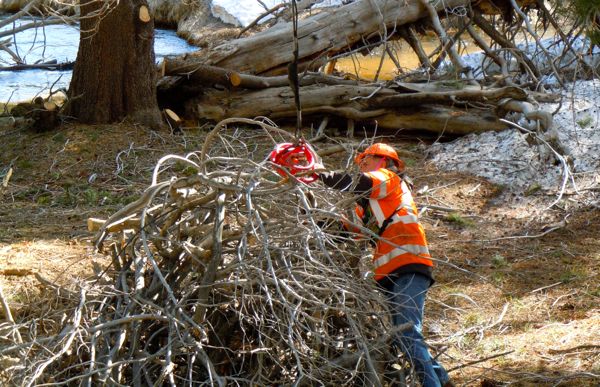
The tree removal project in 2011 at Lake Christopher in South Lake Tahoe got caught up the fire safe council money debacle. Photo/LTN file

The tree removal project in 2011 at Lake Christopher in South Lake Tahoe got caught up the fire safe council money debacle. Photo/LTN file

By Anne Knowles

CARSON CITY — Despite efforts by the Nevada Legislature to press the federal government for money, fire districts, contractors and some homeowners in the Lake Tahoe Basin remain unpaid for $3.4 million in fuels reduction work completed as long ago as 2010.

“It’s been over half a decade. It is absolutely absurd, just unbelievable what’s going on,” Nevada state Sen. James Settelmeyer, R-Minden, said Monday during a meeting of the Legislature’s interim committee that oversees the Tahoe Regional Planning Agency and Marlette Lake Water System.

The fuels reduction work was to be paid for through grants from the U.S. Bureau of Land Management and the U.S. Forest Service administered by the Nevada Fire Safe Council.

But starting in 2010 the NVSFC became slow to pay contractors and the U.S. Department of Agriculture’s Office of Inspector General investigated the group after receiving a tip in July 2011. Lake Tahoe News broke the story that summer.

The OIG released a report in January 2012 saying it found that the NVFSC inappropriately deposited money from multiple grants into a single bank account and recommended that all funds be frozen until NVSFC performed audits and demonstrated it was acting properly.

Eventually, NVSFC filed for bankruptcy and its case remains mired in the courts.

Michael Brown, fire chief for the North Lake Tahoe Fire District, testified at the Nov. 30 committee meeting saying that the fire chiefs of the Lake Tahoe Basin conducted their own investigation and found that NVSFC had used USFS money to pay for BLM-funded projects.

“No criminal activity was ever uncovered by the audits and investigations. They co-mingled the funds and paid out with grants that should have been paid out with other grants,” Brown told the committee.

The fire districts and the money owed each include Lake Valley Fire Protection District, $248,759; Meeks Bay Fire Protection District, $403,378; North Lake Tahoe Fire Protection District, $635,118; North Tahoe Fire Protection District, $379,666; and Tahoe Douglas Fire Protection District, $386,440.

More than a dozen contractors are owed, most for between $10,000 and $20,000 and one, Kimball Tree Service of South Lake Tahoe, for $100,015.

“We’ll survive,” said Brown, referring to the fire districts. “It’s the contractors not surviving. I got two calls just last week asking about the payments. One is out of business and the other is just hanging on.”

Still, the fire districts have suffered, too. Brown told Lake Tahoe News that while his firefighting and emergency response team is holding steady at 52 employees, he has had to reduce his fuels reduction team from 60 workers to 36.

During this year’s legislative session, the Nevada Legislature passed Assembly Joint Resolution 3, urging Congress to facilitate the release of the money.

The committee passed a motion Monday to send a letter to the state’s congressional delegation to update the interim committee on the funds.

“I support the letter,” Assemblywoman Robin Titus, R-Wellington, said. “But I am concerned sending letters is an exercise in futility.”


Opinion: Questioning EDC CAO’s past actions


By Larry Weitzman

Only five months into his tenure it is apparent interim CAO Larry Combs has firmly taken control of the county because the Board of Supervisors has all but conceded power to Combs. It looks as if the county has a new dictator. But are there problems developing as a result?

Before hiring Combs, the county was saddled with another interim CAO and still HR director, Pam Knorr. It is Knorr who brought Combs to this county to wreck his havoc. As with most recently hired high level county officials such as ACAO Kim Kerr, Knorr, interim IT Director Kelly Webb, and former CAO Terri Daly, background checks and a proper recruitment procedures were not followed. That now includes Combs.

Larry Weitzman

Larry Weitzman

Combs has already dictated to the feckless BOS a reduction in road maintenance. It has been one year and yet no plan to find a quality CAO has begun. And with Combs, the climate of fear has turned into a climate of horror. Important tasks haven’t been accomplished which will negatively impact the taxpayers, such as long overdue impact fee studies, yet not a peep from the feckless BOS.

Combs’ background is easily accessible on a Google search. In a reading of various newspaper articles it appears Combs had a major hiccup in 2004 for “retaliation” against the then auditor of Sutter County, Robert Stark, (retaliation was the word used by Stark) where Combs was the CAO for about the last 20 years. How did it happen?

Combs in 2004 presented to BOS of Sutter County a huge increase in pension benefits for county employees, including himself, by about 30 percent. Combs said it would cost Sutter County about $11 million. Unfortunately, Sutter auditor Robert Stark spoke up at the same BOS meeting and said the real cost would be almost double at about $21 million. Before Stark became the Sutter County auditor in about 1984 the CPA worked for the state Controller’s Office as a pension analyst. You could say Stark was a pension expert. But that didn’t matter to Combs and instead of going with the expert, the BOS went with what Combs wanted and the increased pension benefits went into effect. In 2004 Sutter County pension costs were about $1 million. Now they total almost $13 million. Unfunded liabilities grew from what Stark said it would be at $21 million to more than $120 million.

Guess who received the largest benefit from the pension change in Sutter County? It is a rhetorical question as the answer is Larry Combs. How much you ask? Combs pension went from about $120,000 a year to $188,000 a year, which he is currently collecting along with about a $14,000 annual pension from a short two-year stint as CAO of Merced County and $4,159 annual payment from the EDD. Those numbers are from 2014. And he probably still cries all the way to the bank with his EDC annual paycheck of about $92,000 for his half time job. For 2015, that will be more than  $300,000 a year, not counting his medical benefits.

But it’s what Combs did shortly after the Sutter BOS meeting on the pension issue that is disturbing. It was widely covered in the local Sutter County Press. Combs sought to have Stark indicted for misappropriation of funds when he transferred among other small book entries, about $366,000 to a water district, a transfer that Combs’ office signed off on and were approved by the BOS. These books entries also required an emergency declaration, something the CAO’s office failed to put before the BOS, which created a technical violation, which could have been cured with a later emergency declaration by the BOS. Stark said it was an accounting entry that was necessary to balance the books and no money ever left the county treasury. But that doesn’t stop Combs from his retaliation. How did Combs get the indictment? Was it because he had a friend in long time (since 1982) county District Attorney Carl Adams, who appeared to be in his hip pocket to do his bidding? Combs had many other issues with Stark such as when Stark questioned paying Combs’ travel expenses that were submitted after they were 4 years old. Isn’t that a standard business practice?

Not only did Combs set the DA’s budget, after 20 years Combs probably knew where the bodies were buried. He controlled the DA. After eight years of legal wrangling, going to the California Supreme Court twice, the case was thrown out. It was a specious case that cost the county of Sutter well over $1 million of taxpayer money in a totally failed prosecution, a county with an annual general fund budget of less than a $60 million (El Dorado County’s general fund budget averaged about $200 million over the last 10 years and currently sits at about $225 million). Combs during this period spent another $70,000 of taxpayer money having an outside CPA firm audit Stark’s work, only to find nothing. Combs obviously doesn’t care about taxpayers. The bogus misappropriation case cost Stark his health and over $400,000 in legal fees. Combs walked away from Sutter County in 2009 with a current $188,000 pension, plus COLA.

In the aftermath, Stark won two re-elections; finally retiring from his position as Sutter County auditor in 2014.

That leaves us with what happened to Comb’s friend, DA Carl Adams. Adams, a married man, was forced to resign from office in 2013 as a result of a well-publicized sex scandal when he was forced to admit after initially denying (lying about) he had an affair with a woman who was charged as an accessory in a murder case in Sutter County. Coincidentally that charged was dropped. Was that the first time for Adams or was this a pattern of behavior? Maybe Combs knows? Adam’s pension, also enhanced by the Combs engineered pension increase is an annual $142,895.64.

Larry Weitzman is a resident of Rescue.