Impostor performing substandard dentistry

South Lake Tahoe police officers are looking for a person who has been performing basic dental work without a proper dental office or license, and doing so in kitchen.

Officers said it appears this is a cash business that preys on the vulnerabilities of the poor.

Two local dentists told police that people have needed dental repair work after receiving this substandard dentistry.

Anyone with information is asked to call the police department at 530.542.6100.

— Lake Tahoe News staff report


Snippets about Lake Tahoe

trta·      The Tahoe Rim Trail Association has added transit info to its website.

·       Tahoe Regional Planning Agency’s draft Active Transportation Plan will be released for a 30-day public comment period on Jan. 15.

·      Jan Garcia has been hired as human resources director at Lake Tahoe Hard Rock.

·       Sierra Nevada College’s annual winter concert is Dec. 3-5, 7 each night at St. Patrick’s Episcopal Church, Incline Village. Cost is $20.

·       Check out this video to learn about frostbite.


Proper layers key to staying warm outdoors

By Joe Jackson, Outside

When layering for snowy adventures, think about quality as well as quantity. Start with the three-layer principle: up top, you’ll want a form-fitting baselayer, a warm-breathable midlayer, and waterproof outerwear.

The logic is simple. If you’re active, sweat is the enemy. Soak yourself and you’re going to get cold no matter how puffy your down jacket is. Layering gives you the flexibility to react to changing temperatures and exertion levels (chairlift versus a mogul run). The three-layer system wicks sweat, provides insulation, and keeps out the elements more effectively than a single layer or too many layers.

Note: If you already have a layering system that works, stick with it.

Read the whole story


One-of-a-kind trees shine at Tahoe festival


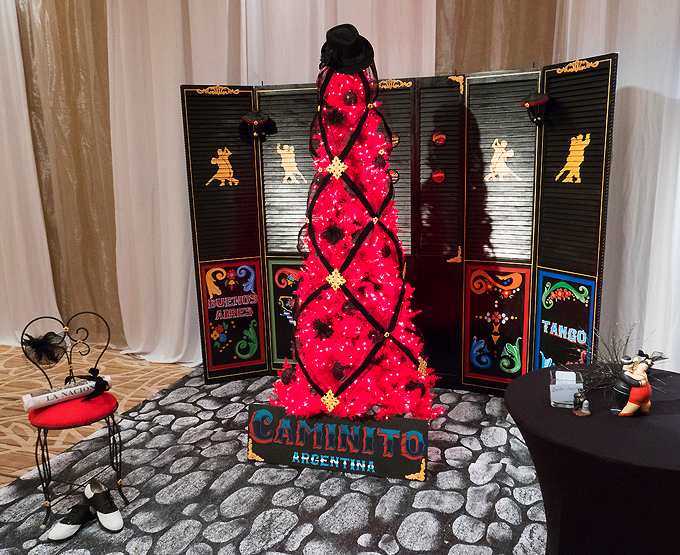
Tantalizing Tango by Belen Urrutia is the overall winner at this year's festival. Photo/Carolyn E. Wright/Copyright

Tantalizing Tango by Belen Urrutia is the overall winner at this year’s festival of trees. Photo Copyright 2015 Carolyn E. Wright

By Kathryn Reed

STATELINE – Imagination, creativity and artistry come together to capture the holiday spirit in mostly untraditional ways at the Barton Foundation’s Festival of Tree and Lights. This is because these are no ordinary evergreens.

Eleven trees have either been ornately or whimsically transformed from a barren (fake) conifer into a one-of-a-kind Christmas wonder.

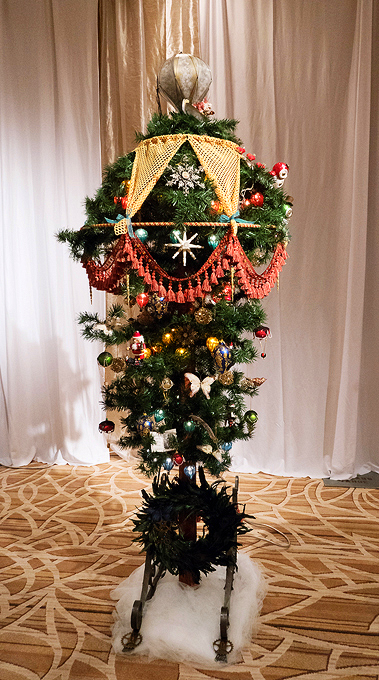
creativity award went to Jeri Oishi and the Enchanted Florist team for Steampunk Christmas. Photo/Carolyn E. Wright/Copyright

Jeri Oishi and the Enchanted Florist team won for creativity. Photo Copyright 2015 Carolyn E. Wright

Now in its seventh year, the festival is a showcase for designers to demonstrate their innovative ways to decorate a tree. Schoolchildren get in the act as well – but with much smaller trees. Barton employees show their originality with decorative wreaths.

The five-day festival has a variety of events for all ages, from a hospital for teddy bears to a station for writing letters to Santa to a fancy adults-only gala.

This is the foundation’s biggest fundraiser. All proceeds benefit the trauma center at Barton Memorial Hospital.

Untraditional is what captured the judge’s attention. Best of show in the designer category went to Tantalizing Tango by Belen Urrutia. This also won for being the most elegant.

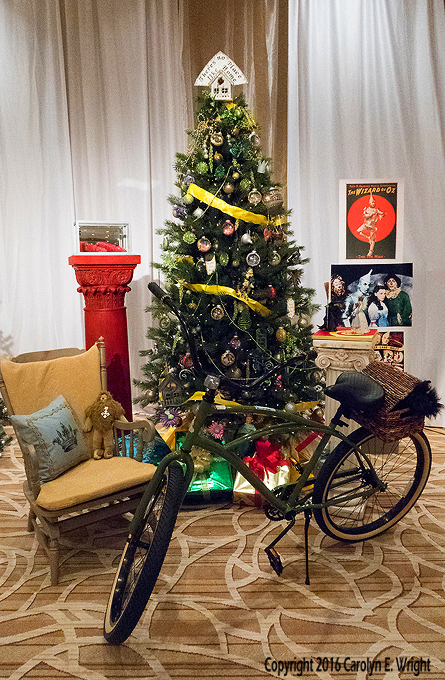
No Place Like Home by Cyndy Brown-Carlson is the winner of the best themed tree. Photo Copyright 2015 Carolyn E. Wright

No Place Like Home by Cyndy Brown-Carlson is the winner of the best themed tree. Photo Copyright 2015 Carolyn E. Wright

The red and black-themed tree stands out in the room. It’s not hard to envision a couple from Argentina doing the tango on the false dance floor surrounding the tree.

The creativity award went to Jeri Oishi and the Enchanted Florist team for Steampunk Christmas. An upside down tree is a definite rarity.

The best interpretation of the theme went to No Place Like Home by Cyndy Brown-Carlson. Hers was also one of the larger displays.

This take on the “Wizard of Oz” was replete with a bicycle and Toto, as well as ruby red slippers in a glass case.

Other winners were:

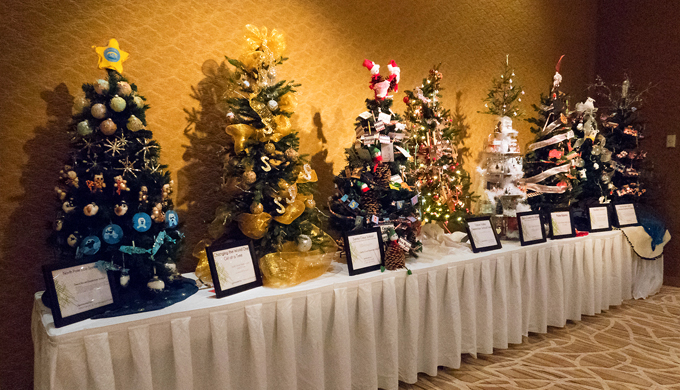
Most South Shore schools competed with classroom-made ornaments. Photo/Carolyn E. Wright/Copyright

Most South Shore schools competed with classroom-made ornaments. Photo Copyright 2015 Carolyn E. Wright

In the schools category:

·       Lake Tahoe Homeschoolers – best ornaments

·       Sierra House Elementary School – best use of theme

·       Lake Tahoe Homeschoolers – most creative.

Best Barton wreaths:

·       I’m Dreaming of a Wine Christmas by Barton Laboratory Department.

—–

Notes:

·      The festival runs through Dec. 6 at MontBleu in Stateline.

·      The schedule and details are online.


Opinion: Why some tragedies matter more

By Gregory Rodriguez

A terrorist attack on a familiar city can inspire a response among global observers not unlike that of motorists passing by a horrible car accident. We slow down to look, to try to understand what happened, see who was hurt, and wonder about the fate of the fallen. It isn’t blood and gore we’re after. It’s recognition. Are the victims like us? Could that have been me?

The horrible events in Paris inspired a round of global rubbernecking and then a sloppy debate over whether the Western world cares more about the victims in Paris then those in Beirut or Kenya and now Mali. Predictably that debate quickly evolved into one over race and ethnicity.

But there’s a deeper question to be asked here: How exactly does empathy work?

When the news of the Paris attacks hit, I was in a meeting in Washington, D.C., with a French-born publisher who quickly became anguished over the news. She grew up in Paris. Her daughter lives there now. In fact, her daughter frequents one of the targeted restaurants. While the events disturbed me, this French woman was clearly more pained. She was safe. Her family was safe. But the news invaded her consciousness in a way that seemed to affect her physically. At one point she sat down on the floor, hunched over, and stared gloomily at her smart phone.

It wasn’t until I learned that Nohemi Gonzalez, a 23-year-old Mexican-American from Southern California, had been killed in the attack that news of the massacre struck me on a more personal level. Nohemi was an American. Like me. She was a Mexican-American. Like me. She was from Southern California. Like me. Suddenly the horrible events that occurred 5,600 miles away seemed closer to home. What I had seen as tragic now felt sad.

A few days after the attacks in Paris, I drove down to Cal State Long Beach, the university Gonzalez had attended, to ask some students how her death had influenced their emotional response to this act of terrorism.

At first what I heard were reactions not dissimilar to mine. People ticked off certain aspects of their multi-layered identities that connected directly to Nohemi’s story, which, in turn, made them feel more deeply about the tragedy in Paris.

“All life is meaningful,” 23-year old senior Ernie Smith told me. “But I related to the events more when I found out she was a student at Cal State Long Beach. Then it really hit home.”

The distinction between generally caring and having that feeling really “hit home” is suggested in the difference between the origins of the words sympathy and empathy. Sympathy derives from the Latin and Greek words meaning “fellow feeling.” The word empathy came to English from the German word Einfühlung, which means something like “inner feeling” or “feeling into.” While often used interchangeably, empathy carries a more intimate meaning than sympathy and suggests that the subject understands and is capable of sharing an emotion with the object. Sympathy, on the other hand, implies a greater distance. In a nutshell, you feel empathy when you can imagine being afflicted by the tragedy in question, and sympathy when you cannot.

What 26-year-old senior Catherine Gillespie then told me explains further how identifying—then empathizing—with a victim of a tragedy can help place you, at least on some psychic level, closer to the incident.

“The band that was playing at the concert hall where so many people were killed was from Palm Desert, California,” Gillespie told me. “I’m from nearby Indio. If I had been in Paris that night, I would have gone to see them play.” In other words, her identification with the band enabled her to imagine suffering the fate of the concertgoers, which therefore made her feel for the victims more deeply. Her response also suggests that there is a strong connection between empathy and fear.

Before the Paris attacks, I would have told you that selflessness is at the core of caring. But after the events in Paris and listening to people’s reactions, I realize that whatever else empathy does for our psyches, it is also a form of self-preservation. I empathize with you, because what happened to you could happen to me. And that would be really horrible.

Gregory Rodriguez is the founder and publisher of Zócalo Public Square.


Why Americans dress so casually

By Roberto A. Ferdman, Washington Post

Look around you, and you’ll likely notice a sea of different outfits. You might see similar articles of clothing — even the same ones — worn by different people, but rarely do you find two pairings of tops, bottoms, shoes, and accessories that are exactly alike.

That wasn’t always the case, said Deirdre Clemente, a historian of 20th century American culture at UNLV, whose research focuses on fashion and clothing. Americans were far more formal, and formulaic dressers, not all that long ago. Men wore suits, almost without fail — not just to work, but also at school. And women, for the most part, wore long dresses.

Clemente has written extensively about the evolution of American dress in the 1900s, a period that, she said, was marked, maybe more than anything else, by a single but powerful trend: As everyday fashion broke from tradition, it shed much of its socioeconomic implications — people no longer dress to feign wealth like they once did — and took on a new meaning.

The shift has, above all, led toward casualness in the way we dress.

Read the whole story


Dead bear found in Meyers neighborhood

A dead bear was found in Meyers on Dec. 2. The cause of death is unknown.

The 2- or 3-year-old cub was not moving behind the house where it was located.

“We did not notice anything that resembled foul play. No blood, no gunshot wounds that we could see, just dead,” Tom Millham with Lake Tahoe Wildlife Care told Lake Tahoe News. LTWC is holding the bear until state officials retrieve it.

A game warden with the California Department of Fish and Wildlife Service is expected to arrive on the South Shore on Thursday. An official with the agency could not be reached late Dec. 2.

It will be up to the warden to decide what to do with the bear’s body and determine how the animal died.

— Lake Tahoe News staff report


NV Energy seeks to buy more solar power

By Kyle Roerink, Las Vegas Sun

The state’s largest power utility wants to add more solar to its portfolio.

NV Energy, which serves more than 1 million customers throughout Nevada, filed an application on Monday with the Public Utilities Commission to buy power from projects currently being developed by First Solar and SunPower in Clark County.

The power company hopes the PUC will approve a deal for it to buy a total of 129 megawatts, which would likely power the equivalent of more than 20,000 homes, from the solar companies.

Read the whole story


How El Niño affects the weather

By Brian Clark Howard, National Geographic

This year’s hurricane season is winding down. And as meteorologists predicted, there was above average activity in the eastern and central Pacific and less than usual in the Atlantic. The reason, also as predicted: a strong El Niño.

El Niño may have also contributed to October 2015 being the warmest on record, at 1.76 degree above the 20th century average for the month.

Now we’ll begin to see the weather phenomenon’s influence on winter storms and rainfall. But that doesn’t mean drought-stricken California can celebrate just yet.

El Niño is the periodic warming of water in the Pacific Ocean every few years. When it occurs, it means more energy is available for storms to form there. El Niño also affects wind shear, which is when air currents at a lower altitude blow in a different direction from winds higher in the atmosphere. Strong wind shear makes it harder for hurricanes to form.

Read the whole story


SLTFD Christmas truck schedule set

The following is the schedule for South Lake Tahoe Fire Department’s Christmas engine.

Dates, times, and areas are all subject to change due to any weather or emergency situation. The engine leaves Station 2 at 5pm.


Dec. 10 — Tahoe Keys/Venice

Dec. 11 — Glenwood

Dec. 12–  Tahoe Keys Boulevard/State streets

Dec. 13 — South Y/Tata

Dec. 14 –Barton/Tahoe Island

Dec. 15. — Al Tahoe Boulevard

Dec. 16 — Springwood/Bijou Pines

Dec. 17 — Main areas/Highway 50

Dec. 18 — Sierra Tract

Dec. 19 — Ski Run Boulevard

Dec. 20 — Heavenly Valley

Dec. 21 — Gardner Mountain

Dec. 22 — Stateline/Hotels

Dec. 23 — Stateline/Pioneer Trail

Dec. 24 — Lake Tahoe Boulevard.