Poll: Nev. Latino voters care about immigration, economy

By Megan Messerly, Las Vegas Sun

Latino voters are one of the fastest growing voting blocs in Nevada — 15 percent of the electorate in the state, up from 5 percent in 1994. Presidential candidates swooping into the state on both sides of the aisle have made plays for the Latino vote — hiring staff to specifically focus on the community, offering bilingual phone banks and playing up issues important to Latino voters.

Although Latino voters care a great deal about immigration policy, a recent study from the National Council of La Raza found that the economy was almost equally important for them heading into the 2016 election, said the organization’s deputy vice president Clarissa Martínez-de-Castro.

The poll, conducted for NCLR by Latino Decisions, surveyed Latino voters in early- to mid-November, zeroing in on voters’ thoughts. The survey looked at responses from about 1,200 registered Latino voters across the country and took an extended look at voters here in Nevada. (The poll was conducted from Nov. 4-14 and has a margin of error of 6.2 percent, meaning that 19 times out of 20, the survey would return results within 6.2 percentage points of those that were observed.)

Read the whole story


Nevada strives to increase ag footprint

By Megan Messerly, Las Vegas Sun

Food grows in unlikely places — sometimes in the middle of a desert.

Nevada had 4,137 farms and ranches in 2012, 1,000 more than in 2007. In 2014, the U.S. Department of Agriculture counted 4,200. Most are in the north, but 792 were in Southern Nevada.

State officials, chefs and many residents would like to see those numbers increase.

“When you look at food security, if the borders were sealed off for some reason, we have 2 percent food security,” Nevada Department of Agriculture Director Jim Barbee said, meaning that Nevada grows only 2 percent of the food needed to feed residents. The rest is trucked in from California and elsewhere.

Read the whole story


Foot of snow at lake level likely Thursday


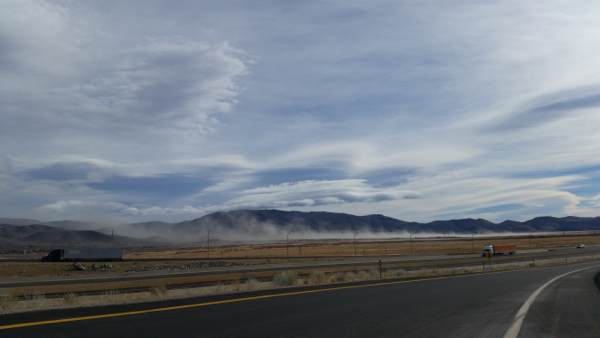
Wind churns up dust in the Washoe Valley on Dec. 9 in advance of a winter storm. Photo/Carolyn E. Wright/Copyright

Wind churns up dust in the Washoe Valley on Dec. 9 in advance of a winter storm. Photo Copyright 2015 Carolyn E. Wright

Get the shovels ready and the snowblowers filled with gas, because 7 to 14 inches of snow is forecast at lake level on Thursday, with those numbers increasing to between 12 and 18 inches on the western side of the basin. One to 3 feet are expected at elevations above 7,000 feet.

It will start with rain and then change to snow.

And then it’s not over. Another storm is coming Sunday.

“Two strong waves like this we have not seen in quite a while. It should be a good base builder,” Zach Tolby, meteorologist with the National Weather Service in Reno told Lake Tahoe News.

The impending storm has forced the California Tahoe Conservancy to reschedule Thursday’s open house regarding the Greenway Bike Trial to Jan. 7 from 6-8pm at Lake Tahoe Community College.

Wind will be a big component of the storm as it comes in tonight. Dirt was swirling in the Washoe Valley on Wednesday afternoon. That area, including Reno, is still under a wind advisory. The strongest winds will be overnight.

The Weather Service has issued a winter storm warning for the basin for the 24-hour period starting 4am Dec. 10.

— Lake Tahoe News staff report


Snippets about Lake Tahoe

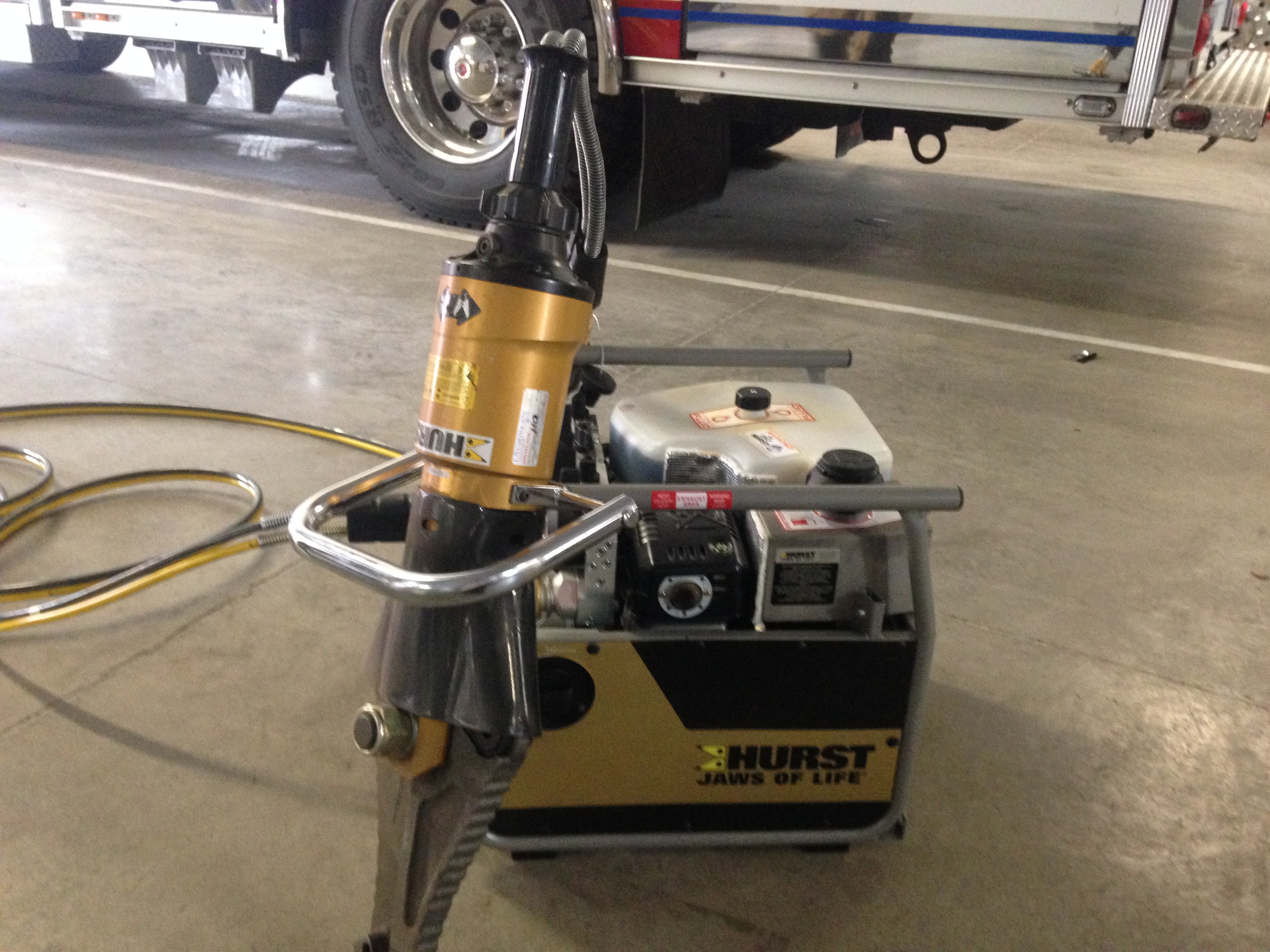
IMG_4400·      North Lake Tahoe Fire Protection District purchased $43,557 in equipment for vehicle extrication through the Nevada Office of Traffic Safety grant program.

·      AT&T is planning to expand the availability of ultra-fast Internet to Reno, but it won’t help Lake Tahoe or Carson City.

·  Lake Tahoe Golf Course in Meyers is hosting breakfast with Santa on Dec. 19 from 10am-1pm. Cost is $20 adults, $5 children under 13. There will be free photo with Santa from 10:30am-12:30pm. Any bringing a winter coat for a 13- to 19 year-old for Tahoe Turning Point will receive $5 off breakfast. RSVP to Kelly Higgins at 530.577.0788, ext. 3.

·       South Lake Tahoe has been named one of TripAdvisor’s top 10 Traveler’s Choice destinations on the rise.

·       Robert Swan, the first person to walk to the North and South Poles will be speaking Dec. 16 at 5:30pm at PlumJack’s in Squaw Valley. The presentation is called Leadership on the Edge: An Antarctic Perspective. Tickets are $5. They are available at New Moon in Tahoe City and Truckee, as well as the Melting Pot World Emporium in Reno.


Jones’ film features 2 decades of extreme riding

On Dec. 17 local hero and extreme snowboarding icon Jeremy Jones will present “An Extreme Snowboarding Retrospective,” which captures his two decades as a premier big mountain rider, and contains readings from his new book and a tribute to the role that the Lake Tahoe mountain community has had on his snowboarding.

This will be the second installment of Alpenglow Sports’ Winter Film Series. The event starts at 7pm at Squaw Valley’s Olympic Village Lodge. It is free.

Jones will showcase a blend of photos and video spanning more than 20 years of riding and the central role the Lake Tahoe mountain community has played in his development as a winter sports athlete. From first descents on steep spine lines in Alaska, to backcountry missions in remote mountain ranges across the globe, Jones will entertain with beautiful photography and edge-of-the-seat extreme helmet camera footage.

The Alpenglow Sports Winter Film Series is designed to inspire, motivate and educate.


Nev. gaming wants to influence presidential candidates

By J.D. Morris, Las Vegas Sun

Which presidential candidates would be willing to meet with casino employees? Which would take a stand against illegal gambling? And what would their approach be to the daily fantasy sports industry?

The American Gaming Association is trying to find answers to these and other inquiries by getting presidential candidates to fill out a questionnaire. The Washington, D.C.-based casino industry trade group said today that responses to the questionnaire will influence a voter guide it plans to distribute to some 1 million casino employees in 40 states.

As part of the association’s Gaming Votes initiative, the questionnaire marks another attempt to ensure casino-related issues are accounted for during the 2016 campaign.

Read the whole story


Letter: Timber Lodge helps at B&B

To the community,

It’s always exciting to have a brand new sponsor for Bread & Broth’s Adopt A Day of Nourishment program. By partnering with B&B, our AAD donors get firsthand experience hosting and serving a hot, nutritious dinner and seeing the impact that their donation of $250 has on those who struggle with food insecurity.

Bread & Broth was pleased to have Marriott’s Timber Lodge at Lake Tahoe host its first Adopt A Day of Nourishment on Nov. 30. Marriott’s Timber Lodge crew was manned by Gay Colvin, sales manager; Craig Chilton, finance manger; Alex Tenocelotl, accounting coordinator; Sheri Runyon, administrator; and Tinka Tang, assistant chief engineer.  They were a great group to work with.

Timber Lodge’s crew arrived in matching blue T-shirts and jumped right in with packing giveaway bags filled with food that would provide meals for later in the week and then ladled out a “killer” meatloaf, mashed potatoes, veggies and salad. They served over 128 meals and Chilton went above and beyond when he donned an apron and helped with the dishwashing duties.

Runyon summed up the teams response to their first experience as a B&B Adopt A Day sponsor when she wrote, “We, the Timber Lodge Team, feel proud and privileged to help out the Bread & Broth program serve our local Tahoe community.”

Bread & Broth would like to express our deepest appreciation to Marriott’s Timber Lodge at Lake Tahoe for hosting one of our dinners and their crew for taking the opportunity to help people in need.

To partner with B&B as a donor or sponsor, contact me at 530.542.2876 or carolsgerard@aol.com.

Carol Gerard, Bread & Broth


Cookbook focuses on Nevada agriculture

NVGrown cookbook coverNevadaGrown celebrates the launch of the cookbook “NevadaGrown A Year in Local Food” on Dec. 12 from 10am-4pm at Reno Provisions, 100 N. Sierra St., Reno.

The launch party will include recipe demonstrations and samples from featured chefs and farmers, complementary wine and coffee, a local produce giveaway and raffle prizes. Cookbooks will be available for purchase, with a portion of the proceeds benefitting NevadaGrown, a nonprofit organization that supports local agriculture.

The cookbook features 150 seasonal recipes from farmers, ranchers, professional chefs and home chefs and highlights the rich diversity of Nevada agriculture. The book is a two-year collaboration of NevadaGrown, RGJ Media, Wes tern Nevada College Specialty Crop Institute and Sundance Books, home of Baobab Press, which published the book.

“NevadaGrown: A Year in Local Food” will be available for purchase at Sundance Books, Reno Provisions and other local retailers after the cookbook launch at. For more info, go online.


Utilities may use drones to inspect power lines

By Mary Esch, AP

BLENHEIM, N.Y. — U.S. utilities see great potential in the use of remote-controlled drones to do the often-dangerous work of inspecting power lines and transmission towers but strict regulations have so far slowed adoption of the technology.

The remote-controlled devices make the work of linemen safer, more efficient and less expensive, according to the Electric Power Research Institute, which last month put on a three-day workshop to help nearly a dozen utilities choose the best machines for the job. Miniature helicopter-like drones, some equipped with cameras and other sensors, conducted demonstration inspections of transmission lines at a hydroelectric plant in the Catskill Mountains.

“We want to start using drones next spring when the inspection season begins,” said Alan Ettlinger, research and technology director for the New York Power Authority, who attended the workshop.

Utilities spend millions of dollars inspecting power lines, which are often in hard-to-reach places. The industry has been interested in the potential use of drones for years, but has been slower than European companies to adopt the technology because of U.S. regulatory restrictions.

While hobbyists can fly drones without certification, the Federal Aviation Administration requires special certification for commercial users. There are numerous conditions and limitations: The drone operator needs a pilot’s license, the aircraft must weigh less than 55 pounds, flights can go no more than 200 feet above the ground, and the drone must be operated in the pilot’s line of sight.

The FAA treats the operation of drones like any other aircraft for safety reasons and commercial operators face strict rules for getting permission to use them, according to the agency.

Seven U.S. utilities have been granted FAA approval for testing drone technology in 2015. Consumers Energy in Michigan conducted a series of tests over the summer using its own eight-rotor drone and unmanned aerial vehicles operated by outside vendors to inspect wind turbines, utility poles and transformers. The utility is part of a UAV task force under the Edison Electric Institute, the association representing U.S. investor-owned electric companies.

“When you look at the amount of information we can gain to make accurate decisions about our systems, and look at the cost and time savings, this is a huge opportunity for us,” said Andrew Bordine, a Consumers Energy executive.

The UAV system Consumers Energy uses starts at about $10,000, Bordine said. Sensor attachments range from a few thousand dollars to upward of $100,000, he said. But the cost savings are far greater than the investment.

Consumers Energy spends several hundred thousand dollars a year to send people out in the field to do mapping and measuring of its electrical system, Bordine said. A UAV equipped with “lidar,” the sensor technology used to develop driverless cars, can collect the same data and more at a small fraction of the cost and time.

“With wind turbines, you’ll have a couple of guys hanging off the blades by a rope a couple hundred feet in the air to do inspections visually, at a cost upwards of $10,000 per site,” Bordine said. “We can get the same results with a UAV for $300, without putting workers in danger.”

The Bureau of Labor Statistics reports 17 fatal work injuries among utility workers in 2014, but doesn’t specify the cause.

Other industries, including oil and gas drillers, pipeline operators, construction companies, and agriculture are also investigating the use of drones to make inspection and mapping tasks faster, more accurate, safer and less costly.

“The main advantage we provide in small unmanned assets is safety,” said Mark Sickling, chief pilot for Cyberhawk, a drone company based in the United Kingdom that does aerial inspections for utilities and the oil and gas industry. At the workshop, Sickling demonstrated Cyberhawk’s most popular drone, the eight-rotor G4 Eagle, which boasts “unprecedented flight and image stability.”

The work done by Consumers Energy over the summer could also be done with a drone flying without direct human control using instructions entered into an onboard flight computer if the FAA allowed it, Bordine said.

“The FAA is looking at how to revamp its requirements to make the technology more accessible to more companies,” Bordine said. “A goal for me would be to get FAA approval to work with a remote application and an autonomous flight.”


UV light may be invasive weed killer at Tahoe

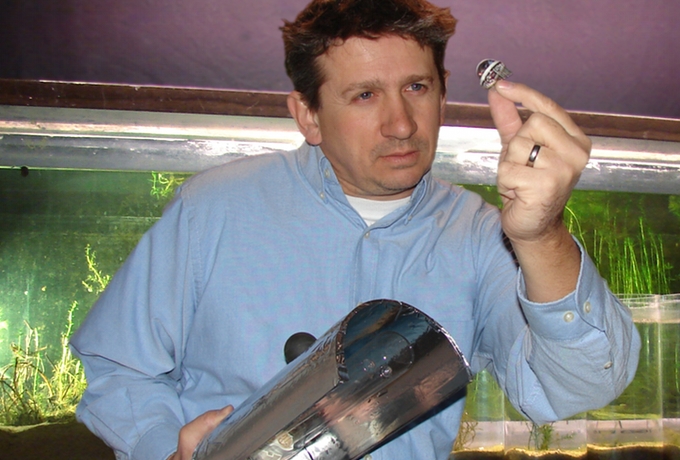
John J. Paoluccio uses weeds from Lake Tahoe to test his UV mechanism. Photos/Provided

John J. Paoluccio uses weeds from Lake Tahoe to test his UV mechanism. Photos/Provided

By Kathryn Reed

Ultraviolet light might be the answer to ridding Lake Tahoe of milfoil and other invasive weeds.

In controlled lab tests the box like device has been effective at killing various weeds that are not native to Tahoe and that have become a problem.

John J. Paoluccio, president of Inventive Resources Inc., is presenting his mechanism this morning to the Near Shore Agency Working Group at a meeting on the South Shore. Regulatory agencies will be there as well as scientists from UNR and UC Davis.

“TRPA is certainly open to looking at any and all potential approaches to fighting AIS at Lake Tahoe, but we will also look to our colleagues in the science and research community for their expert guidance to determine what tools will be the most effective on a location-by-location basis,” Tom Lotshaw with Tahoe Regional Planning Agency told Lake Tahoe News.

Paoluccio has used Lake Tahoe water and five species of plants from here to test his apparatus in his lab in the Central Valley. He’s been able to kill weeds at a depth of 30 feet.

“This technique can be turned on and off,” Paoluccio told Lake Tahoe News. “Herbicides are like a bowl. They will not be forgiving, especially if there is an accident.”

His firm’s main focus is water treatment devices, some of which are being used in the basin.

Paoluccio is hoping regulatory agencies will allow him to test his product before any chemicals are used in the lake. Lahontan Regional Water Quality Control Board has OK’d the use of herbicides in Lake Tahoe on a case-by-case basis.

Ultraviolet is John J. Paoluccio answer to eradicating invasive plants from Lake Tahoe. Photo/Provided

Ultraviolet is John J. Paoluccio’s answer to eradicating invasive plants from Lake Tahoe. Photo/Provided

The Tahoe Keys Property Association spent a quarter million dollars to study long-term eradication plans. Part of the plan includes chemicals. Today TKPOA spends about $400,000 a year on a harvester that in part spreads the milfoil through the channels of the South Lake Tahoe neighborhood, never really doing anything more than mowing the spindly weed.

When the Keys did its study Paoluccio’s technique was not part of the mix because it wasn’t available.

However, Paoluccio has been working with ultraviolet light for about 10 years. His first creation was to use the light in caves to kill microorganisms that were degrading the rocks.

He then saw the Keys’ harvester and figured there had to be a better way to do things in Tahoe. This led to the start of his experiment. As a second homeowner in Tahoe, the interest is also personal.

Paoluccio, who is a Lakeside Water District customer, has seen the milfoil choke that marina, just not to the extent of the Keys.

Lakeside Water District, which has 150 customers near the state line in South Lake Tahoe, is concerned any chemical application at the Keys would negatively impact its water supply. All of Lakeside’s water is drawn from the lake.

“What we are trying to do is slow down, if not stop permanently, the effort that is going on at the Keys to use herbicides,” Andy Engelhardt, vice president of Lakeside Park Association, told Lake Tahoe News. His group wants to be the test site for Paoluccio’s creation.

Paoluccio said to treat Lakeside Marina with his device it would take about 30 days, 10 hours a day.

The light damages the DNA and cell structure of the aquatic invasive weeds. This stops reproduction and eliminates the weed in a few days.

“The UV light is basically burning the plants,” Paoluccio said.

A patent on the mechanism is pending.

It can be applied either by dropping a box like device that resembles how an umbrella works over the infested area or using a mat. The latter would be good to reach under docks.

Paoluccio said noise could be used to deter fish from that area so the light would not affect them. With the shield over the light, it would not be reaching beyond the designated area.

Before a pilot project were to be implemented Paoluccio said he would need to secure funding to build the appropriate mechanism.