EDC supervisors intend to sue auditor-controller

Updated: On Dec. 10 at 3:10pm with county counsel comments.

By Kathryn Reed

El Dorado County Board of Supervisors voted unanimously this week to sue a fellow elected official, Auditor-Controller Joe Harn.

At issue is payment of $169,859 in developer mitigation fees to Diamond Springs-El Dorado Fire District. This is not a new issue, but is actually several years old.

Joe Harn

Joe Harn

Harn believes it would be illegal for him to release the funds based on the county not performing its nexus studies in a timely manner and an appellate court decision that came out this fall. If Harn is correct, anyone who paid the fee could personally sue him as well as the county if he were to pay the money.

The county believes the court decision is not a factor and that the check should be written, and has told Harn to do so. Harn continually refuses to. That is why the board took the action on Dec. 8.

Before Tuesday’s vote Harn had already retained a private attorney. Neither Harn nor his attorney was at the meeting, which was in Somerset instead of Placerville.

Harn on Nov. 15 asked in writing for a deputy county counsel to be assigned to assist with the matter in order to get it resolved. That has never happened.

“They ordered me to transfer some money. I said I need a more robust legal opinion before I transfer the money. I haven’t gotten one yet,” Harn told Lake Tahoe News on Dec. 9. “In order to sue me they need to establish written legal arguments as to specifically why I need to do this. That is what I have been asking Robyn Drivon for for a long time.”

Drivon told Lake Tahoe News, “How many written legal opinions does he need? It has been asked and it has been answered. This is an issue driven by facts. He has been provided all the facts.”

Neither Brian Veerkamp, chair of the Board of Supervisors, nor Sue Novasel, who represents Lake Tahoe on the board, returned a phone call.

Drivon said she hopes conversations between her office and Harn’s continue so litigation can be avoided. She doesn’t have a hard date as to when she will call off talks, but said she is hoping for resolution in the next few weeks.


SLT’s censure of Conner challenged in court

By Kathryn Reed

JoAnn Conner is seeking legal action to have the censure imposed by her City Council colleagues be overturned. She is also asking to have a court rule that the ban on her speaking to city staff is illegal.

Her attorney, Jacqueline Mittelstadt, on Dec. 9 filed the paperwork in El Dorado County Superior Court in South Lake Tahoe. An administrative writ and complaint for declaratory release were filed, with the city expected to receive the paperwork on Friday.

The City Council, anticipating the filing, has called for an emergency closed session meeting for Dec. 11 at 2pm to discuss the matter. The council will likely have to hire outside legal counsel because City Attorney Tom Watson would be a witness in the case. This may mean altering the budget to contend with the unexpected litigation.

JoAnn Conner

JoAnn Conner

Watson did not return a phone call.

Mayor Wendy David said she had not seen the court filing and therefore could not comment.

Mittelstadt, who at one time was the city attorney for South Lake Tahoe, said the main issues at stake involve censure, Conner’s ban from talking to city staff, and the right to public records.

Her first allegation is that the censure imposed Oct. 19 is unconstitutional and that it violated city protocols.

“No. 1 they need to follow the law. If nobody does, there is no accountability. There needs to be accountability,” Mittelstadt told Lake Tahoe News. “If we don’t do this, they will never change their behavior.”

She believes how the city went about imposing the censure is not legal.

In September City Manager Nancy Kerry put out the mandate that Conner not be allowed to talk to staff because she was allegedly creating a hostile work environment and that some employees had filed grievances against the councilwoman.

Mittelstadt said no proof of these grievances has ever been shown to Conner. She cited cases where all of this information would not be protected under the personnel umbrella, as the city contends it is, and that some emails should be public record and that other personal information could be redacted.

Plenty of examples can be found as to when Conner acted unprofessionally – with the Dec. 7 City Council meeting an example. The way she interacts with people and then expects her business to be treated differently than others was on full display Monday. But none of this is illegal.

Members of boards she has been on and others she has worked with as a council member have cited publicly their inability to work with her. While her behavior may be offensive, it has not been proved to be illegal.

According to Mittelstadt, the city hasn’t even proved Conner’s behavior is hostile as defined by law.

The city claims Conner has left a paper trail of her abusive nature. Lake Tahoe News through the Public Records Act obtained emails between Conner and Kerry. There is nothing provided in those emails that points to Conner being particularly difficult nor were they offensive.

While the city in the past has claimed Conner was creating a hostile work environment, Mittelstadt says that is not the case.

“They are willy-nilly preventing a public official form engaging in free speech,” Mittelstadt said.


Snippets about Lake Tahoe

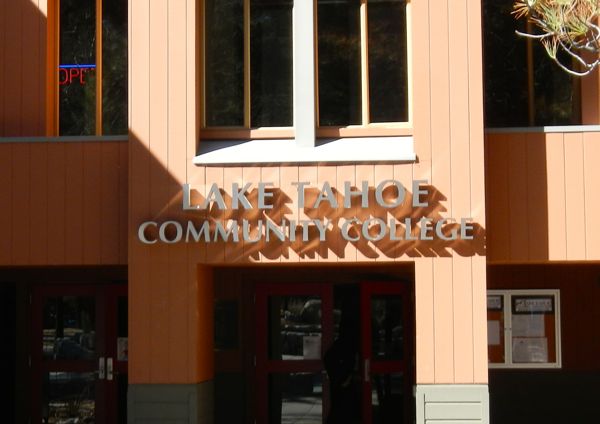
ltcc·       Lake Tahoe Community College will be closed from Dec. 18-Jan. 3. Winter quarter classes begin Jan. 4.

·       Tahoe Regional Young Professionals at the Winter White fundraiser raised more than $4,500 for Live Violence Free.

·      Tahoe Regional Planning Agency has created the Environmental Improvement Program Project Tracker, which is online.

·       The nonprofit SOS Outreach partners with local schools and agencies to introduce youngsters to skiing and snowboarding. For more info, contact Theresa Papandrea at theresa@sosoutreach.org.

·       Homewood Mountain Resort is partnering with Project MANA. Passholders who bring in five or more canned or dry good food items to the guest services office from now until Dec. 25 will receive $10 on their resort charge. Non-passholders who bring in five or more canned or dry good food items will receive 30 percent off the daily lift ticket rate Monday through Friday, non-holiday.


S. Lake Tahoe not playing around with recreation

By Susan Wood

Let’s be honest. You’d have to be living under a rock to not know what’s important to South Lake Tahoe residents and tourists.

Recreation. Recreation. Recreation.

So, the city – which is now all over recreation — is hoping you won’t be living under a rock as it launches a series of four input-gathering meetings to talk about what to do with the South Lake Tahoe Recreation Complex. The site features a main building that by most standards is as old as dirt at four decades.

In a town that worships ways to play and get the blood pumping, the state the structure is in is unacceptable. It’s cold, dingy and energy inefficient – costing the city more than $170,000 a year just to heat and light it. And it leaks. Lauren Thomaselli, who runs the site, had to place trash cans in the gym to catch water dripping from the roof.

The men's bathroom reflects the age of the facility. Photo/LTN file

The men’s bathroom reflects the age of the facility. Photo/LTN file

“This building has outlived its use,” city Parks and Recreation Commissioner Pete Fink told Lake Tahoe News after this week’s first meeting that brought out about 40 people to share their diverse ideas. The next gathering facilitated by planning consultant Greg Tonello is scheduled for February. Tonello plans to feature sketches of predominant themes.

Fink seemed as pleasantly surprised by the turnout as the prospect of wild-eyed ideas for the recreation-oriented site.

“We could have a SnowGlobe inside,” he said referencing the three-day outdoor music festival.

Earlier, Fink had mentioned to the group the idea of perhaps treating a new building on the site as a focal point in town for routine gathering places and for events.

“The one thing we’re lacking in our town is a hub,” he said Dec. 8. “We might want to take this opportunity and make it our town center.”

Fink admitted that now’s the time for those who are passionate about recreation to dream big with a “pie in the sky” attitude and through time what’s been deemed for years in government circles as “the scoping process” will weed out what’s secondary and elevate what’s primary.

Ideas abound in respect to what to build and what to consider when the infrastructure goes into place.

They include: a multi-sport complex, indoor soccer facility, bouldering wall, zero-energy pool, therapy tub, spa, arts gallery, kitchen, café, gymnastic center, racquetball and badminton courts as well as a place for the U.S. Ski Team and promising Olympians to train.

The mood of those who showed up resembled kids at Christmas.

Retaining a swimming pool is a priority with many people. Photo/LTN file

Retaining a swimming pool is a priority with many people. Photo/LTN file

City Assistant Public Works Director Jim Marino and councilmembers Wendy David and Austin Sass listened in as the attendees spanning three generations from a junior in high school to seniors seeking a hang out in their autumn years shared their goals.

Teenager Jordan Deas, who sat in the front row, urged the city to make a place for youth.

“Kids are looking for activities,” he said.

Local arts guru Robert Schimmel suggested the theme expand into the arts as a “connected component” and use display areas to promote local artists.

“I don’t know if we want a facility to be all things to all people, but the arts can be a real add-on as practically everything can be done with an eye to art,” he said.

“We need this facility so bad for so many reasons,” South Lake Tahoe Ice Arena operator Van Olson said.

Olson added he’s enjoyed success at the rink since he’s had “to run it as a business.” He advised the city to do all it can to woo the locals who volunteer and make up team sports.

Marino also reminded the group of locals to keep in mind what keeps the city’s facilities going.

“As much as we want a facility for us, we want to build a facility to drive tourism,” he said.

The thought shared by Fink: “If it’s a great place to live, it’s a great place to visit.”

Think sales tax and transient occupancy tax dollars.

A few ideas ranging from grants and taxes to a rich donor and a public-private partnership floated around informally about how to pay for such a venture, but nothing concrete. The council has had no formal discussions about the matter. The new South Tahoe Middle School track was built under a nonprofit financial structure.

Marino cautioned that while dreaming big is a noble goal, the reality is the group of ambitious endorphin seekers may have just spent $25 million with shared ideas in one meeting alone.

“If we make it so big, we’ll never build it. We might have to temper it,” he said.

The city staffer reiterated what he heard that a “pool component is huge” from many who came out to share their thoughts.

Marino was deadpan serious when he talked about how motivated he and his fellow public works staffers are to making things happen because the city’s recreation “train is rolling right now.” He explained that after years of working on storm drains they’re ready to dive into something above ground and prominent that the citizenry is likely to support.

“If we want to see a new recreation center on this site, we need to show up at meetings,” he said, as if speaking to those who weren’t there. “We’re tired of working long and hard on projects that get shelved.”

And don’t forget maintenance. For example, the city buys about 13,000 rolls of toilet paper just for Lakeview Commons.



Emergency car kit could save your life

By Joe Jackson, Outside

The emergency we’re most likely to encounter this winter has nothing to do with a superstorm, nuclear attack, or apocalyptic volcanic eruption. It’s more likely to take place in your car. And when you slide off the road or your ride breaks down, the right gear can mean the difference between life and death.

We spoke with Joel Stevens and Mark Puhaly, owners of Forge Survival Supply, to talk about the gear that belongs in your vehicle this winter. The men also run two successful survival blogs, and co-authored “Everyday Survival Kits: Exactly What You Need for Constant Preparedness”, which dedicates an entire chapter to emergency car kits.

Before you switch on the ignition, you’ll want to take a few practical measures. First, communicate your travel plans to friends and family, says Stevens.

Read the whole story


North Shore marrying adventuring and beer drinking

By AC Shilton, Outside

After a long bike ride, it’s natural that your mind shifts into beer mode—time to relax! In anticipation of that post-workout appetite, one of Lake Tahoe’s tourism bureaus has commissioned an interactive map to help steer you from the trails to the nearest watering holes.

It’s called the Ale Trail, and it’s essentially a beer-drinking outdoorsman’s dream itinerary planner: Pick an activity—hiking, road and mountain biking, and paddling are all included—choose a trail, and the Ale Trail Map will ensure there’s a frosty pint somewhere near the finish.

To be clear, no new trails in North Lake Tahoe were blazed during the creation of the Ale Trail; it’s simply an organization of trails that abut great bars, breweries, alehouses, and taverns. The map does, however, highlight some of Tahoe’s lesser-known trails.

If you check out the map, you’ll notice that most routes suggest an outdoor activity and then a single bar as a destination.

Read the whole story


Anticipated storm closes DCSD lake schools

Zephyr Cove Elementary and Whittell High schools are closed today.

The district office said this is because of “concerns about afternoon blowing snow, snow accumulations and safe travels from school.”

In Tahoe Truckee Unified School District all schools are open except for Donner Trail Elementary/Donner Summit.

All other districts/schools at the lake are open as usual on Dec. 10.

— Lake Tahoe News staff report


U.S. share of forest products declining globally

By Sarah Farmer, Southern Research Station

Although the United States leads the world in production and consumption of forest products, the U.S. share of the global forest products market has declined precipitously since the 1990s.

The declines are a result of decreases in U.S. construction and paper manufacturing, according to a new study by U.S. Forest Service Southern Research Station (SRS) economists recently published in the Journal of Forestry. The study evaluated the extent of U.S. declines as compared with those of other major producing countries from 1961 to 2013.

The U.S. global share of industrial roundwood peaked at 28 percent in 1999. By 2013 it was 17 percent.

“The declines are related to a combination of cyclical factors and long-term trends,” says David Wear, SRS economist and lead author of the study. “The decline in solid wood products output is linked to low construction levels, while the decline in pulp, paper, and other wood products is connected to the offshoring of U.S. manufacturing and growth in electronic media.”

In the period from 1960 to 2000, an average of 1.5 million new homes were built in the U.S. each year. A return to this level would bring the U.S. share of the global forest products market back up to prerecession levels of 22 to 24 percent. Allowing wood to be used in taller and larger structures would further expand the market for wood products. Industry groups – as well as the White House Rural Council – are encouraging the use of wood in tall buildings.

However, long-term trends in general manufacturing and the paper market will probably keep the U.S. market share from returning to the peak level of 28 percent. In particular, the paper sector is unlikely to recover to its 1990 levels.

The findings indicate that although government and industry decision-makers are not powerless in the face of changes outside the sector, options for interventions to slow or reverse the declines in production are limited, and it seems unlikely that most long-run trends can be interrupted.

“However, the overall timber supply in the U.S. has grown in the last several decades,” says Wear. “In the longer run, the strong resource endowment and expanded timber supply could be the groundwork for growth of the U.S. market share.”


Opinion: When Muslims admired the West and were admired back

By Nile Green

Is it right to talk about friendship in a time of hatred? More specifically, is it right to consider Muslim affection for the West when, from Boston to Paris to perhaps San Bernardino, Muslims appear to be saying we hate you?

Security analysts have looked at the social profiles of the terrorists in London, Madrid, Paris, and Boston, and there is no clear pattern of poverty, no pattern of poor education, no pattern of training in terror camps. But it’s clear to me, as a historian, that what the murderers have in common is a narrative.

It is a story they share in which the West has always oppressed Muslims, in which the West is inherently against Muslims. I’ve traveled to the Muslim world every year for 25 years, and have heard that narrative a thousand times. Like most acts of political violence—from Nazism in the 1930s to Serbian nationalism in the 1990s—Islamist violence claims justification through stories of oppression.

It wasn’t always that way. In my research on the earliest Muslim encounters with the West, I discovered a journal written in Persian by a young student who, with five fellow Iranians, came to the London in the early 1800s. The diary reveals that Muslims certainly lived peaceably in the West in the past—they admired the London of Jane Austen, and moreover, were admired there in return. Their story offers a counter-narrative to the founding myth of Muslim (and non-Muslim) neo-cons that Islam and the West are irreconcilable.

Finding Mirza Salih’s diary felt like unearthing a lost testament to coexistence.

Salih came to England with the others to learn the advanced sciences—engineering, medicine, and chemistry. He wanted to bring knowledge back to his home country. At the time, Iran was trying to defend itself from invading Russians. Reaching London in the fall of 1815, Salih and his fellow students first struggled to make sense of the culture. Women went unveiled and mixed freely with men; moreover, women received education and wrote books that men both read and admired.

Through their own curiosity and the good will of their hosts, the young Muslims came to understand, and admire, this strange land – with not a single mosque in the whole country. Rather than regarding the Christians as their enemies, the students saw them as people from whom they might learn, morally and politically, as well as scientifically.

One of the most moving scenes in the diary occurred when the students made a kind of feminist pilgrimage to pay respect to the novelist and social reformer Hannah More, the high-minded rival of Jane Austen. As the author of numerous books—some of them huge bestsellers—she seemed the epitome of the England that Salih called the vilayat-i azadi, or “land of freedom.” The students praised her learning and library; she gave them signed copies of her books, which they promised to print when they returned home.

On another occasion, they passionately discussed the parallels between Christianity and Islam with the Unitarian minister Lant Carpenter, whom they begged to found a Sunday School for the poor children of his parish. They saw the value of a Christian education and of Christian values. England’s charity schools were one of the things that most impressed Salih.

This year we’ve been bombarded by stories about people killed in the name of Islam. Even I have personal stories to share about the violence I witnessed across the Muslim world, from Morocco to Yemen and Afghanistan. But there are enough books about that. There also need to be books about the friendships that are the other half of the historical record. Salih’s story can reassure Westerners that Muslims are not inherently opposed to their way of life; and it can show Muslims how their learned forebears admired and respected Western norms. As a historian, all I can hope to do is show how such coexistence was, and still is, possible.

Nile Green is professor of history at UCLA and founding director of the UCLA Program on Central Asia. He is the author of “The Love of Strangers: What Six Muslim Students Learned in Jane Austen’s London” and has written numerous books on the history of Islam.


20 people own as much wealth as half of all Americans

By Joshua Holland, Nation

The 400 richest Americans now have more wealth than the bottom 61 percent of the population, a report released last week by the Institute for Policy Studies (IPS) reveals.

According to “Billionaire Bonanza: The Forbes 400 and the Rest of Us,” just the 20 individuals at the top of the pile—a group that could fit into a Gulfstream G650 luxury jet, according to the study’s authors—now control more wealth than the bottom half of the population. That’s 152 million people living in 57 million households.

And there’s a stark racial divide at the top. The 100 richest households own more assets than the entire African-American community (there are just two black people on the Forbes 400 list, one of whom is Oprah Winfrey). And just 182 individuals on the Forbes list have more assets than America’s entire Hispanic population.

But Chuck Collins, director of IPS’s Program on Inequality and the Common Good and a co-author of the report, tells the Nation that their study likely underestimates the scope of the problem. “Our wealth data is a tip of the iceberg,” he says. “So much wealth among the über-rich is hidden, either in offshore tax havens or in these loophole trusts where money is shuffled around into private corporate accounts or between different family members, and it disappears from taxation or any sort of oversight or accountability. So there’s a huge amount of escaped wealth that isn’t even factored into these statistics.”

Read the whole story