Fundraisers pocket nearly half of charity donations

By Teri Sforza, Orange County Register

Commercial fundraisers – the middlemen who hit you up for charitable donations by phone, mail and outside the supermarket – often pocket a big chunk of the dough. And it’s only growing: They extracted a stunning 90 percent more money from do-gooders in 2014 as they did in 2013, according to the California Attorney General’s latest numbers.

These often for-profit firms raked in $687.7 million from well-meaning Californians last year. They gave a bit more than half of it to charities – $371.9 million – and kept $315.8 million for themselves.

Most kind-hearted donors have no idea that so much of their donation gets waylaid, and some in the fundraising business have harsh words for the charities that employ them.

Read the whole story


Sinatra’s old Tahoe casino to reopen in May

By Dale Kasler, Sacramento Bee

Frank Sinatra’s fans celebrated his 100th birthday earlier this month, but there was something missing from the festivities: the Cal Neva Resort & Casino, the Lake Tahoe hotel once owned by the legendary entertainer.

The Cal Neva, closed for renovations since September 2013, was scheduled to reopen on the late singer’s 100th birthday, Dec. 12.

But construction has taken longer than expected, and now the venerable north shore property is set to reopen next May 26 with an international hotel operator in charge.

Read the whole story


Economy, snow increase Reno airport traffic

By Marcella Corona, Reno Gazette-Journal

Reno could see the largest crowd of holiday visitors since the recession with the local airport wrangling in a high number of travelers comparable to that of Burning Man, an airport spokesman said Wednesday.

The Reno-Tahoe Airport expects to see more than 12,000 travelers through Jan. 3, spokesman Brian Kulpin said. That means full seats in and out of the airport, he said.

“It looks fantastic,” Kulpin said. “We are looking at terrific numbers this holiday season, probably the best numbers we’ve seen in six to seven years.”

Read the whole story


What would Jesus drink?

By Oren Liebermann, CNN

The Bible is full of references to wine: Noah gets drunk on it after the flood. Jesus turns water into wine. It is praised in Ecclesiastes and reviled in Proverbs. Yet nowhere in Scripture is the type of wine identified — until now.

A small but growing number of wineries in Israel and the West Bank are trying to recreate the wine of the Bible, combining ancient grape varietals with modern science to identify and produce the wine consumed thousands of years ago in the Holy Land.

“People are very enthusiastic about drinking a wine that King David had on his table, or for the same matter, Jesus or any other biblical figure,” says Eliyashiv Drori, who started a boutique winery near his home in a West Bank settlement. “They all grew here, they all lived here, and they all ate and drank wine here.”


His research has identified 120 varieties of grapes unique to the region, of which about 20 are suitable for making wine.

Read the whole story


EDC loses lawsuit regarding apartment project

El Dorado County lost a court decision this month involving the El Dorado Hills Town Center Apartments project.

The Board of Supervisors approved the project on Dec. 2, 2014.

Citizens for Sensible Development in El Dorado Hills filed a lawsuit saying the supervisors abused their discretionary authority when it ignored the El Dorado Hills Specific Plan, the El Dorado Hills Area Planning Advisory Committee, and the El Dorado County Planning Commission, in addition to violating the county’s general plan, density limits, design standards, and the requirement to mitigate impacts to infrastructure in approving the Town Center Apartments project.

“Legal mulling will need to occur in the near future,” Robyn Drivon, El Dorado County’s chief attorney, told Lake Tahoe News. She likely won’t be doing the mulling since she is living the job early next month.

The Dec. 18 court ruling in part says, “The court finds that the project at issue is a new project, not a modified one and that substantial evidence exists to support a fair argument of significant traffic environmental impacts due to the project, despite existing or planned mitigation. The court also finds that in approving the project, respondent has not proceeded as required by law under CEQA.”

— Lake Tahoe News staff report


Field needs to be built to keep SnowGlobe

By Kathryn Reed

The rush this fall to have the documents signed to create the Community Play Consortium had a lot to do with money. Money in regards to the three-day SnowGlobe music festival that starts Tuesday, money from Lake Tahoe Community College’s facility’s bond, money to be spent on future fields and the potential income they will generate.

When talks of creating the consortium started early this year it was uncovered that the deeds for the properties from more than a decade ago were never recorded properly. That has all been rectified.

The parcels include the old Caltrans right-of-way that the California Tahoe Conservancy obtained after the transportation department decided not to build a freeway there, South Lake Tahoe land, LTCC property and a floating acre Lake Tahoe Unified School District has contributed on which a baseball field will be it. It’s all in the area of the current community play field in South Lake Tahoe. The old Caltrans parcel is now the city’s. Half of the playfield is on it, the other half of the playfield is owned by the college.

The city and LTCC transferred easements to the consortium, not land ownership. Therefore the consortium controls the use of that field and the future fields that are planned to be adjacent to the current one.

The college and city make up the consortium. LTUSD chose not to be a part of it.

 This will be the last year SnowGlobe uses LTCC's synthetic turf field. Photo/Carolyn E. Wright/Copyright

This will be the last year SnowGlobe uses LTCC’s synthetic turf field. Photo Copyright 2014 Carolyn E. Wright

“SnowGlobe was always part of the conversation because the college, city and school district wanted to make sure whoever owns the land that they were properly insured,” City Manager Nancy Kerry told Lake Tahoe News.

Alcohol sales at SnowGlobe have been one of the issues for the parties to deal with.

“It was not a major factor, but it was a factor,” LTUSD Superintendent Jim Tarwater told Lake Tahoe News as to why the district is not in the consortium. “I am not a real supporter of SnowGlobe, but will do whatever the community supports.”

The district, as is the norm for most K-12 institutions, has a zero tolerance policy for drugs and alcohol on its grounds.

The college has policies in place as well regarding alcohol, but they are more flexible. To get around alcohol being sold on campus the beer booths have always been on city property – on the asphalt on the mountain side of the set up. The consumption, well, that is allowed everywhere.

“If the field is under the control of the consortium, under the easements our laws don’t apply. That is part of the reason why we were working so hard when we realized the easements were not in effect so SnowGlobe could take place this year,” Kindred Murillo, LTCC president, told Lake Tahoe News.

Chad Donnelly, SnowGlobe founder and promoter, did not return LTN’s call asking how big of a deal alcohol sales are for the three day event that runs Dec. 29-31.

“We don’t have restrictions about selling alcohol. What the city can’t do is make money off alcohol sales,” Kerry said. “The nonprofits that work with SnowGlobe get a percentage of the alcohol sales.”

This will be SnowGlobe’s final year on the field where Lake Tahoe Community College’s soccer team plays. That is because the college intends to replace that field next year at a cost that is likely to exceed $1.6 million.

The money in part will come from the college, and part from the city via Measure S/R dollars.

“We are looking at a pretty high quality synthetic field. We are looking at some of new techniques that do not off gas,” Murillo said. “That is under investigation, to put in the latest and best and most safe field. That field is so hard and off gassing. We believe it really needs to be replaced as soon as possible.”

Talks are under way with Tahoe Regional Planning Agency to begin work before the May 1 opening of construction season so the field would be ready for the soccer teams in August.

In order to invest bond money into the new field, the college has to have “reasonable use of that property for the life of the investment,” Murillo said. This means the college’s athletic department and all other programs get first priority on that field.

The city next year is looking to build a field next to it that will be sod. It would be a secondary field and where SnowGlobe could go in the coming years. The city and Donnelly have a three-year contract, with this being year two.

Donnelly was asked what he thought about having to come up with a new configuration, but he chose not to answer that question.

The college is likely to provide parking lots for future SnowGlobes. As to whether anything else would be used is up for negotiation.

“Once we build the new field it will be a better location (for SnowGlobe),” Kerry said. “It will be natural. You can’t damage it like synthetic.” She envisions the possibility of vendors and foot traffic going on the new synthetic field.

That will be up to the consortium – not the college. And right now it’s just the college and city in the consortium.
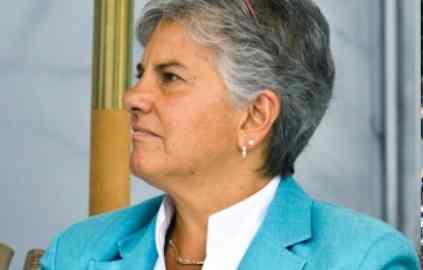


Opinion: Plenty to be proud of in Tahoe

By Joanne Marchetta

People at Lake Tahoe are working together like never before to restore our environment, revitalize our economy, and improve our communities. We saw significant progress all around the lake this year. And our progress is sustainable with continued partnership and collaboration, so critical to tackle the many challenges and important decisions on our horizon.

This summer, the Tahoe Regional Planning Agency and city of South Lake Tahoe adopted the Tahoe Valley Area Plan, a community vision to enhance the environment and revitalize the area around the Y intersection of highways 89 and 50. This vision for the gateway to the South Shore is the second area plan adopted in the city and is already attracting interest.

Joanne Marchetta

Joanne Marchetta

Barton Memorial Hospital is making major facility upgrades with the planned construction of a health and sports performance center on its medical campus. An investor is working on plans to overhaul the factory outlet stores at the Y, turning the tired shopping plaza into a contemporary retail center with a stage for events, community patio, and bike and pedestrian trails linking to the Tahoe Valley green belt envisioned for the area.

South Lake Tahoe also opened Bijou Bike Park, an impressive community undertaking. The bike park shows the kind of recreational assets we can build working together and is proving to be tremendously popular with residents and visitors.

Working with California State Parks, California Tahoe Conservancy, and U.S. Forest Service, El Dorado County completed the second phase of its Sawmill Bike Path, finishing an important 3-mile link between South Lake Tahoe and Meyers for bicyclists and pedestrians.

Placer County and Caltrans are nearing completion of the Kings Beach Commercial Core Improvement Project. This large project is calming traffic, improving pedestrian and bicyclist mobility, and beautifying Highway 28 in that North Shore commercial hub. It is also significantly reducing the amount of stormwater pollution that washes off the highway into the lake.

Douglas County Board of Commissioners passed a 5-cent gasoline tax increase that will help pay for future transportation improvements, showing how local communities can take action. North Tahoe transit providers are consolidating and working on funding plans to create a free-to-rider transit system with more frequent service for Truckee, Tahoe City, Kings Beach, and Incline Village. Similar initiatives are underway on the South Shore. By staying focused, we can achieve a seamless, free-to-rider regional transit system.

California officials awarded nearly $9 million in grant funding this year for several upcoming Tahoe projects. The funding will help California Tahoe Conservancy build another phase of the South Tahoe Greenway Shared Use Trail, help South Lake Tahoe improve bicycle and pedestrian access and safety around the South Tahoe Middle School, and help Tahoe Transportation District build the Highway 89/Fanny Bridge Community Revitalization Project in Tahoe City.

Budget enhancements California and Nevada approved this year provided TRPA and its partners with the funding needed to sustain Tahoe’s watercraft inspections. This frontline program is critical for protecting our lake from invasive species and it is working: No new invasive species have been detected in Lake Tahoe.

With the inspection program funded, we are now turning our focus to controlling or eradicating the aquatic invasive species already in Tahoe before they can do any more harm to its environment and world-class recreational opportunities. A science-based roadmap for invasive species control projects that researchers at UNR released this year will guide that initiative.

The U.S. Senate and House of Representatives have moved forward on the Lake Tahoe Restoration Act of 2015. The bill would continue the federal government’s important investment and leadership at Tahoe, helping pay for projects to clear hazardous fuels from our forested public lands and protect our lake from the harm of invasive species.

The Fixing America’s Surface Transportation Act, a five-year, $305 billion federal transportation bill Congress and President Obama enacted this month, includes language that will steer additional funding to Lake Tahoe for roadway improvements and enhanced transit service.

We are making significant progress at all levels and on all fronts and we have much to be proud of at Tahoe. But we have much more to do and continued partnership and “epic collaboration” will be critical to sustain our progress to restore our environment, revitalize our economy, and improve our communities. By working together we are making a real and meaningful difference.

Joanne Marchetta is executive director of the Tahoe Regional Planning Agency.


Study: Poor kids already a year behind at age 4

By Roberto A. Ferdman, Washington Post

Wealthy parents aren’t just able to send their kids to top pre-schools—they can also purchase the latest learning technology and ensure their children experience as many museums, concerts and other cultural experiences as possible. Low-income parents, on the other hand, don’t have that opportunity. Instead, they’re often left to face the reality of sending their kids to schools without having had the chance to provide an edifying experience at home.

That might sound foreboding if not hyperbolic, but it’s a serious and widespread problem in the United States, where poor kids enter school already a year behind the kids of wealthier parents. That deficit is among the largest in the developed world, and it can be extraordinarily difficult to narrow later in life.

This is one of the key takeaways from a new book about how United States is failing its children. The book, called “Too Many Children Left Behind”, is written by Columbia University Professor Jane Waldfogel, a long-time researcher of poverty and inequality. And it will force almost anyone to reflect on the impact of unchecked inequality on children.

Read the whole story


Letter: Meyers thankful for community’s support

To the community,

On behalf of the Meyers Community Foundation, we would like to sincerely thank a number of people and organizations for their assistance in making this year’s Meyers tree lighting celebration the best one yet.

This event would not have been possible without the support of Sierra-at-Tahoe Resort, Rise Designs, Tahoe Journal, CalStar, California Conservation Corps, Lake Valley Fire Protection District, California Highway Patrol, El Dorado County Sheriff’s Office, Dylan Thomas, Misty McBride, Tahoe Daily Tribune, Lake Tahoe TV, Sunrise Ski Rentals, Downtown Café, John and Delaney Rice, Lauren Lindley Photography, Fast Prints, and Ryan Palmer.

Thanks again for a magical night. We will continue our efforts to bring more opportunities and projects to “Make a Better Meyers” and look forward to your participation.

Sincerely,

Rene Brejc, president Meyers Community Foundation


Reno airport files complaint against U.S. Customs

By Jane Kane, Reno Gazette-Journal

Officials with the Reno-Tahoe International Airport are decrying the treatment of a 15-year-old girl by U.S. Customs and Border Protection agents at the airport when she flew to Reno from Guadalajara, Mexico in November and was allegedly detained, questioned for five hours and unable to contact family.

On Monday, Reno-Tahoe Airport Authority board chairman Andy Wirth and Marily Mora, the president and CEO of the airport, said they filed a formal complaint on Dec. 16 against the federal agency. Both Wirth and Mora said they have been hearing from the local Hispanic community since this summer about alleged mistreatment by federal border protection agents at the airport, which added the direct flight to Mexico about a year ago.

“She was coming to visit her family for the holidays and was treated in a way that should not be tolerated in our airport, our community or in our country,” Wirth said of the 15-year-old girl, whose identity is being withheld by the airport because she is a minor. “The treatment she received was appalling on every level and deeply disconcerting.”

Frank Falcon, a spokesman for Customs and Border Protection in San Francisco, said he had not heard of the situation in Reno until a reporter called him on Monday.


Airport officials noted that they have been receiving complaints of the customs process in Reno since late summer this year.

Read the whole story