Opinion: California has issues with its neighbors

By Dan Walters, Sacramento Bee

There’s always been an incongruity about California’s having three disparate states on its borders.

As California’s population exploded during the 20th century, those of Nevada, Arizona and Oregon remained relatively sparse and today, collectively they have just one-third of California’s population.

Dan Walters

Dan Walters

The economies of California and its neighbors developed differently, but they once shared a generally conservative political outlook. Recently, however, we’ve shifted to the left, and Oregon has as well, while Nevada and Arizona still lean rightward.


The California-Nevada relationship has been particularly frosty. There’s a long-running conflict over environmental issues around Lake Tahoe, for instance. And in recent months, Nevada has tweaked California by seemingly luring away California firms.

Read the whole story


Even legal pot use a reason to be fired

By Rebecca Greenfield, BloombergBusiness

With marijuana legalization spreading state-by-state across America and the U.S. government backing away from aggressive enforcement of federal laws, employers in the Weed Belt have begun to reconsider their substance abuse policies. They’re making them tougher.

In a first-of-its-kind survey, the Society of Human Resource Management asked 623 HR managers in states where marijuana is legal about their drug policies. Unsurprisingly, getting stoned at work is largely frowned upon, SHRM found, regardless of legality. But it turns out a large chunk of workplaces also won’t hire employees who smoke on their own time.

Marijuana is legal for recreational use in the nation’s capital and four states. In almost 20 others, it’s allowed for medicinal purposes. More than half of the HR managers surveyed by SHRM said they have policies, or plan to implement them, restricting employment of marijuana users. Some 38 percent said they will flat-out reject users even if they claim medical reasons. Six percent said their policy will exclude only those who partake for fun.

Read the whole story


Cops out in force targeting DUI drivers

Fifteen people were arrested in El Dorado County on charges of driving under the influence of alcohol or drugs
from 12:01am Dec. 18 through midnight Dec. 23.

This is the second weekend of the National 17 Day DUI Mobilization DUI-Saturation Patrols that will be conducted
in Placerville, South Lake Tahoe and the unincorporated areas of El Dorado County. All regularly
scheduled traffic and patrol officers will focus efforts at stopping and arresting DUI drivers during their normal
shifts.

CHP is conducting its maximum enforcement period beginning Friday tonight and ending at midnight Dec. 27.


Regulators deal a blow to Nev. rooftop solar industry

By Daniel Rothberg, Las Vegas Sun

With no discussion, state regulators this week voted unanimously to slash the value of credits rooftop solar customers earn for generating excess energy.

The three-member Public Utilities Commission adopted a proposed order that would reduce by 75 percent the amount NV Energy pays customers for excess power their solar panels produce and change the flat service rate for customers with solar panels. The changes in so-called net metering policies would phase in over four years, starting Jan. 1.Regulators deal a blow to rooftop solar industry

The PUC’s position in the order is that higher bills are being paid by nonsolar users to provide “hidden subsidies” for those with solar panels. The PUC said solar users in Southern Nevada have been getting an annual subsidy of about $623. The subsidy for solar users in Northern Nevada is about $471.

Read the whole story


Environmental cancer causing agents subject of talk

Learn more about environmental cancer causing agents from Roderick Turner, doctor with Barton Pathology, as he gives a talk Jan. 13.

Cancer is caused by changes in a cell’s DNA. Some of these changes may be genetic or inherited from parents, while others may be caused by outside exposures, which are often referred to as environmental factors. Environmental factors can include a wide range of exposures, such as:

  • Lifestyle factors (nutrition, tobacco use, physical activity)
  • Naturally occurring exposures (ultraviolet light, radon gas, infectious agents)
  • Medical treatments (radiation and medicines including chemotherapy, hormone drugs, drugs that suppress the immune system)
  • Workplace exposures
  • Household exposures
  • Pollution.

The free talk is from 6-7pm in the board room at Lake Tahoe Community College.


Drinking coffee tied to lower risk of death

By Kathryn Doyle, Reuters

In a 10-year U.S. study, people who drank coffee regularly were less likely to die of many causes, including heart disease and diabetes, than those who didn’t drink coffee at all.

The more coffee study participants consumed, the lower their risk of dying, and decaf drinkers showed a similar pattern.

“Coffee contains numerous biologically active compounds, including phenolic acids, potassium, and caffeine,” said lead author Erikka Loftfield of the National Cancer Institute in Rockville, Md.

Read the whole story


Snippets about Lake Tahoe

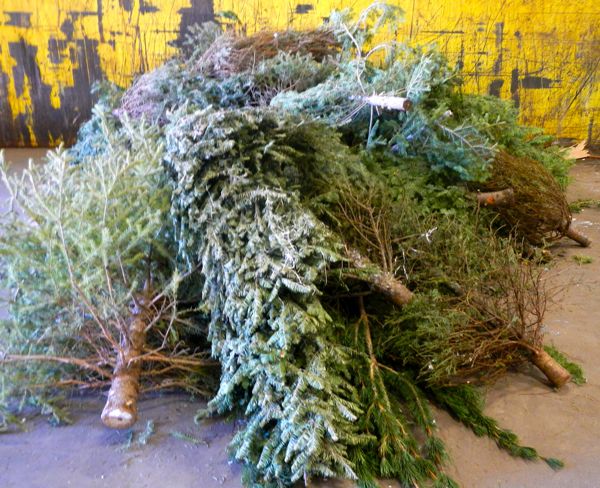
trees·       Since 2001, more than 300,000 Christmas trees have been recycled throughout Nevada.

·       Placer County Public Health Officer Robert Oldham has been appointed to California’s Tobacco Education and Research Oversight Committee.

·       Douglas County Library in Zephyr Cove will be close Jan. 1.  The library will resume its regular schedule Jan. 2 at 9am.

·       Tahoe Maritime Museum is having an open house Dec. 28 from 3-5pm in Tahoe City. RSVP to info@tahoemaritime.org.


EPA wants toxic Nevada mine on Superfund list

By Scott Sonner, AP

Fifteen years after U.S. regulators started assessing damage and health risks at an abandoned Nevada copper mine, the Environmental Protection Agency is moving to add the contaminated site to its Superfund National Priority List, according to documents obtained by the Associated Press.

Rural neighbors of the World War II-era mine that has leaked toxic chemicals for decades won a $19.5 million settlement in 2013 from companies they accused of covering up the contamination — some of it radioactive — near Yerington about 65 miles southeast of Reno.

The EPA sent a letter to Gov. Brian Sandoval this week announcing the agency’s intention to place the mine on the list of the nation’s most polluted sites to “mitigate exposures that are a substantial threat to the public health or welfare or the environment.”

Nevada has opposed past EPA proposals to list the site based on fears about the impact on property values, as well as any precedent that could be set by federal intervention in the mining-friendly state that is the world’s sixth-biggest producer of gold.

But earlier this year, the Nevada Division of Environmental Protection estimated it would cost $30.4 million to address only what EPA considers the most immediate health and safety concerns, and the state has been unsuccessful in obtaining financial assistance from those responsible for the damage.

Under the Superfund listing scenario, the EPA would cover 90 percent of the costs.

“Without an identifiable private source of funding, the only mechanism to make federal funding available is to add the site to the NPL,” said Jared Blumenfeld, the EPA’s regional administrator in San Francisco, using the acronym for the Superfund’s National Priority List.

“If we do not receive a written response from the state by Jan. 29, we will assume that Nevada is in agreement with EPA and will proceed with proposing the site for addition to the NPL,” he wrote in the Dec. 22 letter obtained by AP.

Aides to Sandoval had no immediate comment.

The class-action lawsuit filed in 2011 accused Atlantic Richfield Co. and its parent company, BP America Inc., of “intentionally and negligently” concealing the extent of uranium, arsenic and other pollutants leaking into their drinking water wells from the mine covering 6 square miles of land owned partly by the U.S. Bureau of Land Management.

Atlantic Richfield acquired the property in 1977 from Anaconda Copper, which built the mine in 1941.

Previous owners left behind 90 million gallons of acidic solution that continues to threaten the groundwater, Blumenfeld said. That’s equivalent to the amount of liquid it would take to cover about 80 football fields, 10-feet deep.

In 2008, a U.S. Labor Department review panel upheld a whistleblower claim by ex-mine cleanup supervisor Earle Dixon who said the Bureau of Land Management illegally fired him for speaking out about the risks in defiance of local politicians who tried to muzzle him.

Peggy Pauly, a Yerington minister’s wife, helped organize efforts to demand additional cleanup and filed the lawsuit joined by about 700 past and present neighbors.

“She’s the real hero in all of this,” said Steven German, a New York-based attorney who represented the residents.

“This is an important next step in getting this massive old mine cleaned up,” he told AP Wednesday. “It is going to cost a fortune.”

Anaconda produced 1.7 billion pounds of copper from 1952 to 1978 at the mine in the Mason Valley, an irrigated agricultural oasis in the otherwise largely barren high desert. The EPA determined the uranium was produced as a byproduct of processing the copper and that the radioactive waste was initially dumped into dirt-bottomed ponds that — unlike modern lined ponds — leaked into the groundwater.

EPA studies showed 79 percent of the wells tested north of mine had dangerous levels of uranium or arsenic or both that made the water unsafe to drink, including one a half-mile away with levels more than 10 times the legal drinking water standard.

At the mine itself, wells tested as high as 100 times the standard. Although the health effects of specific levels are not well understood, the EPA says long-term exposure to high levels of uranium in drinking water may cause cancer and damage kidneys.



Book chronicles the real story behind Winnie-the-Pooh

By Siobhan Starrs, AP

LONDON — Lindsay Mattick’s great-grandfather was on his way to fight in World War I when he bought a bear cub he named Winnie, inspiring author A.A. Milne to create the timeless character Winnie-the-Pooh. Now, Mattick has written a new children’s book chronicling the real-life story behind the bear.

Mattick, 37, wanted to tell her young son the peculiar tale and wrote “Finding Winnie: The Story of the Real Bear Who Inspired Winnie-the-Pooh.” The book was published in November — just weeks before the 90th anniversary on Thursday of the first time Milne used the name Winnie-the-Pooh in print.

“‘Finding Winnie’ is a story that I have had in my head for a long time,” Mattick told the Associated Press with a warm smile that reveals her passion for this very personal project. “I thought a picture book would be an amazing way to share my incredible family story with my child.”

The family history goes like this: Her great-grandfather, Lt. Harry Colebourn of Canada, bought an American black bear cub from a hunter while Colebourn was on his way to fight in World War I in 1914. Colebourn, a veterinarian, raised the female bear and named her after his home city, Winnipeg — or Winnie for short. He took Winnie on the long journey by train and ship to his training camp in England.

The story came to light in the late 1980s, when another regiment was incorrectly linked to the bear, which by then had been made famous by Milne’s classic childhood tales. Mattick’s grandfather wanted to set the record straight.

“He said, ‘No, actually that was my Dad’s bear, that was his pet,’ and at that point, he pulled out his father’s diaries and photographs from the war, and started to really share the story publicly,” Mattick said.

She is now retelling the story for a new generation. Taking inspiration from her family’s archive of photos of Colebourn and Winnie, Mattick teamed up with illustrator Sophie Blackall to create historically accurate drawings that capture the rare bond between the soldier and the bear cub.

But a war zone is no place for a pet. So when Colebourn was sent to the front lines in France, he left Winnie in the care of London Zoo.

Visitors quickly saw that this bear was unusually gentle and kind — qualities later reflected in Milne’s writings. Children were even allowed into her enclosure, something no zoo would consider today.

“She became a star attraction,” Mattick said. “She had a lot of visitors because of her very friendly and well-trained nature.”

Christopher Robin Milne, a young visitor who forged a friendship with the bear, loved her so much that he re-christened his own teddy Winnie-the-Pooh. The name “Pooh” comes from a swan also named by Christopher Robin.

The boy’s father, A.A. Milne, first published a story about a boy named Christopher Robin and his stuffed bear Winnie-the-Pooh in the London Evening News on Christmas Eve in 1925.

Winnie-the-Pooh was first published as a book in October 1926 and A.A. Milne wrote several other stories and poems about Christopher Robin and his bear’s adventures. The books and illustrations have been treasured by children — and their parents — for generations.

Colebourn survived the war. But, as he returned to Canada, he felt that Winnie was so settled at the zoo that he left her there, where she remained a favorite with visitors until her death in 1934.


Author to talk about El Dorado County history

Author Ellen Osborn (great-granddaughter of John Calhoun “Cock-eye” Johnson) will share her book “A Lovely & Comfortable Heritage Lost” at the South Lake Tahoe Library on Jan. 9.

She will provide a unique history of El Dorado County, beginning with the early days of the Gold Rush and the first conflicts with the Native American tribes of the region. Her book also traces the evolution of California’s Highway 50 from its beginning as the Native American trade trail that became a popular Gold Rush route and explains why it has come to be called one of the most storied and romantic roads in American history.

Most importantly, Osborn shares the story of the her great-grandfather and the world he lived in as emigrants poured into California, seeking promises of riches and following their own dreams of a new life.

The free talk at 1pm is presented in partnership between the Friends of the Library and Lake Tahoe Historical Society. Book sale and signing to follow. South Lake Tahoe Library is at 1000 Rufus Allen Blvd.