TTD maps out transportation plan for basin

The Tahoe Transportation District board of directors approved an eight-year vision to complete a transportation system connecting communities around the lake as well as with Truckee.

Goals include completing the Fanny Bridge project in Tahoe City, the loop road on the South Shore and a ferry that would take people between the south and north shores. The only one of these projects that is approved and has funding is Fanny Bridge, which calls for the realignment of Highway 89.

“Providing dependable, safe, affordable, environmentally friendly and easy to use transportation that connects communities throughout the basin is essential to the economic health of the Lake Tahoe region,” said Carl Hasty, TTD district manager, said in a statement.

The district is also on course to take over BlueGo, the South Shore bus system, starting Nov. 1.

— Lake Tahoe News staff report


Aging rock climbing equipment a safety threat

By Steven K. Paulson, AP

DENVER — They have popular names like Dome Rock, Yosemite, Rocky Mountain National Park and Joshua Tree, and they all have one problem in common that seasoned rock climbers call a “ticking time-bomb” — aging climbing anchors.

The anchors, drilled and pounded into the sides of mountains, are rusting and starting to fail, and some climbers and parks are trying to replace them. Funds, however, are sparse.

Some of the anchors are made of iron and were installed in the 1960s. Others hide dangerous secrets — they are bolted in rocks that have loosened because of freezing and thawing, and there are bolts that look new on the outside, but have rotten cores.

Some bolts are so bad climbers can pull them out with their fingers.

Experienced climbers often keep logs of dangerous or failing equipment and share them with other climbers, but the information is often not available to other climbers.

Bernadette Regan, a seasoned climbing ranger at Joshua Tree National Park, about 140 miles east of Los Angeles, fell last year when a bolt broke off while she was rappelling down a popular route called “Solid Gold,” one of the park’s more popular routes.

Her life was saved because she didn’t trust the bolt and had a backup rope that kept her from plunging 150 feet to the ground.

“I was testing it, and jumped on a bolt and it broke,” she said. The bolt was replaced a week later.

Park officials held a “bolting blitz” last month that brought in master bolters from around the U.S. to do some concentrated re-bolting on ancient anchors. They replaced 62 bolts, some of them more than 30 years old.

Regan said experienced climbers are worried because the sport has drawn more interest in recent years.

She said interest soared this year after Kevin Jorgeson and Tommy Caldwell spent 19 days scaling the 3,000-foot sheer granite face of the Dawn Wall of El Capitan wall in Yosemite National Park, long considered one of the world’s most difficult climbs.

Chris Weidner, who is on the board of the Boulder Climbing Community in Colorado, said the anchors are “ticking time-bombs.”

He said it has taken years for the climbing community to band together to fix the problems because experienced climbers are a close-knit community and they don’t rely on old equipment to keep them safe.

He said thousands of climbing routes from the East Coast to the West Coast need to be fixed for new enthusiasts.

“It’s scary when you look at bolts that are corroded,” he said.

Weidner said one of his favorite routes in Rocky National Park, called “the Diamond” because of its massive diamond shape, requires climbers to climb nearly 1,000 feet vertically on ropes.

He said the mountain is dotted with rotting equipment left behind by other climbers.

He said most climbers can’t stop and spend hours drilling into granite to replace the bad equipment they find, and they climb other routes or use equipment that can be easily hammered or stuffed into a crag and removed as the climbers scale their way up.

Weidner said it will take a concerted effort to make the sport safer, and the group is asking for donations to buy the equipment.

“So far, deaths are few and far between,” said Brady Robinson, who now leads a campaign called the Access Fund dedicated to replacing the equipment.

He said every climber, no matter how experienced, falls once in a while and people are putting their lives on the line when they hook their ropes to the equipment.

Calif. Senate raises employee pay 1 year after layoffs

By Don Thompson, AP

The California state Senate is giving all its employees pay raises just one year after laying off several dozen employees due to financial problems, according to a memo obtained by the Associated Press.

The raises for about 1,000 employees are possible because of last year’s “prudent and necessary cuts,” according to the memo to employees from Senate Secretary Daniel Alvarez.

They include a 4 percent cost-of-living increase for employees who are paid less than about $150,000 a year. Those paid up to $178,000 get 2 percent raises, while those paid more than that get 1 percent increases.

They are the first raises in nearly eight years, according to the memo, which is dated Dec. 21.

It does not project the total cost to taxpayers, and Senate officials declined to immediately provide that information. Officials told the AP to file a request under the Legislative Open Records Act for that and other details about the increases.

The Assembly is not giving across-the-board raises this year and hasn’t since 2007, said spokesman John Casey.

However, Assembly members can give their employees merit raises if they have money in their individual office budgets and if the employee has not received a raise in at least two years. Members’ annual budgets were increased to $292,000 earlier this month, restoring them to their pre-recession level after they were cut by nearly $30,000 six years ago.

Senate President Pro Tem Kevin de Leon, D-Los Angeles, announced a year ago that he was cutting 39 out of nearly 1,000 staff positions.

Alvarez said then that the layoffs were necessary due to a projected financial shortfall caused because the Senate declined annual budget increases during the recession without making any layoffs, and because of smaller budget increases under limits set by a voter-approved ballot measure. The announcement came a month after de Leon became the chamber’s new leader and officials have not disclosed how much was saved through the layoffs.

There were no layoffs in the Assembly at that time.

Spokesmen for de Leon would not comment or provide additional details.

Alvarez’s staff memo cites several legislative accomplishments this year and notes that most other branches of state government have had raises in the last eight years.

“We implemented painful but prudent and necessary cuts to put our own house in fiscal order and achieve greater efficiencies in our delivery of services,” his memo says. “As a result, we can responsibly consider long-overdue cost-of-living adjustments.”

The increases will be included in the paychecks employees receive Dec. 31.

The Senate also has spent $1.17 million on 1,300 new desktop computers and monitors since October, according to a separate response to an inquiry by the AP.

The old computers “had reached their useful end-of-life and … repairs were no longer feasible,” Alvarez said in the written response.


Plans released for Squaw-Alpine gondola

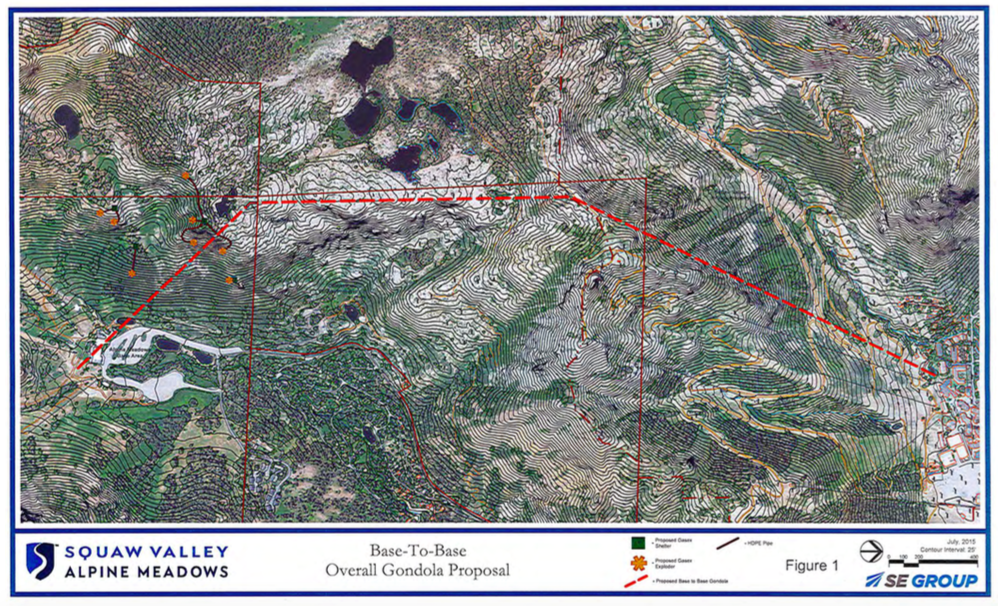
squaw-alpine gondolaPlacer County this month released the application and a description of the gondola that would link Squaw Valley and Alpine Meadows.

While the cars, with a capacity to hold eight people, would not travel into Granite Chief Wilderness, they will come awfully close. That is one of the controversial aspects of the project.

Combining the terrain of the two resorts was talked about long before Squaw Valley Ski Holding came into being. KSL Capital Partners bought Squaw in November 2010. JMA Ventures bought Alpine in 2007. Squaw Valley Ski Holdings Inc. was created in September 2011 to operate both resorts.

In April it was announced that an agreement had been reached with Troy Caldwell who owns the private land known as White Wolf. This acreage sits between Squaw and Alpine. It won’t be open to skiing, but is needed to erect the gondola.

The application says there will be two base areas, plus two midpoint stations, as well as eight Gasex exploders for avalanche control. It would be 13,000 feet long, with 37 towers.

The plan is the gondola would only operate during the ski season.

— Lake Tahoe News staff report


‘Winnie the Pooh’ at Douglas library

The Douglas County Public Library continues its First Saturday of the Month Family Movies on Jan. 2.

“The Many Adventures of Winnie the Pooh” will be shown from 2-3:15pm in the library meeting room. The movie and popcorn are free.

First Saturday Afternoon Movies is sponsored by the Friends of the Douglas County Public Library. The Minden Library is located at 1625 Library Lane.


Nevada resurrecting charcoal production

By JoAnn Kittrell

Early Nevada miners historically used charcoal as a fuel source to smelt less valuable ore to extract silver and gold.

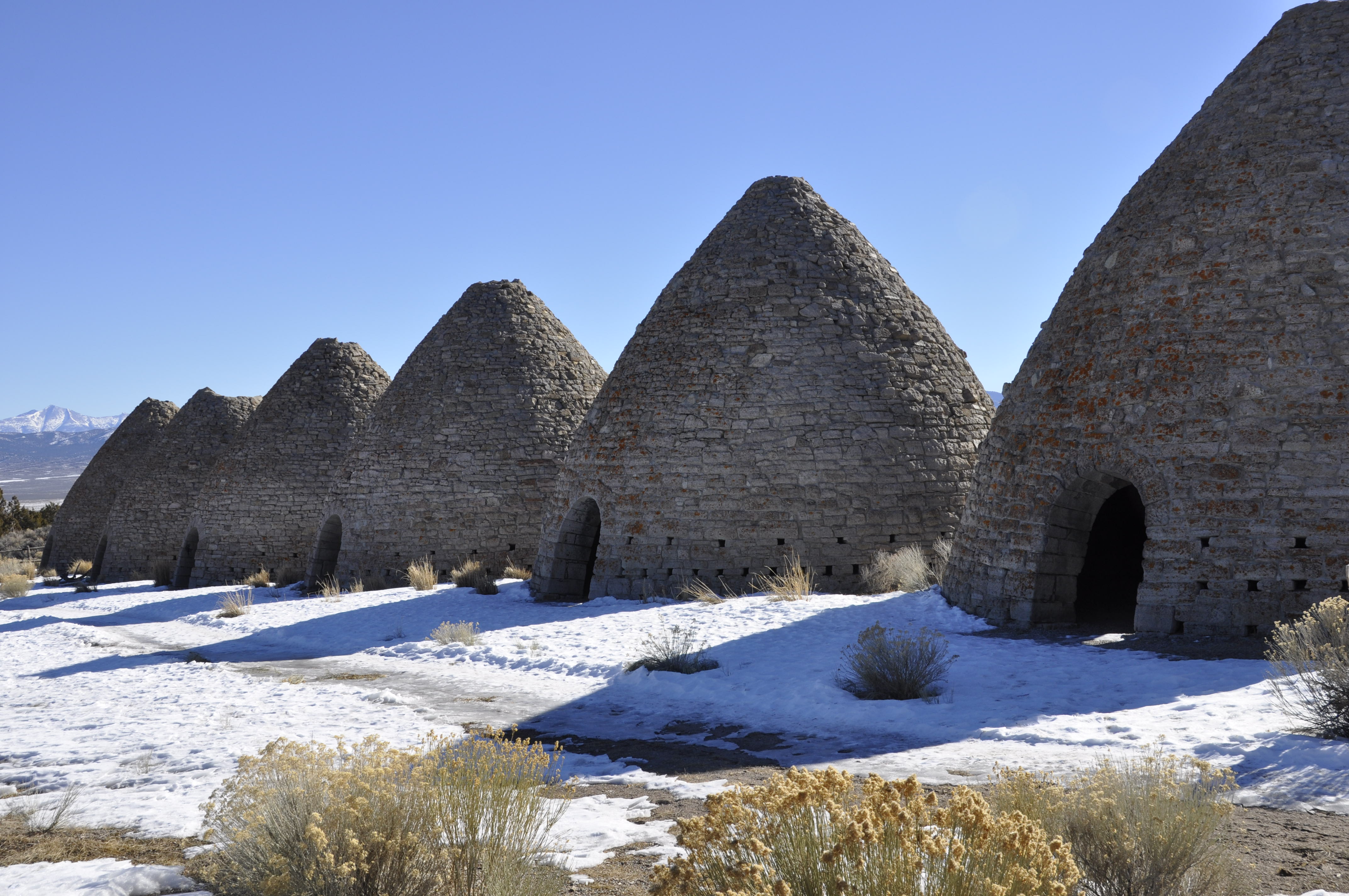
Located near mining districts throughout the state, charcoal ovens were utilized to optimize the charcoal conversion process.

With the Ward charcoal ovens just south of Ely, 35 cords of wood were loaded in each oven and cooked more than 10 days to create 1,750 bushels of charcoal. The ovens allowed operators the ability to manipulate the flow of oxygen needed for conversion of wood to charcoal.

Charcoal is produced when organic matter is heated in low levels of oxygen. If too much air (oxygen) enters and the fire burns hot, the result is ash, so the careful manipulation of air flow is essential for the efficient production of charcoal. To control air flow at the Ward charcoal ovens (also called kilns), brick vents were opened and closed to adjust the amount of oxygen and the resultant heat of the fire.

Ward ovens are being used to make charcoal. Photo/Provided

Ward ovens are being used to make charcoal. Photo/Provided

At Ward, pinion-juniper (PJ) wood was used to make charcoal for the smelting process. PJ woodlands were plentiful and located near most state mining districts.

The Nevada Division of Forestry is now making charcoal, but for a very difference purpose.

NDF has helped to resurrect this historic production process in order to amend poor Nevada soils. When charcoal is used as a soil amendment, it is called biochar. Biochar has been shown to increase soil moisture and nutrient retention capacity, improve habitat for soil microbes and even reduce the effects of soil pollutants. When PJ wood is converted to long lasting biochar, much of the carbon otherwise lost by the cut and scatter methods is preserved in the soil. As such, biochar production reduces atmospheric levels of carbon dioxide, a significant contributor to climate change.

While state agency began experimenting on a small scale with biochar production in the western region with one working kiln about four years ago, it has recently and dramatically increased their ability to make biochar throughout the state. With funding from the Eastern Nevada Landscape Coalition and the USDA Forest Service, NDF now has 10 kilns dedicated to biochar production.

To help increase moisture on burned areas, replace expensive potting mix ingredients in the state’s tree nurseries and improve survival of restoration plant material and urban trees, NDF is now making biochar on an unprecedented scale. Each of the NDF kilns converts about 1,200 pounds of wood to about 600 pounds of biochar in a three-day operation. The first day, crews load and ignite the wood inside the kilns. Kilns burn for one to two hours and then most of the vents are closed and sealed with dirt. The cooking process takes about 24 hours. After 24 hours, all the vents are closed, the fire is extinguished and a cool down phase takes another 24 hours. Then, the fresh biochar is harvested and processed for use.

In November and December, Ely camp crews made about 70 yards of biochar for urban and rural use. Making biochar gives land managers working on PJ removal an option other than the usual cut and scatter.

JoAnn Kittrell works for the Nevada Department of Conservation & Natural Resources.


Nev. may expand education savings accounts

By Neal Morton, Las Vegas Review-Journal

The state’s top education and political leaders soon will start exploring ways to expand Nevada’s new education savings accounts, which many already consider to be the most aggressive school choice program in the country.

At a hearing Monday, the state treasurer’s office adopted regulations that extend early eligibility for the program, which allows parents to use per-pupil state funds on private school tuition and other education services, to children 5 to 7 years old, and active-duty military families.

Lawyers for the Nevada Legislature objected to the extension, prompting Republicans on Saturday to pass a nonbinding resolution in support of waiving a rule that all students must attend a public or charter school for 100 consecutive days before they can enroll in an education savings account.

Read the whole story


K’s Kitchen: Wine infused vinaigrette

By Kathryn Reed

It was a bold move earlier this month when I chose to serve a spinach salad to my friend who is famous for her spinach salad.

It paid off. We all had seconds.

The dressing below will work on all kinds of green salads. I tossed Craisins and chopped walnuts in with the spinach. This made for a sweet, crunchiness. Nuts are a much healthier alternative than croutons. Pecans or pine nuts would work, too.

Only dress the amount of salad you believe you will eat at that meal because a dressed salad won’t last.

This recipe was enough for three people the first night, and leftovers for me for later in the week.

salad Red Wine and Dijon Vinaigrette

½ C dry red wine

¼ C red wine vinegar

1 T Dijon mustard

¼ C canola oil

Salt and pepper

In a small saucepan bring the wine to a simmer. Cook over moderate heat until reduced to 2 tablespoons. Let cool.

Pour wine in bowl. Whisk in red wine vinegar and mustard. Slowly drizzle in canola oil. Season with salt and pepper.


CHP truck totaled during storm in Truckee

During the Christmas Eve storm in the Sierra a California Highway Patrol vehicle was totaled.

The officer was not injured, just “shaken up”, according to the department.

The patrol truck was on eastbound Interstate 80 in Truckee when it was hit. There were whiteout conditions at the time.

— Lake Tahoe News staff report


Sledding — uncontrollable fun in the snow

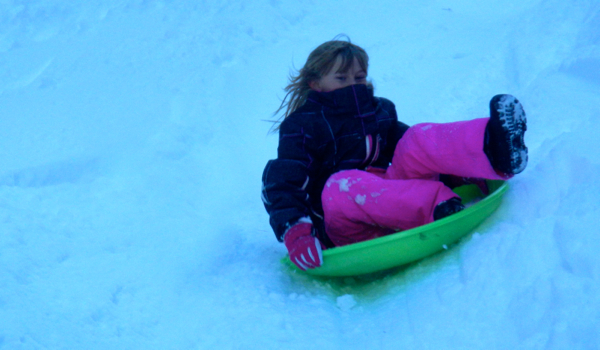
Scarlett Hart hangs on tight Dec. 25 as she sleds near South Tahoe High School. Photos/Kathryn Reed

Scarlett Hart hangs on tight Dec. 25 as she sleds near South Tahoe High School. Photos/Kathryn Reed

By Kathryn Reed

Sledding – it’s one of those winter activities that transcends generations, has little to do with athletic ability (though hiking uphill can be a workout), and brings out the inner child in those who let themselves careen down a slick surface with no brakes or any steering mechanism.

Laughter fills the woods of Tahoe this time of year with adults and kids finding inclines steep and tame, long and short, straight and with jumps – all in the pursuit of seeing how fast one can go downhill on a piece of plastic.

Stop trying to be in control and remember what it was like to be a carefree kid. That was the overwhelming sentiment of a group of adults (and one 9-year-old) who spent part of Christmas afternoon sledding behind South Tahoe High School where the old ski lift used to be. (One of the stanchions remains at the bottom of the hill.)

Some safety tips: •Sled in a snow park or allocated sledding area. Injuries are less common in designated sledding areas. We see more injuries when people sled in the woods near their house or in informal sledding areas where groups of people congregate.   •Sled in an open area, away from trees. The worst injuries I have seen come from collisions with trees resulting in head injuries, lacerations, broken bones, contusions, and abrasions.  •Avoid hard packed snow. Adults who end up going airborne often land harder. In hard packed snow conditions, it’s fairly common to see fractures in the vertebrae. •Sled in an area free from obstacles. If someone else is using the same path, wait for it to clear. Injuries are also sustained when people are hit by a sled coming from behind and they can’t get out of the way in time. Source: Lance Orr, director of Barton Memorial Hospital’s emergency department

Some safety tips:
• Sled in a snow park or allocated sledding area. Injuries are less common in designated sledding areas. We see more injuries when people sled in the woods near their house or in informal sledding areas where groups of people congregate.
• Sled in an open area, away from trees. The worst injuries I have seen come from collisions with trees resulting in head injuries, lacerations, broken bones, contusions, and abrasions.
• Avoid hard packed snow. Adults who end up going airborne often land harder. In hard packed snow conditions, it’s fairly common to see fractures in the vertebrae.
• Sled in an area free from obstacles. If someone else is using the same path, wait for it to clear. Injuries are also sustained when people are hit by a sled coming from behind and they can’t get out of the way in time.
Source: Lance Orr, director of Barton Memorial Hospital’s emergency department

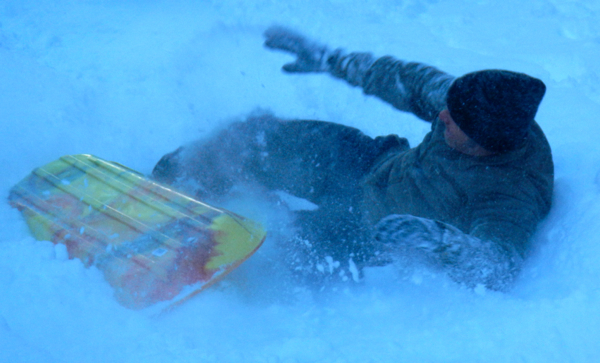
So many winter activities – skiing, snowboarding, skating – are all about control. Sledding is the opposite. And once you give in, it’s a whole lot more fun – even if it means careening off the main path or an unintended gymnastic maneuver becomes part of the dismount.

One of the problems with people sledding wherever there is an incline is the parking.

“We will tow just as many local cars as we will out of town cars. Locals are just as bad,” California Highway Patrol Officer Ruth Loehr told Lake Tahoe News. “If any part of the vehicle is in the road, we are going to tow it.”

It’s especially bad near Emerald Bay. Lake Tahoe Airport and Echo Summit areas are also notorious for people either ignoring no parking signs or having part of the vehicle in the highway.

Parking tickets are $94.

Loehr says officers try to get people to move their vehicles, but after a while tickets and towing are the only way to solve the problem and make it safe for everyone.

And while sledding is fun, it can also result in a trip to the hospital.

“From my perspective in the emergency department, sledding can be one of the more dangerous outdoor activities. It is difficult to have good control of where a sled goes,” Lance Orr, physician and director of the emergency department at Barton Memorial Hospital, told Lake Tahoe News.

Locally, the number of injuries related to sledding have been holding steady through the years, though exact numbers were not available.

“Kids are more likely to sled than adults and, as a result, we see more kids injured than adults. Though adults land harder than kids, and can suffer more severe injuries,” Orr said.