Climate, El Niño at forefront of meteorologic conference

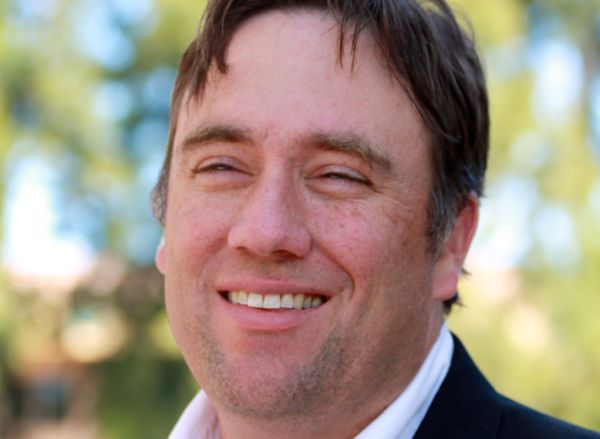
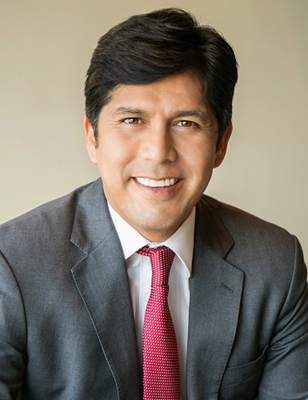
California State Sen. Pro Tem Kevin de León, D-Los Angeles, will be the keynote speaker at Operation Sierra Storm Meteorologist Conference on Jan. 8.

Kevin de León

Kevin de León

He will discuss the outcome of the Paris climate conference and highlight results including the long term economic, environmental and cultural impacts and California’s role as a leader in addressing climate change.

The annual conference includes scientists, lawmakers and television meteorologists from major market network affiliates throughout the United States.

Alexander (Sasha) Gershunov with Scripps Institution of Oceanography will also speak about this year’s El Niño phenomenon on that Friday. Gershunov is affiliated with the Climate Education Partners (funded by National Science Foundation), NOAA’s California and Nevada Climate Applications Program, Department of the Interior’s Southwest Climate Science Center.

Gershunov will talk at 8am, followed by de León at 10am at Harveys Cabaret Theater.

RSVP online by Jan. 4 at 5pm. There is no cost to attend.


‘It’s amazing what Calstar pilots, personnel do’

South Shore woman credits air ambulance with saving her life


By Laura Kaufman

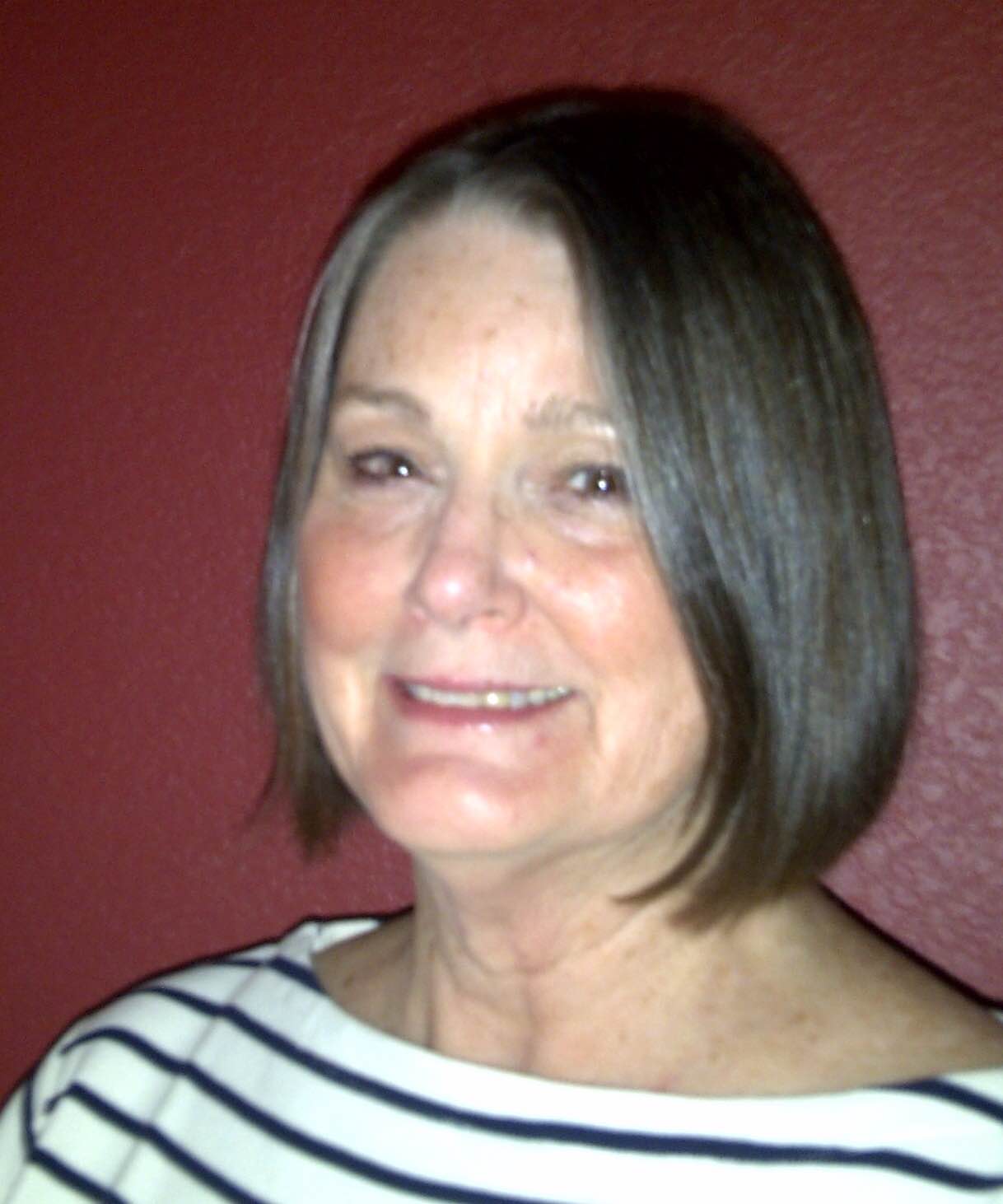
Living in Christmas Valley, Billie Jo and Paul McAfee are used to a fairly self-sufficient life. The valley is 1,000 feet down, tucked into the mountains along Highway 89 on the South Shore. Paul McAfee, a former Marine and a heavy equipment mechanic for the city of South Lake Tahoe, is also a HAM radio operator. Billie Jo McAfee, a retired California Tahoe Conservancy secretary, says, “Due to the isolated area, we have been Calstar members for years.”

Billie Jo McAfee, 68, recalls the challenges when winter pass closures cut off the valley from surrounding communities. But a different, unusual emergency arose for her last winter—a fast-moving, mysterious flu-like illness—that put their Calstar membership into action.

“We are prepared for many things, but we were not prepared for this. It was so insidious, the way it snuck up on me. I realized that it was getting worse very quickly,” she says.
Billie Jo McAfee

Billie Jo McAfee

On Feb. 1, McAfee developed an unusual cough. Then, she started vomiting. Drinking lots of fluids, she suspected she had the flu, but wasn’t sure. Three days later, she met her husband at the door as he returned from work. “I think I’m in trouble,” she said. They went directly to the ER at Barton Memorial Hospital. On the way, she passed out in the car.

“When we got there, they asked me to spell my name, and I couldn’t,” she said. That is all she remembers.

McAfee was already in critical condition. Calstar was called to transfer her quickly to Renown Regional Medical Center in Reno. She vaguely remembers thinking that the helicopter looked like a tiny mosquito, and she didn’t think she would fit inside. But during the flight she recalls feeling comfortable and warm.

“I remember the scene in little funny flash clips,” she says. “I remember a soothing voice saying ‘in two minutes we will land, and here’s what will happen’.”

Flight nurse Mark Haase was on the transport that evening. He recalls Billie Jo’s situation as complex, compounded by multiple factors, including electrolyte imbalances and fever.

“She was gravely ill with overt cardiac complications that warranted rapid air ambulance,” he says. “I recall her demeanor to be rather brave and calm in light of the seriousness.”

On arrival, McAfee vaguely remembers having a port installed in her neck, being prepared for surgery, and then bright lights overhead. She was in the ICU for two days. She kept waking up to discover doctors all around her, but was not able to answer their questions. Her husband was always there. McAfee was put into quarantine, and on the fifth day, her doctor told her what had happened: severe sepsis.

“I had to look it up, as I had never heard of it. I was shocked to discover that this was one of the things people died from in World War I, when they had wounds and no antibiotics. It’s a bacterial infection, and it can get into your bloodstream and take over, wrecking your organs and your brain. I read that people often die within about four days,” she said.

According to the Sepsis Alliance, sepsis is the body’s toxic response to infection. The organization says, “every hour that sepsis is not treated increases the risk of death.”

“I truly believe that I would not be alive if not for the helicopter transport. At the time, I had no idea how sick I was. Sepsis gets to a point where you can’t reverse it, and time is of the essence,” McAfee says. “An ambulance would have taken an hour and a half, but Calstar got me there in about 20 minutes.”

In McAfee’s case, the source of the sepsis was a mystery. To her surprise, much later it was discovered to be caused by a seriously diseased gallbladder. Tests of that organ had originally come back normal—its condition possibly masked by all the medications and antibiotics she was on. However, as she continued healing, she was still aware that something was not quite right.
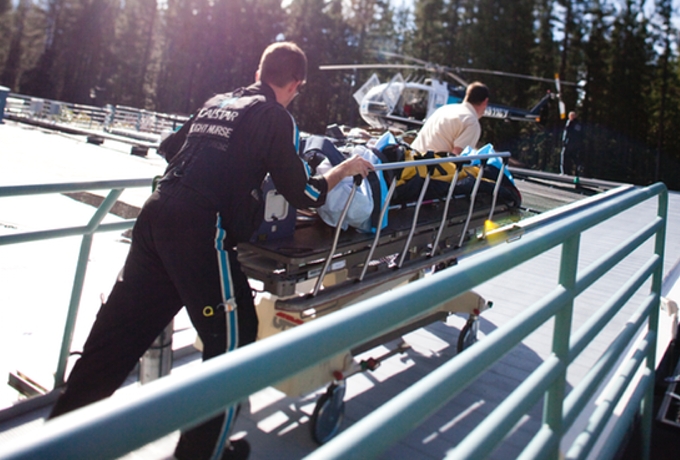
Billie Jo McAfee credits Calstar with saving her life. Photo/Provided

Billie Jo McAfee credits Calstar with saving her life. Photo/Provided

Recovery and recharging

After about two months, McAfee felt good enough to go for coffee or shopping with friends, but found she would have to spend the next two days in bed. “I’d tell myself, this is a reminder that you were very sick – and need to take things slow.”

Something still wasn’t allowing her to fully bounce back. After she underwent a highly specialized scan, it was indeed found that her gallbladder was in bad shape. When she had it removed, months later, McAfee recovered right away.

Recently, she stopped by the Calstar station at the South Lake Tahoe airport to say hello and to thank the staff for her nick-of-time transport last February.

“It’s amazing what Calstar pilots and personnel can do. In winter here, we have bad accidents or mishaps in the Kirkwood area, and they are crackerjack at getting in and helping people in need. I’ve told everyone in the valley that it’s a no-brainer: join as a member,” McAfee says.

“I just want to extend my thanks to Calstar. If they hadn’t gotten me to the trauma center in such an expeditious manner, I probably wouldn’t be here to deliver the message,” she adds.

Back in Christmas Valley, the McAfees are again readying for the winter. This time, they are looking forward to a happy, healthy, and much less eventful New Year.

Laura Kaufman works for Calstar.

—–

Notes:

·      Calstar memberships may be purchased online.


Opinion: Side with the refugees, not the terrorists

By Joe Mathews

On a Saturday night after the terrorist attack in San Bernardino, a plastic replica hand grenade was left in the driveway of Baitus Salaam Mosque in Hawthorne, a municipality near the Los Angeles airport. Someone also spray-painted “Jesus” on the mosque’s front gate and crosses on the windows.

The Ahmadiyya mosque community could have responded by erecting new walls or adding security. Instead, its members decided that the vandalism was an opportunity to connect with neighbors. So the mosque held an open house. “Extremism,” the community president Jalaluddin Ahmad said in an invitation, “will not scare us into locking our mosques. Rather we will open the doors wider to educate all.”

Joe Mathews

Joe Mathews

If only the rest of California were responding to this moment in the same spirit.

So far, we Californians—from everyday citizens to top leaders—have demonstrated an abundance of ignorance and cowardice. But if we thought of San Bernardino as an opportunity to reach out to others, we could emerge a safer, and even richer place.

Since the attack, California has seen a surge in vandalism and threats against mosques. And we’ve seen public authorities spread fear by overreacting to threats. Last week, the Los Angeles Unified School District committed the cardinal sin of responding to terror with terror by closing all its schools—900-plus, serving 640,000 students—because of an implausible threat that other cities were quick to dismiss.

We’re also seeing political opportunists of both parties use the attacks to advance law enforcement agendas—like weakening the encryption that protects all of us from hacking or demanding onerous new requirement for foreign tourists that will hurt California’s tourism business. And we see some California Congressional Democrats joining Republicans in linking the attacks to concerns about Muslim refugees—an especially cruel and thoughtless response during the largest worldwide refugee crisis in decades.

Stop the madness, California. Our state needs a hard and immediate U-turn, which starts with recognizing how the attacks connect California to the rest of the world. While we have always been connected by who we are—27 percent of us are foreign-born, twice the national percentage, San Bernardino now connects us to people around the world as fellow victims of terrorism. We all saw the horror of just one attack in one building in one small city of a state of 39 million. Imagine such scenes repeated far more often in places like Syria. How can we not respond by seeking to help our fellow victims—especially refugees fleeing the same terror we’ve experienced?

California, more than any other place in this country, has been defined by its readiness to integrate people fleeing wars and other horrors. Most tellingly, California communities have often welcomed refugees even in the face of opposition from our leaders. Back in the 1970s, Gov. Jerry Brown was as wrong to oppose the resettlement of Vietnamese refugees here as President Ronald Reagan was a decade later to oppose the taking-in of refugees from Central American wars. Both Vietnamese and Central American arrivals have enriched California immensely. In more recent times, our state has responded to callous inaction in Washington, D.C., by giving what public services and legal status it can to undocumented immigrants and to child refugees coming over our border.

So why do we allow ourselves to be limited by the United States’ decision to accept indefensibly low numbers of refugees from Syria (just 10,000) and other theaters of American warfare? California, as a global power in its own right, would do well to set the goal of leading the world in accepting refugees.

Sweden, with fewer than 10 million citizens, has accepted 200,000 refugees this year. Germany, with 80 million citizens, has taken in about 800,000 this year. California leaders and citizens, as a start, should express our willingness to accommodate a number that would put us in that class—say 500,000 refugees from Syria and other places. And our demand for more refugees should also include the request that the laborious and bureaucratic process of screening refugees—it lasts two years—be expedited. We need to save as many lives as we can, as fast as we can.

Of course Washington, not the state, makes refugee policy, as a federal matter. But a push by California to fulfill its historical role as America’s America would change the conversation nationally. And if we were to get such a number of refugees, there would be huge challenges—but also huge payoffs. Our welcoming stance would distinguish us internationally—and offer a competitive advantage over the lily-livered cowboys in Texas and 29 other states who are so consumed by fear that they’re seeking to block the arrival of even tiny numbers of refugees. It’d be much easier for California, as a generous and welcoming place, to make connections of trade and commerce to the many Muslim countries that are, despite tremendous challenges, on the path to greater wealth and democracy.

We’d also win at home, since refugees would be assets in a state that needs more people. Immigration is flat here, the birth rate is down, and our increasingly homegrown population is aging, with fewer children to support it. Refugees would provide a shot in the arm to our culture and our economy—and the human capital to make up big deficits the state faces in the number of skilled workers.

The fact that such a movement in California sounds unrealistic—I can already hear the fear-mongers accusing me of wanting to give California its own Islamic state—shows just how far down the road of unreasoning fear we’ve already gone. Let’s turn around, and send the vital and very Californian message that, in this great place, the doors are always open—and that we don’t punish the many for the heinous crimes of the few.

Joe Mathews is California and innovation editor for Zócalo Public Square, for which he writes the Connecting California column.


2 snowmobilers rescued near Ebbetts Pass

By Cathy Locke, Sacramento Bee

Two El Dorado County men spent a night stranded outdoors in the Ebbetts Pass area of Alpine County after their snowmobiles became stuck in the snow late Saturday afternoon.

Joshua Seidel and Zachary Bradgon, both 24 and residents of Diamond Springs, were rescued by searchers on the ground after they were located Sunday morning by a California Highway Patrol helicopter crew. Both men were in good physical condition after spending the night in a tree well created by the snow, according to a CHP news release.

Bradgon, Seidel and another friend had gone to the Ebbetts Pass area about 1:30pm Saturday to ride their snowmobiles, CHP officials said. Being unfamiliar with the area, they rode around the main area, near the parking lot, until about 4pm, then decided to explore down the canyon. Bradgon and Seidel left the friend behind and told him they would return soon.

Read the whole story


Important to keep pets warm in winter

By Central Veterinary Associates

Winter can be tough on dogs and cats, but there are a number of safe and effective ways you can help them get through the cold season, an expert says.

“Sidewalks, driveways and steps are often coated with rock salt or ice-melt products that can prove irritating and drying to animals’ feet,” warns Greg Nelson, director of surgery and diagnostic imaging at Central Veterinary Associates in Valley Stream, N.Y.

“If they lick their toe pads to remove these substances, the salt or chemicals can also trigger stomach irritation or even more dangerous reactions,” he said.

He recommended keeping a spray bottle filled with water handy to spray your pet’s feet when they come indoors. Then quickly wipe their paws with a towel to remove any residue.

When the temperature falls below 45 degrees Fahrenheit, you should keep your pets mostly indoors, except to take them out for walks/exercise or to go to the bathroom.

“Outdoor dogs should have an insulated dog house, and be sure outdoor cats aren’t hiding in warm car engines before starting your car. Use plastic bowls for food and water outdoors, not metal,” Nelson said.

Antifreeze is sweet-tasting and deadly to pets. Clean up antifreeze spills immediately and watch for antifreeze leakage on your garage floor or driveway. If you get antifreeze on your shoes, take them off and clean them so that you don’t track the liquid indoors.

“Dry winter weather can leave animals’ nasal passages stuffy, and the same over-the-counter saline drops and sprays we use can safely be given to dogs and cats to ease breathing,” Nelson said.

“Regular Claritin [a quarter of a tablet for cats, up to a full tablet for dogs] also can provide relief for little sniffles. But never use the ‘D’ version of human antihistamines, which indicates the nasal decongestant phenylephirine,” an ingredient unsafe for cats and dogs, Nelson said.

If you can hear your pet breathe through its nose, exposing it to steam heat can also be an easy fix, he said. Rather than use room humidifiers — that steam can scald if pets get too close — bring your dog or cat into a closed bathroom while you run a hot shower, Nelson recommended.

Constipation or bowel irregularity can be a problem for dogs and cats, especially if they get less exercise during the winter. Canned pumpkin (not pumpkin pie mix) is a natural and safe laxative for pets. Use one teaspoon per day in cats and up to two tablespoons per day in large dogs to keep them regular, Nelson said.

People’s use of acetaminophen (Tylenol) increases during cold and flu season, but even small doses of the drug can be deadly to cats. Be sure not to leave acetaminophen tablets lying around. Do not give ibuprofen (Advil) or aspirin to pets unless it is prescribed by your veterinarian.

Be sure to check with your veterinarian before giving your pet any over-the-counter products meant for people, to confirm safety and dose information, Nelson added.


Era of dam building may not be over in Calif.

By Bettina Boxall, Los Angeles Times

This tranquil ranching valley lies 15 miles west of the Sacramento River. A one-lane bridge spans a dried-up creek at the valley entrance. But when Jeff Sutton stands there, he imagines water, lots of it.

Never mind that talk of flooding the Antelope Valley north of Sacramento and turning it into a reservoir is older than Sutton. The time has finally come, he says. “It’s the right project at the right place.”

Drought, climate change and environmental curbs on water deliveries are fueling campaigns for more water storage in California. Sites Reservoir — as it would be called after the tiny settlement it would wipe off the map — is one of a handful of resurgent proposals challenging the notion that the era of big dam building is over.

Central Valley growers especially are pushing dam projects as their salvation, despite multibillion dollar price tags and studies that show the new reservoirs would do little to boost the state’s overall water supplies.

Read the whole story


Gambling may help seniors stay sharp

By Will Ripley and James Griffiths, CNN

It might be a long way from the glitz and glamor of Las Vegas or Macau, but old people’s homes may quickly be becoming a new frontier for gaming in Japan.

In one senior day care center in Yokohama — appropriately named after the aforementioned U.S. gambling mecca — elderly people play mahjong and baccarat as the chimes and pings of slot machines and pachinko fill the room.

“We believe this casino stimulates the brain and helps to prevent or suppress the development of dementia,” said Kaoru Mori, Chairman of Japan Elderly Care Service, which runs the “Las Vegas” center.

It’s no secret that old people love to gamble. Grey hairs are a common sight everywhere from the casino floors of Vegas to the mahjong parlors of Hong Kong.

Read the whole story


DCSO prepping for New Year’s Eve at Stateline

Expect Highway 50 in the casino corridor at Stateline to close at some point on New Year’s Eve.

Sheriff’s deputies shutdown the road as people fill the street.

Traffic will then be diverted to upper and lower Lake Parkway Drive.

Deputies of the Douglas County Sheriff’s Office will be present in the Stateline casino-core area throughout the evening, supplemented by officers and representatives of numerous other law enforcement agencies, including Nevada Highway Patrol,  Nevada Department of Corrections,  South Lake Tahoe Police Department, El Dorado County Sheriff’s Office, California Highway Patrol, and the FBI. Supporting agencies include the Douglas County Sheriff’s Search and Rescue, Douglas County Communications Center, Tahoe-Douglas Fire Department, Caltrans and Nevada Department of Transportation.


Incidents that will most likely result in an arrest include acts that place celebrants or law enforcement officers in jeopardy; including acts of rowdy behavior, fighting, throwing projectiles, vandalism, theft, narcotic violations, severe public drunkenness, possession of or discharge of fireworks, minors consuming or possessing alcohol, or any other act that disrupts the goal of achieving a peaceful and safe environment for all in attendance.

Glass or metal containers, regardless of contents, are prohibited in the casino core area on New Year’s Eve.

The curfew in Douglas County is midnight on Dec. 31. Anyone under the age of 18 is subject to citation for being in violation of this ordinance.


Tahoe Donner to try to help set Guinness record

Tahoe Donner Downhill Ski Area aims to help set a Guinness Book of World Record on Jan. 8.

As part of the National Learn to Ski and Snowboard Month initiative to gain new lifetime skiers and snowboarders, 160 resorts across the country, including Tahoe Donner, have teamed up in hopes of breaking a record for the largest, one-time ski and snowboard group lesson in the world.

At 10am that day, 50 beginner skiers and 50 beginner snowboarders will have the chance to participate in this learn to ski and snowboard lesson at Tahoe Donner. The current world’s largest ski lesson (multiple venue) world record is 594 participants. Tahoe Donner will have a max of 100 ski and snowboard participants and a minimum of 25 represented in this challenge, along with two independent witnesses and two stewards. Participants in the world record challenge are exclusively for beginner students, new to the sport.

Registration is $10 per person, available on a first-come, first-served basis and subject to sellout.

To be counted toward the Guinness World Record, participants and instructors must complete the one hour, 30 minute lesson.

To sign up, go online.


Drought report could map Nevada water policy

By Michelle Rindels, AP

CARSON CITY – A panel of water experts that spent almost a year analyzing Nevada’s persistent drought has issued recommendations that could shape Gov. Brian Sandoval’s policy agenda in the coming year.

The eight-member Nevada Drought Forum, which Sandoval commissioned in April, included water, agriculture, climate and emergency management officials who gathered information in a series of public meetings over the past year.

“I think there’s stuff in there that can be done fairly quickly, and a variety of stuff that is going to take a fair amount of planning and prioritization,” said forum chairman Leo Drozdoff, director of Nevada’s Department of Conservation and Natural Resources, about the 20-page report wrapped up in mid-December.

Here are some of the panel’s recommendations:

• RAMP UP CONSERVATION: While agencies such as the Southern Nevada Water Authority testified about their aggressive water-saving measures, the forum wants conservation efforts elevated statewide and even in smaller municipalities. Forum members want water meters on all connections, water efficiency standards for new development, tiered rate structures to promoted water conservation and time-of-day and time-of-week watering restrictions.

They also recommend giving the state water engineer power to enforce water conservation plans if agencies aren’t sticking to them.

•TWEAK WATER LAW: The forum wants incremental changes in Nevada law that strengthen the state water engineer’s ability to manage the state’s driest areas. Members want clarification in law that would preserve indoor water use even amid cutbacks in domestic well users’ outdoor watering.

They also want to change the law to allow the small-scale capture of rainwater, as long as it doesn’t interfere with others’ water rights.

•CLOSE GAPS IN RESEARCH: The state bases many of its water policy decisions on the U.S. Drought Monitor, a map that’s updated weekly to reflect conditions on the ground throughout the U.S. and Puerto Rico. But Drought Forum members say there are gaps in the data.

They recommend improving the map by developing a statewide monitoring network that uses a variety of information sources and makes real-time data centrally available. They also want to coordinate with other western governors to ensure western states have more of a say in the national map, and that it’s measuring both hydrological conditions underground and the vegetation conditions above ground — which can sometimes give different signals about the state of the drought.

•FIND NEEDED MONEY: Forum members noted that incentive and rebate programs can be effective at encouraging consumers to conserve, but they can be prohibitively expensive. The group wants state agencies to come up with budget proposals that could help pay for high-priority incentive programs.

They also noted that some of their recommendations, such as better drought monitoring, could require extra staff. The forum wants to identify and prioritize the resources needed to implement its plan.

•PLAN LONG-TERM: The forum wants to support the work of Nevada’s Water Reuse Steering Committee to explore regulatory changes that could allow water recycling and stretch supplies.

They also want to keep an eye on technology advances in water desalination — a process that’s expensive now but could be a viable option for boosting Nevada’s supply when it gets cheaper.

•EDUCATE THE PUBLIC: The forum wants to keep the conservation message going to everyday Nevada residents, even during wetter years when drought isn’t top-of-mind. They also want state staff dedicated to public outreach, including people focused on educating elected and appointed officials about Nevada’s water issues.

•REWORK WARNING SYSTEMS: Forum members recommend the state’s Drought Response Committee refine its warning system. Nevada issues Drought Alerts, Drought Warnings, a Governor Drought Declaration and a water emergency declaration, but the forum wants more clarity on the difference between them.