Sugar Bowl to host cross country ski race

A cross country race that begins in the village at Sugar Bowl and winds into Royal Gorge Cross Country will challenge cross country racers on Sunday.

The Village Nordic Cup, formerly known as the Sugar Rush, will begin at 10am Jan. 10. The course will take racers through the village at Sugar Bowl and into the eastern edge of Van Norden Meadow before climbing back below Crow’s Peak to the village. Child racers will complete one 5-kilometer loop, and adult racers will complete two loops for a 10-kilometer race.

Race entry is $40. Racers do not need a trail pass or season pass to compete. Registration before the day of the event is available at Royal Gorge’s Summit Station on Pahatsi Road in Serene Lakes. Registration on the day of the event is available starting at 8am at Village Station in the village at Sugar Bowl.

Prizes will be awarded for division and age-group winners. The Village Nordic Cup is a freestyle race, meaning that skate and classic racers will race in a single division.


Historic agreement allows for water storage

In March 2015 there was no water flowing from Lake Tahoe to the Truckee River, which contributed to the need to change water agreements. Photo/LTN file

In March 2015 there was no water flowing from Lake Tahoe to the Truckee River, which contributed to the need to change water agreements. Photo/LTN file

By Anne Knowles

RENO — The Truckee River Operating Agreement is a done deal.

Parties to the landmark water compact, which went into effect Dec. 1 after nearly three decades of negotiations and work, took time out Tuesday to celebrate.

“From a drought perspective, this is a game changer,” Leo Drozdoff, director of the Nevada Department of Conservation & Natural Resource, said Jan. 5. “It provides certainty in uncertain times.”

The agreement allows upstream users such as Truckee Meadows Water Authority to store water they are entitled to rather than release it from reservoirs if it weren’t immediately needed, and receive a credit to use the water when it is needed.

“We’ve never been able to store water in the winter before,” John Erwin, director of natural resources planning and management at TMWA, told Lake Tahoe News.

Since Dec. 1, when TROA took effect, TMWA has been able to store 2,700 acre-feet of water. Overall, TMWA expects to triple its storage, helping the municipal water purveyor to handle drought and continue to allow the Truckee Meadows to grow.

California, too, can start storing water rather than diverting it once the Water Resources Board agrees to a reporting framework, probably in a month or so, David Willoughby, engineer with the Watershed Assessment Section of California Department of Water Resources, told Lake Tahoe News.

The agreement also allows for those credits to be used or exchanged in multiple reservoirs.

“It allows storage by different entities in different spaces. Before it went down the river,” Willoughby said.

The flexibility should also help downstream users.

“Regimented release didn’t always match up to the needs downstream,” Arthur Hinojosa, division of integrated regional water management of California DWR, told Lake Tahoe News. “Needs are not always consumptive. This is better for the fish and for recreation.”

That includes the endangered Cui-ui and the threatened Lahontan cutthroat trout, vital to the Pyramid Lake Paiute Tribe and its fishery.

Before TROA, the federal water master was required by court decrees to release water from reservoirs year-round in order to maintain river flows.

Now, the water master and a group of signatories will meet monthly to discuss and schedule variable releases.

The committee — which consists of the federal water master and a representative from California and Nevada, TMWA, Pyramid Lake Paiute Tribe and the U.S. Bureau of Reclamation — has been meeting for years in what Chad Blanchard, the water master, called mock TROA.

The group has also been using mock data because the ongoing drought has meant there’s no water to wrangle over. So they’ve used made up data that lets them simulate real negotiations.

In December, for the first time, the group used real data, Blanchard told Lake Tahoe News.

In the end, the water master is the arbiter who will determine water releases, especially in the case of any minor conflict of interests. If a conflict gets more complicated, Blanchard said TROA stipulates a special hearing prosecutor to settle disputes.

“It is emotional,” Mark Foree, general manager of Truckee Meadows Water Authority, said as he looked around the packed room at the Siena Hotel, and added some of the people involved in the agreement had essentially spent their careers on it.

“It was a surreal moment when they reported to us this is done,” said Vinton Hawley, tribal chairman, Pyramid Lake Paiute Tribe. “I said it let’s give it a week and let it set in. Somebody may oppose it.”

TMWA and the tribe are two of five major signatories to TROA, an agreement designed to manage allocations among Truckee’s users and hopefully end more than a century of court battles over what is considered the country’s most litigated river.

TROA has 15 signatories: the five major parties which form the release scheduling group and 10 others — the Carson-Truckee Water Conservancy District, Washoe County Water Conservation District, the cities of Reno, Sparks and Fernley, Washoe County, Sierra Valley Mutual Water Co., Truckee-Donner Public Utility District, Placer County Water Agency and North Tahoe Public Utility District.

The Truckee-Carson Irrigation District, which manages the Newlands project in Northern Nevada, is not a signatory and TMWA’s Foree said TCID in the next few weeks will drop its litigation opposing TROA, removing what the signatories hope is the agreement’s final hurdle.



Opinion: Modern sagebrush rebels recycle old Western fantasies

By Paul Larmer, High Country News

Ammon and Ryan Bundy, sons of scofflaw Nevada rancher Clive Bundy, appear to have made an ambitious New Year’s resolution: Force the federal government, which has managed more than half of the American West’s lands for the past century, to relinquish them, at gun point if necessary, to the locals.

Over the weekend, the Bundy brothers and a group of a few dozen or so militiamen and their sympathizers took over the headquarters of the Malheur National Wildlife Refuge in eastern Oregon and declared it a safe haven for well-armed “patriots” who oppose federal land management.

The group is demanding that the federal government release local ranchers Dwight Hammond and his son, Stephen, who are scheduled to report to federal prison this week to finish serving time for intentionally setting fires in 2001 and 2006, burning up hundreds of acres of public lands. They also want the government to hand over the 1.7 million-acre Malheur National Forest. According to OregonLive, Ryan Bundy said, “many would be willing to fight — and die, if necessary — to defend what they see as constitutionally protected rights for states, counties and individuals to manage local lands.”

Read the whole story


A handwritten card sealed by technology

By Eilene Zimmerman, New York Times

Communication today is faster and more ephemeral than ever. We fire off emails, skip the punctuation in our texts, and watch our photos and messages vanish in seconds on Snapchat.

Digital tools have made communicating with others easier but not necessarily more thoughtful, and this bothered Sonny Caberwal, an entrepreneur. “We’re in a rush to make everything disappear,” he said.

Receiving a physical, handwritten thank-you note or letter these days feels special, but it also requires some work. “You have to assemble all the pieces,” Caberwal said — including paper, a pen, the recipient’s address, an envelope and a stamp — and then the note has to be written and mailed, all of which is time-consuming. He wanted to enable people to do that more easily, by harnessing technology to create a product that still felt very personal and worth keeping.

His company, Bond, harks back to a time of fountain pens, creamy sheets of writing paper and wax-sealed envelopes. Caberwal, founder and chief executive of the New York City start-up, describes it as “the opposite of Snapchat.” Bond was started in 2013, and has about 50 full-time employees and several high-profile backers, like Gary D. Cohn, the president of Goldman Sachs, and the rapper Nasir Jones (known as Nas).

Although handwritten notes and cards may seem like artifacts of the 20th century, greeting cards are still a strong business. According to the Greeting Card Association, Americans purchase about 6.5 billion cards a year and annual sales are estimated to be $7 billion to $8 billion. Despite a culture awash in digital communications, the greeting card and stationery industries have not declined precipitously but have remained largely flat, said Patti Stracher, director of the National Stationery Show, an annual trade show and business event for stationery, greeting card and gift companies.

Read the whole story


Reno-Tahoe market to get UberSKI service

By Jason Hidalgo, Reno Gazette-Journal

Uber is doubling down on the area after its recent Tahoe launch by offering passengers an additional service option.

The ridesharing company announced that its UberSKI service is now available to customers in the region, making Reno-Tahoe only the second area in the nation to have the option available.

UberSki allows passengers to request an UberX car — the designation for the company’s low-cost vehicle option — but with all wheel drive and a ski rack for transporting skis and snowboards. Using the service will add a $5 base fee to a customer’s fare.

Read the whole story


Calif. misses water-saving mark for 2nd month

By Scott Smith, AP

Residents of drought-stricken California used 20 percent less water in November, falling short of the governor’s 25 percent conservation mandate for a second straight month, officials reported Tuesday.

Despite missing the mandate, California remains on course to beat its long-term goal through February, said Felicia Marcus, chair of the State Water Resources Control Board.

Residents have saved a combined 26 percent since the cutbacks began in June, she said at a meeting in Sacramento.

The tally came as a series of much-anticipated El Nino storms began to drench the state and boost the already high snowpack.

Officials had expected less water saving during the winter, when residents reduce landscape irrigation, Marcus said.

Still, the latest numbers reflect considerable savings over past years, Marcus said, adding that residents understand it’s too early to declare an end to the four-year drought.

Most strikingly, average monthly water use declined from 87 gallons for each person in October to 75 gallons in November, hitting the lowest level since the curtailments began, officials reported.

“Californians are clearly thinking twice before turning on the tap,” Marcus said in a statement.

Gov. Jerry Brown ordered the 25 percent cutbacks in June compared to the same period in 2013, the year before he declared a drought emergency.

Conservation efforts hit a setback in October, when Californians missed the mandated target, posting 22 percent in savings.

Regulators renewed their appeal for conservation, even with the coming storms and as a recent Sierra Nevada snowpack survey showing water content was well above normal for this time of year.

“We’re in such a deep hole,” Marcus said. “We need to have a lot of water in storage and snow in the mountains to let us relax at all.”


EDC Office of Ed picks leader from within

Ed Manansala

Ed Manansala

Ed Manansala was sworn in Jan. 5 as the superintendent of El Dorado County Office of Education.

Most recently he had been the deputy superintendent of educational services for the district, a position he has had since June 2013. Prior to his work at EDCOE, he served as interim chief of staff at Sacramento City School District, superintendent of St. Hope Public Schools, and principal of Sacramento Charter High School.

The board conducted interviews in public on Monday. All of the candidates interviewed live outside the county. The agency was granted a one-year waiver to allow the new superintendent to live outside the jurisdiction.

Manansala will fill out the term of Jeremy Meyers, which expires in 2018. Meyers resigned with more than six month’s pay late last year after being arrested twice on driving under the influence charges in a five-month span. Manansala will be making $196,837 a year, with an expense allowance of $7,600.

— Lake Tahoe News staff report


Dog ownership is a full-time commitment

By John Spinola

Let me just start of by saying I have been around dogs as far back as I can remember. It started with Rootbeer (Irish setter mix), then Cotton (American Eskimo/Samoyed), and next was Smokey (Akita/German Shepherd). They were family dogs. Dogs I grew up with.

As an adult I had Henry (Akita/Bloodhound), next was Astro (Malamute/wolf content) and now Stanley (Great Pyrenees mix). So I am no stranger to dogs. And if you notice I tend to like the larger breeds. I’ll also say that all of the above came from dog pounds or shelters.

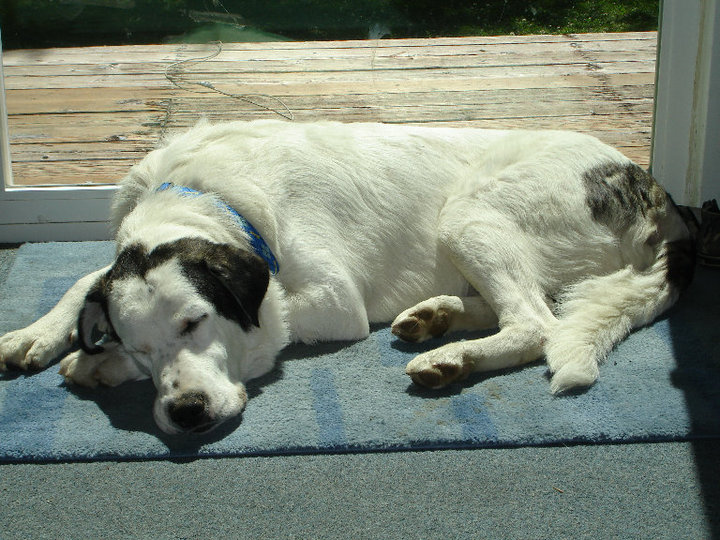
Stanley

Stanley

In digging into the business side of dogs I saw that there was a lot of information about what kind of dog is best for certain personalities and what to do after you get a dog. One thing I noticed was that there is a lack of what to consider before you get a dog.

Here are some tips:

  • Do you have the time for a dog? Seriously, do you have 10 to 15 years to commit to something? Ten to 15 years of every day. No days off. The dog is going to take priority. Do you have time in the morning, afternoon, evening and on your days off? Do you have time to walk the dog? Do you have time to play with the dog? New dogs take a lot of time. A lot. They need constant reassurance and companionship. They need exercise and input. They are pack animals. They need to be included. Now granted it does get easier as they get older, but at first it is all time consuming. They take time and you have to put in good time if you want a good one.
  • Do want a puppy or a dog that is a little older that might have some training? Consider that with puppies you have to teach them everything. With a dog that is older they might already have some skills like house training, commands like sit and stay.
    Do you have space for a dog? Do you have a yard? Fenced? Do you live in an apartment, house, etc? If renting, does your landlord allow dogs? Are you able to walk the dog from your front door or do you need to go somewhere? A dog is going to take of some space within your space.
  • Dog hair. Dogs are dirty hairy creatures. Are you ready for that? House, clothes, floor, all infected with dog hair.
  • Are you equipped to transport your dog? Car or truck? If car, are you ready to have it covered in dog hair? If you have a truck, are you going to get a camper shell or a leash system for the dog? If you ride a bike, bus or walk does that choice work with what the dog needs?
  • Not to be a downer, but are you ready to say goodbye to one of the best friends you have ever had? If you get a dog, there is going to be a day that you are going to have to decide on “the big sleep”. That’s not easy, but it is the most loving thing you can offer your friend at the end.
  • Have you ever thought about traveling with a dog? Do you like to travel or vacation? Are you going to take the dog or leave the dog? A lot of hotels allow dogs for a fee. Do you have someone who will dog sit the dog while you are away? If not, do you have money to kennel the dog?
  • Do you have money for the continued cost of a dog? Most everyone I know has said the same thing with his or her first dog. “Well they don’t cost much.” No, not upfront. But after you purchase your dog — hopefully from a shelter or rescue – t here are collars, leashes, vet visits, food, treats, license, grooming, brushes, bed, toys, runner, kennel, dog house, maybe medication if they need it and in my case dog walking service.

There are also unseens that happen. Henry met a porcupine once. One person I know mentioned the dogs was only $X but the fence for the yard was $1,200.

I just want to mention that dogs (or in the case of any animal) take time, money, and commitment. A good animal just doesn’t happen. It is something that is nurtured over a long period. If you have had dogs, you know that there is a point when they go from being “a dog” to “the dog”. If you pull it off, the reward is worth the payment many times over.

John Spinola owns Poundawg Enterprises – Dog Walking based on the South Shore.


Experts: Calif. will see more disease-carrying mosquitoes

By Joshua Emerson Smith, Los Angeles Times

Two types of nonnative mosquitoes that can transmit potentially fatal diseases have spread throughout California, and their populations could explode come spring.

The mosquitoes’ expansion of territory was largely attributed to abnormally warm weather in the summer and fall.

“It was quicker and more widespread than any of us could have anticipated,” said Chris Conlan, an ecologist with the San Diego County Vector Control Program.

The yellow fever mosquito (Aedes aegypti) and Asian tiger mosquito (Aedes albopictus) can carry diseases linked to birth defects, painful illness and tens of thousands of deaths around the world each year.

Read the whole story


Life goes on at brothel despite Odom scandal

By John M. Glionna, Las Vegas Review-Journal

BATTLE MOUNTAIN — Madam Jennifer O’Kane knows a stark little truism about the world’s oldest profession: Discretion is a working girl’s best friend.

Everything happens behind closed doors between consenting adults. And any release of personal details could not only crush the spirit of a brothel worker’s unsuspecting family, she insists, it could even threaten a woman’s safety.

But an October scandal — in which former NBA basketball star Lamar Odom collapsed and nearly died from a drug overdose inside a Nye County cathouse — has cast a chill over the state’s 17 brothels, hideaways with names such as Angel’s Ladies and the Cherry Patch II.

Paranoia over personal privacy has even hit O’Kane’s Calico brothel in this windblown Northern Nevada town, the only bordello in rural Lander County.

Read the whole story