Battle heating up over prescribing painkillers

By Matthew Perrone, AP

WASHINGTON — A bold federal effort to curb prescribing of painkillers may be faltering amid stiff resistance from drugmakers, industry-funded groups and, now, even other public health officials.

The Centers for Disease Control and Prevention was on track to finalize new prescribing guidelines for opioid painkillers this month. The guidelines — though not binding — would be the strongest government effort yet to reverse the rise in deadly overdoses tied to drugs like OxyContin, Vicodin and Percocet.

But this highly unusual move — the CDC rarely advises physicians on medications, a job formally assigned to the Food and Drug Administration — thrust the agency into the middle of a longstanding fight over the use of opioids, a powerful but highly addictive class of pain medications that rang up over $9 billion in sales last year, according to IMS Health.

Critics complained the CDC guidelines went too far and had mostly been written behind closed doors. One group threatened to sue. Then earlier this month, officials from the FDA and other health agencies at a meeting of pain experts bashed the guidelines as “shortsighted,” relying on “low-quality evidence.” They said they planned to file a formal complaint.

The CDC abandoned its January target date, instead opening the guidelines to public comment for 30 days and additional changes.

Anti-addiction activists worry the delay could scuttle the guidelines entirely.

“This is a big win for the opioid lobby,” said Andrew Kolodny, co-founder of Physicians for Responsible Opioid Prescribing, a group working to reduce painkiller prescribing.

CDC Director Tom Frieden said politics did not play a role and the guidelines remain a priority.

“We want to make sure we don’t go so fast that there are questions about our process, but we certainly don’t want to see any further delay,” Frieden told the Associated Press.

Frieden said the FDA and other agencies support his effort, despite the negative comments from some officials. The Department of Health and Human Services, which oversees both the CDC and the FDA, said the guidelines are critical to “tackling the opioid epidemic.”

Frieden acknowledged the limited evidence comparing various treatments. “But there is no way we can wait for better evidence while so many people are dying.”

Under the proposed guidelines, doctors would prescribe these drugs only as a last choice for chronic pain, after non-opioid pain relievers, physical therapy and other options. The CDC also wants doctors to prescribe the smallest supply of the drugs possible, usually three days or less for acute pain. And doctors would only continue prescribing the drugs if patients show significant improvement.

The CDC’s logic: Reshaping how primary care doctors use painkillers would result in fewer prescriptions and, therefore, fewer deaths. By its estimation, deaths tied to these drugs have surged more than four-fold since 1999.

But industry-funded groups like the U.S. Pain Foundation and the American Academy of Pain Management warn that the CDC guidelines could block patient access to medications if adopted by state health systems, insurers and hospitals. Such organizations often look to the federal government for health care policies.

The CDC decision to delay its guidelines followed months of lobbying by physician and patient groups aligned with the pharmaceutical industry, who have almost always had a seat at the table in federal discussions on painkillers. As a result, they have had far more influence over federal policy than addiction activists, according to experts.

“They’re very well-funded and they have a lot of pharma money behind them,” said Dr. Lewis Nelson of New York University, an FDA adviser who is also advising the CDC on its guidelines. “And then you have the anti-addiction groups on the other side, which is clearly much less funded and organized.”

The Washington Legal Foundation — a conservative group which frequently represents pharmaceutical interests in court — says CDC is in “blatant violation of federal law” for not disclosing its advisers. The foundation wants the CDC to scrap its current guidelines and start over.



EDC defending itself regarding mitigation fees

El Dorado County Board of Supervisors on Jan. 5 unanimously agreed to spend up to $150,000 from the county’s self-insurance fund to defend how the county collects mitigation fees.

Thomas and Helen Austin of El Dorado Hills in December filed a lawsuit against the county regarding building permit fees.

The couple in court documents believe the county is violating the Mitigation Fee Act and therefore wants the county to refund nearly $30 million to the people who have paid the fees either directly to the county, to El Dorado Hills Fire Department, or to El Dorado Hills Community Services District.

In one of Robyn Drivon’s last acts she recommended the expenditure. Her last day as county counsel is Jan. 10. The supervisors agreed to hire Abbott & Kindermann of Sacramento to handle the case.

— Lake Tahoe News staff report


2 South Lake Tahoe restaurants burglarized


Shawn DeCosta

Shawn DeCosta

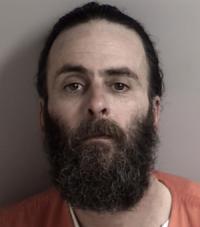
A South Lake Tahoe man suspected of burglarizing two local restaurants was arrested Tuesday.

Shawn DeCosta, 49, was taken into custody in connection with the Jan. 4 burglary at IHOP and is a suspect in the burglary at Blue Angel Café. A window was smashed at the pancake house, according to police Lt. Brian Williams.

Blue Angel was burglarized twice — Dec. 30 and Jan. 4. Each time the suspect got a couple hundred dollars, according to owner Jeff Cowen.

“The damage cost more than the take,” Cowen told Lake Tahoe News. He added that a person fitting DeCosta’s description was asked to leave the restaurant about a week before the first break-in.

DeCosta was identified from surveillance cameras at IHOP.

He may also be responsible for a burglary at Tahoe Hemp Co. in 2015, as well as being a suspect in recent incident where a teenage cyclist was jumped on the bike path near Wildwood Avenue.

— Lake Tahoe News staff report


Harder drugs, more medical calls at SnowGlobe

Rock Med officials at SnowGlobe at times asked law enforcement to leave the tent because patients didn't feel comfortable. Photo Copyright 2016 Carolyn E. Wright

Rock Med officials at SnowGlobe at times asked law enforcement to leave the tent because patients didn’t feel comfortable. Photo Copyright 2016 Carolyn E. Wright

By Kathryn Reed

More medical issues at SnowGlobe this year could be the result of concertgoers using harder drugs.

That was the message Russell Liles, detective with South Lake El Dorado Narcotics Task Force, told the local drug coalition on Jan. 5.

Rock Med was in charge of all onsite medical issues for the three-day musical festival last month in South Lake Tahoe. The organization specializes in working at events like this. Exact numbers of how many people were treated have not been released.

The medical group also had personnel at the transit center in case anyone who got on a bus at the concert venue needed attention before going to their lodging establishment.

Barton Memorial Hospital handled the more serious cases, like drug overdoses. The emergency room saw 116 patients total from 7pm to 7am on the three nights of the music festival, of which one-third were estimated to be SnowGlobers.

“The majority of patients treated at Barton from SnowGlobe were due to weather exposure, alcohol use or substance use,” Mindi Befu, Barton spokeswoman, told Lake Tahoe News. “There was an increase in SnowGlobe patients when the Rock Med tent onsite at the event was no longer available for service.”

Molly – aka MDA and ecstasy – remains the drug of choice for this crowd. It makes people extremely thirsty. That’s why lines are long to refill water bottles.

The amnesty box was nearly empty. This is where people can dump their illegal drugs without any questions being asked or threat of arrest.

“I think they are getting better at smuggling drugs in,” Liles said.

People were using DMT (dimethyltryptamine), according to Liles. It is a psychedelic drug. He added this was the first year officers saw the hallucinogen ketamine (aka Special K). It’s an animal tranquilizer that has effects similar to PCP that is often used with ecstasy.

Officers noticed significantly less marijuana use this year compared to the past when it was almost like getting a contact high walking the grounds.

What alarmed Liles, though, was the number of minors cited for possession of alcohol – 104.

It’s estimated 35,000 people attended the Dec. 29-31 event on the ball field at Lake Tahoe Community College.


Yosemite concessionaire wants $44 mil. for trademarked park names

By Michael Doyle, McClatchy News Service

Yosemite National Park’s former concessionaire surprised federal officials by quietly trademarking high-profile park names and then “grossly” overvaluing the intellectual property in an unjustified bid for millions of dollars, government lawyers contend in a new legal filing this week.

With an aggressive, 25-page lawsuit response that foreshadows more maneuvering to come, the Justice Department publicly asserts for the first time that the former Yosemite concessionaire proposed an “improper and wildly inflated” value for the trademarked park names.

The company, DNC Parks & Resorts at Yosemite Inc., demanded to be paid for the trademarks it valued at $44 million. The National Park Service, by contrast, said the trademarks for such park names as “The Ahwahnee” hotel were worth only $1.63 million.

Read the whole story


CDC: E-cigarette ads reach 70% of 7-, 12-graders

By Brady Dennis, Washington Post

The ads have popped up everywhere in recent years, from TV commercials featuring celebrities to model-adorned magazine spreads to banners splashed across websites. E-cigarette marketing has become so ubiquitous that it now reaches more than two-thirds of U.S. middle and high school students, according to a report Tuesday — a development that some public health officials argue is prompting more teens to use the devices and threatening decades of progress in combating youth tobacco use.

“It’s the Wild West out there when it comes to e-cigarette advertising,” said Tom Frieden, director of the Centers for Disease Control and Prevention, which released the data. “It’s no coincidence that as the advertising has skyrocketed, the use of e-cigarettes has skyrocketed.”

CDC’s findings were drawn from the 2014 National Youth Tobacco Survey, which included a representative sample of more than 22,000 middle and high school students. Nearly 70 percent — an estimated 18.3 million students — reported having seen e-cigarette marketing in at least one setting that year.

Read the whole story


Squaw-Alpine strive to help armed forces

Squaw Valley and Alpine Meadows are offering a season pass to active duty military in exchange for a $25 donation to the Military to the Mountains program.

The partnership between the two ski resorts, High Fives Foundation, Achieve Tahoe (formerly Disabled Sports USA Far West) and Adaptive Training Foundation that will host and train 10 injured veterans of the United States armed forces on the slopes of Squaw Valley this spring. The program has raised $50,000 this season.

The resorts provide a Silver Tahoe Super Pass to military personnel, along with a note of appreciation and a challenge coin for a donation of $25, of which all proceeds support nonprofit organizations 22Kill and Military to the Mountains. Additional donations are also accepted at the resort on behalf of these organizations, and online donations will be coming soon. Those interested in purchasing this pass must present their U.S. active duty military ID at the guest services and sales center at Squaw Valley or Alpine Meadows.


Nevada to help driverless car industry

By Richard N. Velotta, Las Vegas Review-Journal

The state will dedicate resources through the Governor’s Office of Economic Development toward the autonomous car industry in a bid to become the nation’s leader in the testing and development of vehicles that drive themselves.

At a workshop meeting of transportation regulators and car manufacturers Tuesday, Gov. Brian Sandoval announced that within a month, a center for autonomous vehicles would be created within his economic development office.

Sandoval said dedicating state resources for those vehicles would be a first in the United States.

The office would assist companies looking to test or build their vehicles in Nevada the same way that the state now helps companies with unmanned aerial vehicles.

Read the whole story


Hotel sells for hefty price in El Dorado Hills

By Mark Anderson, Sacramento Business Journal

In another sign that Sacramento’s hospitality market is becoming more attractive to investors, a hotel in El Dorado Hills recently sold for a robust price.

A San Francisco investor purchased the Holiday Inn Express in the El Dorado Hills Town Center on Dec. 15 for $14.4 million, or $155,203 per room, and plans a major renovation.

The price reflects the hotel’s strong performance since it opened in late 2005, said Justin Myers, a vice president for Irvine-based hotel brokerage firm Atlas Hospitality Group. The hotel, which was originally built for roughly $12 million, had been run by McDermid Management Co. of Colorado. The Colorado company is run by Charlie McDermid who with his wife at the time, Douglas County Commissioner Nancy McDermid, used to own the South Lake Tahoe Holiday Inn Express.

Read the whole story


Support group available for new moms

Barton Health’s Mommy and Me Support Group is now offered two days a week.

New mothers and their babies up to age 1 are invited to attend a weekly support group to share experiences and discuss the joys and challenges of parenting. This is an opportunity to get support from other mothers as well as professional support from a childbirth instructor and guest speakers. Speakers and topics vary week to week.

The sessions are Tuesday from 10am-noon and Thursdays from 2-4pm. They are at Barton University, 1077B 4th St., South Lake Tahoe.

For more information, contact Bridget Demaree at 530.543.5549 or bdemaree@bartonhealth.org.