K’s Kitchen: Spicy soup ideal on winter night

By Kathryn Reed

It’s always good to have a Plan B when it comes to dinner – especially when guests are coming.

Once I realized what a hectic day I was going to have I knew I needed to find something easy to make. Out came the crock pot. This would allow me to have dinner cooking all day and not have to worry whether I would have it ready when my friends arrived.

Another bonus to using a crock pot is that the aroma of whatever is cooking then permeates the house. And a one pot dish makes cleaning up so easy.

This recipe has a little kick to it, which the three of us enjoyed. Know that the flavors are going to meld as they cook, so don’t rely on the initial taste to know if you have the seasonings adjusted correctly.

Assuming I’m going to be around, I start with the crock pot on high. When I leave the house I put it on low.

Served with a salad, bread and wine it’s a complete meal.

    soupSpicy Vegetable Soup

2 C yellow onion, chopped

1 medium green bell pepper, chopped

1 C celery, diced

1 large carrot, diced

1 jalapeño pepper, minced

8 ounces cremini mushrooms, chopped

6 garlic cloves, minced

3 T tomato paste

1 T cayenne pepper

2 tsp ground cumin

1 tsp dried oregano

½ tsp smoked paprika

¼ tsp red pepper flakes

1 (14.5-ounce) can stewed tomatoes

3 C water

1½ C vegetable broth

1 bottle of beer

1 (14.5-ounce) can kidney beans, drained

Salt

Place all of the ingredients into a crock pot. Stir. Cook all day.

Adjust seasonings if need be.


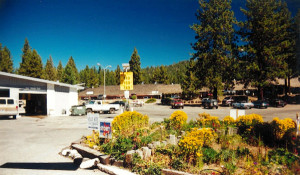
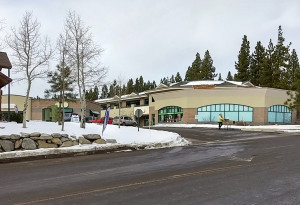
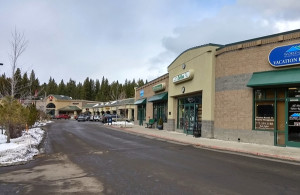
Then and now: Round Hill mall changes

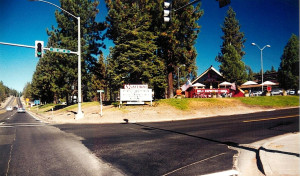
The original Round Hill Shopping Center was built in the early 1960s. It had two driveway entrances and featured a rustic indoor mall.

The corner of the center in 1996. Photo/TRPA

The corner of the center in 1996. Photo/TRPA

On the south corner fronting the center was a popular deli in an A-frame building. A retail and business office building now occupies that separately-owned corner.

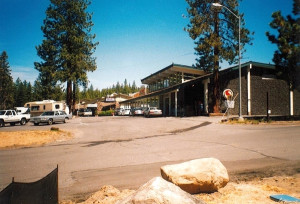
The south entrance to the center in 1996. Photo/TRPA

The south entrance to the center in 1996. Photo/TRPA

To the right of the deli was the south entrance to the center from Elks Point Road. A Safeway store was immediately to the right.

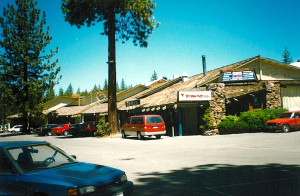
This is what the strip mall looked like 20 years ago. Photo/TRPA

This is what the strip mall looked like 20 years ago. Photo/TRPA

Next to the Safeway going north was the main building of the mall.

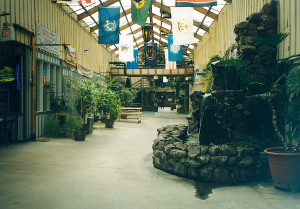
In 1996 the mall was enclosed. Photo/TRPA

In 1996 the mall was enclosed. Photo/TRPA

The skylight-topped mall included, among other things, water displays, a roller skating rink, U.S. post office, photography, jewelry, shoes, clothing, crafts, gifts, bakery, florist, various eateries, bars, offices and an open booth from which mall promoter Dick Green broadcast Round Hill Time daily. (“Hi there, Mrs. Smith — nice to see you here!”)

At the far north end of the mall was a spacious disco nightclub which had various names/owners over the years including the Monte Vista.

The north entrance in 1996. Photo/TRPA

The north entrance in 1996. Photo/TRPA

The north driveway to the center was from Highway 50, fronted by a Shell gas station which was razed in about 2005. That lot remains empty today. At one time there were thre gas stations at Round Hill; today just one.

By 1998, the original buildings had been razed and replaced by the new Round Hill Square, without an enclosed mall. The post office and Safeway remained, but the other original tenants gradually left.

The south entrance as it looks in 2016. Photo/Bill Kingman

The south entrance as it looks in 2016. Photo/Bill Kingman

On the site where Safeway had been at the south entrance now stands the Dollar Tree store.

The strip mall in 2016. Photo/Bill Kingman

The strip mall in 2016. Photo/Bill Kingman

A new Safeway was built at the north end of the center where the Monte Vista nightclub was.

Note: My thanks to Karen Fink, Theresa Avance, Devin Middlebrook, and Julie Regan for sharing the 1990s photos from the Tahoe Regional Planning Agency files.

— Bill Kingman


Olympic champ embraces being free spirit

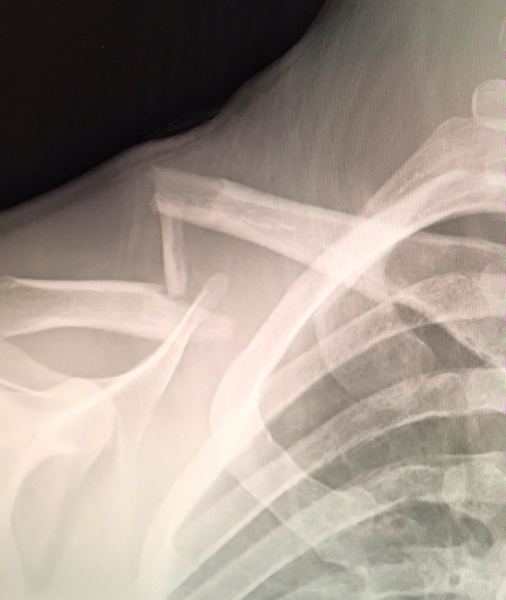
Jamie Anderson of Meyers hopes to be back competing this month after breaking her collar bone. Photo/Provided

Jamie Anderson hopes to be back competing this month after breaking her clavicle. Photo/Provided

By Jessie Marchesseau

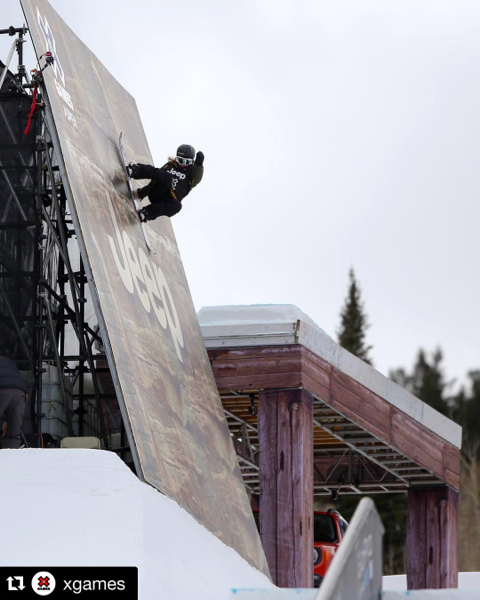
Olympic snowboard gold medalist Jamie Anderson started the season with a clavicle broken in five places, her first surgery, one plate and eight screws.

Her collarbone now on the mend, Anderson is anxiously awaiting approval from her doctors to get back on the snow. When she does return to competition, she will be doing so without the U.S. Snowboard Team.

Anderson joined the team in 2014 when she was heading to the Olympics. However, she has otherwise opted to go it on her own when it comes to training and competing on the snowboard circuit.

“For me, snowboarding is just about fun! It’s not so much about the ‘serious training’ or team stuff,” Anderson said, “it’s just about being on the mountain with your friends and having fun doing whatever you want.”

Jamie Anderson's record proves doing her own thing is working. Photo/Provided

Jamie Anderson’s record proves doing her own thing is working. Photo/Provided

John Rice, general manager of Sierra-at-Tahoe the resort that sponsors Anderson, doesn’t see her decision to not be part of the team as having negative impacts on her riding or her sponsorship from Sierra.

“Everyone knows she’s the best female snowboarder in the world, so it’s not an issue at all,” he told Lake Tahoe News.

For athletes still working their way to the top, Rice said he believes being a member of the U.S. Team can offer big training advantages. But for Anderson, the advantages would be more for her teammates than for her.

“She’s a free spirit,” he said. “When she needs to be part of the team, she signs up and she’s a good member.”

Enjoying the serenity of Tahoe is one Jamie Anderson's indulgences. Photo/Provided

Growing up in Meyers, Jamie Anderson is all about embracing the outdoors at Tahoe. Photo/Provided

Anderson is not the only pro snowboarder who has opted out of being on the team. Shaun White was rarely a member. Sage Kotsenburg who also won a gold medal in Sochi has chosen not to join this year. Two-time Olympian Elena Hight took a break from the team last year, but is back again this season.

Tricia Byrnes, snowboarding press officer for the U.S. Ski and Snowboard Association and a former professional snowboarder, said it’s not uncommon for snowboarders to go on and off the team or only join up around the Olympics.

Snowboarding is different than ski racing, she said. Snowboarders don’t necessarily want or need the structured training or team mentality that being part of the U.S. Ski Team brings. A lot of snowboard athletes want to do their own thing and work with their own coaches. Plus, many of them are juggling filming, photo shoots and other obligations which don’t really allow them to have structured schedules or make all of the competitions required of team members.

But just because Anderson isn’t officially on the team doesn’t mean she can’t take advantage of some of the benefits like coaches or training. Byrnes said anytime Anderson wants advice from a coach or trainer, all she has to do is ask. And if she wanted to join up mid-season, that option is there for her, too.

But for now, being on her own is working out just fine for Anderson. She follows her own off-the hill training regimen which includes a lot of yoga, acupuncture, working out with a personal trainer, and, recently, spending time in a hyperbaric oxygen chamber to speed her healing.

Repairing the broken clavicle was Jamie Anderson's first surgery. Photo/Provided

Repairing the broken clavicle was Jamie Anderson’s first surgery. Photo/Provided

“She can survive and thrive on her own program; not everyone can do that,” Byrnes told Lake Tahoe News. “She’s a total free spirit, and she knows what’s going to motivate her and rally her better than anyone.”

If you’re counting, that makes two people who called Anderson a free spirit so far, and Anderson herself makes three. She says being a “free spirit” and wanting to do her own thing is part of the reason she chose not to join the team.

“It’s a creative expression,” she told Lake Tahoe News of snowboarding, “and I just like to go with my own flow.”

Anderson missed out on the Dew Tour due to her injury, but she’s ready to get back on her board and is hoping to get the OK from her doctors before the LAAX Open in Switzerland Jan. 18.  U.S. Snowboard Team or not, fans can expect to see plenty more of Jamie Anderson flying through the air with her snowboard this season.


Opinion: When California sterilized 20,000 citizens

By Alexandra Minna Stern

Not too long ago, more than 60,000 people were sterilized in the United States based on eugenic laws. Most of these operations were performed before the 1960s in institutions for the so-called “mentally ill” or “mentally deficient.”

In the early 20th century across the country, medical superintendents, legislators, and social reformers affiliated with an emerging eugenics movement joined forces to put sterilization laws on the books. Such legislation was motivated by crude theories of human heredity that posited the wholesale inheritance of traits associated with panoply of feared conditions such as criminality, feeblemindedness, and sexual deviance. Many sterilization advocates viewed reproductive surgery as a necessary public health intervention that would protect society from deleterious genes and the social and economic costs of managing “degenerate stock.” From today’s vantage point, compulsory sterilization looks patently like reproductive coercion and unethical medical practice.

At the time, however, sterilization both was countenanced by the U.S. Supreme Court (in the 1927 Buck v. Bell case) and supported by many scientists, reformers, and law-makers as one prong of a larger strategy to improve society by encouraging the reproduction of the “fit” and restricting the procreation of the “unfit.” In total, 32 U.S. states passed sterilization laws between 1907 and 1937, and surgeries reached their highest numbers in the late 1930s and early 1940s. Beginning in the 1970s, state legislatures began to repeal these laws, finding them antiquated and discriminatory, particularly toward people with disabilities.

Of the 60,000 sterilizations in the United States, California performed one-third, or 20,000, of them, making the Golden State the most aggressive sterilizer in the nation. Ten years ago, I published a book that explores the history of eugenics and sterilization in California, but I was frustrated that my research had yielded so little information about the state’s extensive sterilization program. I knew next to nothing about the thousands of Californians sterilized in institutions such as Sonoma, Mendocino, and Patton, all located in rural, remote parts of the state.

Who were these people? Why were they committed to institutions and then deprived of their reproductive autonomy? What was the demographic composition of those sterilized? Were certain groups of people disproportionately targeted? What about their families, interests, and lives, in and outside of the institution?

In 2007, I finally found crucial pieces of the historical puzzle. At the administrative offices of the state’s Department of Mental Health (now Department of State Hospitals), which had directed the state’s sterilization program decades earlier, a secretary pointed me to a standard-issue gray metal filing cabinet. Inside, I found a box with some microfilm reels. Squinting at the small dark font on the negative strips, I could make out the words “Sterilization Recommendation.”

In total, I located 19 microfilm reels containing thousands of documents dating from 1919 to 1952 (the most active years of sterilization), which had been preserved in the 1970s when the paper files were discarded. Several years ago, I was able to launch a project with a team of students and researchers at my institution, the University of Michigan, Ann Arbor, to create a dataset that contains all these records in de-identified and coded form. Data entry has been a protracted and demanding process, taking nearly three years, but ultimately we created a dataset containing 19,995 patient records.

Our dataset reveals that those sterilized in state institutions often were young women pronounced promiscuous; the sons and daughters of Mexican, Italian, and Japanese immigrants, frequently with parents too destitute to care for them; and men and women who transgressed sexual norms. Preliminary statistical analysis demonstrates that during the peak decade of operations from 1935 to 1944 Spanish-surnamed patients were 3.5 times more likely to be sterilized than patients in the general institutional population.

Laws that govern the use of medical records require that we redact personal information to protect patient privacy. Even though we will never be able to divulge the real names or precise circumstances of the 20,000 people sterilized in California, we can still see the ugly underside of medical paternalism and how authorities treated Mexican-Americans, African-Americans, immigrant groups, and people with disabilities and mental illnesses in 20th-century America.

Consider the following stories:

In 1943, a 15-year-old Mexican-American boy we will call Roberto was committed to the Sonoma State Home, an institution for the “feebleminded” in Northern California. Roberto’s journey to Sonoma began the previous year when he was picked up by the Santa Barbara Police for a string of infractions that included intoxication, a knife fight, and involvement with a “local gang of marauding Mexicans.” Citing his record of delinquency and “borderline” IQ score of 75, the officials at Sonoma recommended that Roberto be sterilized.

Roberto’s father adamantly, and unsuccessfully, opposed his son’s sterilization, and went so far as to secure a priest to protest the operation. Again and again, the records reveal that many Mexican-American families like Roberto’s resisted compulsory sterilization, seeking support from the Catholic Church, the Mexican Consulate, and legal aid societies. On occasion, family members were able to stop or forestall the operation; in most cases, however, medical superintendents would simply override such protestations and proceed with surgery.

Four years later, the relatives of Hortencia, a young African-American woman held in Pacific Colony in Spadra, California, contacted the NAACP to make a strong case against her sterilization. They halted the surgery with threats of high-profile legal action, even though this meant Hortencia was not permitted to leave the institution.

At the same time, we found that many parents and guardians consented to the sterilization of their loved ones. Silvia, a Mexican-American mother of a toddler, was 20 years old when she was placed in Pacific Colony in 1950. She was assessed with an “imbecile” IQ of 35 and reportedly had been raised in a violent home. Silvia’s mother ostensibly could not control her daughter and approved her sterilization.

Fifteen years earlier, Timothy, a white 25-year old placed in Stockton because of same-sex encounters since boyhood and a psychiatric diagnosis of “dementia praecox, hebephrenic type,” consented to his own reproductive surgery, perhaps because he knew that it was a potential ticket out of the facility or because he felt it would help him control his pathologized sexual desires.

In contrast, Mark, a white clergyman committed to Patton (a hospital for the “mentally ill”) for “dementia praecox, catatonic type,” wrote to officials in Sacramento in 1947 that he was “religiously opposed” to his own vasectomy. Records indicate that by speaking up for himself Mark persuaded authorities against the recommended vasectomy.

Taken together, these experiences illuminate, often in poignant detail, an era when health officials controlled with impunity the reproductive bodies of people committed to institutions. Superintendents wielded great power and proceeded with little accountability, behaving in a fashion that today would be judged as wholly unprofessional, unethical, and potentially criminal. We hope our project can restore the dignity and individuality of people such as Roberto, Hortencia, and Mark, who were subjected to this kind of dehumanization.

This history remains relevant, considering a more contemporary episode of sterilization abuse, again in California’s public institutions. Although the state’s eugenic sterilization law was repealed in 1979, existing legislation provided leeway for operations in state prisons pursuant to a strict set of criteria. Between 2006 and 2010, 146 female inmates in two of California’s women’s prisons received tubal ligations that ran afoul of these criteria; at least three dozen of these unauthorized procedures directly violated the state’s own informed consent process. The majority of these female inmates were first-time offenders, African-American or Latina. Echoing the rationale of the eugenicists who championed sterilization in the 1930s, the physician responsible for many of these operations blithely explained they would save the state a great deal of money “compared to what you save in welfare paying for these unwanted children—as they procreated more.” In 2013, an intrepid journalist at the Center for Investigative Reporting broke this story and it eventually led to the passage of a bill banning sterilization in California state prisons.

These revelations demonstrate that, even in our age of bioethics and awareness of the wrongs of medical experimentation, we are not immune from the conditions that facilitated compulsory sterilization in the mid-20th century: lack of institutional oversight, presumptions that certain members of society are not “fit” to reproduce, and overzealous and biased physicians. The documents we found certainly contain historical lessons for the present and starkly remind us that we should never forget the past.

Alexandra Minna Stern is professor of American culture, obstetrics and gynecology, women’s studies, and history at the University of Michigan. A new edition of her book “Eugenic Nation: Faults and Frontiers of Better Breeding in America” was published in December 2015.



Farmers try political force to open Calif.’s taps

By Michael Wines and Jennifer Medina, New York Times

FIVE POINTS — The message that Maria L. Gutierrez gave legislators on Capitol Hill was anguished and blunt: California’s historic drought had not merely left farmland idle. It had destroyed Latino farm workers’ jobs, shuttered Latino businesses and thrown Latino families on the street. Yet Congress had turned a deaf ear to their pleas for more water to revive farming and farm labor.

So Latinos — the nation’s fastest-growing ethnic group, she noted pointedly — were sending a warning that politicians could not ignore.

“We created an organization that’s called El Agua Es Asunto de Todos — Water Is Everybody’s Business — so the Latino voice can be heard,” Ms. Gutierrez, who described herself as an El Agua volunteer, said in October 2013 at the meeting with lawmakers. “Don’t devastate our economy. Don’t take our jobs away.”

The group has since blanketed California with demands for more water on Spanish-language television, on the Internet, even on yard signs. But for whom it speaks is another matter: El Agua is bankrolled by more than $1.1 million from the Westlands Water District, the nation’s largest agricultural irrigation contractor, a state entity created at the behest of — and largely controlled by — some of California’s wealthiest and most politically influential farmers.

For almost five decades, Westlands has brought its farmers a torrent of water from the reservoirs and aqueducts of the federal Central Valley Project, the vast public work that irrigates half of California agriculture. Drought has reduced that torrent to drops, and El Agua is one part of Westlands’ wide-ranging effort to open the spigots again.

Read the whole story


ZCES preps for annual Night in Tahoe shindig

Tickets are available for A Night in Tahoe, Zephyr Cove Elementary School’s annul fundraiser.

The event at Edgewood Tahoe is Jan. 22 from 6-10pm. It includes a silent auction, dancing, food, and wine.

Tickets are $70 per person and available in the front office or from any Parents Club member. Tickets will also be available at the door.

While you’re enjoying A Night in Tahoe, your kids may enjoy Kids Night Out at Kahle Community Center. This is for ages 5 and up. The $15 fee includes a slice of pizza, drink and popcorn. It goes from 6-8:30pm.Call Kahle to register — 775.586.7271.

For more info, contact Amanda Pilcher at ajpilcher@hotmail.com or 832.314.7405.


Obstacle racing losing its electrified challenges

By Erin Beresini, Outside

Swedish obstacle series Tough Viking is doing away with electrified obstacles in 2016, OCR Europe reports. The move puts it among a handful of events axing electricity as the industry chucks its original selling points of shock value and mental games in a sad but necessary drive for longevity.

Savage Race did away with its electric obstacle Tazed N Blazed in 2014. Tough Mudder, whose brand was arguably built on YouTube videos and articles about Electroshock Therapy, a giant trellis of dangling wires juiced with “10,000 volts of electricity,” (runners have to run through or under this to pass) announced in November 2015 that its new event, the Tough Mudder Half, won’t have any electric obstacles. In the meantime, the original Tough Mudder has also phased out Electric Eel, a stomach crawl under live wires.

Part of the issue with electricity is legal, to be sure. A 2013 study highlighted one Tough Mudder participant who received 13 shocks running through Electroshock Therapy. Also, “Electroshock Therapy’s had a lot of bad press,” says Margaret Schlachter, editor in chief of OCR news site Mud Run Guide. Not just for Tough Mudder, but for the industry in general, whose diverse events often get lumped together as crazy obstacle races who electrocute people.

Read the whole story


Education technology not limited to computers

By Ian Whitaker, Las Vegas Sun

Technology in the classroom has come a long way.

What started with a simple chalkboard has evolved into projectors, computers, tablets and now robots. If you go by what you see at CES, which kicked off Tuesday in convention centers on the Strip, the beeping, booping machines are the future of technology in the classroom.

It’s not a surprise that the programmable gizmos are taking center stage given the recent obsession with improving science, technology, engineering and mathematics education.

Read the whole story


Avalanche training near Mount Rose

The North Lake Tahoe Fire Protection District and Mount Rose Ski Patrol will be conducting avalanche training Jan. 11, 13, and 15 near the Mount Rose summit.

There will be hands-on training for avalanche skills in four 30-minute stations, beginning at 10am and 1pm. The stations will consist of transceiver and RECCO search, probe line organization, snow pit-snow sack information, and depending on availability, a Search dog demonstration.

The trainings will be on the back road into Mt. Rose Ski Area across from the summit restroom parking lot. The drill area is within a few minutes’ walk.


Prescribed fires in basin to resume next week

Tahoe Douglas Fire Protection District, California State Parks and the U.S. Forest Service may continue prescribed fire operations next week.

To view a map with project locations and details, go online.

Residual smoke may be seen in locations where operations have taken place over the last several weeks.

Before conducting prescribed fire operations, agencies post road signs around areas affected by prescribed fire, send email notifications and update the local fire information line at 530.543.2816.  To receive prescribed fire notifications, send an email to pa_ltbmu@fs.fed.us.