Opinion: EDC’s future in the wrong hands

By Larry Weitzman

About or shortly after the time Larry Combs was dismissed from his two-year stint as CAO of Merced County he was asked by the Board of Supervisors of Sutter County to help them find a new CAO. It was a paid consultancy.

Combs recommended a man named Jim Arkens, who at the time was the CAO of Mono County, a county of about 3,000 square miles, but only 14,000 people, with only 6,000 of those residents living in the unincorporated areas. The only incorporated city, Mammoth Lakes, has a population of about 8,000.
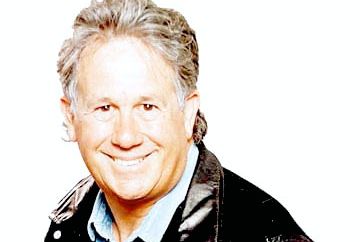
Larry Weitzman

Larry Weitzman

Arkens had only been CAO of Mono for about a year, accepting the position initially in Mono as its human resources director in 2011, eventually becoming chief administrative officer a year later. Sutter agreed to pay $185,000 annually on a three-year contract, plus $4,000 in moving expenses. His resume consisted of a 21-year career with Scott Paper as a fire and safety protection technician, working for the Northwest Regional Planning Commission (in Wisconsin), serving on the City Council for a claimed 24 years in Menominee, Mich. (pop. 8,458) and for the five years prior to his stint in Mono County, he was the human resources director of a small Taos, N.M., (pop. 5,716) hospital.

Obviously, being a Sutter CAO was a more significant government position, but that didn’t stop Arkens from breaking some serious rules. In a county with an annual general fund budget of about $60 million, Arkens, among other issues according to a June 2015 Grand Jury Report, sold the Sutter BOS on a $10.5 million solar system that required the county to take on $9.1 million in debt service at an interest rate of 3.7 percent. It was supposed to be able at peak hours under perfect conditions produce 1.468 megawatts of power, which was nothing special as most solar systems sell for about $7 a watt as this one did.

Because of its cost, it will not return any monetary benefits until year 16 based on the seller’s (optimistic) projections. That’s a big system and a lot of debt for such a small county. And two years after the contract it is not yet completed, but the county is still paying for it. However, the big problem didn’t occur until some months later, when the county conducted an outside audit by Gallina LLP that revealed that CAO Arkens (and the Sutter County supervisors) were violating government accounting principles and Government Code Section(s) 27008 and 27005. The question is how?

Arkens actually was found to have a “second set of books” and kept not only this $10.5 million contract from the auditor/treasurer, but collected and spent funds regarding this contract in a separate account apart from the county general fund handled by the auditor/treasurer. GC Section 27008 requires that the auditor certify all claims against the county while 27005 sets forth the treasurer’s role regarding disbursements.

Because of this second set of books it has been all but impossible for the proper allocation to the various departments of the receipts and disbursements. Some reports said Arkens had heard that the former auditor Robert Stark was tough to work with as was the California law. Nathan Black who was elected auditor 2014 after Stark retired after 30 years as the auditor said he was “shocked” by the Gallina audit and not knowing anything about the $10.5 million contract and the related debt.

A few months after the Gallina audit, the Sutter BOS advised Arkens with the proper 120-day notice (actually about five months in this case as the notice was given in early September 2015) that his three-year CAO contract was not going to be renewed. So what did Arkens do? He used up about 40 days of leave and stopped showing up at the county. He will be paid through this month.

How does this apply to El Dorado County? It was Combs who took a fee to find for Sutter County a new CAO three years ago and this was the best he could do? Guess who our BOS gave the job to lead the recruitment for our new CAO? That’s right, the same Larry Combs. Last Monday was the NFL’s “Black Friday” where almost every failed NFL coach was given his walking papers. Combs has a worse record, especially if his entire history is evaluated. Yet who does our BOS hire for the job? The biggest loser (no offense meant to the TV show where individuals work their butt off to be “the biggest loser”).

You can bet that the chances of getting a qualified, non-dictatorial candidate that has the entire county’s best interests in mind, one who follows law, regulation and procedure, one who appoints and hires not their friends, one who does not play the game of government musical chairs, one who demands hard work and works hard themselves, one who does not tolerate feather bedding, one who creates complete transparency and demands absolute honesty, one who will not use lawyers to facilitate cover-ups, one who reports clearly to the BOS with no favoritism among BOS members and one who will do proper background checks (something that hasn’t happen for at least six years) will never happen as long as Combs is involved in any way with the selection process. If past experience is how we predict future performance, Combs is absolutely disqualified.

Larry Weitzman is a resident of Rescue.


National Park Service stretched thin as it approaches 100th year

By Kevin Freking, AP

WASHINGTON — Under President Dwight D. Eisehower, the nation prepared for the 50th birthday of the National Park Service with a spending splurge that refurbished Independence Hall in Philadelphia and helped complete the Gateway Arch in St. Louis and the 469-mile Blue Ridge Parkway. This year, the world-famous system turns 100 and the celebration will be far more modest.

The Obama administration and Republican lawmakers have vastly different ideas about what to do.

Both parties agree that the country’s national parks and historic sites could use some sprucing up. Their shared goal is to use the centennial to improve trails, visitor centers, campgrounds and other park features that need maintenance work.

The question is how much of a dent Congress will make in a system-wide maintenance backlog with an estimated $11.5 billion price tag.

President Obama has recommended spending an additional $1.5 billion on the parks over a three-year period. Republican leaders in Congress have a smaller birthday present in mind.

Just the fact they are open to greater investment, though, is being viewed as a promising first step by some Democrats.

Areas of agreement include lifting the price of the $10 lifetime park pass for seniors to $80 and enacting a lodging tax for those who stay overnight, though how much and whether it should apply to campers as well as hotel guests, will have to be worked out in the months ahead.

The administration and lawmakers are also looking to use some of the additional federal dollars to leverage private-sector donations and endowments.

Lawmakers go into the debate with different views on why the parks system is failing to keep up with basic maintenance. Republicans point to Congress’s appetite for adding new units to the parks system, diluting the pot of federal dollars into ever-smaller slices.

“It’s fun and sexy to add a new unit to the Park Service. It’s not fun or sexy to talk about fixing a sewer system,” said Rep. Rob Bishop, the Republican chairman of the House Natural Resources Committee.

Democrats say Congress has simply failed to make the national parks a priority. The budget over the past five years has been largely flat, increasing from $3.16 billion to $3.24 billion, though Congress did just boost spending by more than $200 million in this year’s budget.

Most of the nation’s 409 park units have a piece of the backlog.

Alcatraz, the former federal prison in California, has crumbling walls and deteriorated windows. “The walls leak, concrete falls off the building, rust jacking is causing the building to move and crack…,” the National Park Service said in a report to Congress this past year detailing its budget requests.

Mammoth Cave in Kentucky needs to have dirt trails replaced for safety reasons. “Without this project the park may have to severely curtail visitor access to Mammoth Cave and eliminate significant visitor experiences,” the Park Service said.

And a historic hotel at Glacier National Park needs a new fire sprinkler system and other work. “Failure to rehabilitate this building will pose serious health and life safety threats to park visitors and park and concession employees,” the Park Service wrote.

Congress is just beginning to take a closer look at the administration’s request for more money and the debate will extend well into 2016. In a recent hearing, Republican Sen. Lisa Murkowski, chairman of the Senate Energy and Natural Resources Committee, called the backlog a travesty, but she said that spending $1.5 billion without identifying how most of that money would be raised was troubling. Other Republicans agreed.

Meanwhile, draft legislation that Bishop is putting together provides too little help, Democratic lawmakers said when reviewing it.

“Making a dent in the maintenance backlog is going to require a significant investment,” said Democratic Rep. Niki Tsongas of Massachusetts. “New revenue generated by fees will not solve this problem.”

Lawmakers from both parties are interested in using federal dollars to generate more private sector investments in the parks. They want to follow the model of a program called the Centennial Challenge in which the federal government spent $10 million and other groups and individuals pitched in about $16 million.

Obama has upped the ante, calling for federal spending of up to $100 million over each of the next three years to be matched with private contributions from individuals, foundations or businesses.

“It’s essential the federal government have skin in the game. The first question I get from prospective donors: Is the Park Service invested?” said Will Shafroth, president and CEO of the National Park Foundation, a charity that raises money for park improvements.

The big-ticket item in Obama’s request is $900 million that would address non-transportation infrastructure. Roads and bridges make up about half of the maintenance backlog, and administration officials will use the recently passed highway bill to direct more money there.


Country of origin requirement for beef repealed

By Nancy Fink Huehnergarth, Forbes

That next steak or pork chop you buy at the grocery store could be from Mexico and beyond, but you’ll never know it.

On Friday, Congress repealed the country-of-origin-labeling rule (COOL) on beef and pork after the World Trade Organization (WTO) imposed $1 billion in retaliatory import tariffs against United States if the rule was not overturned. The repeal was part of the omnibus spending bill signed by President Obama on Friday.

COOL mandates labels on packaging that reveal the country (or countries) where the meat animal was born, raised and slaughtered. While beef and pork will no longer have to comply with COOL rules, chicken and lamb must still be labeled.

Read the whole story


Book review: 2 inspired takes on survival

By Kim Wyatt

MTrain

“M Train”

By Patti Smith

Knopf, 272 pages, $25 hardcover

One-line review: Transcendent.

It seemed fitting to begin “M Train” by Patti Smith at a diner, the kind with Formica counters and only 10 items on the menu. Smith is a diner and—more significantly—coffee aficionado, so I felt a kinship with her before I even cracked the spine.

Eating alone at a diner with a book is a pleasure for those for whom it is a choice. “M Train” is an impressionistic meditation on many things, but most skillfully on navigating grief. Rock n’ Roll Hall of Famer Smith won the National Book Award in 2010 for her memoir “Just Kids,” chronicling the writer’s early years in New York and her relationship with photographer Robert Mapplethorpe. This book is an incandescent departure, both elegy and ode to the powers of reflection.

What makes a memoir compelling is not just an author’s skill with language, or the series of events that make up a life; it’s their lens, the particular way in which they see the world. Who else goes to a prison in French Guiana for their honeymoon, and later joins the Continental Drift Club? Smith is a person worth traveling with. You won’t be staying at the Best Western and hanging at the pool. Her obsessions turn into journeys, and we are along for the ride.

The book begins with a dream and an unusual guide, a sardonic cowpoke. Don’t let this put you off; by the end of the book we are looking forward to his visitations. Although “M Train” is steeped in loss—her husband, mother, brother and beloved café—each luminous chapter is a stop in which Smith departs to capture writers and artists who have guided her throughout her life. This aspect of the book was like catnip to me.

Smith finds magic and mysticism in books. Her mother began gifting her with books at a young age, and they have exerted lifelong power and influence. Roberto Bolano, Virginia Woolf, William Burroughs, Sylvia Plath, Jean Genet, Paul Bowles and, to my delight, a roster of Japanese authors including Mishima and Murakami are among those who appear in Smith’s travels. At each rendezvous, she visits a home, grave, or an object; the effect is not morbid, but rather, insight into the cumulative passions that make up a life. Polaroid photos add to the spell cast by each chapter, and I soon found myself contemplating my own relationships with books and people.

Although grounded by ritualistic visits to her café for coffee and writing, Smith is powered by her fascinations, and there are many. But she’s also unfailingly human: She loves detective shows; when Lennie Briscoe on “Law & Order” falls off the wagon, she worries about him. She’s a cat lady. We see her hemming pants and sewing curtains and listening to Detroit Tiger ball games on the radio with her husband. But she also has friends named Ace and Dice, and when she chokes on a fish bone in Mexico, she sticks it in her pocket to consider later.

I loved Smith’s minimalist gustatory tour of New York: coffee, a slice of pizza, more coffee, a tin of sardines, coffee. And her uniform: Dungarees, T-shirt, long coat and watch cap, an affectionate object from her childhood. She doesn’t have time for fussy clothes, nor, apparently, vegetables. Not complicating her life with busy food or dictates about fashion, she frees her mind for other pursuits.

But her reflections aren’t navel gazing: they open up the world to us as well. When she literally buys into a young man’s dream of owning a café at the shore, you recognize the impulse to connect and feel alive, a remarkable impulse after a life of loss. But isn’t that the story for all of us?

“The transformation of the heart is a wondrous thing, no matter how you land there,” she writes. And she does it again and again.

When grief does surface in the book, it’s random and devastating, just like in real life. It might happen at a stop sign or while crossing the street; it comes mid-flight, and the tears are already there. Yet “M Train” inspires. Smith, at almost seventy years old, shares with us insights that come only through a lifetime of contemplation. You could do much worse than spend an afternoon in a café reading “M Train.”

Station Eleven“Station Eleven”

By Emily St. John Mandel

Vintage; 352 pages, $15.95 paperback

One-line review: A wildly inventive spin on what makes life worth living.

We’re plunged into the action on the first page of “Station Eleven.” It’s mid-production in Toronto during “King Lear,” and something terrible happens. And then something even more terrible happens. Emily St. John Mandel has crafted a weird and spellbinding tale, a fresh take on dystopia that elevates the human spirit while skewering celebrities and making us grateful for the here and now.

Twenty years after a virus has unpeopled the world, the Traveling Symphony, a roaming band of actors and musicians, brings Shakespeare to makeshift towns. “Survival is insufficient” is the troupe’s motto, a nod to nostalgic memories of “Star Trek: Voyager,” but more so to the power of art. The worst has already happened, and we enter a world with nature intact: people routinely hunt for deer and rabbit in the woods, build fires for heat. Those left have figured to how to survive.

When a prophet—why is there always a prophet? Even after the end of the world?—threatens the ensemble’s small hold on survival, they move toward an airport in Michigan where they find the Museum of Civilization, which contains the objects we loved, like iPhones and stilettos, that no longer serve any purpose.

As the world collapsed, many planes were diverted to this landing strip in Michigan; passengers disembarked, and there they remained. A plane at the end of the runway, which landed but remained sealed, is a bone-chilling reminder of what has transpired and all that has been lost.

Author Mandel so skillfully weaves the plots and subplots that I didn’t see the big reveal coming, as anticlimactic as it was. And in skewering our love of celebrity, she reveals to us our desire for human connection. A neat trick.

Sentences, one by one, filled me with dread. Mandel must have been positively gleeful when writing them, and she certainly has a knack for the cliffhangers at the end of the chapters. Characters are complex, mostly original and fully realized. The subplots between them shift back and forth in time, and I found myself equally enjoying both worlds, pre-and post-apocalypse.

Although entertaining, weird and original, there is an occasional heavy-handedness that seems more authorial than character-based; it’s almost as if the author didn’t trust us to know what we’d miss in a world gone bad. Even so, if you need some good escapist fiction, “Station Eleven” is more fantastic than disturbing, in the end, making us look at what we already have with new eyes.

Kim Wyatt is the owner of the independent press Bona Fide Books.


Analyst: Casino industry financial outlook looks stable

By Howard Stutz, Las Vegas Review-Journal

Count the analysts at Fitch Ratings Service as predicting 2016 to be a stable environment for most U.S. gaming operators.

Few casino openings are planned that could tip the scales in saturated gaming markets. Discretionary spending by consumers remains on an upswing. Companies saddled with a hefty long-term debt — this doesn’t include Caesars Entertainment Corp. — have taken necessary steps to address near-term maturities through refinancing efforts and other means.

That’s not to say, however, the casino business is back to the halcyon days of monthly double-digit gaming revenue increases.

Read the whole story


Tahoe real estate market sees gains in 2015

By Mark Glover, Sacramento Bee

The median price for a home in the high-end Lake Tahoe market climbed modestly in 2015, according to Nevada-based Chase International Real Estate.

The median price increased 3 percent year-over-year to $490,000. Unit sales also increased 3 percent year-over-year.

Chase said the South shore and Tahoe City areas saw the biggest increases in unit sales in 2015.

Read the whole story


Vintage ski posters on the auction block

By Georgia Diebelius, Daily Mail

A collection of striking vintage ski posters that hark back to a golden age of winter holidays are expected to fetch a whopping $1 million at auction.

The pictures of Europe’s top skiing destinations were created in the early 20th century when the first resorts began competing against one another to be recognised as the most beautiful and glamorous.

The bold and colorful paper images are incredibly valuable and can fetch up to $23,000 for one single poster.

Read the whole story


Calif. budget earmarks big money for disasters

By Christine Mai-Duc, Los Angeles Times

After one of the most destructive fire seasons in California history and with an eye toward the increased potential effects of climate change, Gov. Jerry Brown has proposed spending more on fighting wildfires than the state has in more than a decade.

Brown’s $170.7 billion budget proposal includes a $719 million one-time drought package, including an extra $215 million to the state’s emergency fund for battling big blazes.

The extra cash, along with increased funding for healthy forests and bolstering levies, takes into account the “new normal” as it relates to climate change and the state’s historic drought, officials say.

Read the whole story


Snippets about Lake Tahoe

·      The Father-Daughter Sweetheart Dance at Harveys in Stateline is Feb. 5 from 7-9:30pm. Cost is $10 per person. For more info, call 775.586.7271.

·      TRYP’s January workshop is a community service open house where more than 12 nonprofits will discuss their services and try to bridge the gap between organizations. The workshop is free for members of all nonprofits, and $5 for non-members. The event is Jan. 19 from 6-7pm at the Blue Angel Cafe in South Lake Tahoe.

·      Rep. Tom McClintock, R-Oak Grove, will host a town hall meeting Jan. 20 at 6pm at Rolling Hills Middle School in El Dorado Hills.

·      Here is the Sierra roadwork schedule for the coming week from Caltrans.

·       E.L. Wiegand Foundation gave $70,000 to the Boys & Girls Clubs of Western Nevada to replace the organization’s aging vans.


How Nixon changed the State of the Union

By Philip Bump, Washington Post

The Constitution, in one of its less explicit sections, mandates that the president shall “from time to time” give Congress his assessment of the state of the union, and offer ideas for what to do about it. Nearly every president has taken this literally, giving either an address (as is now customary and was first done by George Washington) or a written letter (most of the 19th century) to the House and Senate. (The only two who didn’t offer state of the union were dead before they had the chance to do so.)

Franklin Roosevelt figured out that this was a pretty good way of talking to the American people, too, and so he introduced the modern, delivered State of the Union address. Looking at the dates of the past addresses, you’ll notice that for decades presidents gave their thoughts right at the top of the year. President Obama’s 2016 address — which won’t necessarily be his last — will be on Jan. 12. That’s a relatively late date by the standards of Roosevelt, Truman, Eisenhower, Kennedy and Johnson.

But by modern standards, it’s unheard of. Beginning with Richard Nixon, State of the Union addresses moved to late in January.

Read the whole story