To better cope with stress, listen to your body

By Gretchen Reynolds, New York Times

To handle stress and adversity more effectively, we should probably pay closer attention to what is happening inside our bodies, according to a fascinating new brain study of resilience and why some people seem to have more of it than others.

We live in difficult times. Worries about the state of our world, our safety, our finances, health and more can lead to a variety of physiological and psychological responses.

“When faced with stress, whether it’s giving a talk in front of a hundred people or feeling pressured to get a second gold medal at the Olympics, we experience changes in our body,” said Lori Haase, a clinical professor of psychiatry at the University of California in San Diego and lead author of the new study. Our heart rates rise, breathing grows shallow, and blood levels of adrenaline and other stress chemicals soar.

While this stress response can have desirable results — “I need anxiety to motivate myself to write a grant,” Haase said — it can easily can get out of hand.

Read the whole story


LTCC president calling it quits

By Kathryn Reed

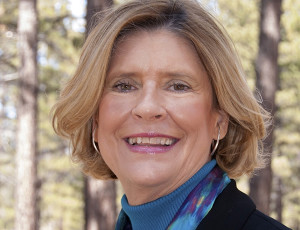
Unable to hold back the tears, Kindred Murillo has mixed emotions about having tendered her resignation as president of Lake Tahoe Community College.

While she will be leaving behind an extensive list of accomplishments, it is the people she will miss the most. She only had good things to say about the boards she has worked for since talking the helm in July 2011, the faculty and classified staff.

What comes next for the 61-year-old remains to be seen. Whatever it is, it will have to be in a region without pine trees or at least with more humidity. Murillo is allergic to pine trees, which leads to colds and respiratory issues. Throughout the meeting Tuesday night she was dabbing at her eyes and blowing her nose – which at that time wasn’t about the sadness of her impending departure.

“I can retire, but I really like what I do,” Murillo told Lake Tahoe News after the special closed session. “I may look at select opportunities. I had a great experience here.”

Kindred Murillo is Lake Tahoe Community College's fourth president, having been hired in 2011. Jim Duke served form 1974-90; Guy lease 1990-2007, and Paul Kilpatrick 2008-10.

Kindred Murillo is Lake Tahoe Community College’s fourth president, having been hired in 2011.
Jim Duke served from 1974-90; Guy lease 1990-2007, and Paul Killpatrick 2008-10.

She doesn’t have a solid end date, which gives the board flexibility and the potential for the college to transition from one president to the next with some overlap. At the earliest she will leave June 30, the latest is Feb. 1, 2017.

If the board doesn’t have someone on board by then, an interim president will be hired from outside the college, board President Fritz Wenck said.

The college board spent 90 minutes Jan. 19 discussing what happens next in finding the 42-year-old institution’s fifth president. A search firm will be hired and from there a nationwide search will begin.

What exactly the board wants in the next leader will be discussed in greater detail in closed session at the Jan. 26 meeting. The next president will oversee the spending of the bulk of the bond money that voters approved in 2014 as well as the upcoming accreditation process.

“We are buckling up to try to do the best we can with a situation that is very unhappy for us,” Wenck told Lake Tahoe News. “She is an outstanding president and none of us wants to see her go.” But he recognizes that her health must come first.

For Murillo, she is most proud of having brought the college to a point of fiscal solvency, with a plan for the college’s future. This includes having identified issues with the facilities, as well as technological shortfalls.

“My hallmark is the fiscal plan so the college is here for the community and the future,” Murillo said.

She spearheaded the $55 million facilities bond. Wenck gave her a ton of credit for that, admitting it’s something he didn’t think would come to fruition.

Murillo does have one major goal left – the one set for herself and the college at the onset of her tenure here – to have LTCC be a four-year college.

With local resident Lisa Maloff donating more than $5 million for a university center, Murillo’s goal is on the path to completion.

“To make sure there is four-year education in South Lake Tahoe is the last thing to complete,” Murillo said. She is working hard to have one or two universities lined up by the end of this fiscal year.


Skier pushes snowboarder off Colo. chairlift

By Chuck Hickey, CW-2

ASPEN, Colo. — A skier threw a snowboarder of the chairlift they were riding at Aspen Highlands on Sunday, the Aspen Times reported.

Seth Beckton of Aspen told the newspaper the skier was a white man in his late 20s or early 30s who took offense to a seemingly innocuous comment by the snowboarder as they rode the Loge Peak chairlift.

Beckton said he fell face-first 20 to 25 feet but landed in a “large pocket of snow” and was not injured.

Read the whole story


Search for missing ski instructor suspended

The search for missing Sugar Bowl ski instructor Carson May will not continue beyond Jan. 19.

The 23-year-old from Davis was last seen Jan. 15 skiing in white-out conditions on the back side of the resort. He was not working at the time. He was reported missing the next day.

Carson May

Carson May

This was May’s third year working at Sugar Bowl; he had been a season pass holder prior to that.

“Conditions during the five days of searching have been treacherous due to frequent heavy snow and the associated risks that high avalanche danger poses to the many search and rescue volunteers,” Placer County sheriff’s deputies said in a release.

It was noted if any new information becomes available and conditions allow, additional searches are possible.

— Lake Tahoe News staff report


Passenger dies after accident near Glenbrook

A Los Angeles man died from injuries he sustained Jan. 16 in a two-vehicle accident near Glenbrook.

Aquiles Molero, 36, was a passenger in a vehicle that drifted across the center lane of Highway 50 and was then struck by oncoming traffic.

Nevada Highway Patrol officers said a 2009 Toyota Corolla driven by Mexican national Carlos Ortega Gomez was going east on the highway about 9:40pm, crossed the centerline and began to rotate. It spun into the path of a Subaru Impreza heading west. The Subaru, driven by Virgilio Ballesteros, 59, of Carson City, struck the right side of the Corolla.

Neither driver was injured. All occupants were wearing seat belts.

The highway was wet and icy at the time of the collision.

— Lake Tahoe News staff report


Award-winning novelist to read at LTCC

Award-winning novelist and short story writer Rebecca Makkai will be giving a reading, engaging the audience in a Q&A, and signing books in the Aspen Room at Lake Tahoe Community College on Feb. 10.

This free event is at 7pm. Books will be available for purchase.

Makkai is the Chicago-based author of the novels “The Hundred-Year House”, winner of the Chicago Writers Association’s Novel of the Year award, and “The Borrower”, a Booklist Top Ten Debut which has been translated into eight languages.

Her short story collection, “Music for Wartime”, was published in June 2015. Her short fiction was chosen for the Best American Short Stories for four consecutive years (2011, 2010, 2009 and 2008), and appears regularly in journals like Harper’s, Tin House, and New England Review. Makkai is a recipient of a 2014 NEA fellowship.


Calif. farmers brace for water shortage despite El Niño

By Scott Smith, AP

FRESNO — Farmers in the fertile San Joaquin Valley are bracing to receive no irrigation water from a federal system of reservoirs and canals for a third consecutive year and looking to El Nino to produce the very wet winter they need.

The year kicked off with heavy rains and an above-average snowpack in the Sierra Nevada. The El Nino — a global weather system associated with wet winters in California — may play out nationwide through late spring or beyond, officials at the National Oceanic and Atmospheric Administration say.

While many are celebrating a break to the long dry spell, however, the four driest years on record for California have left their mark, and experts say it will take time for the parched state to recover.

“We need a wet winter this winter and next and the following winter probably to get us anywhere close to equilibrium,” said Dave Kranz, a spokesman for the California Farm Bureau Federation.

State water managers say California’s snowpack needs to be at 150 percent of normal on April 1 to signal an end to drought. Friday it was at 110 percent, according to the Department of Water Resources’ statewide electronic reading.

Lake Shasta, the state’s largest reservoir, remains at half of its historical average for this time of year. Other major reservoirs in Oroville and Folsom that collect and store rain and snowmelt had reached or came close to historical low levels before the winter storms hit.

The lack of surface water supplies for irrigation during the drought has forced many farmers to use groundwater to keep their crops alive, drawing down wells and leading many to run dry.

Westlands Water District, which relies on water from the U.S. Bureau of Reclamation, has warned hundreds of farms it serves in the San Joaquin Valley that they may not be receiving any irrigation water yet again this year, said district spokeswoman Gayle Holman.

Westlands is the nation’s largest supplier of irrigation water, and for the last two years, the bureau’s initial allocation was for zero percent of the district’s contracted amount. It remained at zero throughout both years.

Holman said that this stormy winter has raised hope that in the spring they’ll receive some federal water, even if officials at first announce that there’s none available. Holman said that by that time it may be too late.

“The need for that water is now,” she said, adding that any federal water sent to them early in the year would be stored in reservoirs for use when the weather warms and the growing seasons begins. “That’s why the timing is so critical.”

Federal officials say it is too early now to know how much water will be available. California’s wet season is just underway. The bureau is monitoring the snowpack, rainfall, reservoir levels and other factors before saying how much water it will release to farmers and other users.

That announcement typically comes in late February, said bureau spokesman Louis Moore.

The Water Resources Department, which also manages part of California’s vast water system, said in early December that it anticipated releasing 10 percent of expected supplies this year — half of the last year’s allocation.

The state’s figure could also change, depending on the amount of precipitation that falls in the next several months, officials said.

San Joaquin Valley farmer Shawn Coburn, who grows 1,500 acres of almonds, pistachios and tomatoes along the San Joaquin River near Firebaugh, said the rain has become an exciting event.

On a recent stormy night, Coburn was up at 3am watching satellite images of clouds moving over California. He exchanged text messages with another farmer on the other side of the valley, alerting each other when raindrops started falling.

But Coburn relies in part on federal water supplies, and he said officials have repeatedly warned farmers like him that they should expect no irrigation water. He may leave his tomato fields unplanted this year, saving his limited water to keep his trees alive.

“We may never recover,” said Coburn, who also blames environmental regulations designed to protect endangered fish for depriving farmers of water. “This may be the long death spiral.”

Lester Snow, executive director of the California Water Foundation, said the drought has exposed a weakness in the state’s water management system built 60 or more years ago.

The amount of land farmers now cultivate and the number of people living in the state have both dramatically increased since state and federal officials built California’s massive water system.

Yet Snow said the state hasn’t adequately invested in modernizing it, such as finding ways to capture storm water runoff, recycle water, store and recharge depleted groundwater.

“We’re not going back to the good old days,” said Snow, a former secretary of the California Natural Resources Agency. “We’ve reached a new normal in volatility, and we need to adapt to that.”


2015 wildfires burned a record 10.1 mil. acres

By Gloria Dickie, High Country News

The summer of 2015 was unlike anything most career firefighters had ever seen. Across the United States, fires erupted not only in dry woodlands, but also in grasslands, rainforests, and tundra, ignited by lightning strikes and careless campers.

Flames dripped from lichen-covered trees in the Pacific Northwest, and in Alaska, ate into permafrost. U.S. military personnel were called in to battle the ferocious blazes across the West — as were Canadians, Australians, and New Zealanders.

By year’s end, wildfires would consume more than 10.1 million acres of land in the U.S., destroying 4,500 homes and taking the lives of 13 wildland firefighters. Fighting the blazes cost an unprecedented $2.6 billion, the majority spent in the West.

“While the news that more than 10 million acres burned is terrible, it’s not shocking, and it is probable that records will continue to be broken,” said Secretary of Agriculture Tom Vilsack in a press release.

Read the whole story 


Homegrown flavor from an indoor garden

By Melinda Myers

Add some homegrown flavor to your winter meals. From microgreens to tomatoes, it is possible to grow produce indoors.

Microgreens are a quick and easy way to add some flavor and crunch to your plate. Just plant seeds labeled for sprouting or microgreens in a shallow container filled with a sterile potting or seed starting mix. Within two weeks you will be harvesting nutritious mini vegetable and herb leaves for salads, sandwiches or snacking.

Take it one step further and grow a few of your favorite herbs on a warm sunny windowsill. Select a container with drainage holes and set on the appropriate size saucer to protect your woodwork. Fill the container with well-drained potting mix and plant seeds or transplants. Purchase basil, chives, parsley, oregano and rosemary plants from your local garden center or the produce department.

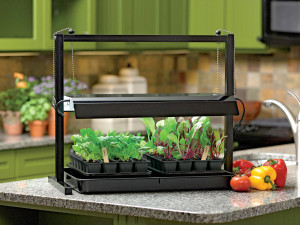
Energy efficient and long lasting high intensity grow lights will provide the greatest yields when growing tomatoes and other fruiting plants indoors. Photo/Gardener’s Supply Company

Energy efficient and long lasting high intensity grow lights will provide the greatest yields when growing tomatoes and other fruiting plants indoors. Photo/Gardener’s Supply Company

Greens, like lettuce and spinach, will also grow in a sunny window or better yet under artificial lights. Grow them in a container filled with a well-drained potting mix similar to your windowsill herb garden. Plant seeds according to the seed packet. Continually harvest the outer leaves when they are 4 to 6 inches tall.

Those that like a bit of a challenge may want to try growing a compact tomato, pepper or eggplant. You’ll get the best production with a combination of natural and artificial light or full spectrum lights.

Natural sunlight and full spectrum lights contain the variety of light plants need to grow, flower and fruit. Blue light promotes leaf and stem growth, while red combined with blue promotes flowering. Consider investing in energy efficient and long lasting high intensity grow lights for the greatest yields when growing tomatoes, peppers, eggplants and other fruiting plants indoors.

Leave lights on for 14, but no more than 16 hours each day. Plants need a dark period as well as bright light each day to grow and thrive. Use a timer to ensure the plants receive the right duration of light.

Most flowering and fruiting plants need a high intensity of light, so keep the lights six to twelve inches above your plants. Use reflective surfaces under and around the plants to bounce light back into larger plants.

Increase your indoor growing space by going vertical. Shelf units with built-in light fixtures provide multiple layers of growing space.

And once your tomatoes, peppers and eggplants start flowering, you will need to shake things up a bit. Gently shake the plants several times a week, better yet daily, to move the pollen from the female to the male parts of the flower so fruit will develop. A gentle breeze from a fan or vibrations from a battery-operated toothbrush work well.

Indoor gardening won’t yield the same results as a sunny outdoor garden, but the flavor can’t be beat when gardening outdoors is not an option.

Gardening expert, TV/radio host, author columnist Melinda Myers has more than 30 years of horticulture experience and has written more tha 20 gardening books, including “Small Space Gardening” and the “Midwest Gardener’s Handbook”>


Mistaken EDSO Facebook post has family fearful

By Steve Large, CBS-13

An El Dorado County father says he was just trying to do what any good dad would do, but instead he was treated like a common criminal.

What bothers Vincent Gatica more is his license plate was posted on Facebook by law enforcement as if he were a common criminal.

Gatica says he has a great deal of respect for law enforcement, but says the El Dorado County Sheriff’s Department may have put his family in danger when it posted his license plate as part of an alert in a reported attempted abduction.

A sheriff’s department spokesperson offered no apologies for the Facebook post, writing, “Priority one of the El Dorado County Sheriff’s Office is the protection of our citizens and our community. When dealing with the circumstances we were faced with this past Friday, we will always error (sic) on the side of caution for the potential victim.”

Read the whole story