How to avoid a vacation rental surprise

By Christopher Elliott, USA Today

When it comes to vacation rentals, there are surprises — and there are surprises.

Good surprises, such as the one Ana O’Reilly encountered when she checked into a villa in Palm Springs, Calif., are rare. She was dumbstruck to discover the home looked better than the pictures in the listing, which was a first. The refrigerator was stocked with champagne and bottled water, and bowls of M&M’s were left in the kitchen as a welcome snack.

And there are the not-so-good ones, such as  the one encountered by Timothy Trudeau when he rented a home in Santa Barbara with his family. After getting settled, he decided to take a dip in the pool.

“As we were floating around, I started to notice that the property had small infrared cameras mounted all over the place,” recalls Trudeau.

Read the whole story


Vegas newspaper staff feels casino giant’s tightening grip

By Nigel Duara, Los Angeles Times

When casino mogul Sheldon Adelson quietly bought Nevada’s largest newspaper, reporters made it their mission to break the story of their new owner.

Newly energized after years of turnover and turmoil, the news staff at the Las Vegas Review-Journal furiously reported on the sale and — in a front-page editorial — promised readers that they would stand sentry to make sure the paper’s stories were fair, balanced and stripped of any possible influence from Adelson’s political and business connections.

But that full-tilt burst of self-reporting has now slowed amid a heavier hand from Adelson’s appointed leadership, and some suggest, so has the vow of being transparent.

Read the whole story


Incorporate Olympic Valley backers face state fine

Incorporate Olympic Valley PAC faces a $2,500 fine from the California Fair Political Practices Commission.

The PAC is accused of failing to file timely monthly campaign statements from July 15, 2013, to July 15, 2014.

According to legal documents, “Under the Political Reform Act, a committee that is primarily formed to support or oppose a LAFCO proposal is required to file monthly campaign statements by the 15th of each calendar month from the time of circulation of the petition begins to the time the measure is placed on the ballot, or, if not placed on the ballot, until termination.”

The full commission will hear the matter on Feb. 18. However, the settlement has been agreed to by all parties. The group could have faced a $5,000 fine.

The money will be paid to the state’s general fund.

The PAC was formed to support the incorporation of Olympic Valley, which was started in a effort to have more control over development matters in the region and to fight what they considered overdevelopment by the owners of Squaw Valley ski resort. That incorporation effort has since been disbanded.


— Lake Tahoe News staff report


Study: Public land is good for rural areas

By Krista Langlois, High Country News

For many parts of the rural West — like Oregon’s Harney County, where timber jobs dropped 70 percent between 1998 and 2013 — large swaths of public land can feel like a burden. Counties rich in public land are often at the mercy of federal land managers, so when logging, mining or ranching dries up — either because of management decisions or shifts in the market — loggers, miners and ranchers can feel powerless. Watching young people flee to cities, it’s easy to conclude that federally managed lands impede economic growth.

A study by Montana nonprofit Headwaters Economics shows that’s not necessarily the case. Overall, rural Western counties with more federal land performed noticeably better by four key economic indicators than counties with less public land.

Though economic growth in rural areas is still far surpassed by urban growth, Western rural counties with the highest share of federal lands had on average faster population, employment, personal income and per capita income growth between 1970 and 2014 than those with less public land.

Read the whole story


Snippets about Lake Tahoe

squaw·       Squaw Valley Alpine Meadows is hosting the 7th annual Kid-O-Rama celebration Feb. 13-20. For complete details, go online.

·      Mojo Green of Reno will be putting on a free concert Feb. 13 at Whiskey Dicks Saloon in South Lake Tahoe. Must be at least 21 to attend. Doors open at 9pm.

·       Tahoe Cross Country will be closed Feb. 12 because of school races at the Tahoe City facility.

·       Here is this week’s El Dorado-Tahoe roadwork schedule from Caltrans.

·      One Love Valentines Day Reggae Celebration featuring Pato Banton and the Now Generation from Birmingham, England, will be at Whiskey Dicks Saloon in South Lake Tahoe on Feb. 14. Must be 21 to attend. Tickets are $15 in advance or $20 that night. Doors open at 9pm.


Panel explores why gas is so expensive in Calif.

By Alison Noon, AP

SACRAMENTO — Gouging by oil companies could be one reason California drivers pay about 76 cents more for a gallon of regular gas than motorists elsewhere in the nation, a state government panel was told Monday.

Fuel experts and consumer advocates also told the Petroleum Market Advisory Committee that a high state gas tax and more rigorous regulations have kept prices relatively high as oil prices have plunged across the nation in recent months.

Drivers in California pay more partly because of stiffer fuel blend standards to meet the state’s unique air-quality rules, speakers said at the hearing.

The panel, appointed by the California Energy Commission, is studying whether changes in state policies and laws could rein in the prices.

The average price in California for a gallon of regular gasoline was $2.50 on Monday — 76.5 cents higher than the national average, according to Gordon Schremp, a fuels adviser at the CEC Energy Assessment Division.

Committee Chairman Severin Borenstein said taxes and cleaner-burning fuel account for about 40 cents of the price difference. Witnesses split over whether the additional cost stems from price gouging by providers.

Bob van der Valk, senior editor of the Bakken Oil Business Journal, said a lack of active oil traders has opened the door to price gouging.

“We have an ill-equipped market, so it is prime to be manipulated and it is being manipulated,” van der Valk said.

Dolores Santos of the Oil Price Information Service noted that a number of fuels advisers and gas companies have left California or deactivated their businesses — increasing pricing fluctuations — since a regulatory provision of Assembly Bill 32 took effect a year ago.

Jamie Court, president of the advocacy group Consumer Watchdog, argued that oil refiners have been intentionally importing less oil and increasing exports, thereby tightening supplies in California.

Two industry associations were invited to the meeting. Their representatives did not comment during the discussion.

The committee also considered how the state could feasibly and legally require oil companies to disclose more information. The members agreed to focus on making transaction prices more transparent and publishing information more quickly at their next meeting.

Lawmakers last year held hearings on gas prices after one of the largest price swings in recent history.

State energy officials said two refineries that make up 17 percent of the state’s processing capacity went offline after a plant explosion and a labor dispute, limiting supply and driving up prices.



Vacation rental scams on the rise in Tahoe

By Ali Wolf-Fox 40

Beautiful South Lake Tahoe. With the snow-covered mountains, the panoramic views and the peace and quiet — it’s no wonder rentals are in high demand.

This season, property manager Kathy Liebhardt is busy placing tourists into homes.

Her most popular property is a multi-million dollar home near Heavenly Mountain Resort.  It rents for about $2,000 a night, and it’s rarely empty.

But Liebhardt has run into a big problem: scam artists, ripping off her business and leaving travelers high and dry.

Read the whole story


Climate change making mountaineering more dangerous

By Devon O’Neil, Outside

In July 2011, Arnaud Temme and three friends were climbing the Rottalgrat, a tough route on the west side of the Jungfrau in Switzerland’s Bernese Oberland, when rocks began to rain down from above. Temme, an experienced alpine climber, took a rock to the shoulder and a handful more hit his helmet, but the team eventually completed the route unharmed.

That night, the climbers evaluated their experience in the warm comfort of the Mönchsjoch Hut. Their guidebook, which was a decade old, described the route as relatively safe with only minor rockfall danger. “But the more recent guidebook, which we didn’t have, said to stay away from this route because of very high rockfall danger,” Temme says.

The disparity struck Temme, a 37-year-old assistant professor at the Netherlands’ Wageningen University who is also an affiliate of the Institute for Arctic and Alpine Research (INSTAAR) at the University of Colorado at Boulder. How could two guidebooks describe the same route in such different ways when they were written less than a decade apart? That question served as the impetus for Temme’s three-year study into the effects of climate change on alpine climbing danger, the results of which were recently published in the international scientific journal Geografiska Annaler. Temme says the two are “very probably related.”

Read the whole story


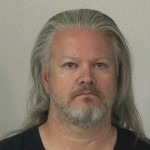
Ex-narcotics officer faces 10 years in prison

A former El Dorado County drug agent will be going to prison for at least 10 years after pleading guilty to one count of drug trafficking.

Mark Zlendick

Mark Zlendick

Mark Zlendick, 48, was arrested last May in Gardnerville. The initial reason deputies went to his house was for an alleged domestic dispute. He was subsequently arrested on charges of possession of a controlled substance, trafficking methamphetamine, conspiracy, and possession of paraphernalia.

He got the drugs from the evidence locker in South Lake Tahoe. At the time Zlendick was El Dorado County Sheriff’s Office’s representative on the South Lake El Dorado Narcotics Enforcement Team.

He will be sentenced April 11. According to the plea agreement, Zlendick faces 10 to 25 years in prison and a $500,000 fine.

— Lake Tahoe News staff report


Nevada caucus is easier than you think

By Brian Duggan, Reno Gazette-Journal

The Nevada Caucuses are a crucial part of the 2016 election cycle, but to some, the process can seem confusing and arcane compared to the simplicity of a paper ballot primary.

Most states use a secret ballot primary similar to the general election during the presidential nomination process, but a handful use a caucus – a system similar to a neighborhood meeting that allows voters a chance to publicly discuss the candidates and sway supporters to their side.

Nevada first gained early-state status in the 2008 cycle. The national parties wanted to expand on the Iowa Caucus and New Hampshire Primary to include a Southern and Western state. South Carolina was chosen for the South and Nevada – largely by lobbying from then-Sen. Majority Leader Harry Reid, D-Nev. – was chosen for the West.

Read the whole story